GSM-NONP Progress Report March 2026
Burt J., Springer B., featuring A. Claassen
intoishun / robogenesis
Olympic National Park
Washington State, USA
*This report will be updated as sequencing data is received. Results will be added along with additional comments. Last updated September 14, 2026.
In March we observed a range of different habitats during a range of different conditions. With Spring approaching, but certainly not yet arrived, we started the month slow. In terms of both pace and collections.
Beginning with a walk with mycologist Andrew Claassen, who was visiting me briefly in between giving talks in Canada. Andrew tore his meniscus a few weeks before visiting, so our time together was limited but he is included here. We made a few sparing collections, preparing for a more full month later between myself and Brodie.
Throughout the remainder of the month we surveyed a variety of locations, often relying on a broad host of lesser frequented habitat, but composed of somewhat familiar fungal genera and families. Brodie is a local to this region, I myself am not but have lived here for a few years. So, we made a conscious effort to explore areas we had not visited or not frequented, especially during this time of year. With springtime Ascomycota approaching, we also sought to collect mostly Basidiomycetes, although a couple key early asco species are featured for this month’s report.
Being the first full month of collections under this study, I think we managed to survey a fairly decent spread of habitat and macrofungal diversity within the park’s northwestern limits. The following is a day-by-day journaling of observations made under this study, organized by location. A spreadsheet of the mentioned observations / collections is available, as well as reporting for our three February collections, mentioned at the end here. As mentioned on the title page I will also be updating these reports as we go. The original content will remain, we will simply create a space for updates.
This will likely be the format for this sort of additional reporting going forwards. It is fair to mention that in the slower months for fungi, again such as March, there will be a focus on condensing less frequent collections into a more broad report. This equates to more time and study, for the same total amount of collections being reported on. In October, for example, it is likely the same amount of reporting will be created for collections made on two separate dates, as opposed to five or more. This has no personal effect on us, we don’t mind the extra hiking in the park, it is just something to consider when analyzing these reports. It is likely that when making more frequent collections we will visit multiple locations in the same day. That is not the case for March!
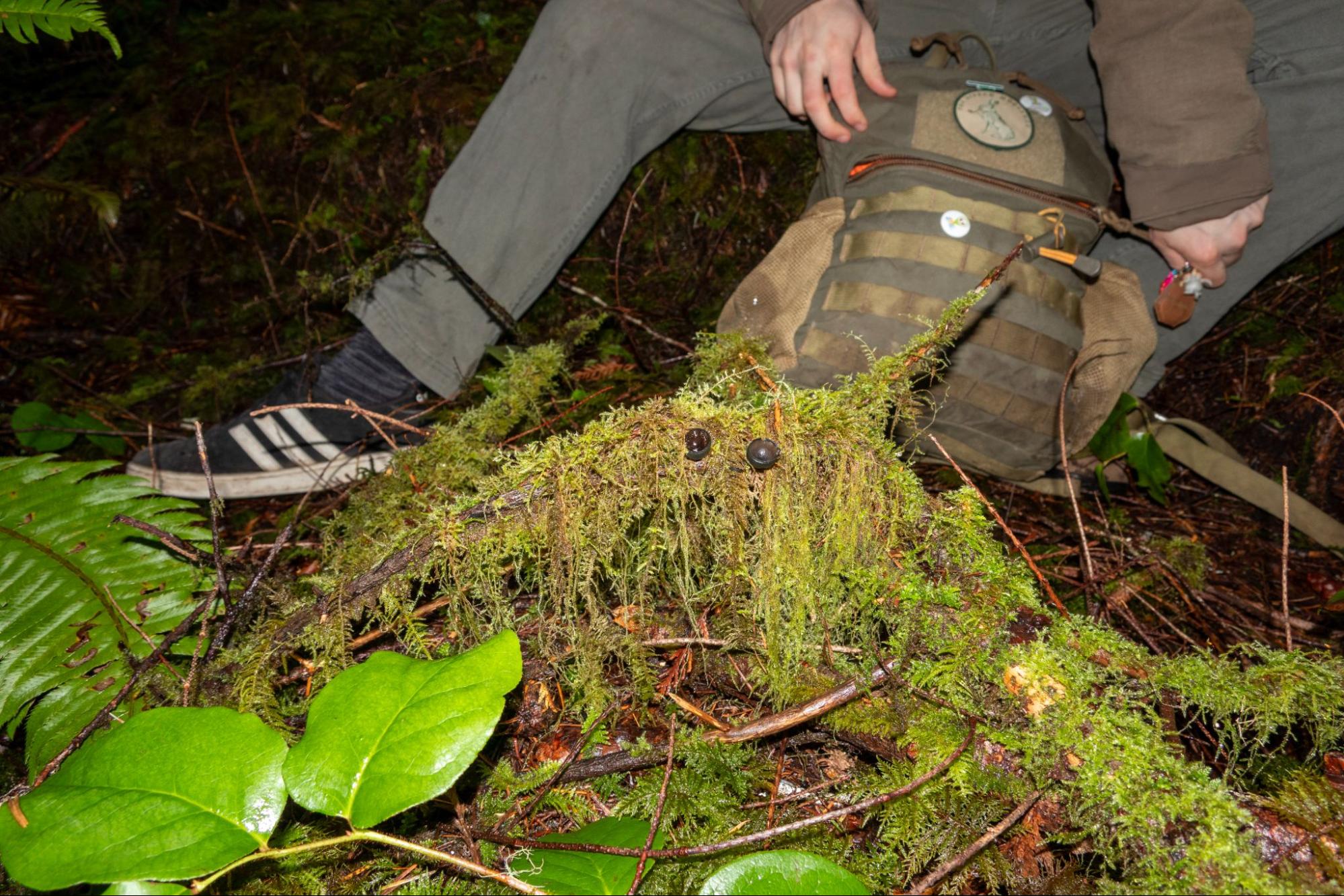
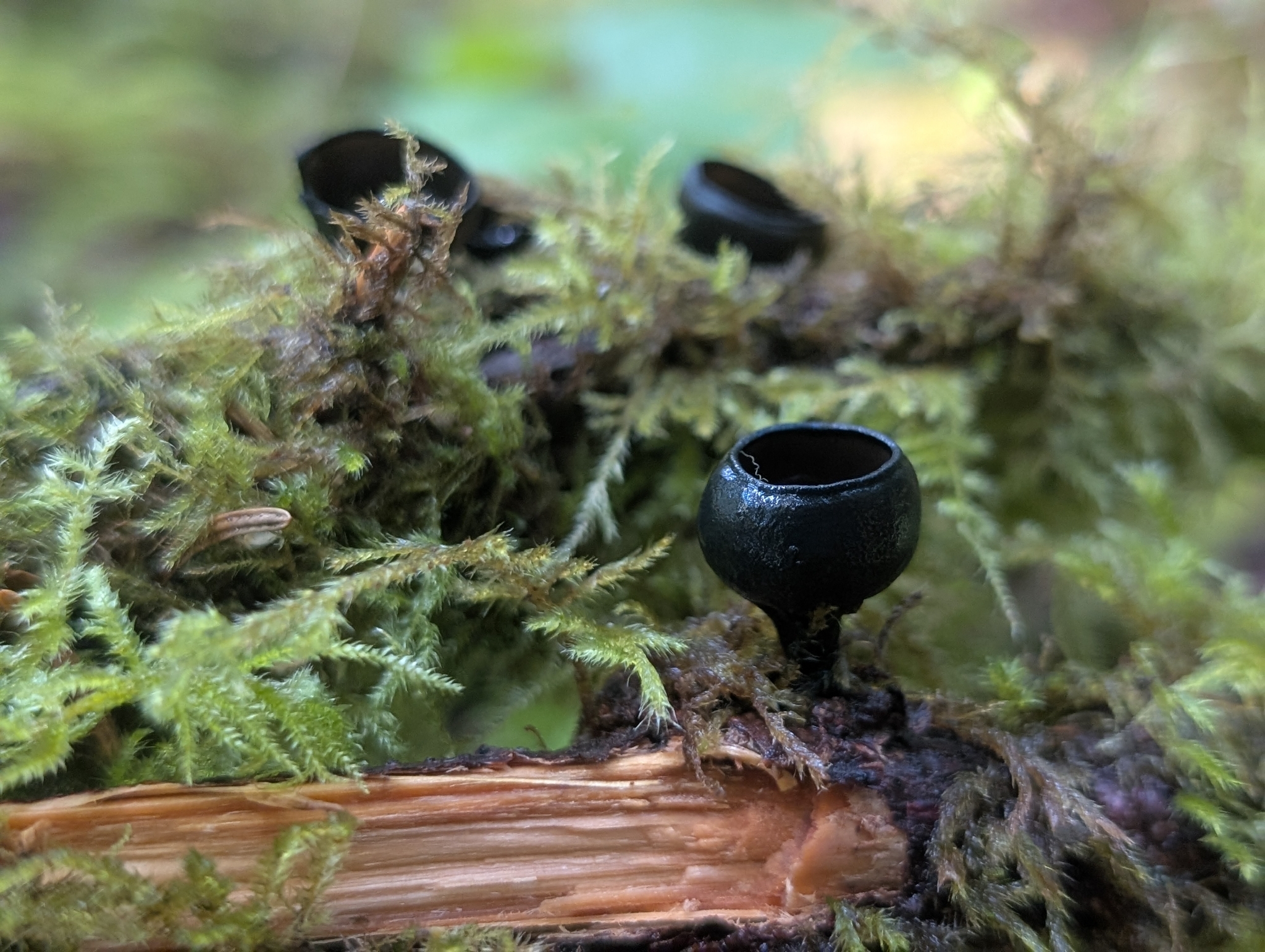
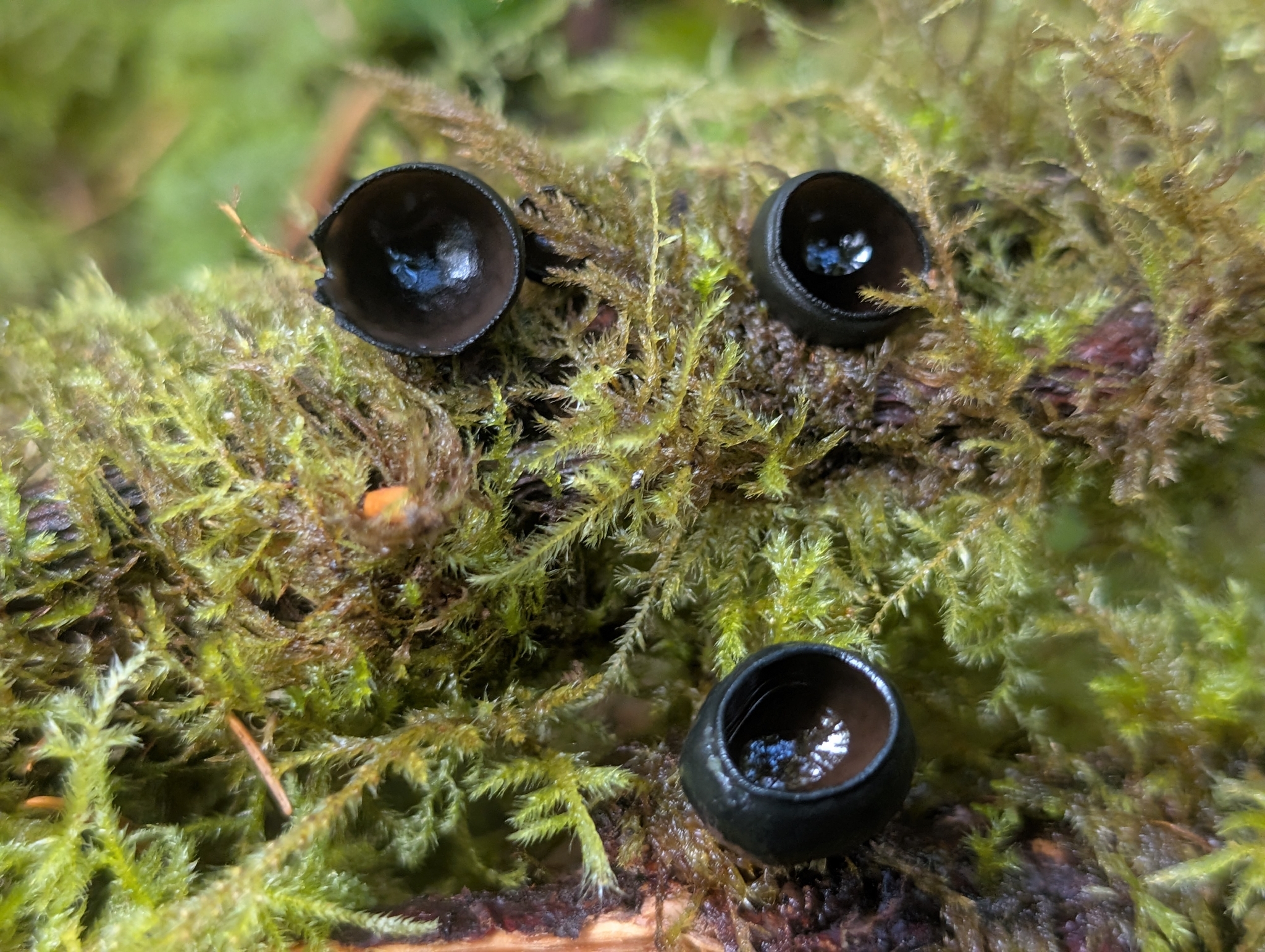
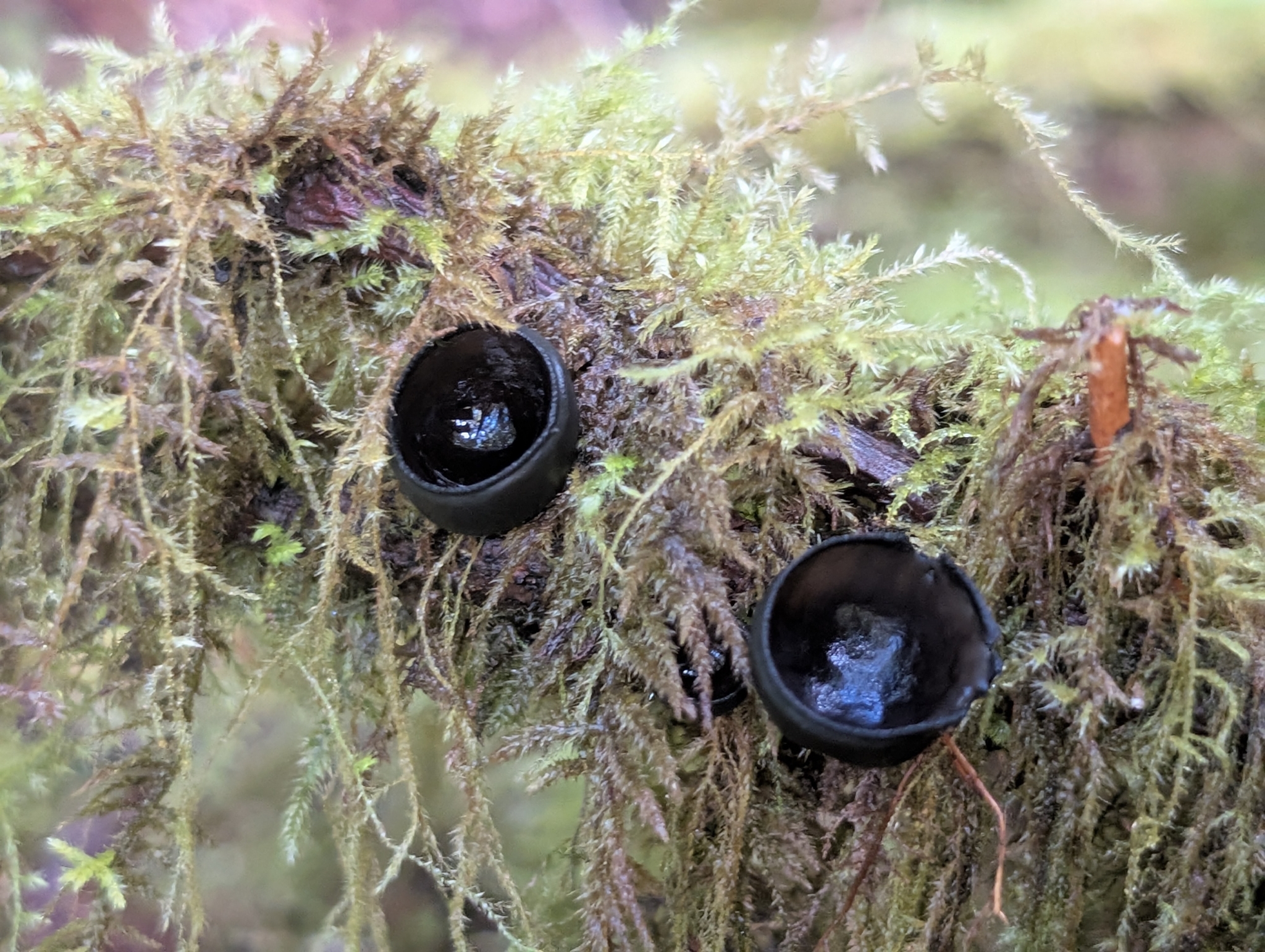
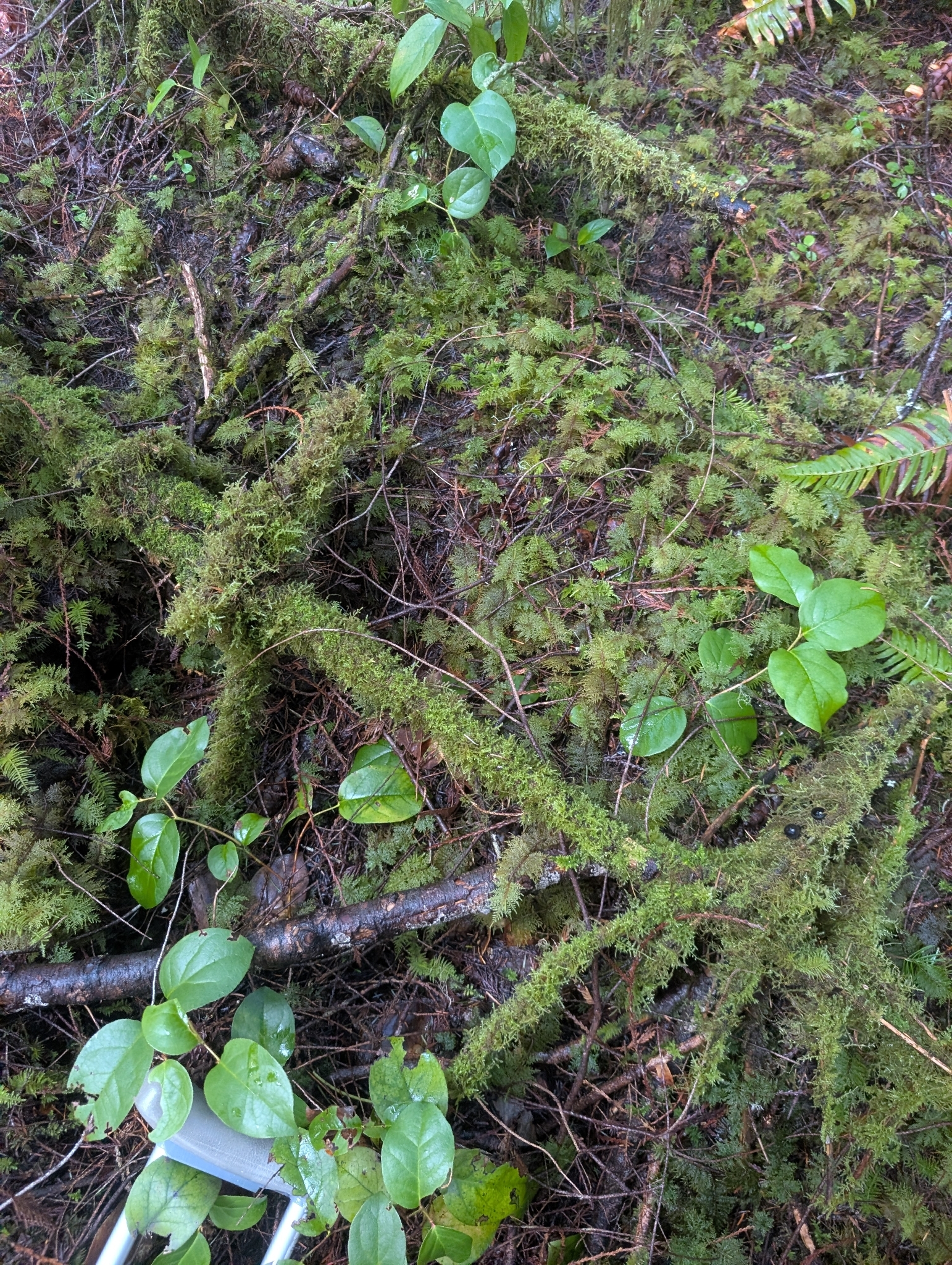
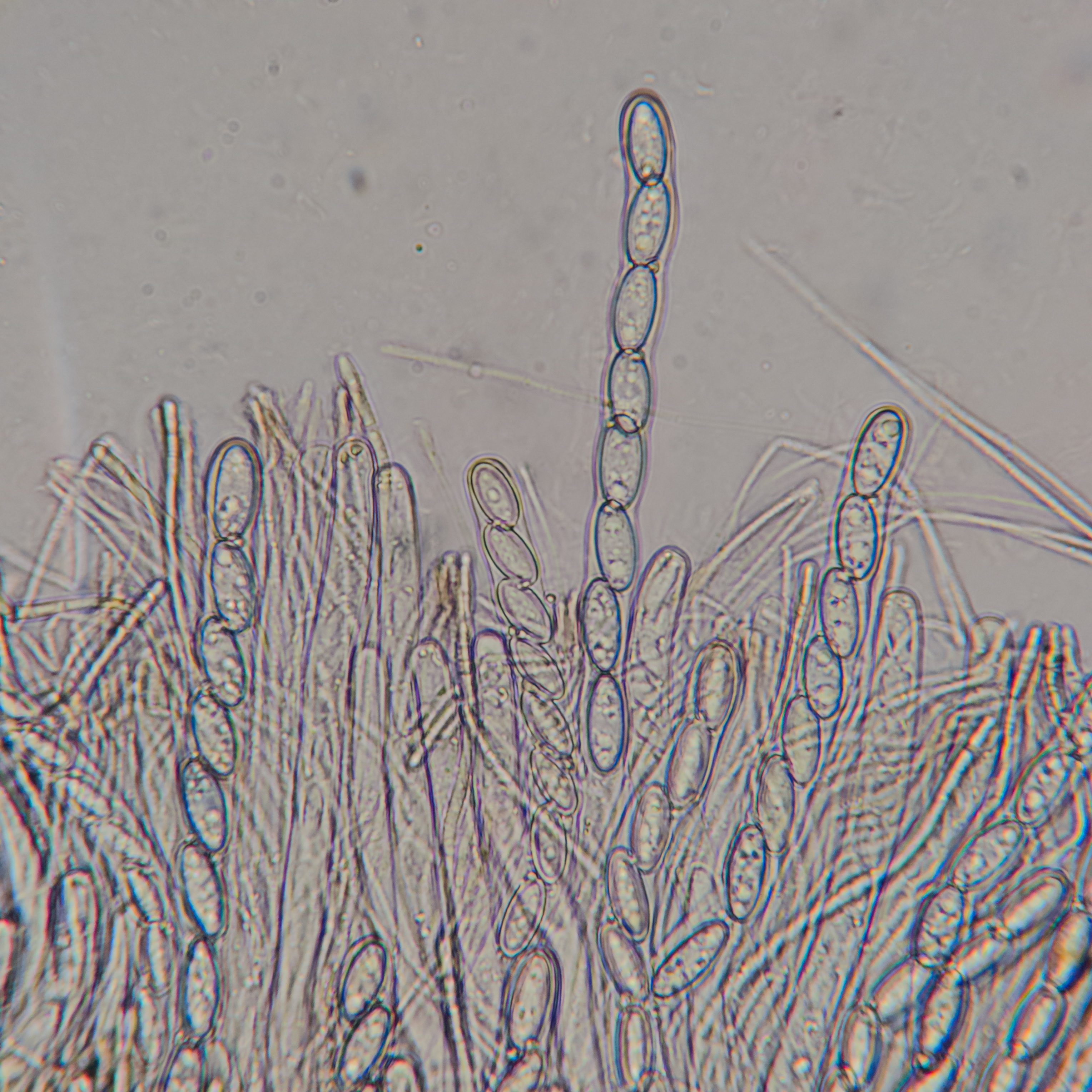
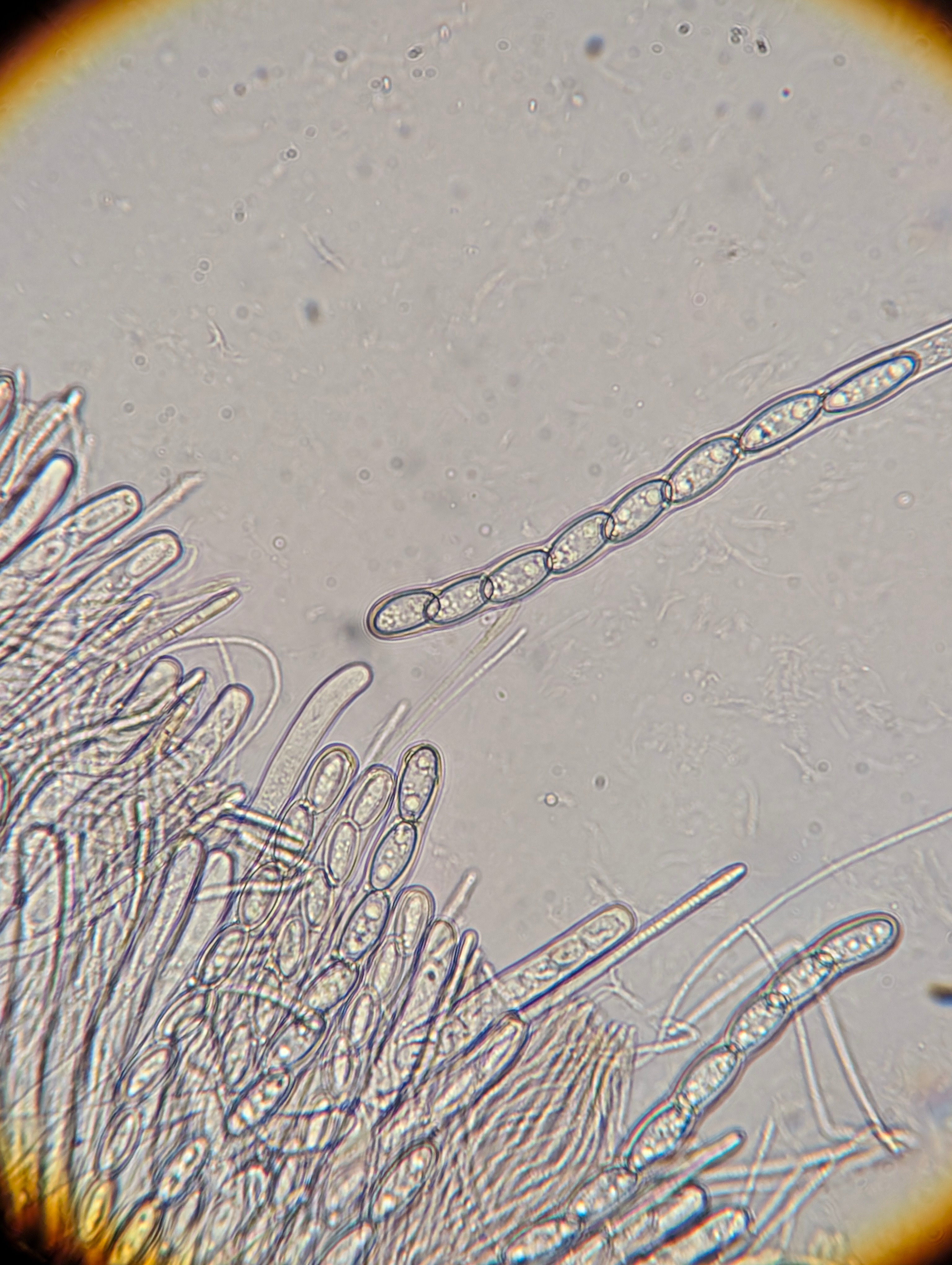
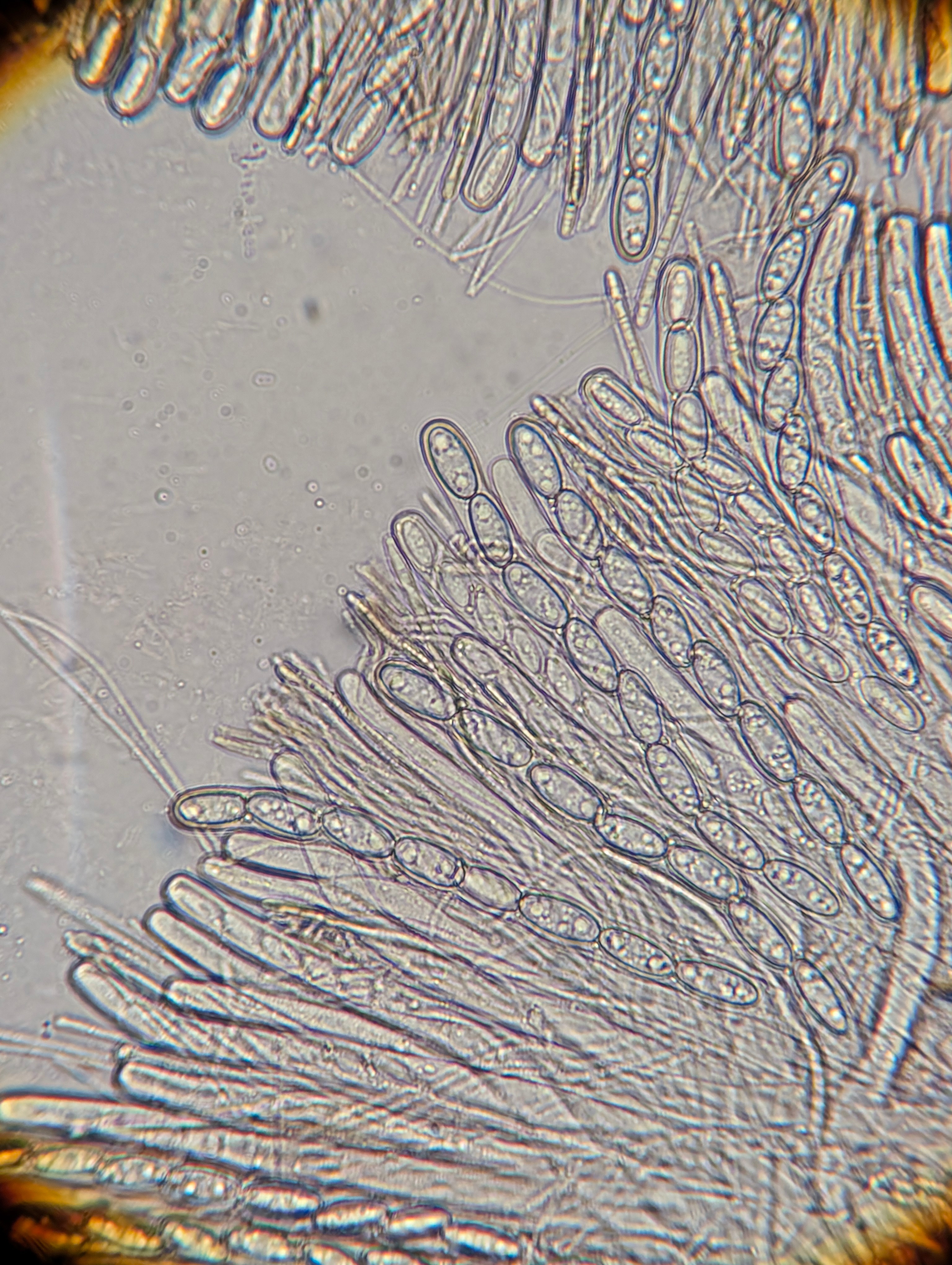
Andrew, resting injured leg pictured below, sits over a branch that has become host to Donadinia cf. nigrella. A photo from Andrew’s obs of this collection. (342019812)
A genus of typically black, small to medium, ascomycete cups, I am not sure if this is the species we have here. I would say though that this species is incredibly common throughout the same habitat and season as other end of winter fungi, such as Dacrymycetes like G. alpina and D. stillatus. The former is featured later.
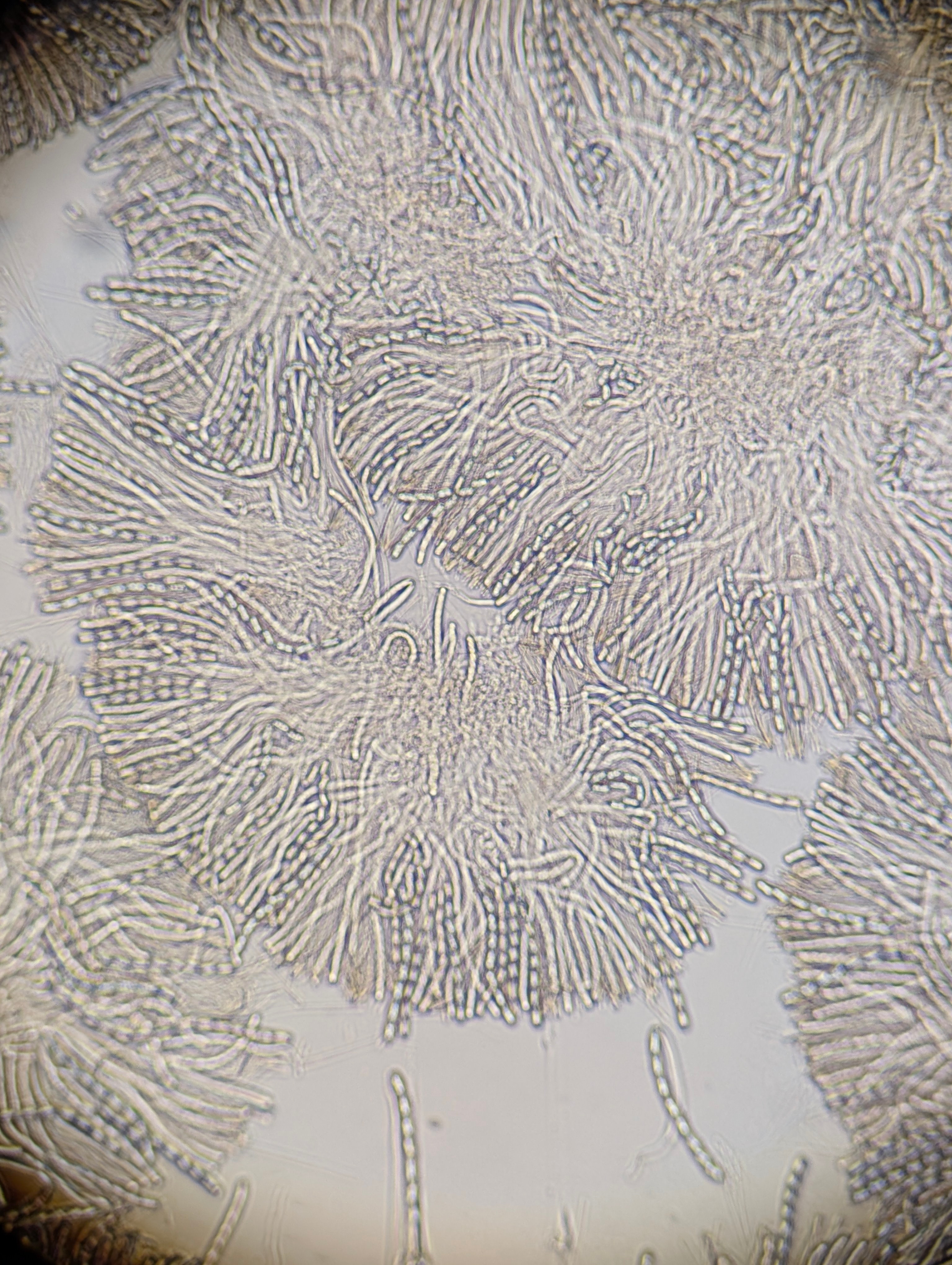
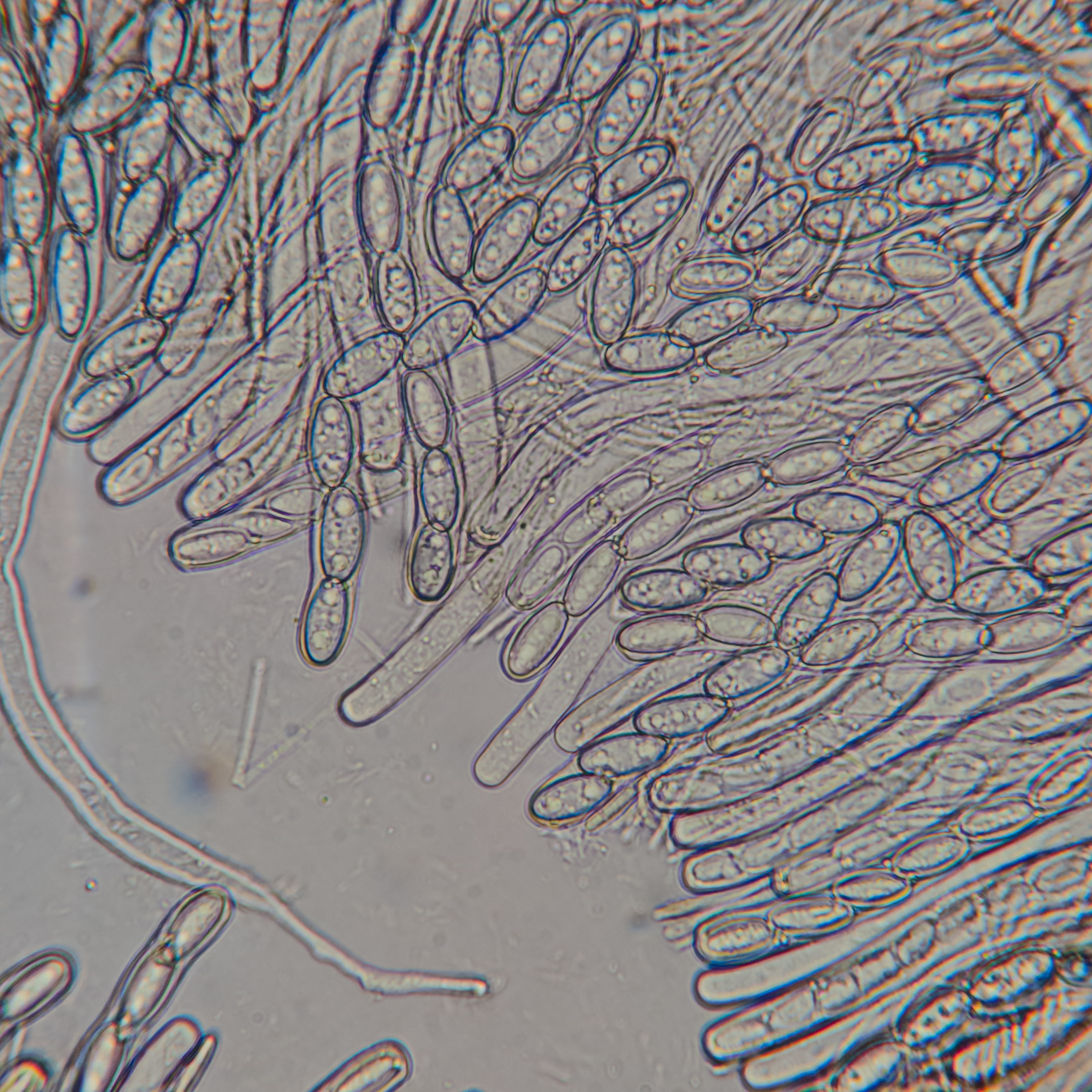
Update: New temp code!! Donadinia sp. ‘WA01’. Some microscopy as added, measurements pending.
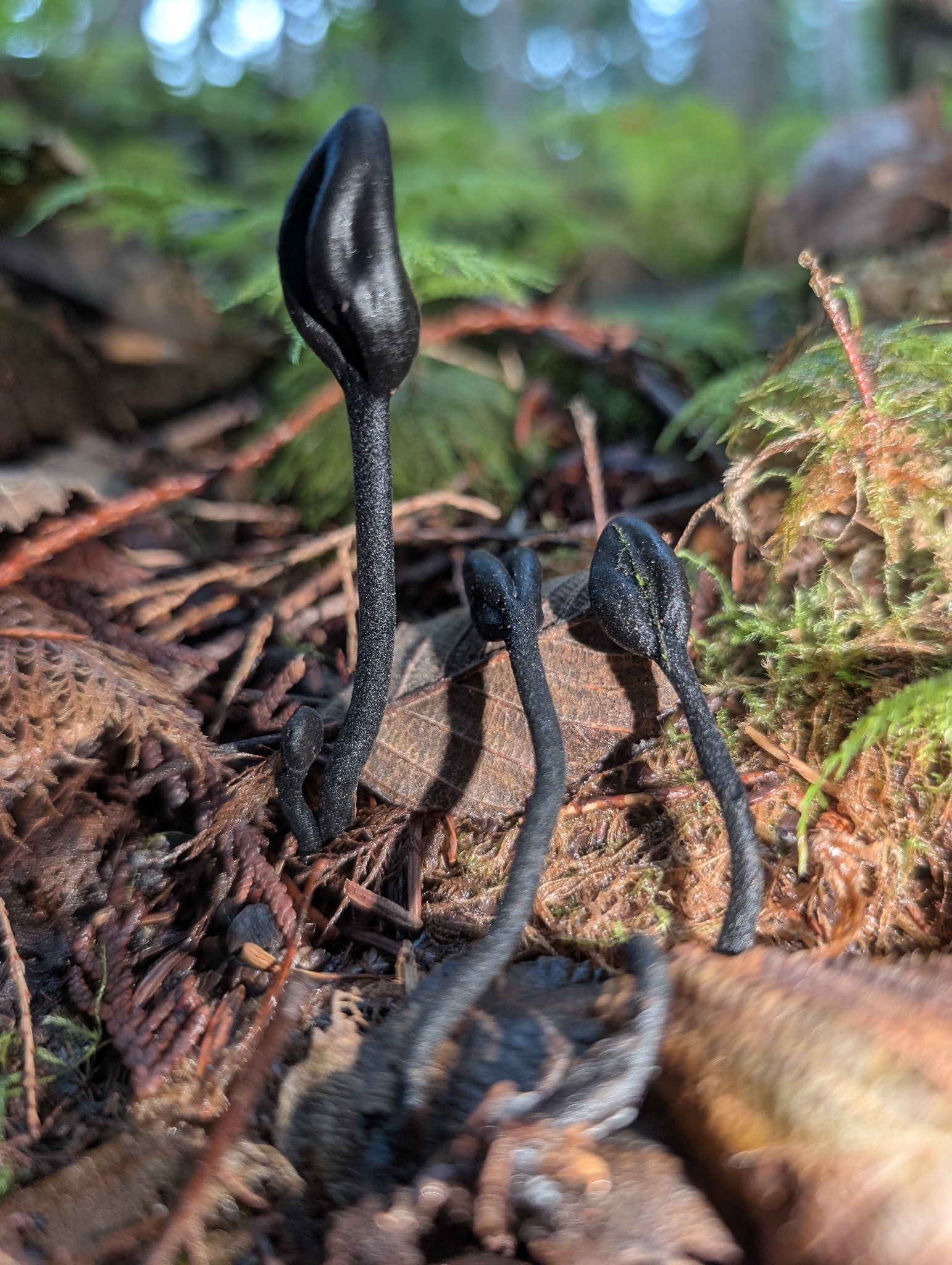
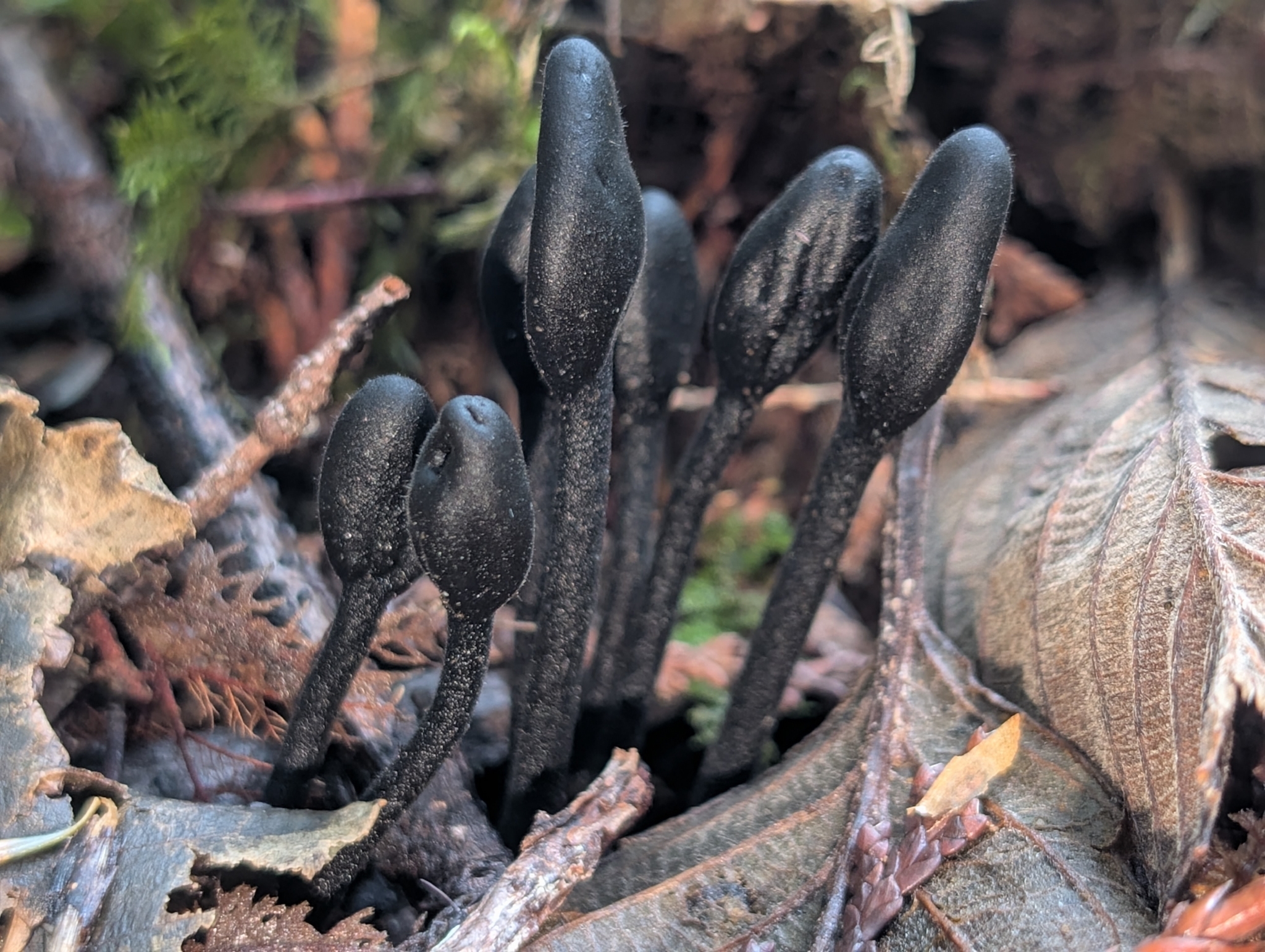
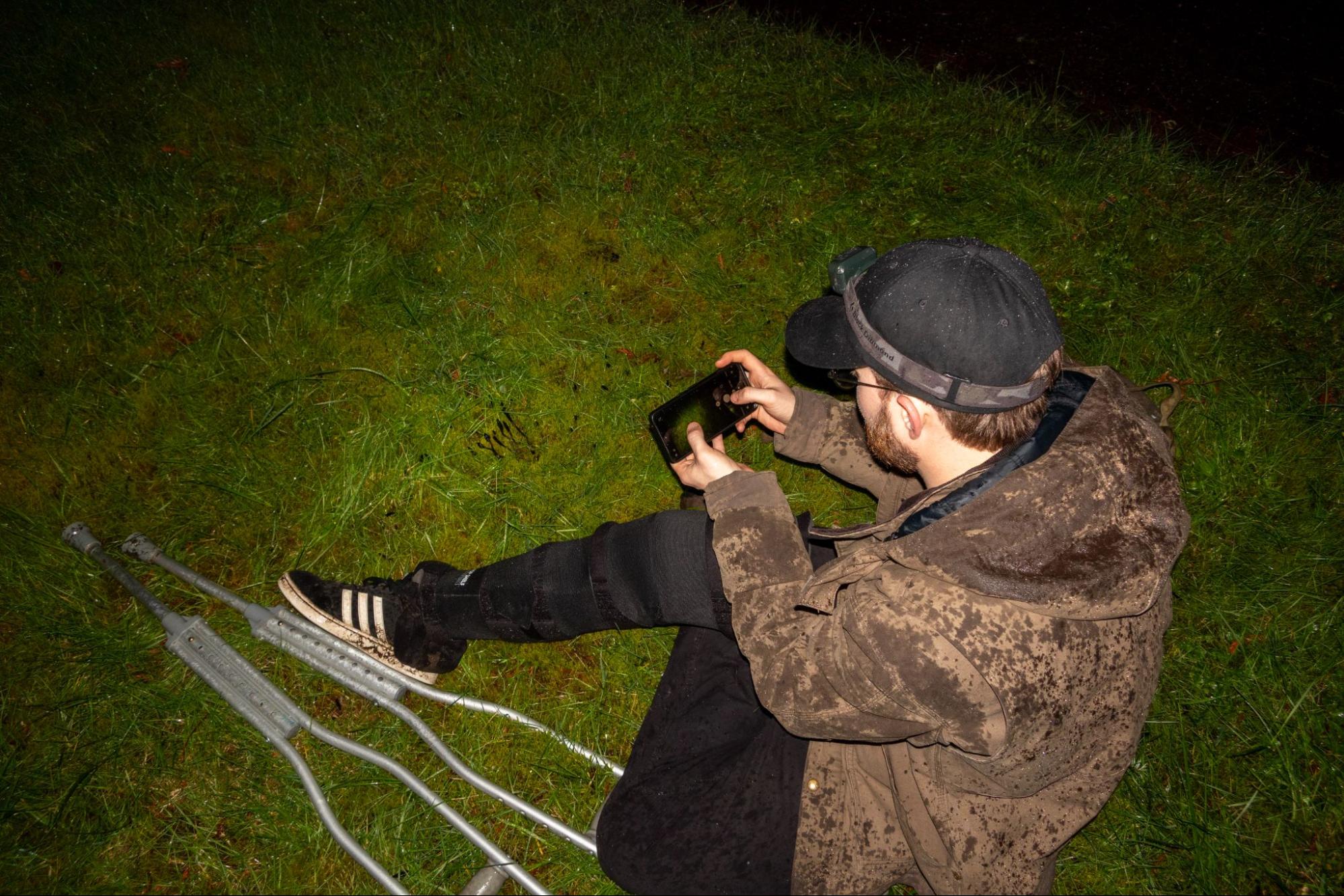
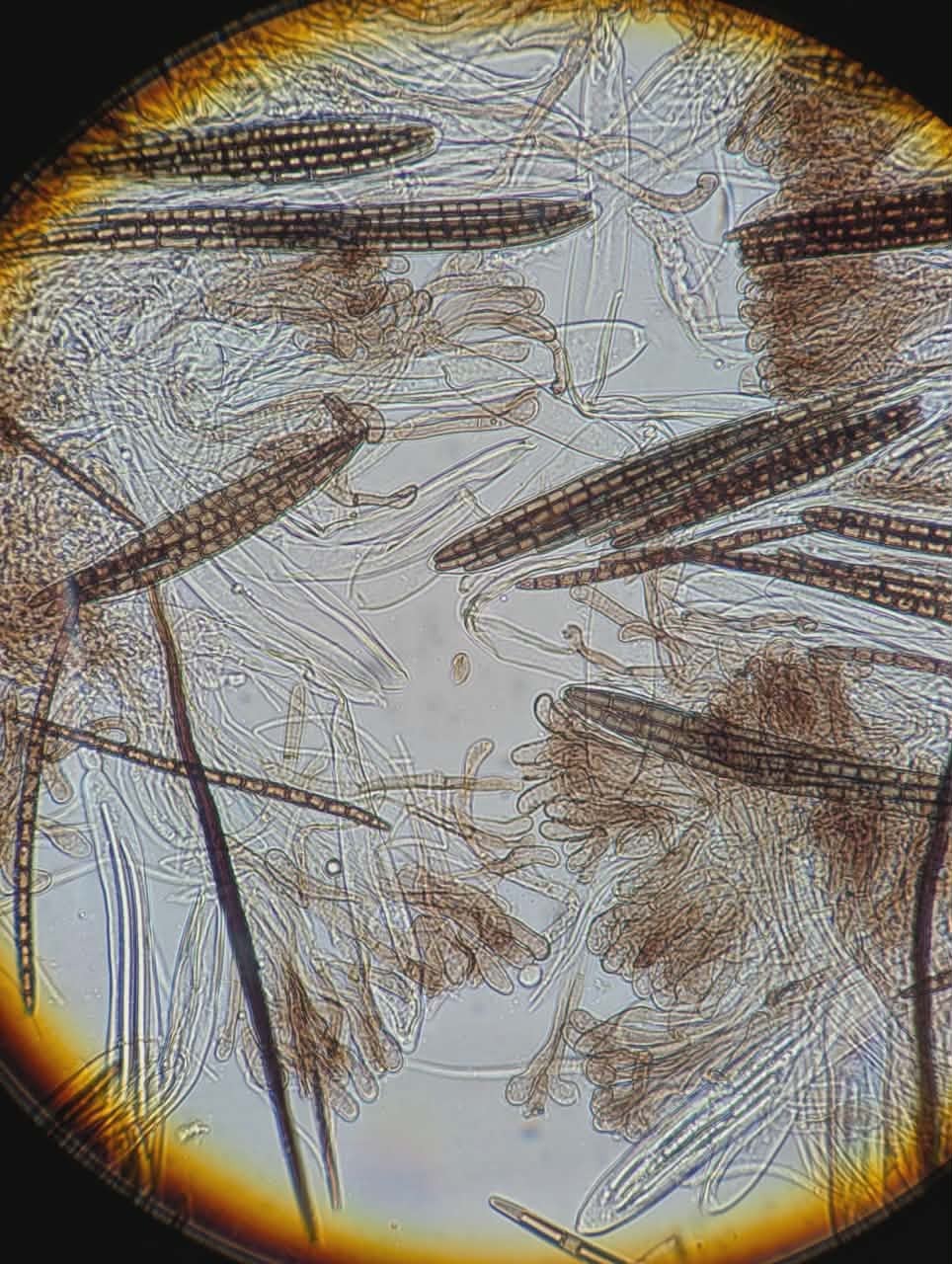
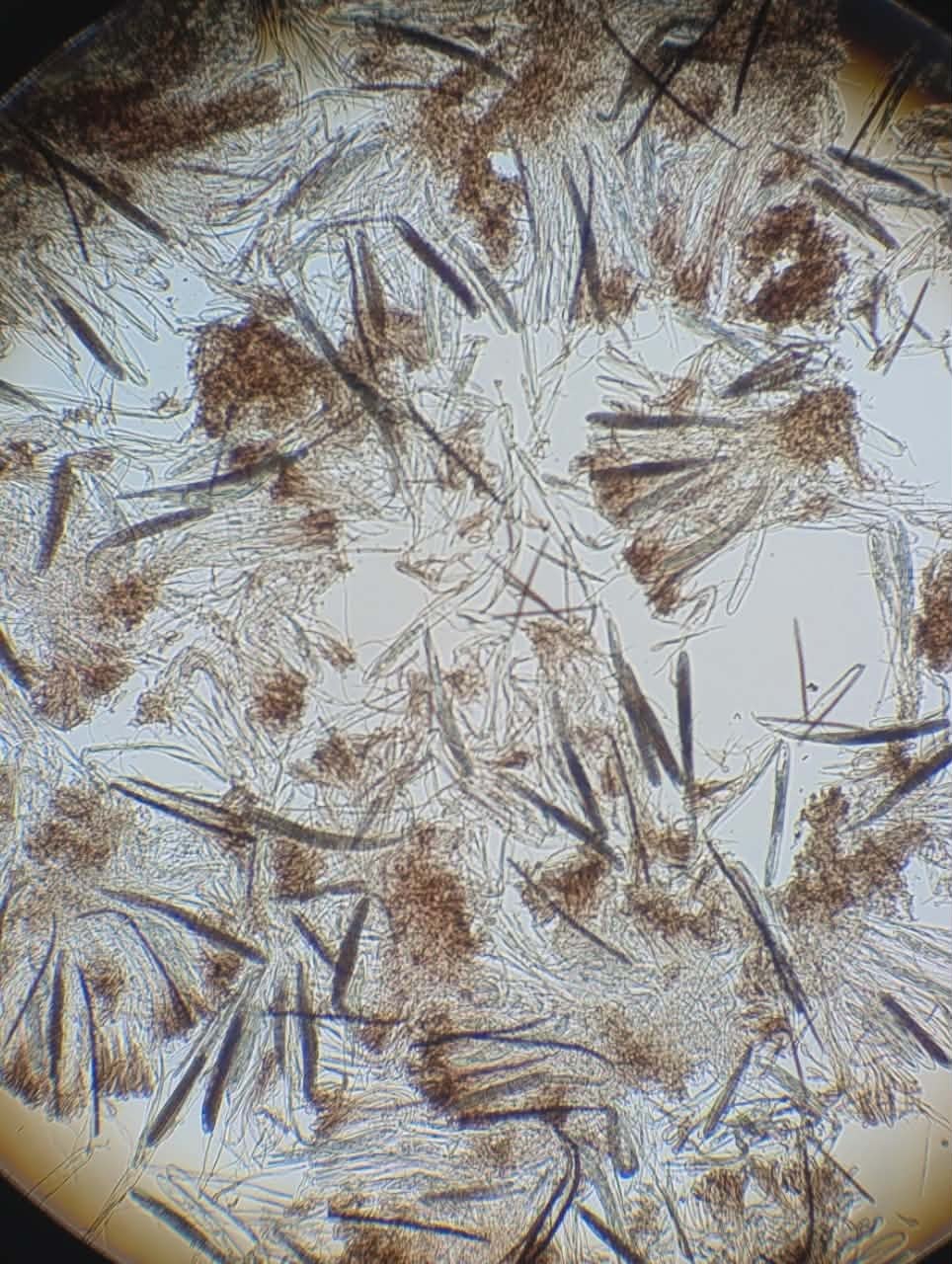
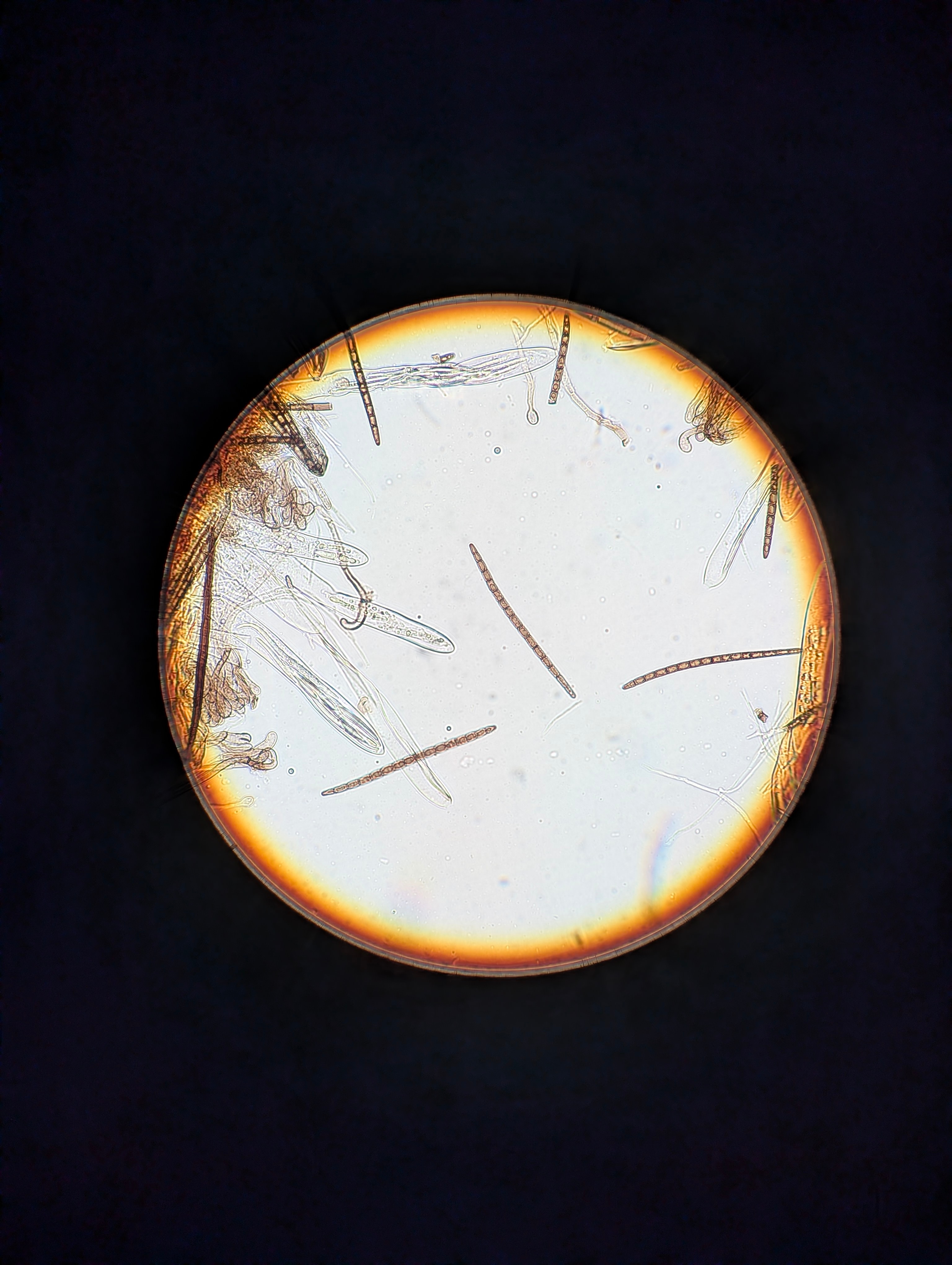
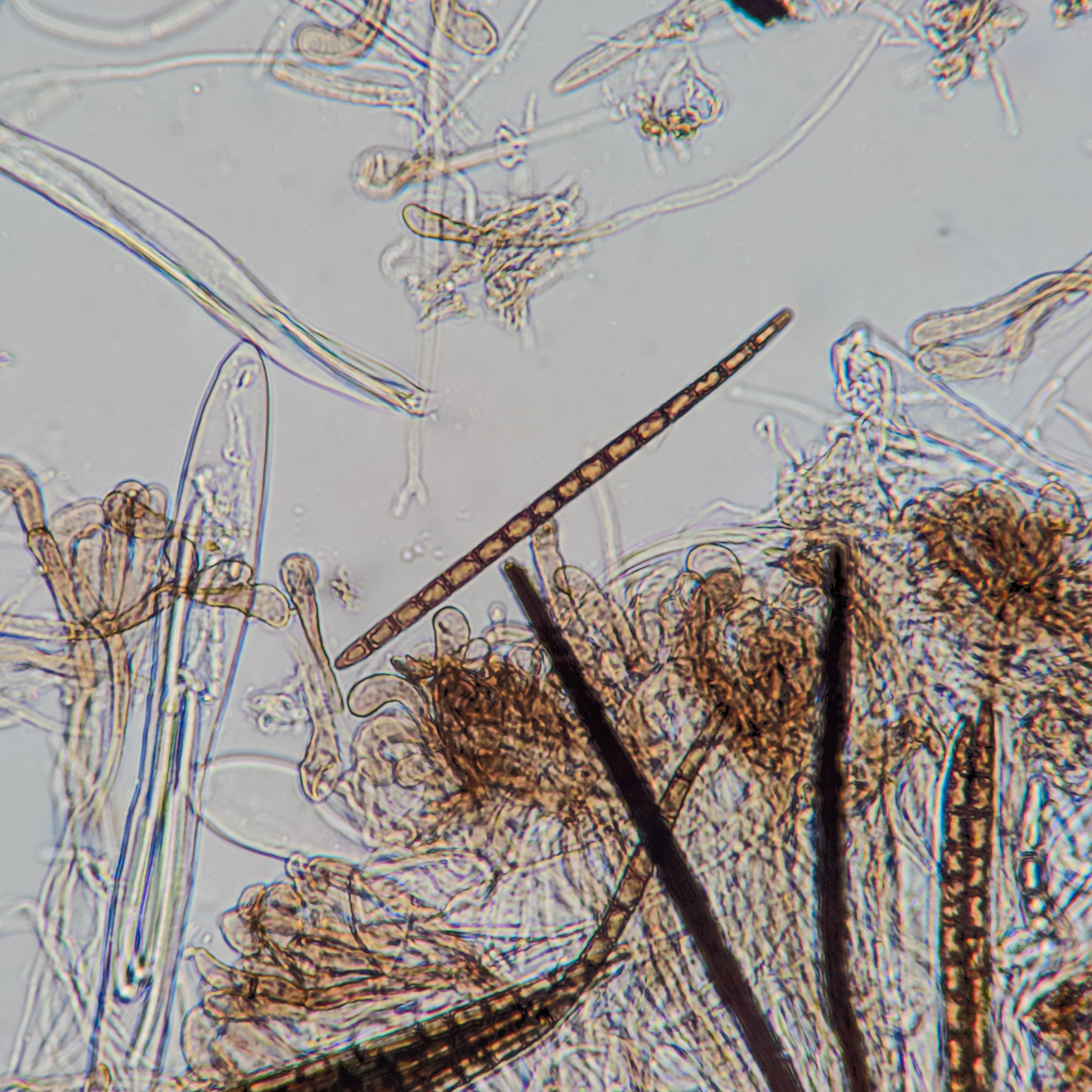
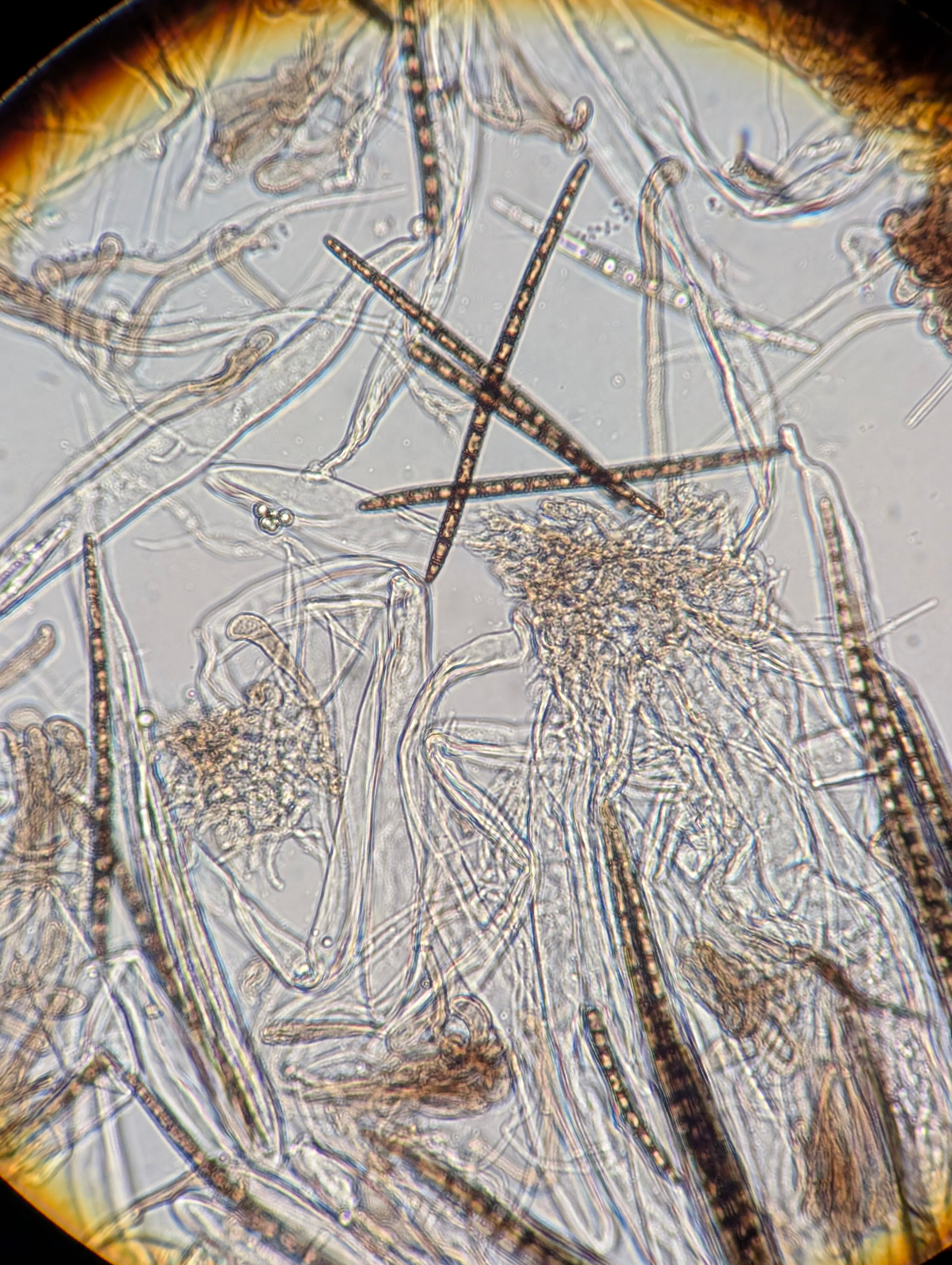
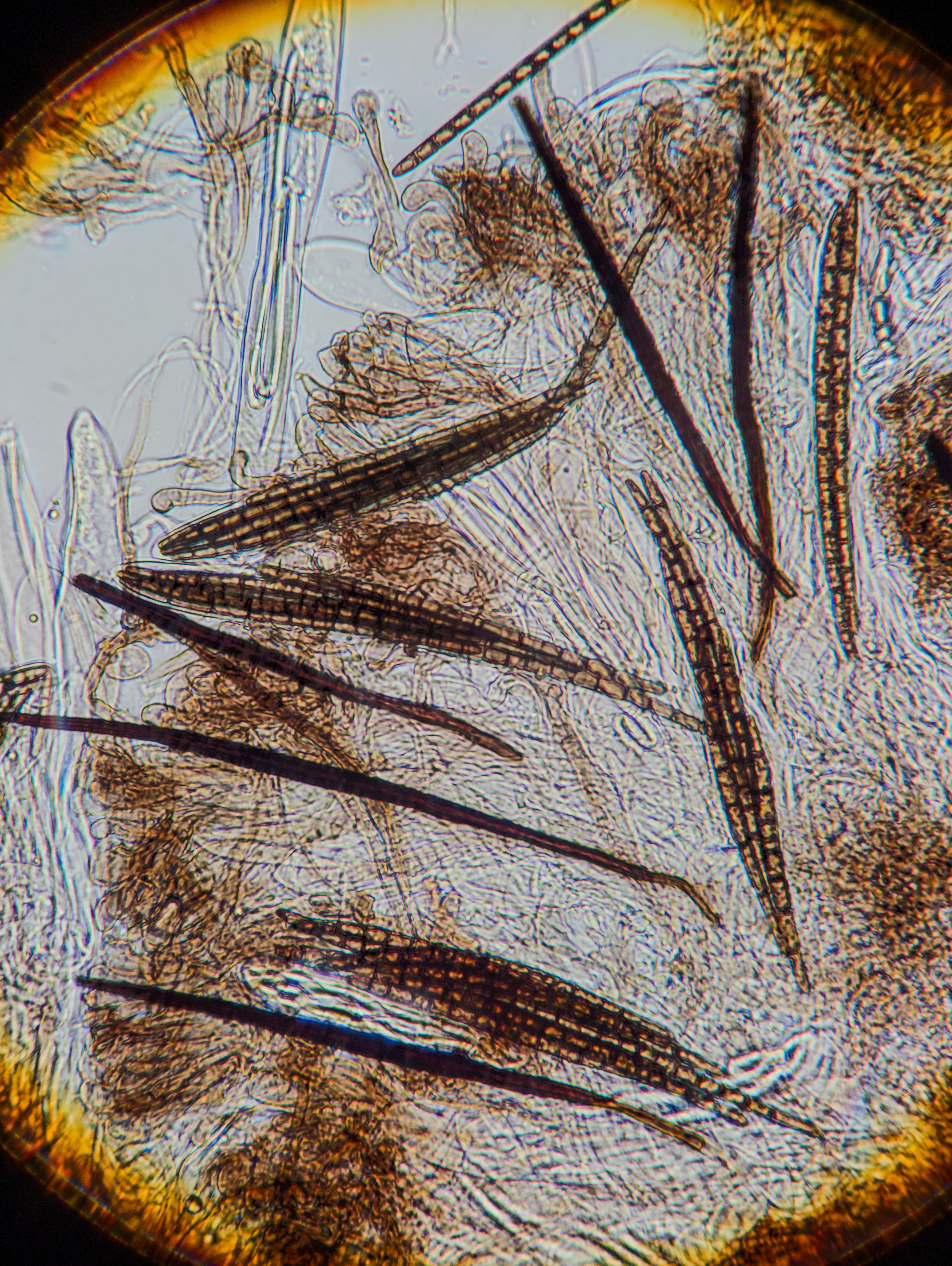
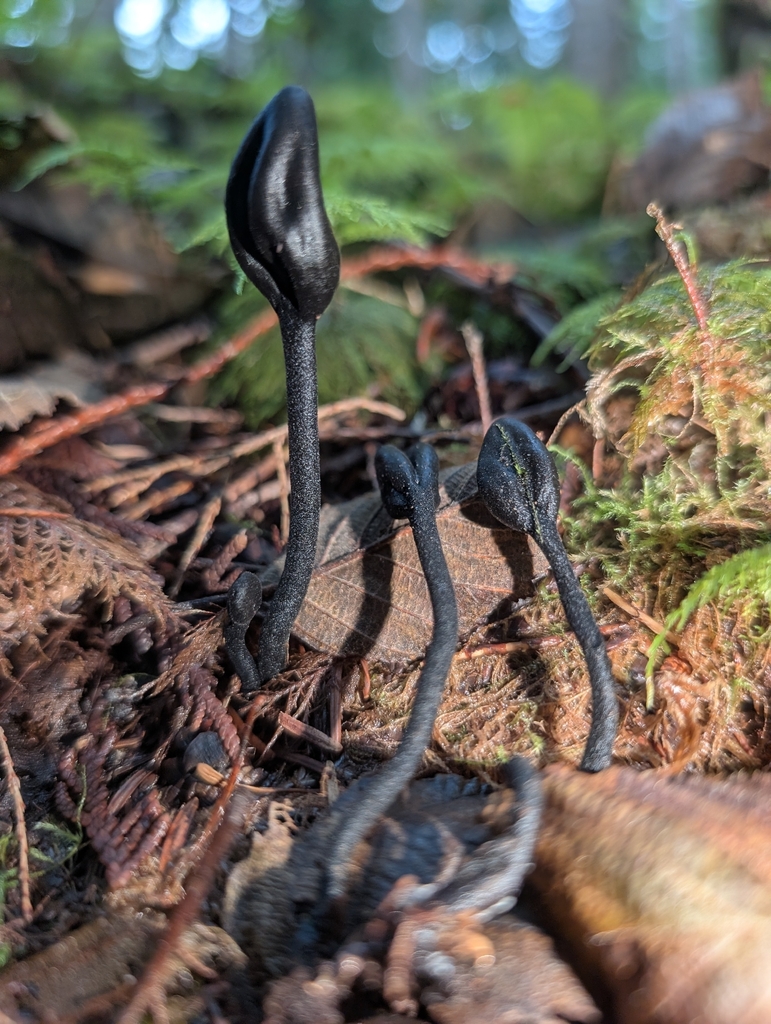
Andrew’s obs photos for our park collection of Trichoglossum cf. hirsutum (342013813). Andrew, crutches in tow, photographs a different species in the same family, on private property near my previous home.
This genus of, again mostly black, species are commonly called earth tongues. I am not super familiar with the finer details here but I find them to be a lovely and widespread indicator here for early spring. Andrew seemed very interested in anything Geoglossaceae at the time of this visit. Their spores are fairly interesting looking too, if we make another park collection I will ensure to do some micro.
We also collected some Guepiniopsis on this walk (347170789), but that genus and family will be covered both later in this report, and in more detail later in this study.
Update: Trichoglossum hirsutum var. irregulare confirmed by DNA for our park collection here. Some microscopy added.
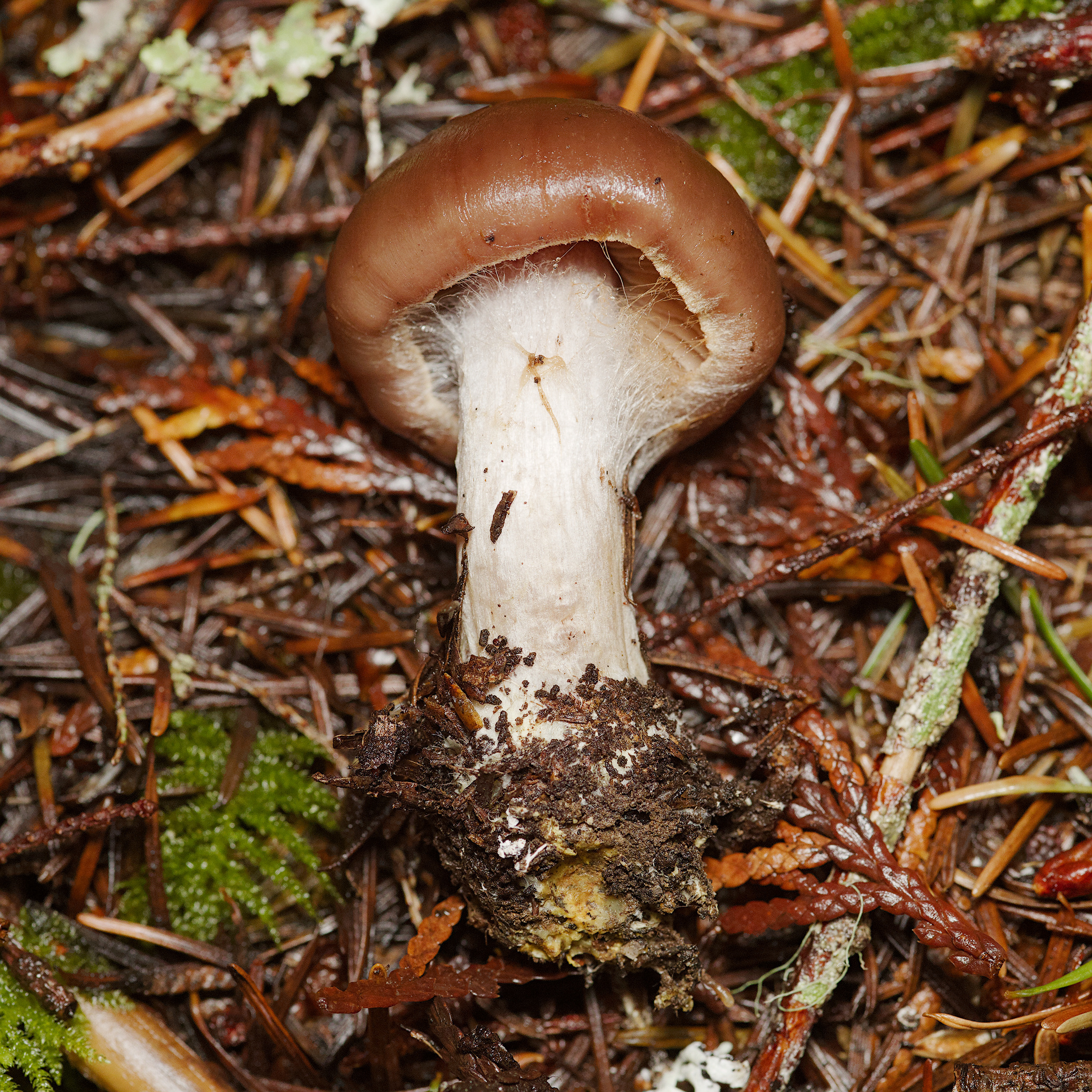
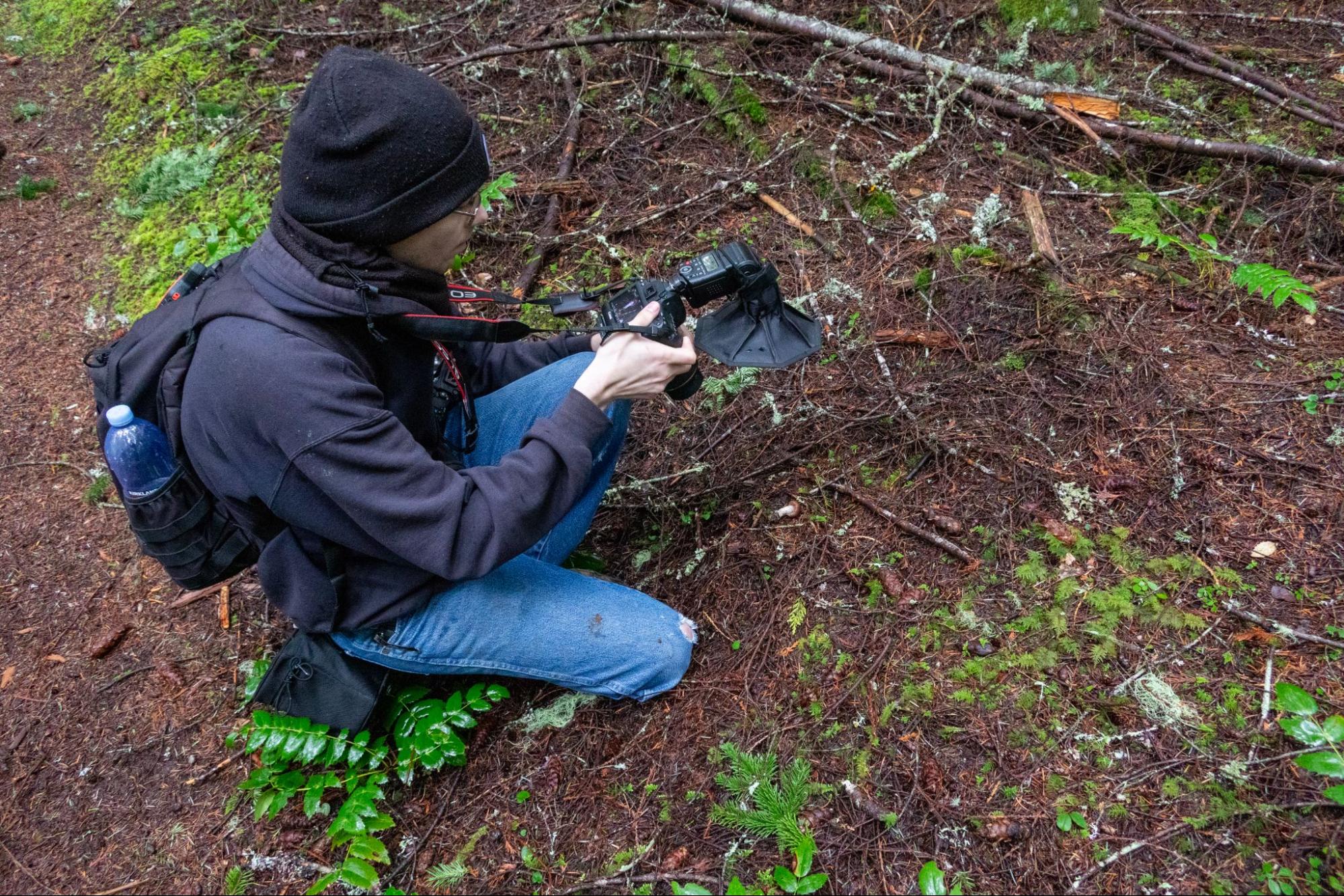
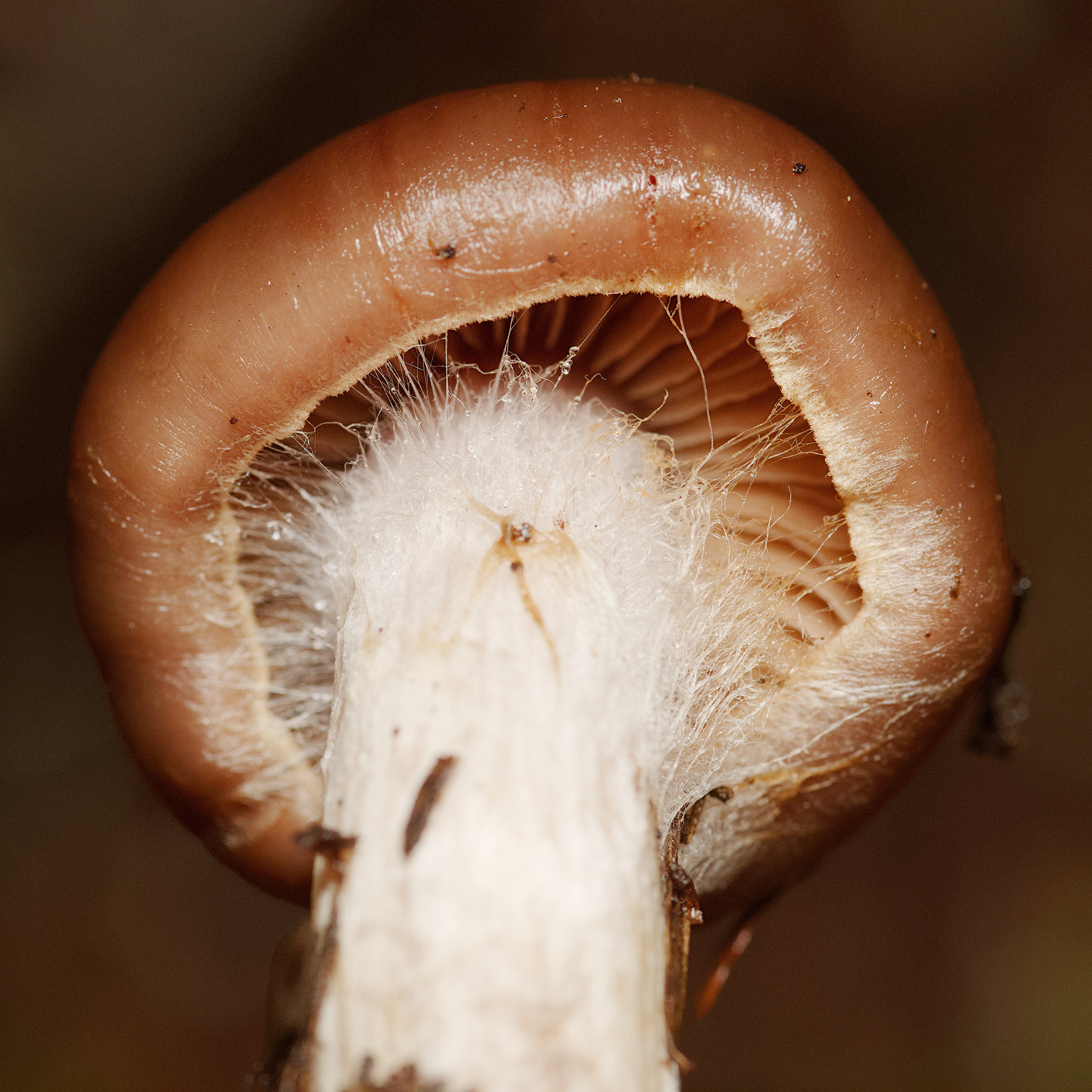
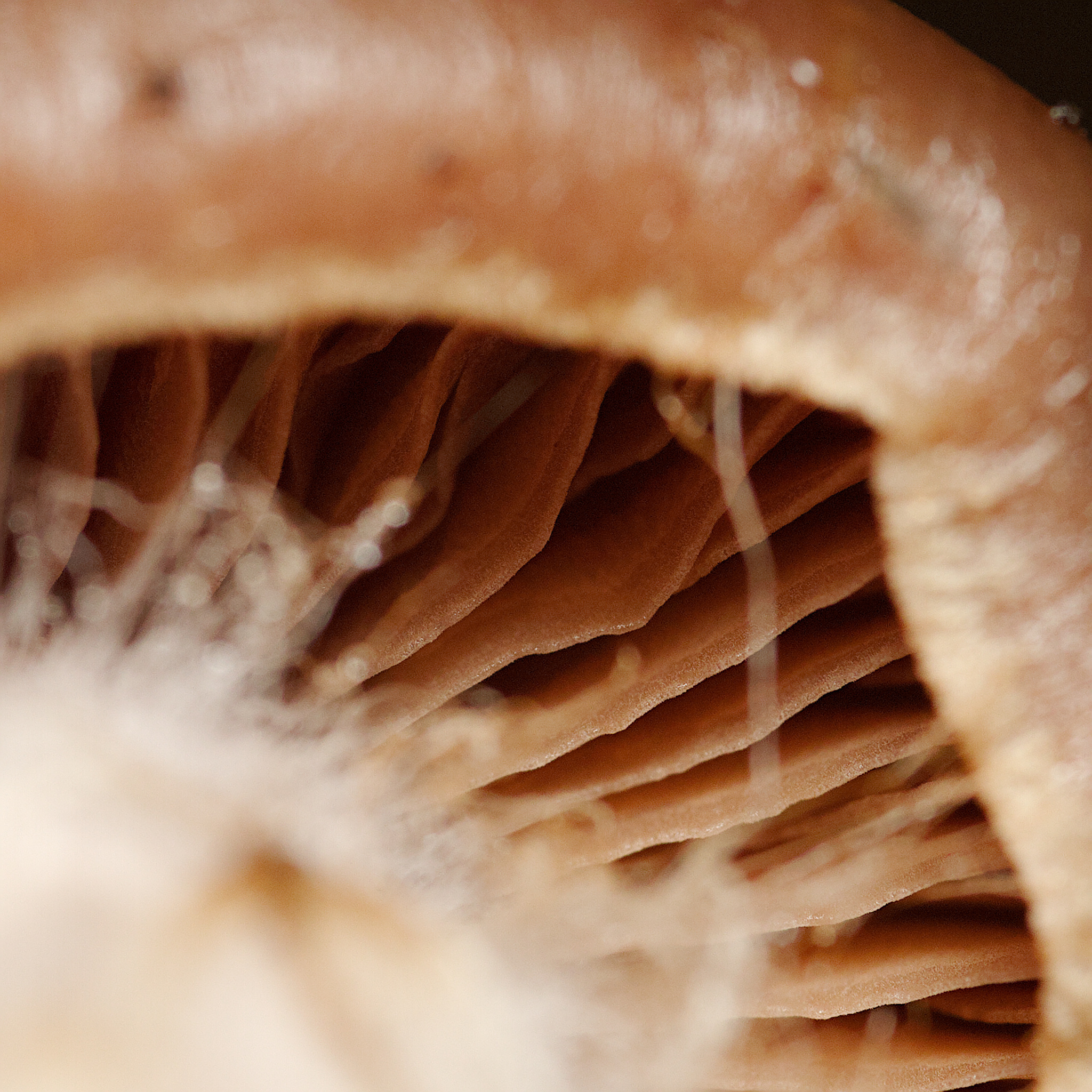
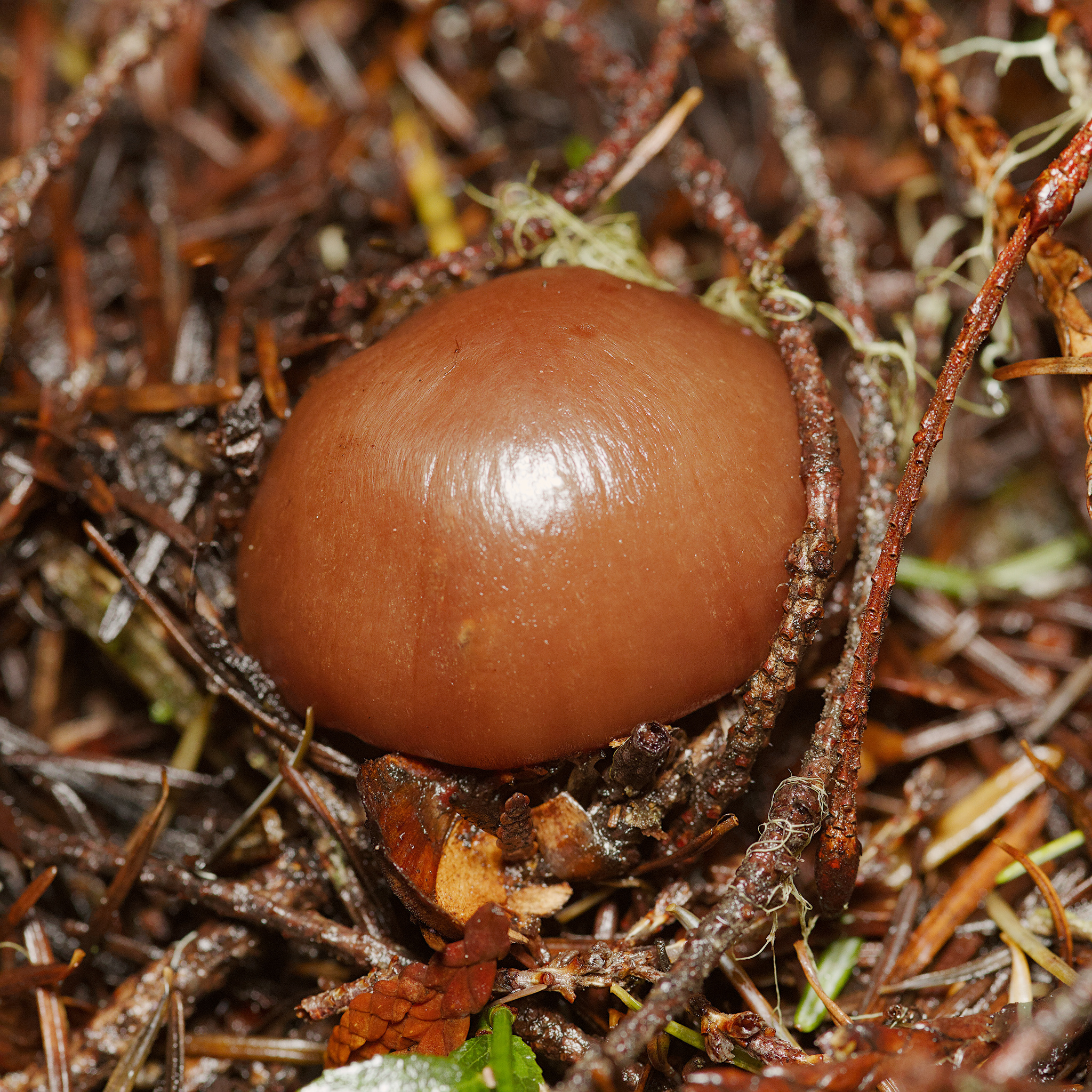
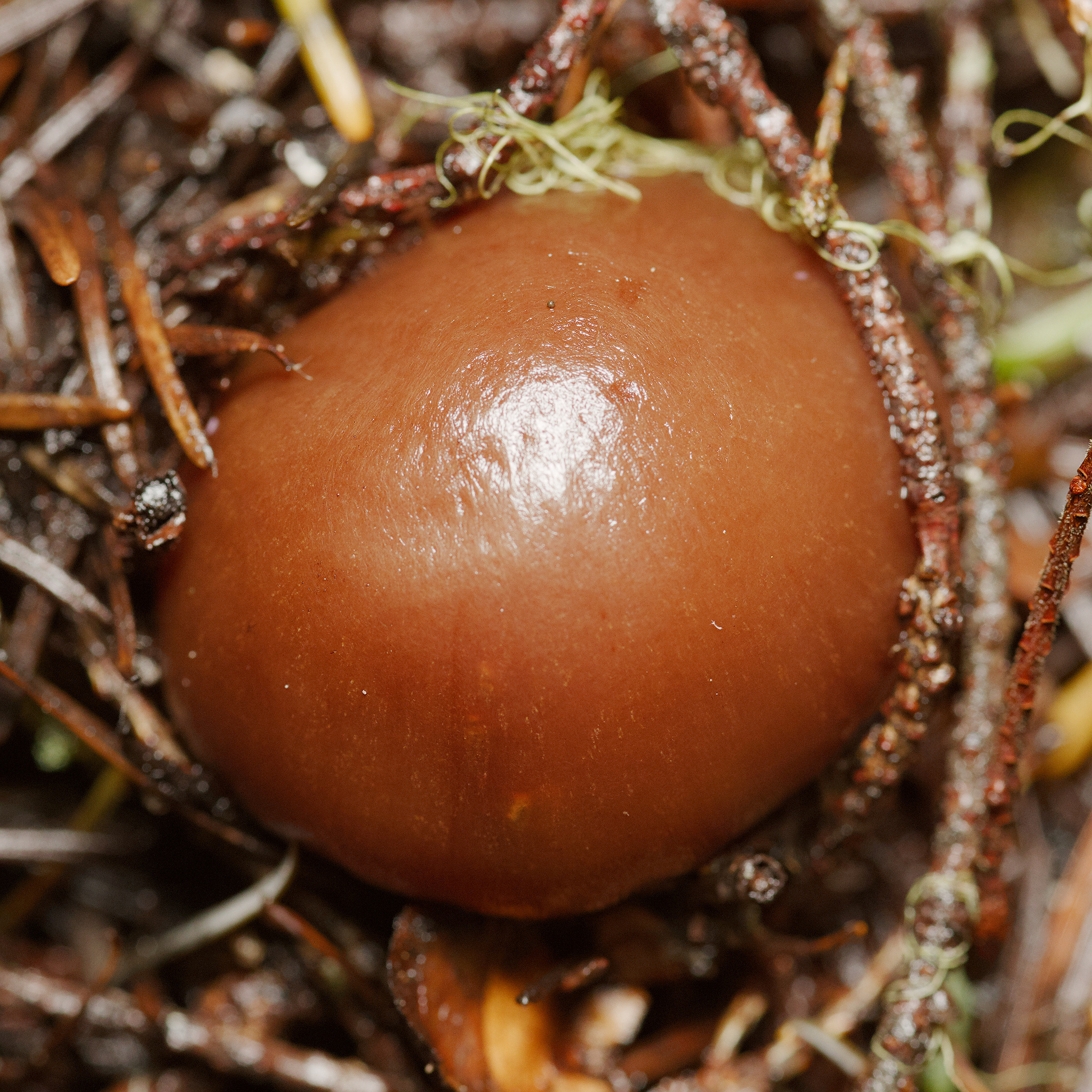
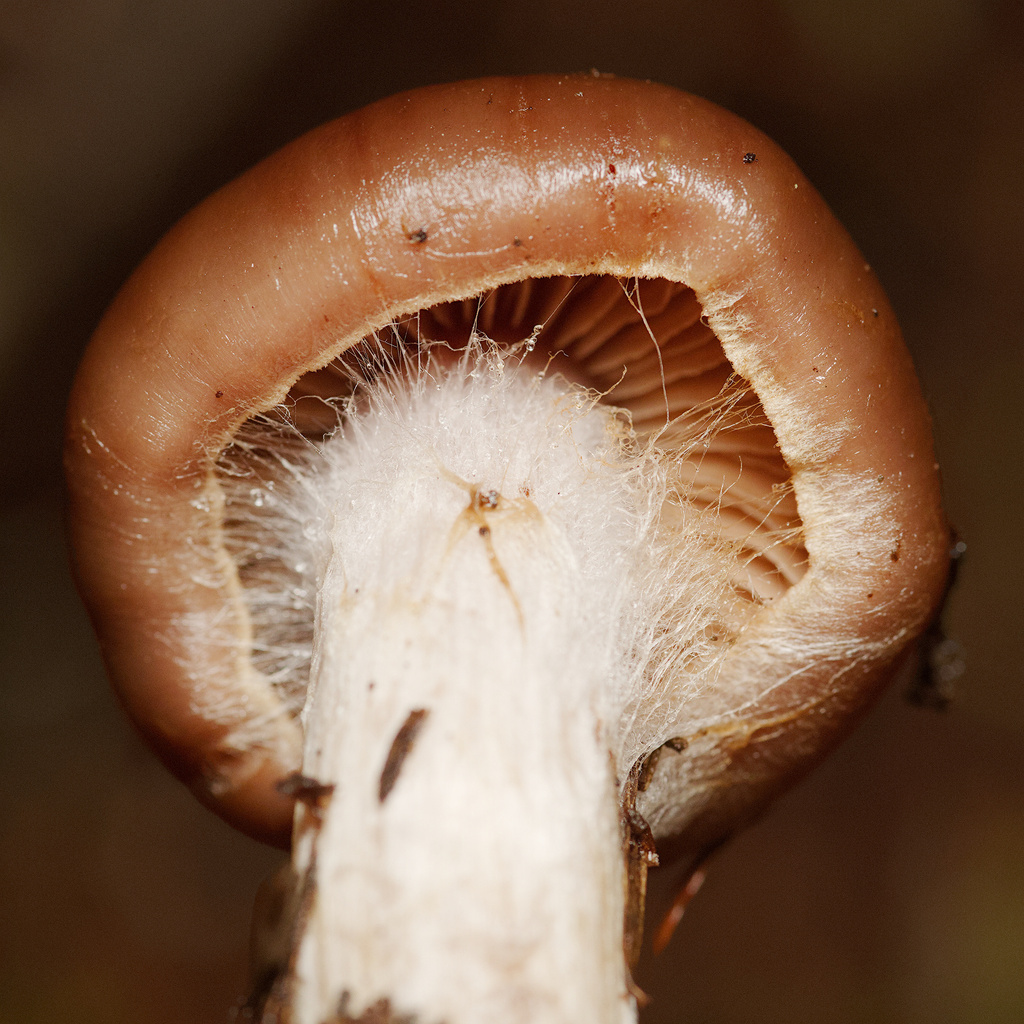
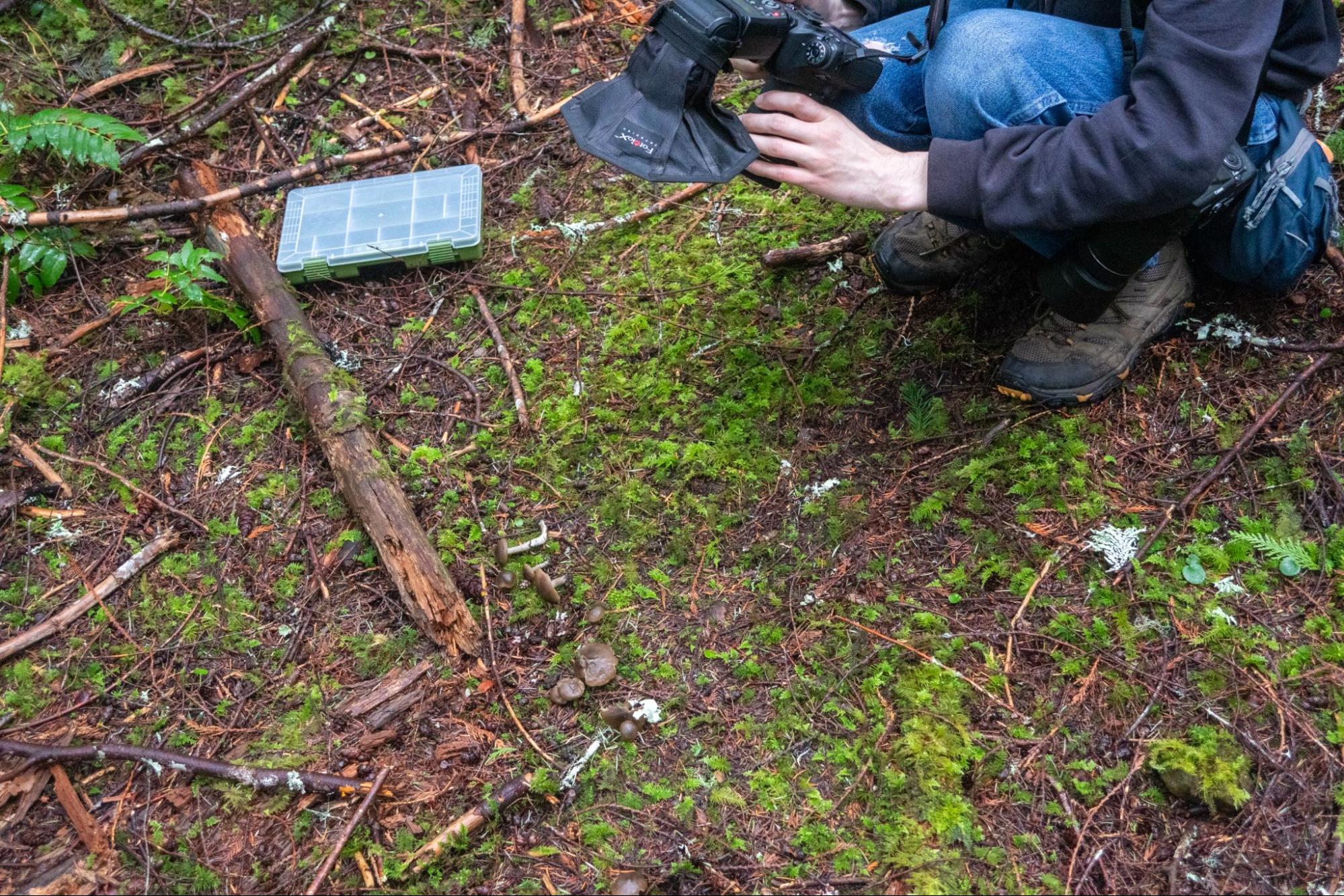
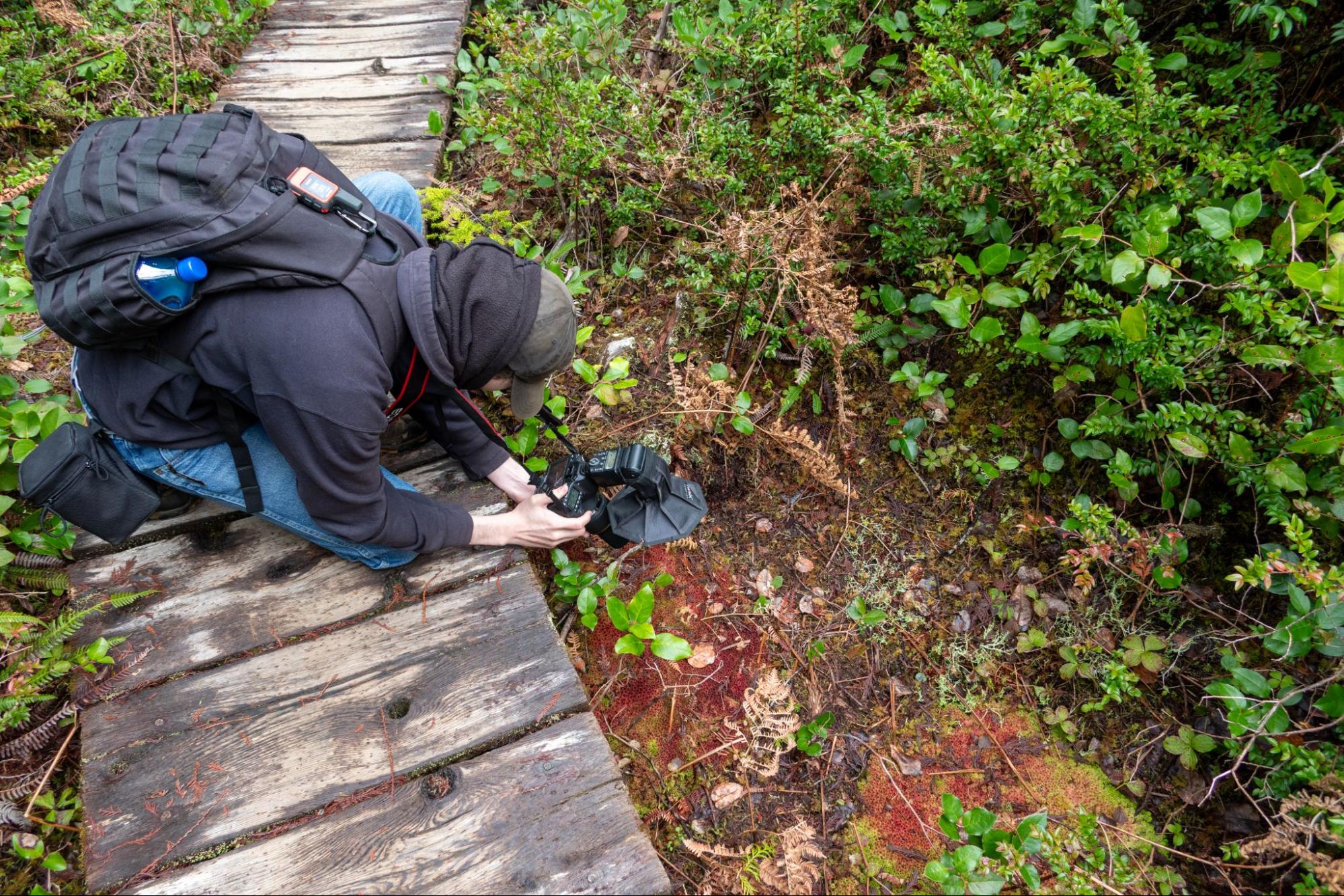
Brodie’s photo of this cort collection (344618997). Photo of Brodie taking the photo on the left.
Cortinariaceae is a large and very diverse family. I am by no means an expert in identifying a vast majority of its subgenera, sections, and especially species. However this was a welcome sight at a time that is otherwise fairly sparse for “larger” mushrooms.
Update: DNA confirms Cortinarius bridgei. Will have to ask the cort pros about it.
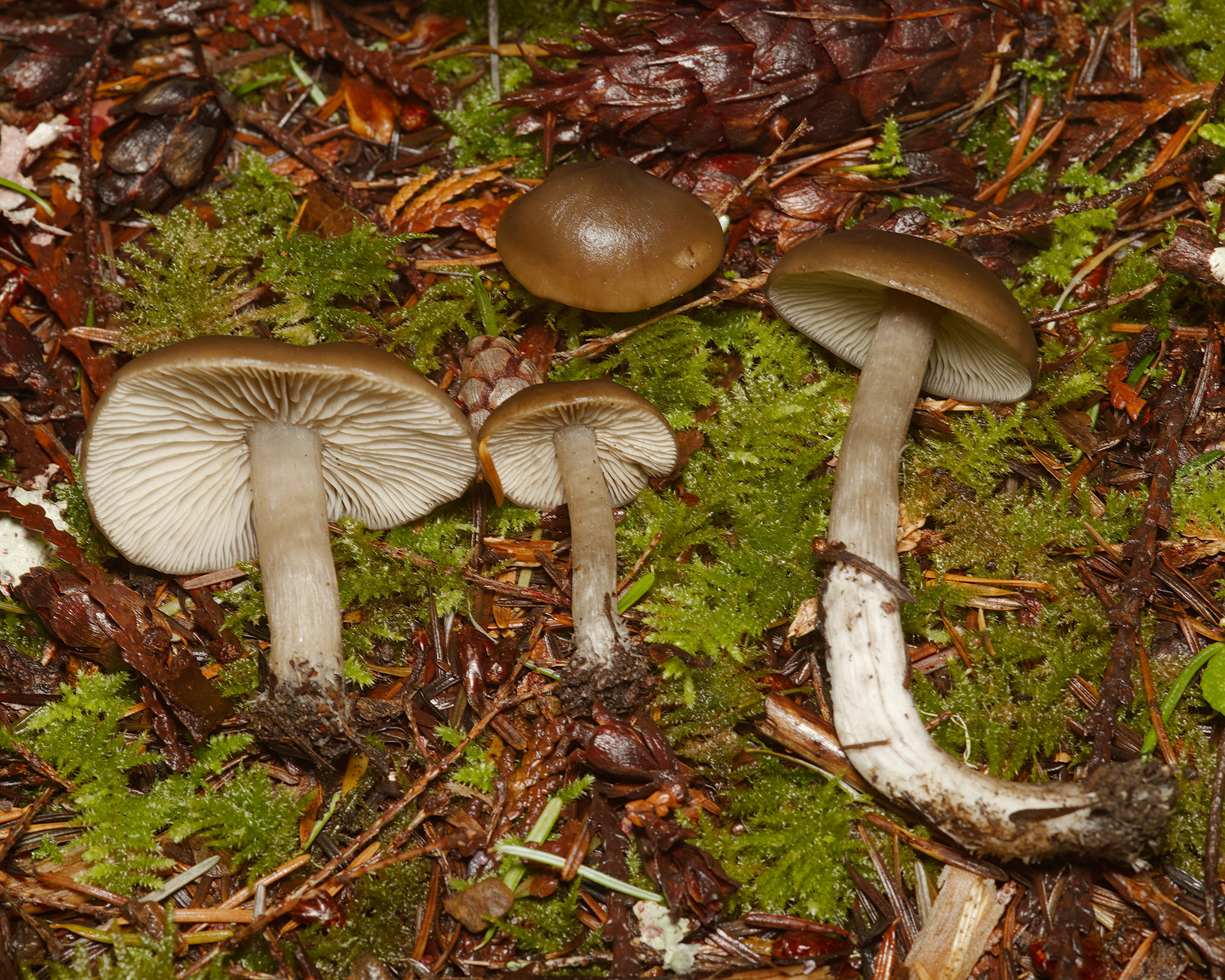
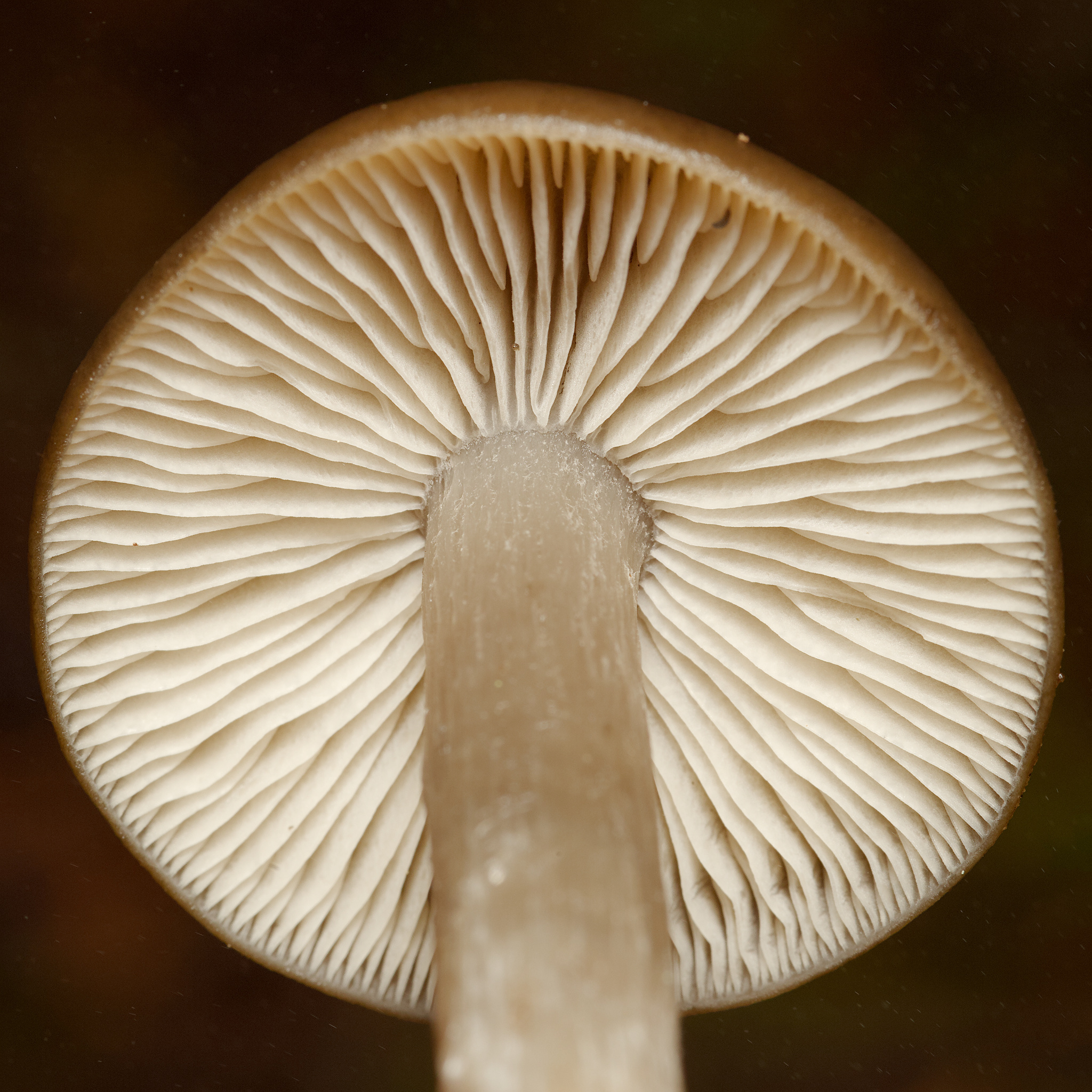
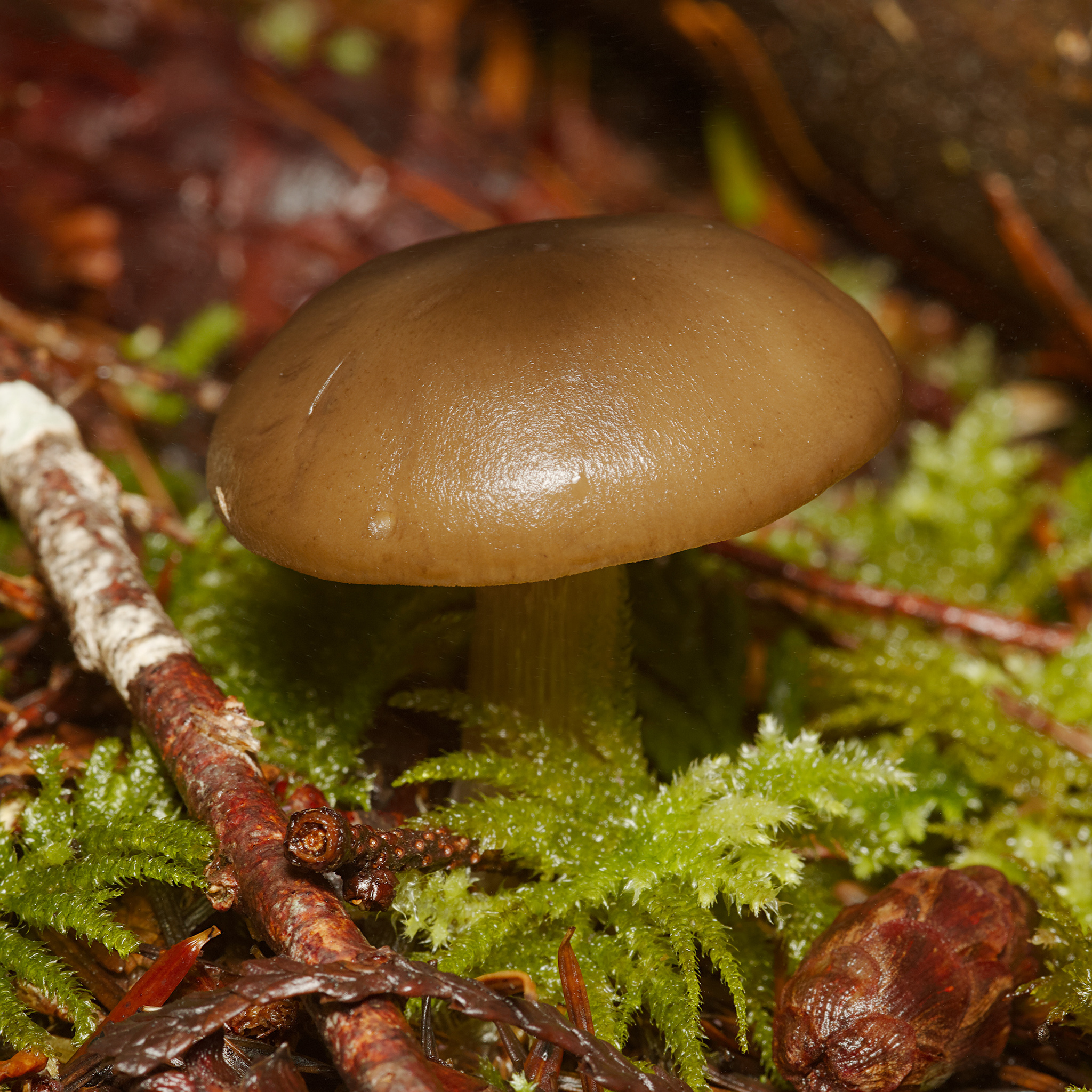
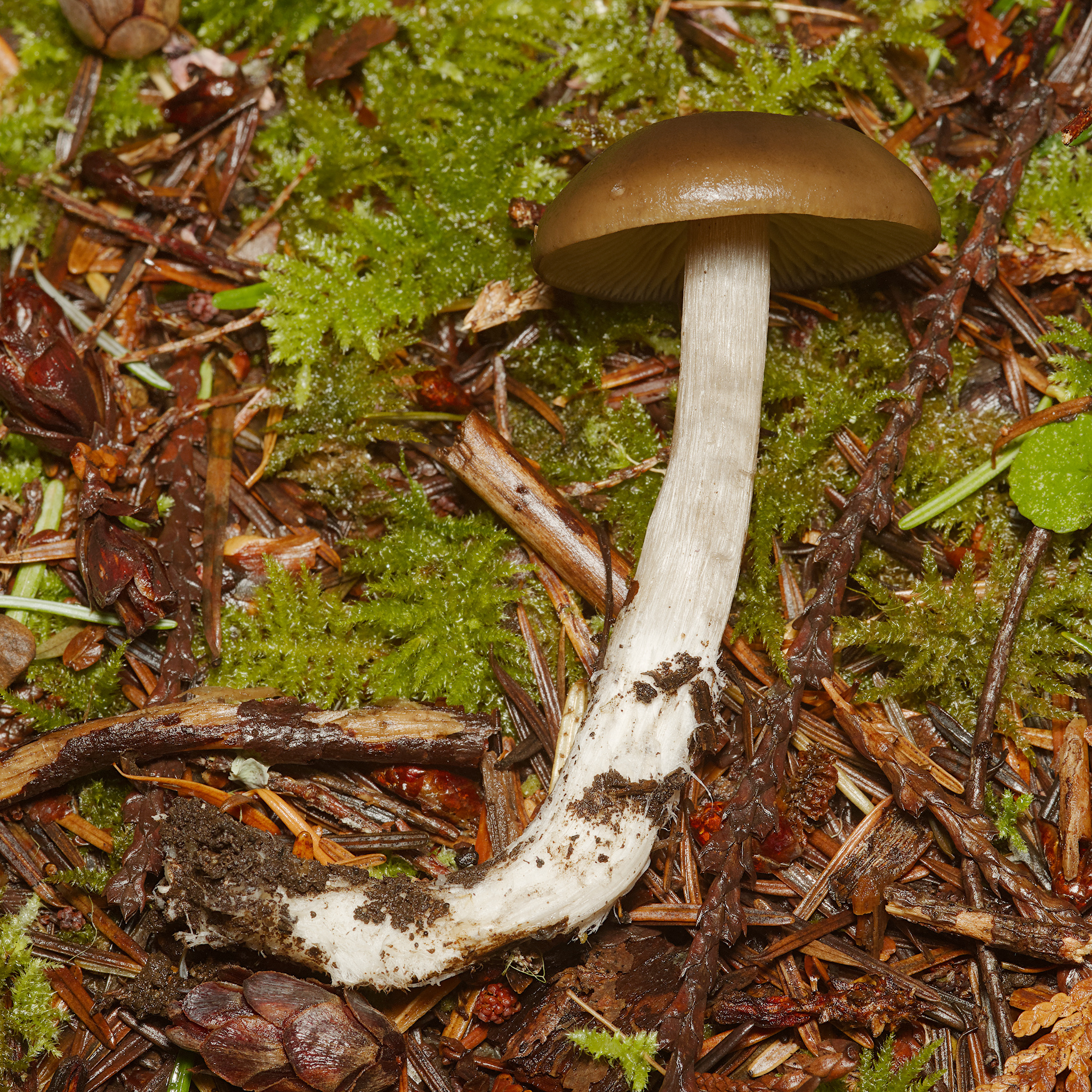
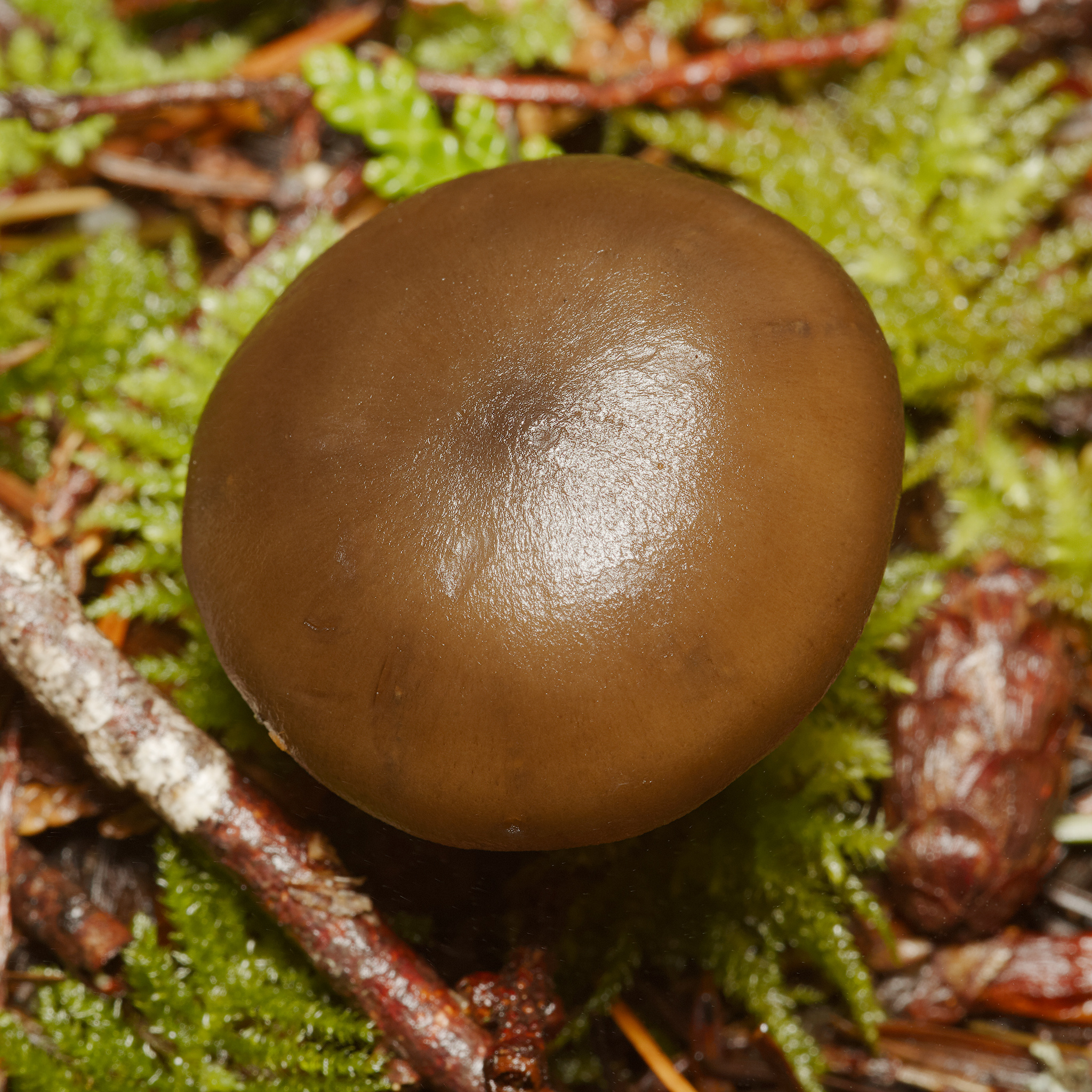
Brodie photographs this collection. (344618982) Remaining photos are from his observation.
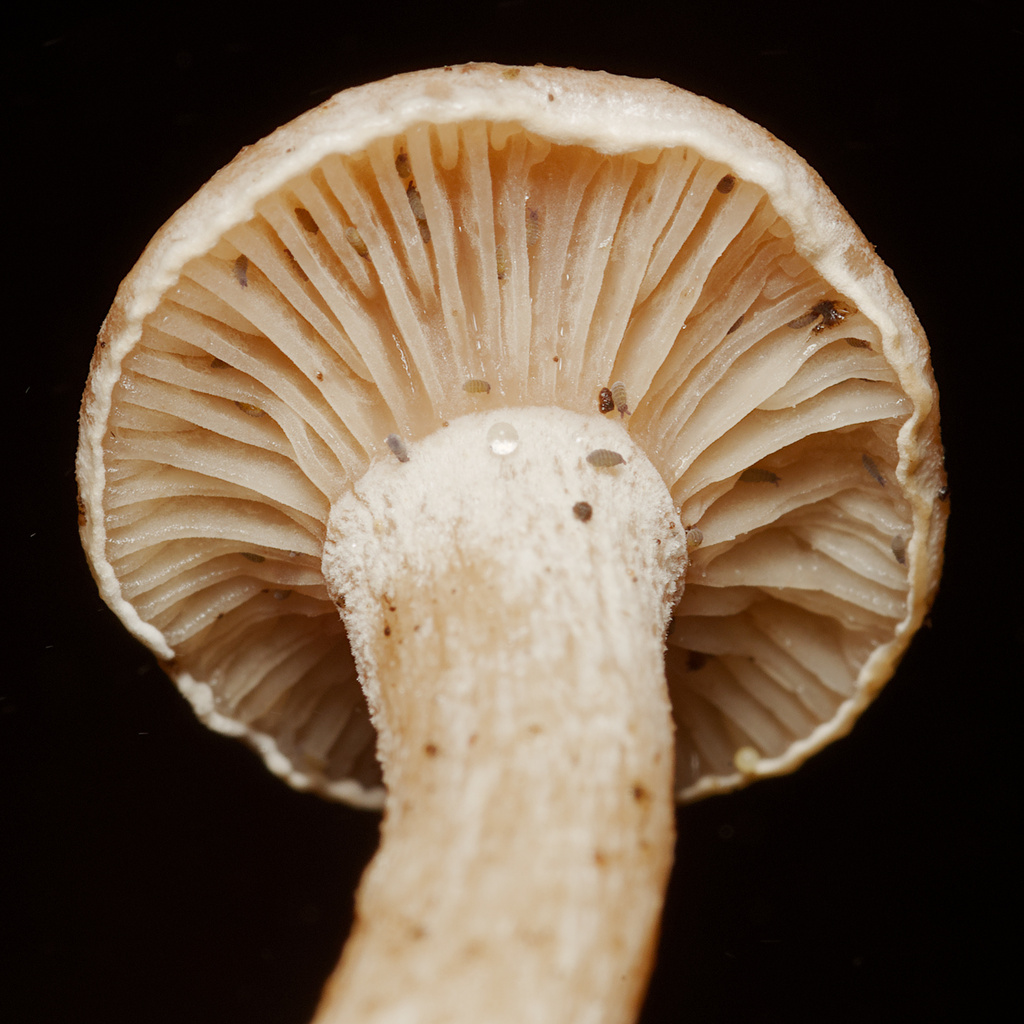
For this collection I have currently settled with an entolomatoid of some description. We thought maybe Entoloma in the field but both Brodie and I observed morphology that rules out most common species, this time of year especially. Some friends have failed to give better suggestions for me personally, so I have settled for a family level ID here. Probably the most robust and fresh looking collection we made this month, as far as gilled mushrooms go. I would expect an at least mildly interesting sequence, and will await results! For now it seems like Entolomataceae sounds good for those we have pinged.
DNA Update: Sequencing says Lyophyllum sp. 'semitale-PNW01'. I think we initially considered Lyophyllum but moved away because of some of the stature and structure, etc. This is a neat result.
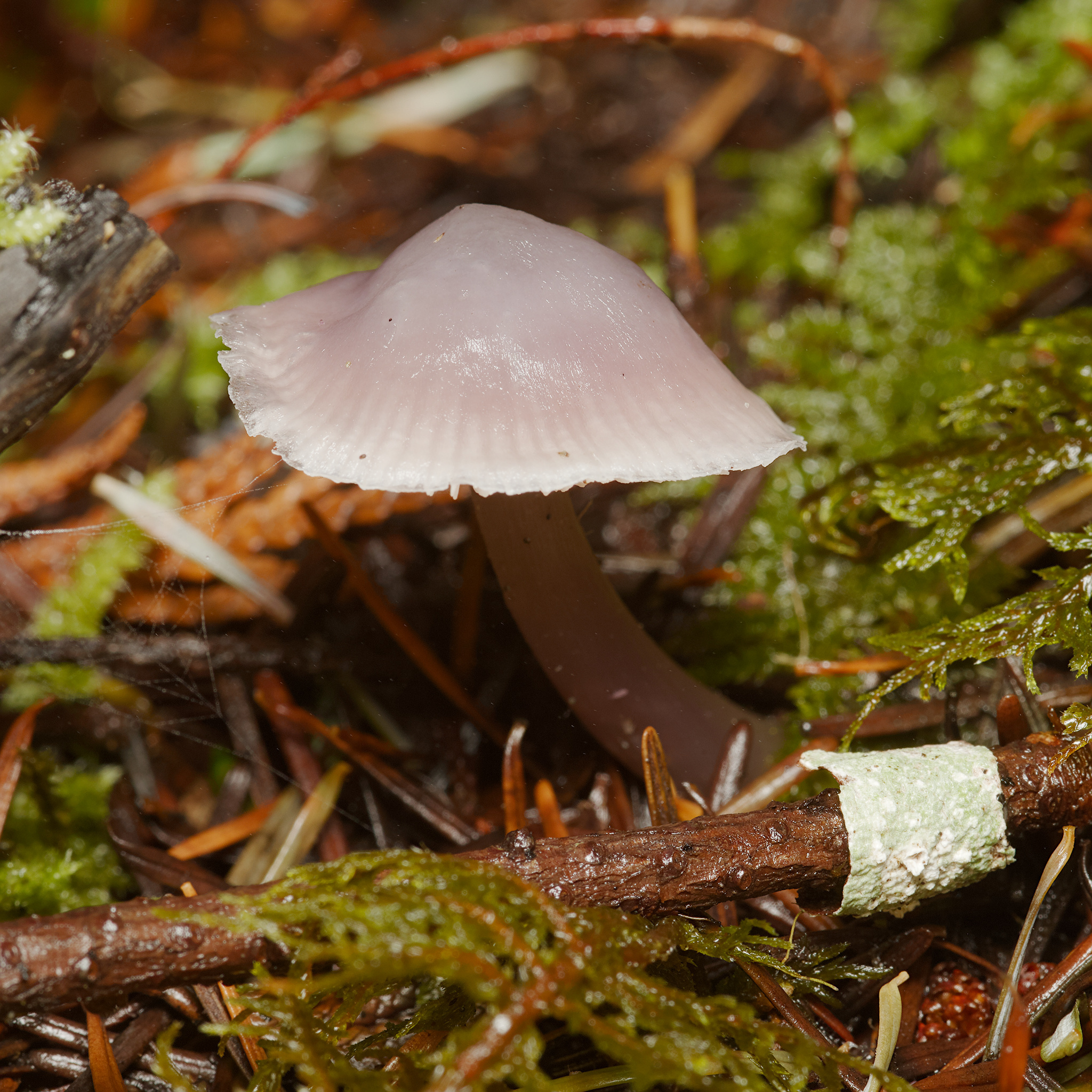
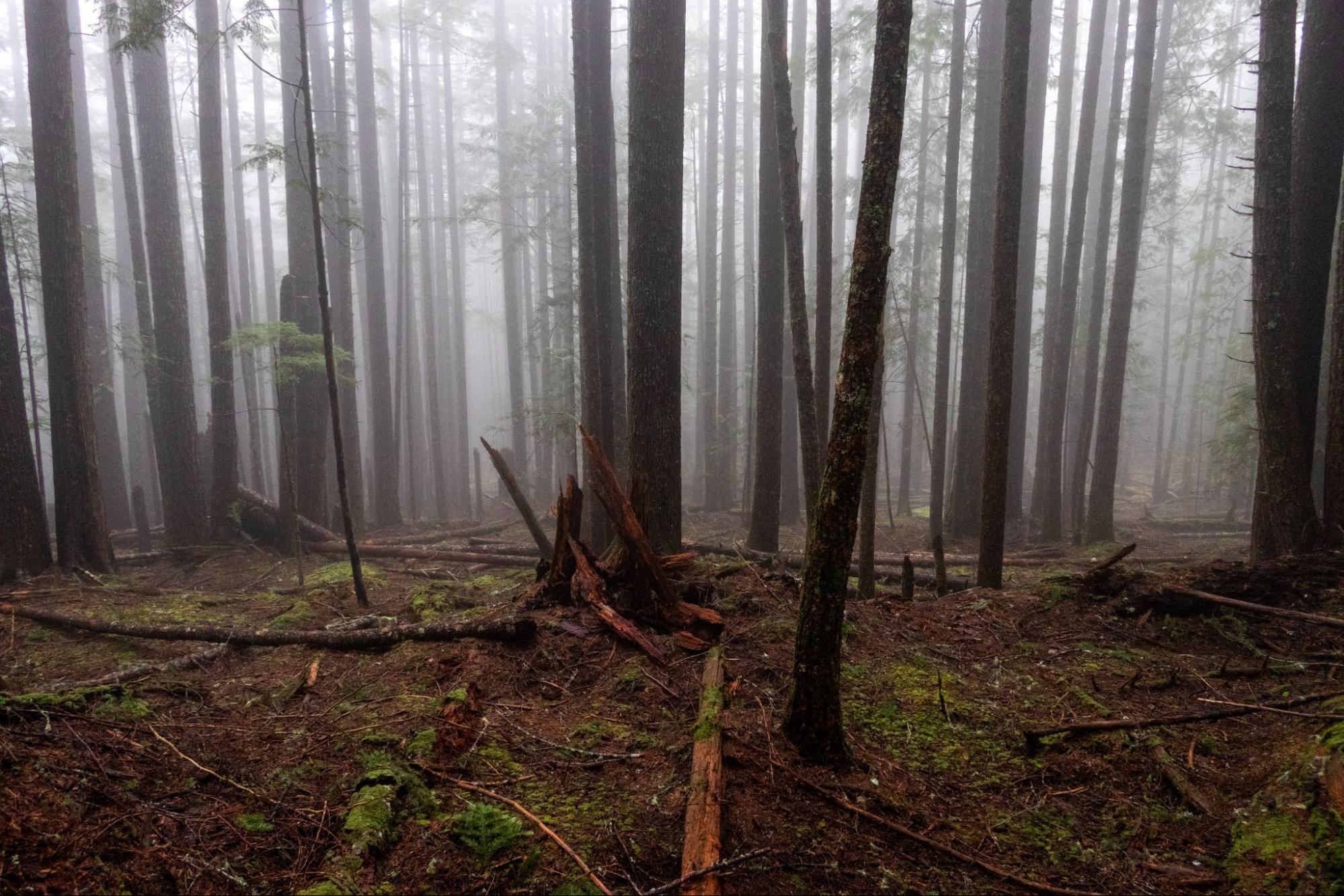
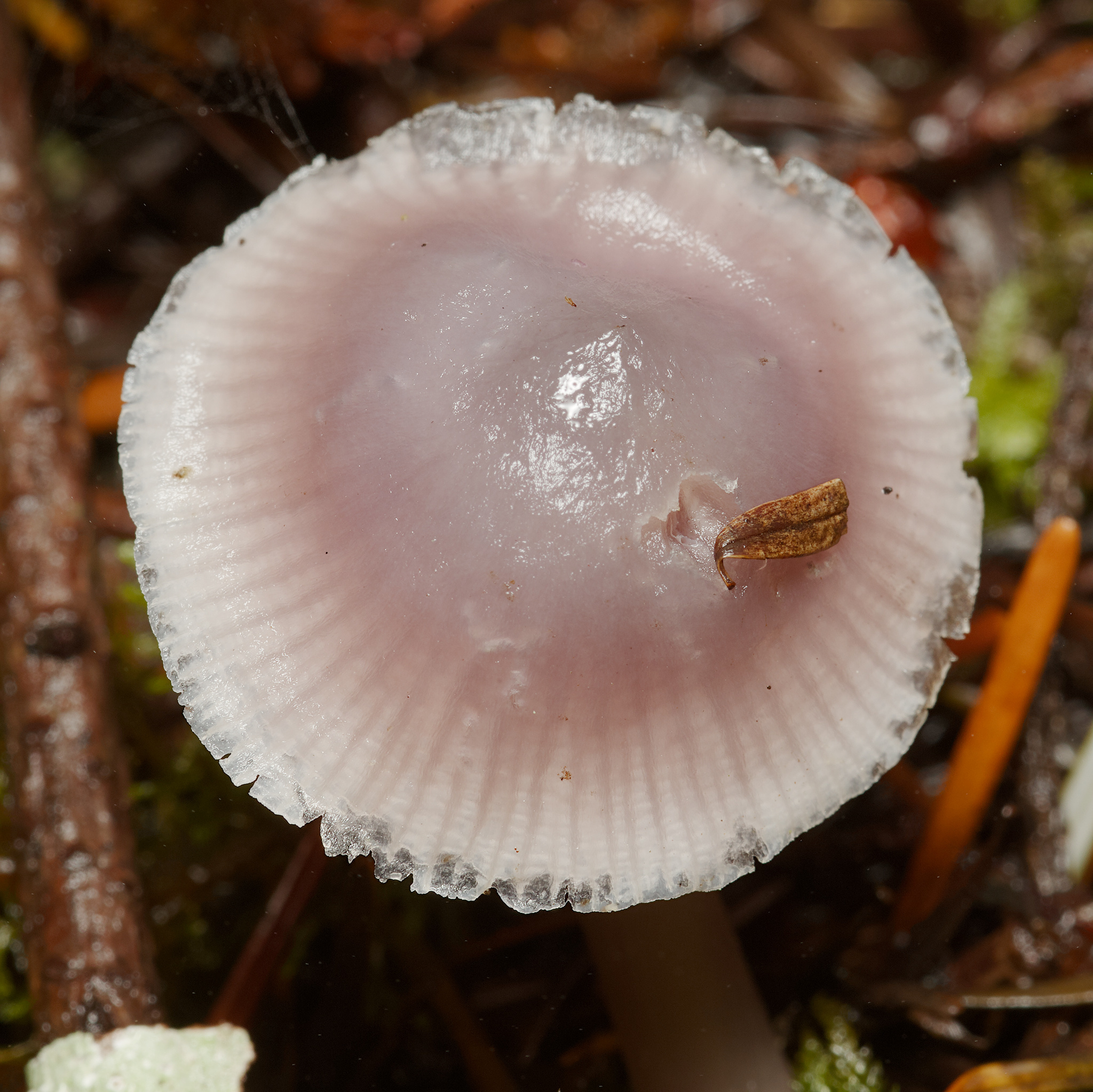
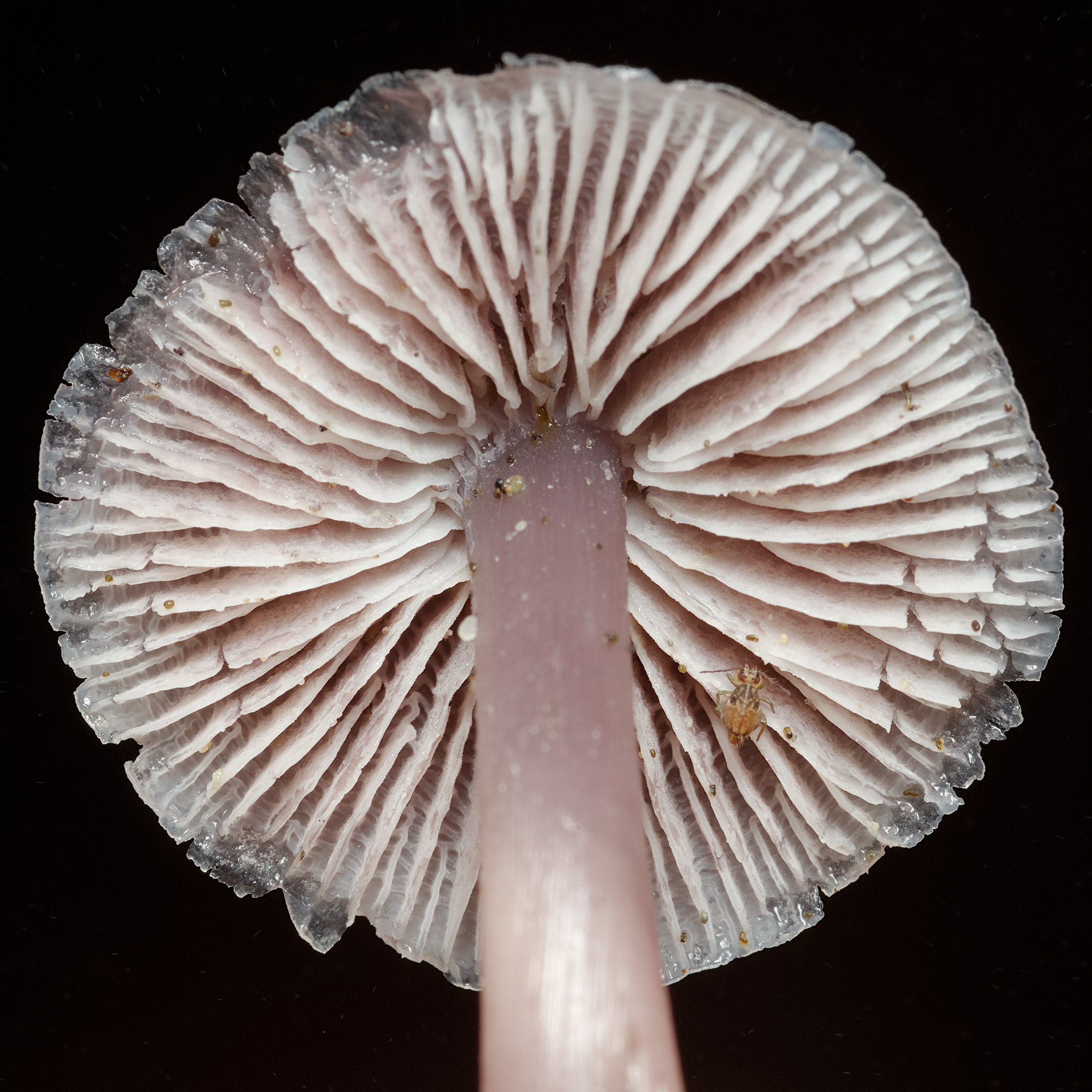
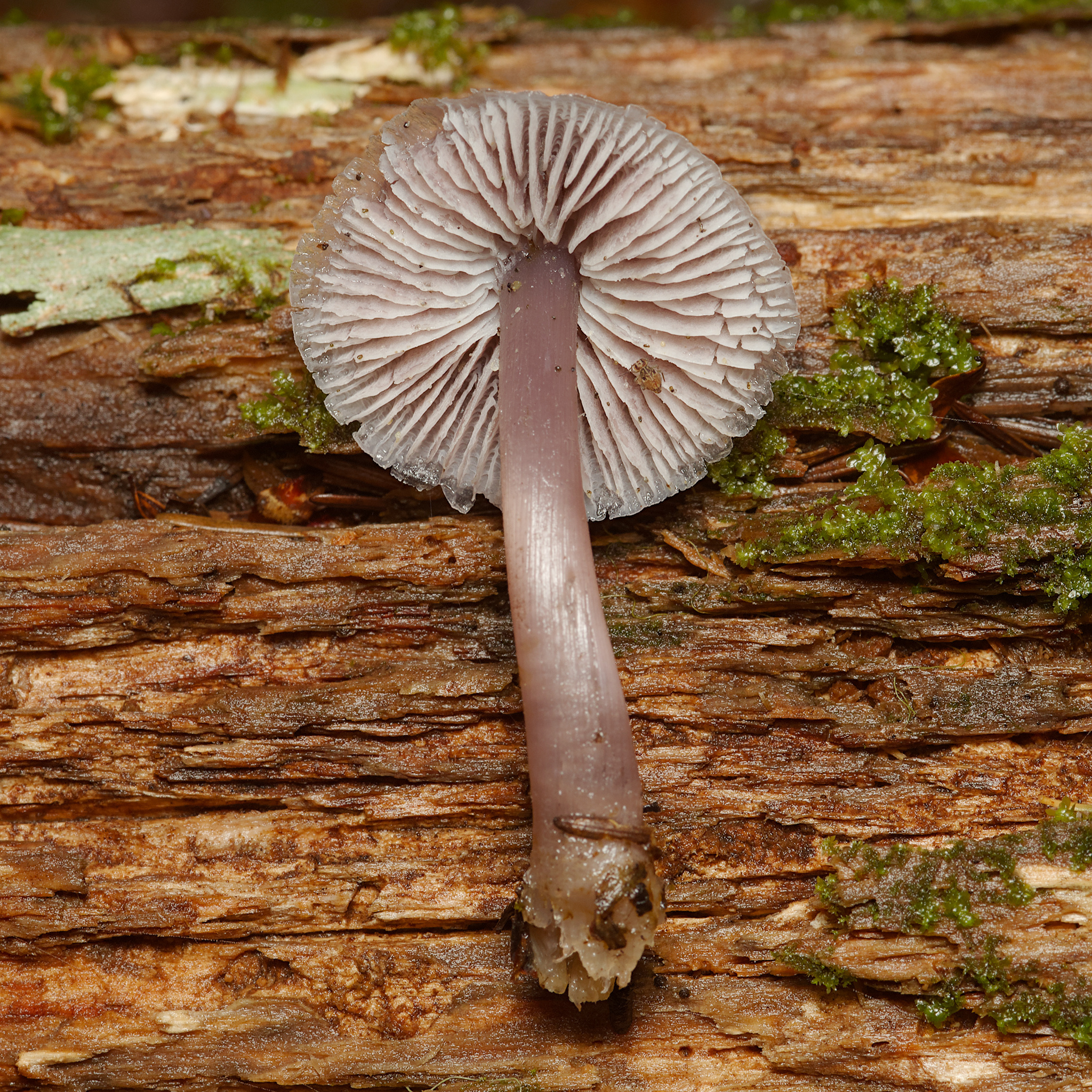
Brodie’s photos from this observation (344618980), featuring a globular springtail within the half-eaten gills. Habitat of this collection.
Update: Sequencing has returned a result of Mycena sp. 'pura-PNW15'. This kicks off a group of different species from this subsection, glad to have one of this maturity for comparison.
Mycena subsection Purae are always a pleasant surprise. Not terribly rare here, but also not incredibly abundant. This is one of our local provisionally named species. Perhaps what may be the most common ‘PNW15’, but I will let the sequence validator folks tell me which temp code fits best.
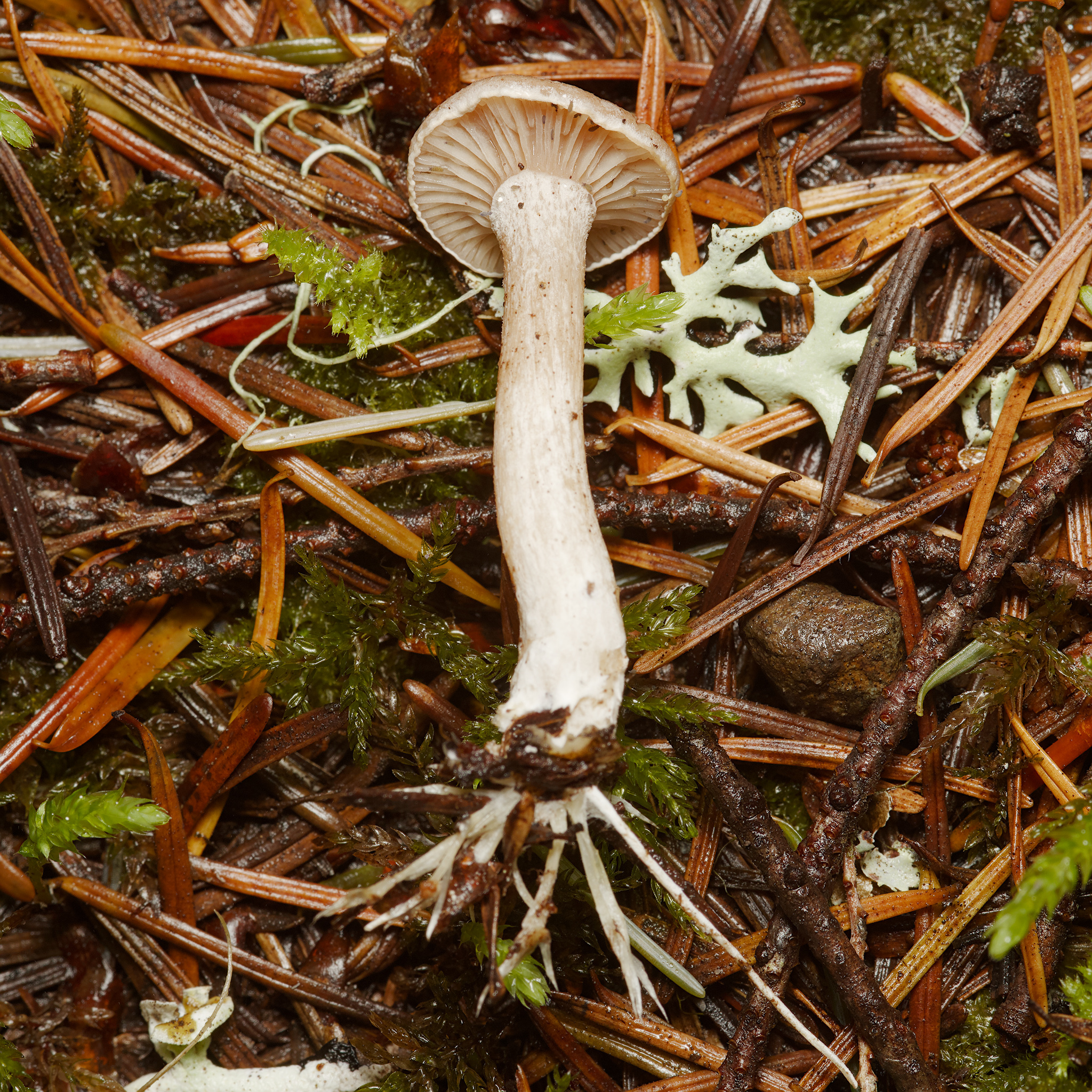
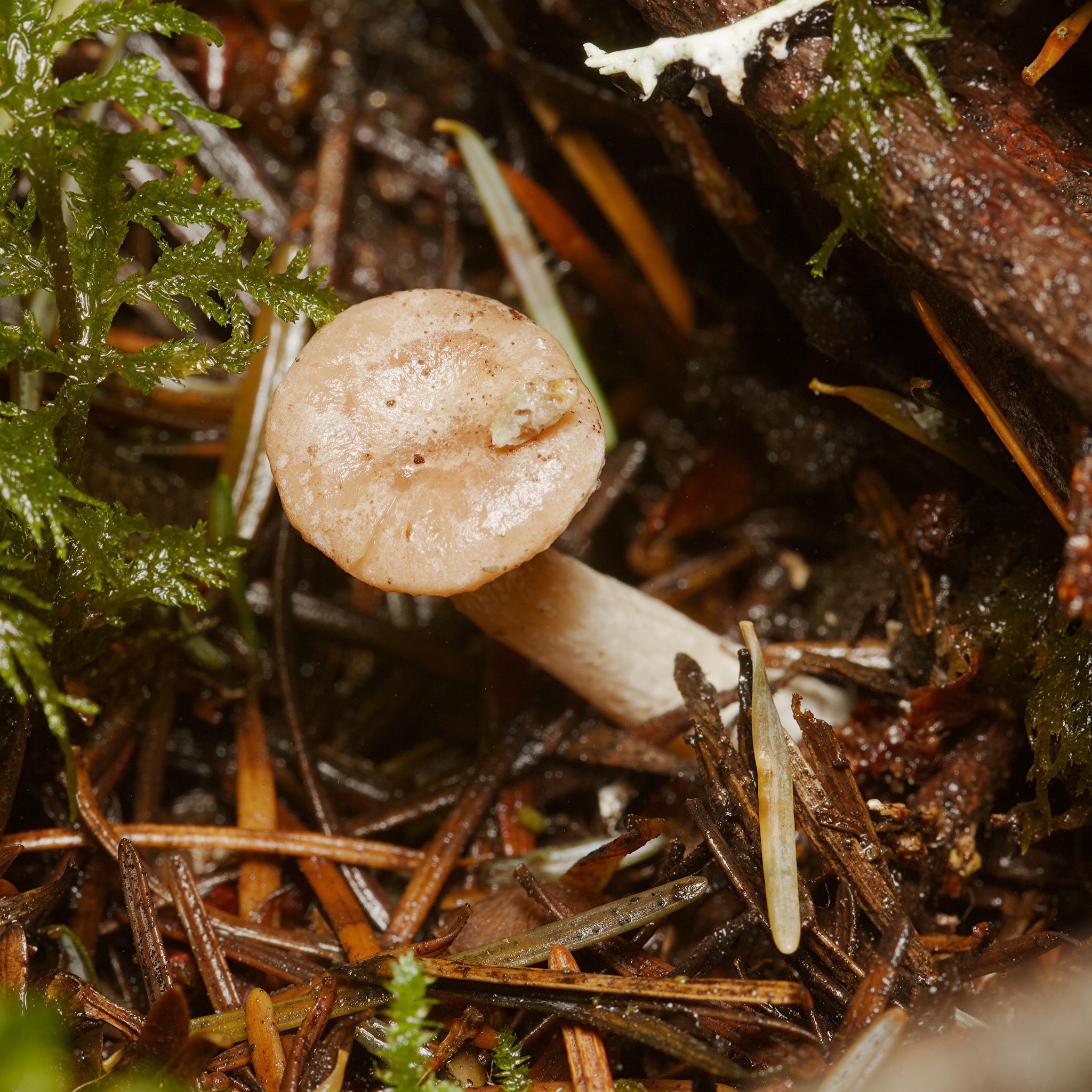
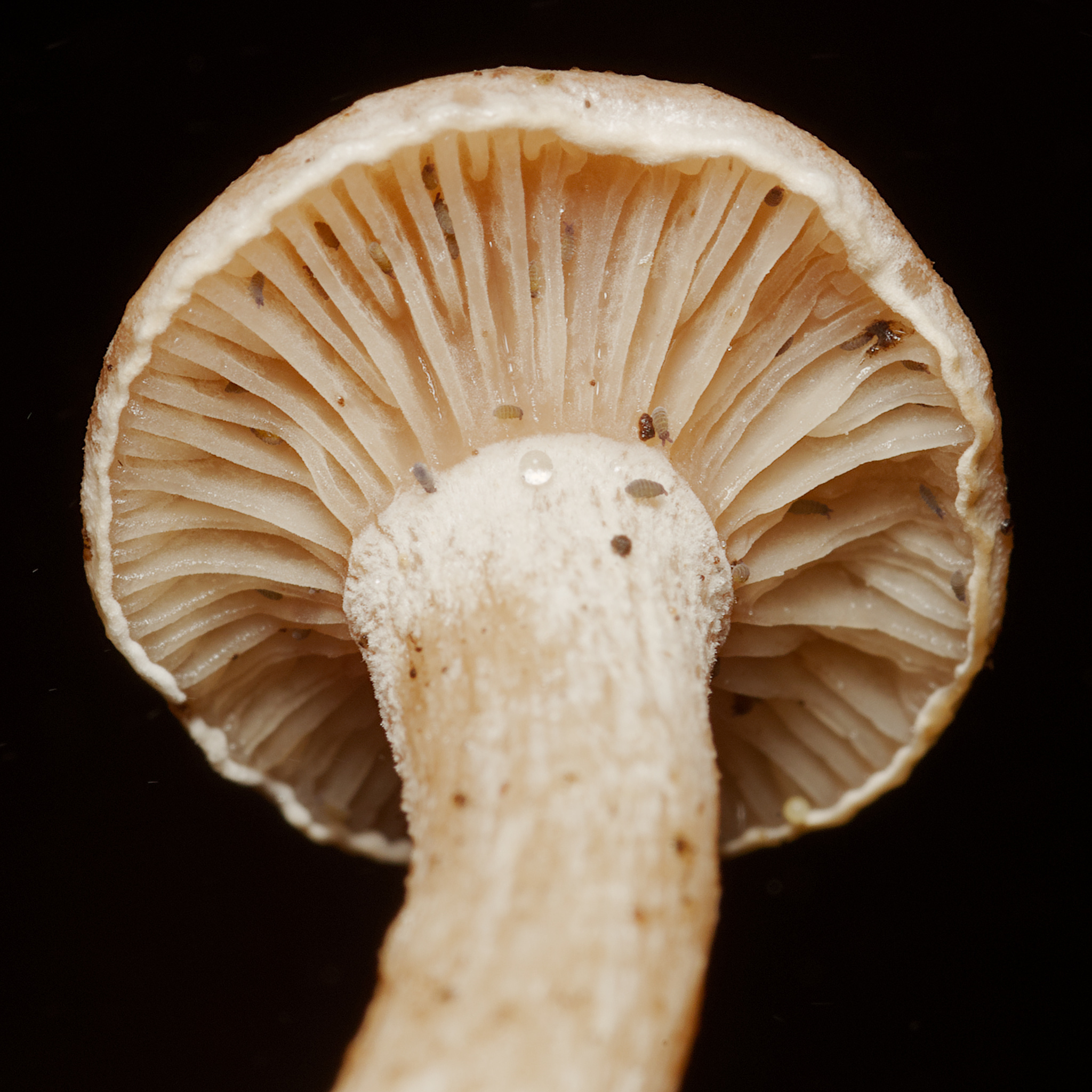
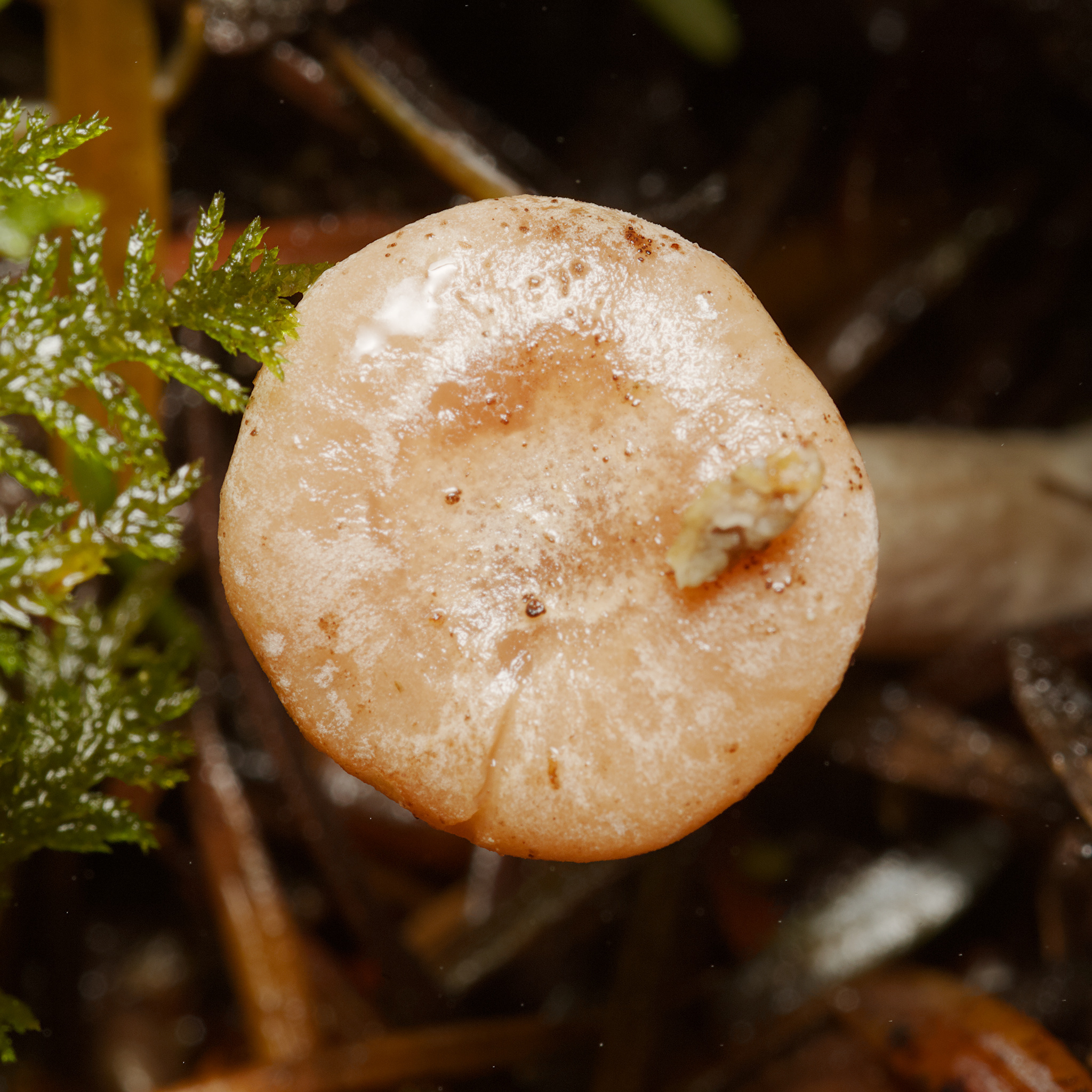
These photos are from Brodie’s observation of our Rhizocybe vermicularis group collection (344618979) from this month. Perhaps R. americanus? Both Brodie and I see these commonly in the spring and I believe I have found collections that are more fitting for that species / subspecies. Unfortunately for this survey, this was the only collection we made this year. At least of this early spring species as it appears here. I will make a mental note that we may want a few additional sequences from this group next time around.
More springtails on the gills here!
WIth the changing of the season, many of these early spring species have already put up mature fruits by the first snowmelt. This was also a very mild winter, extending the seasonal window of many of these species. This one included. M. pura, featured previously, is also fairly weathered.
DNA Update: Sequencing confirms this is Rhizocybe 'vermicularis subsp. americanus'. Not sure if there is other reference to the subspecies suggested by Stephen.
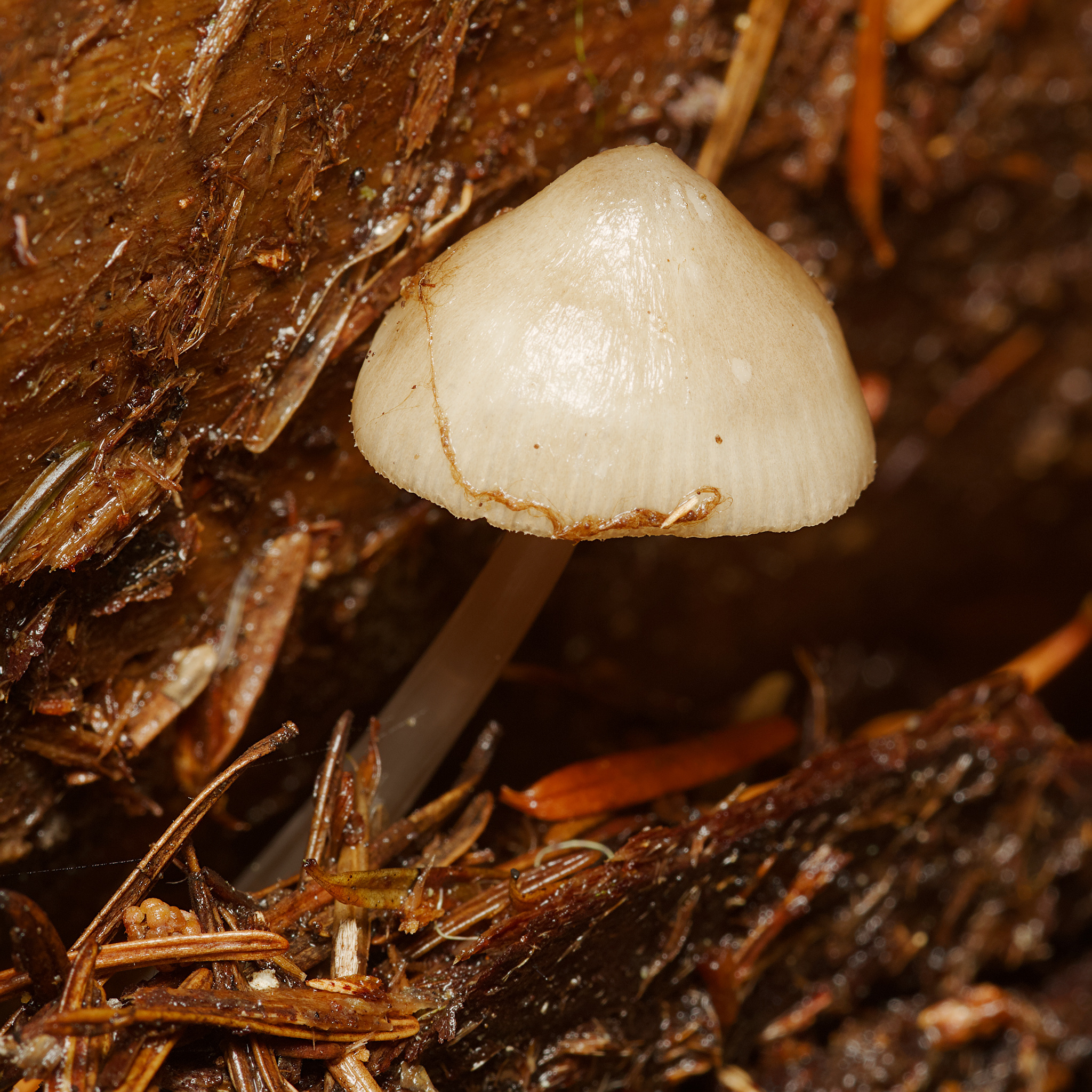
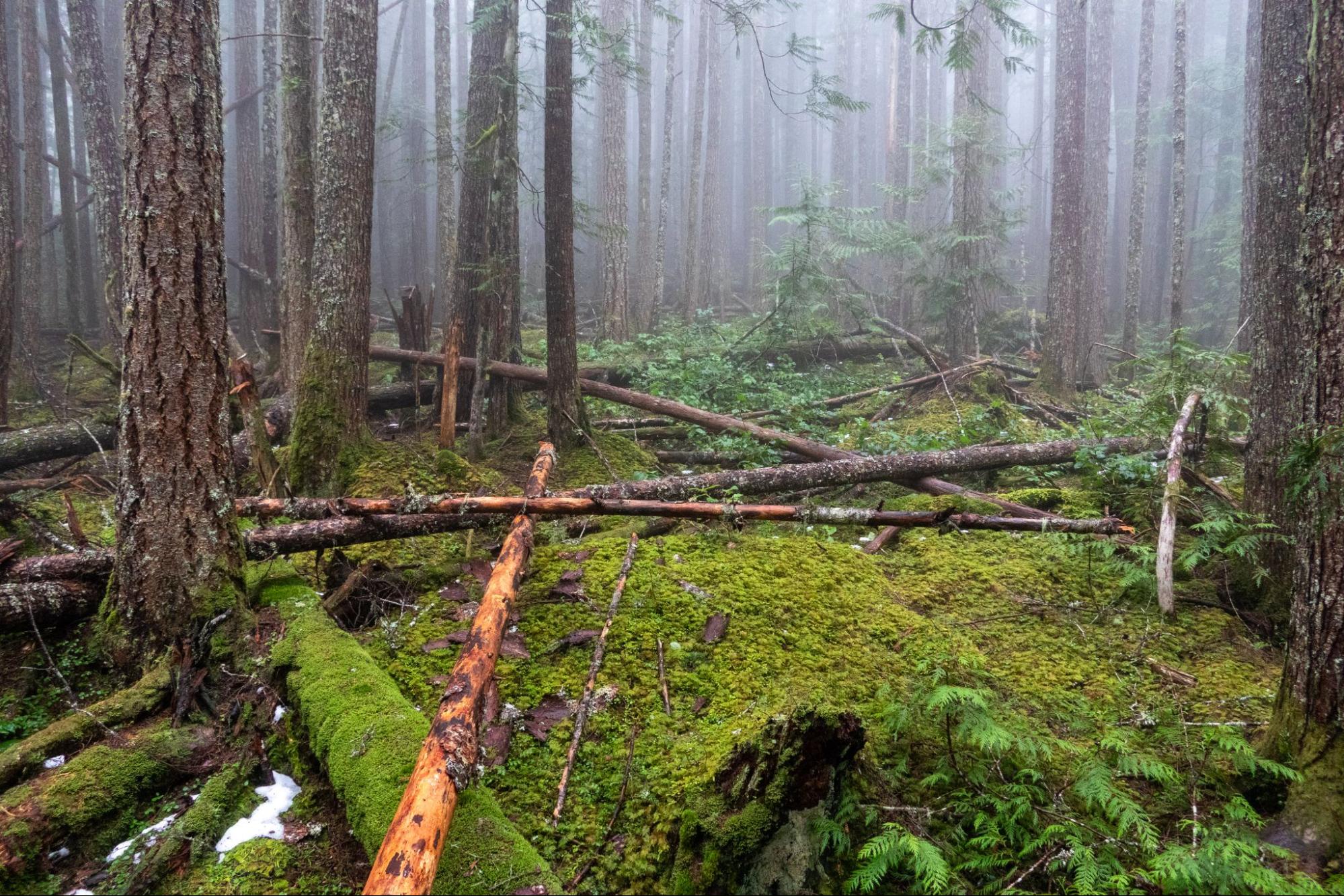
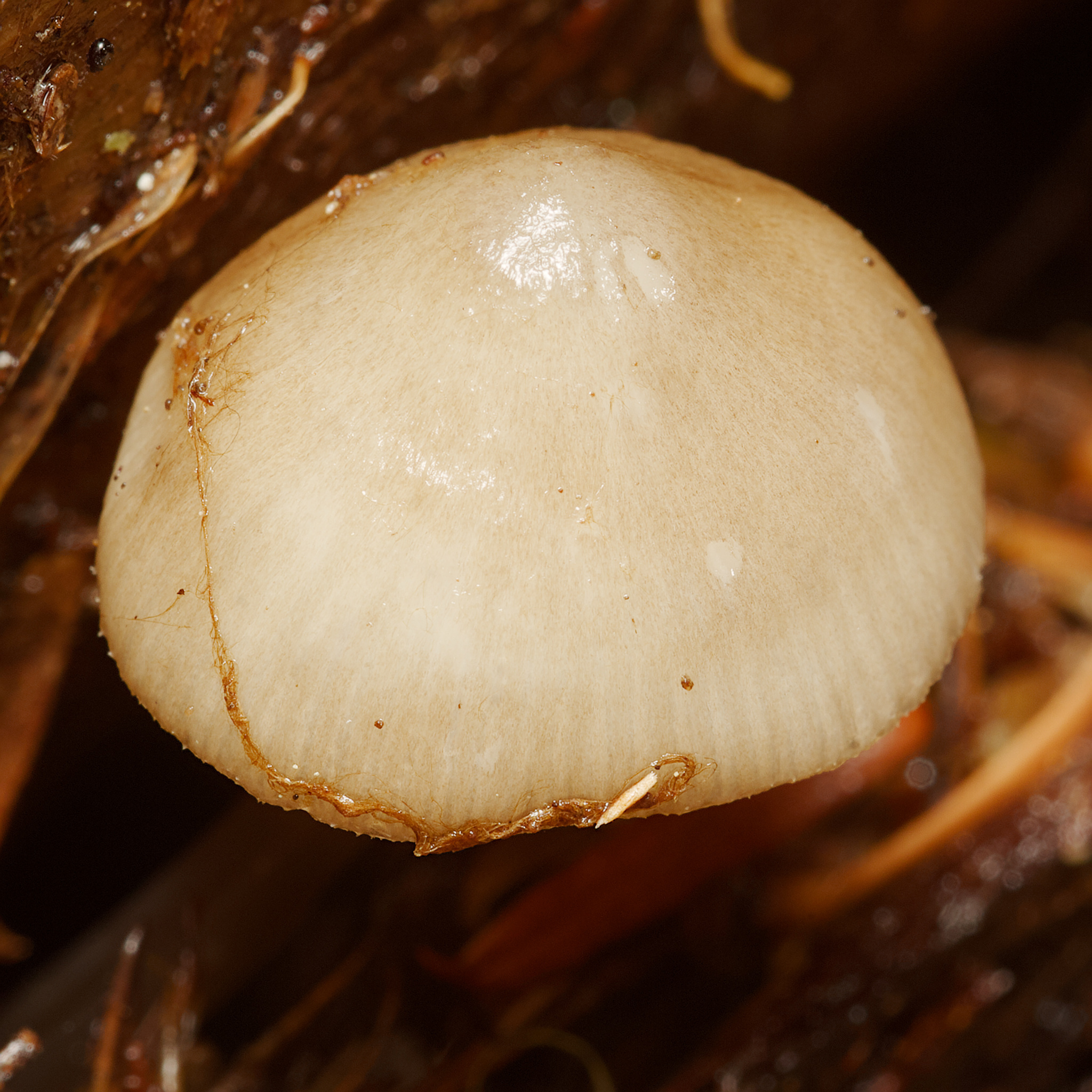
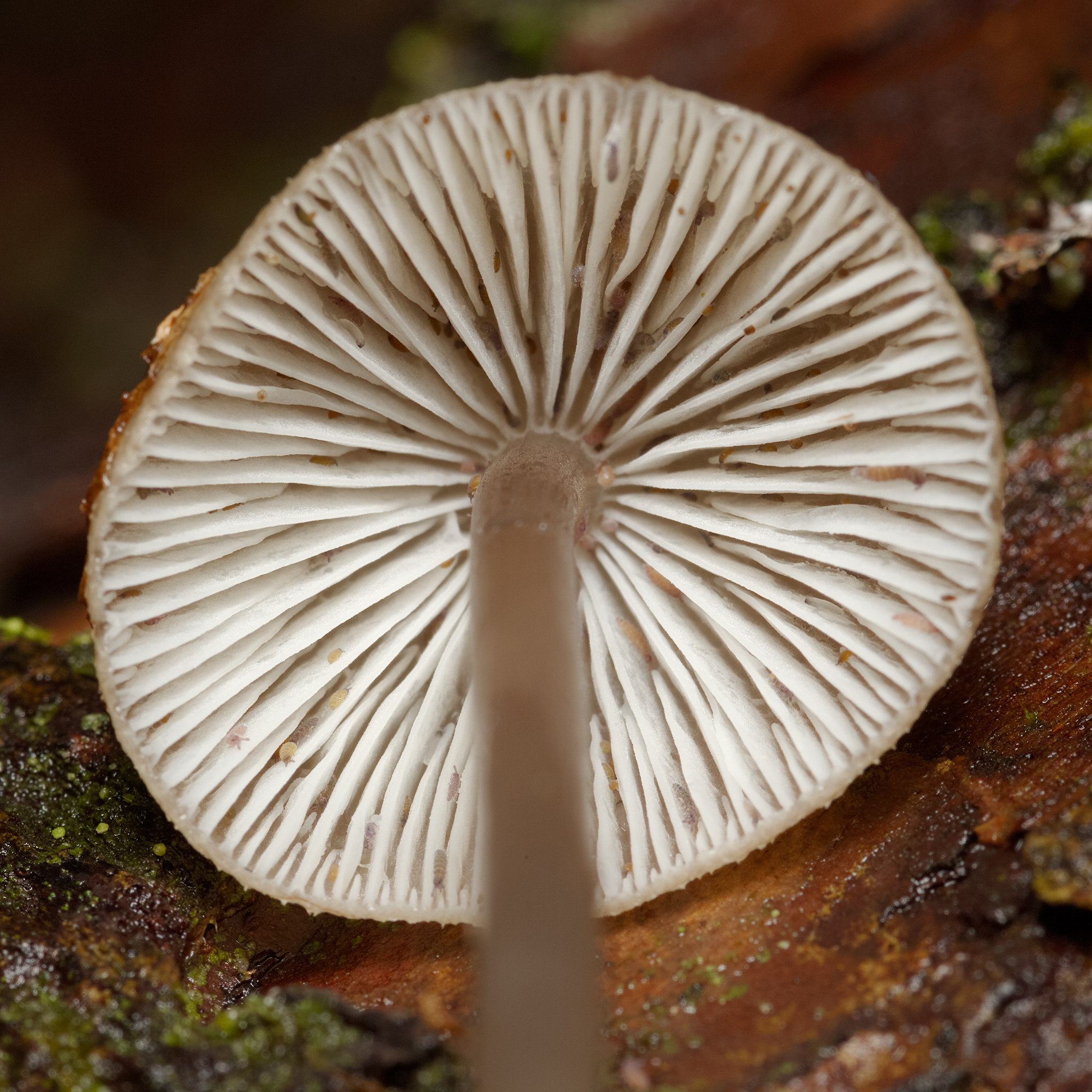
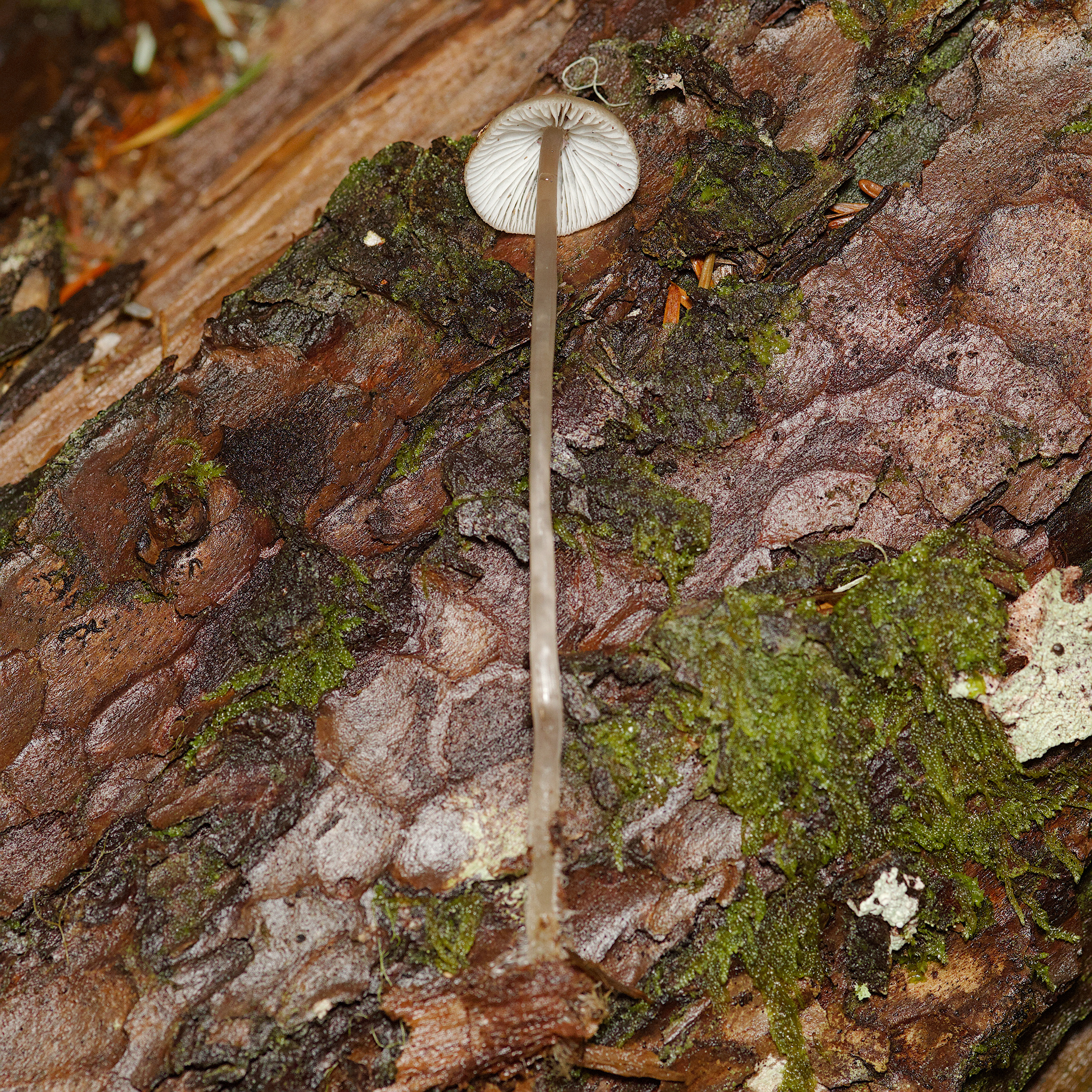
Previous page: Brodie’s observation photos for this Mycena (344618995) Above: Habitat for this Mycena, slightly higher elevation than prior M. cf. pura observation.
This is a relatively plain Mycena. This is probably one of our common temporary coded species, I am not confident in discerning which. Despite being very common, many of these are still in need of further description and sequences. I figure if we collect at least one or two “boring” Mycena for each of the slower months, we may be able to provide at least some additional data on the genus here. Color is fair to note, I am actually torn between a few of the large grey and/or brown species here but would probably place this in the M. robusta group. This one is fairly light tan toned on the cap, with a fairly brown stipe. Once again, sequence will have to help us with more detail, at least before both we and the rest of the community do more micro here also. We will likely continue to focus on DNA and macro, with a splash of micro here and there. Moving on!
Update: DNA confirms this is Mycena sp. ‘silvae-nigrae-IN02’. Glad to collect this mature example for further documentation here.
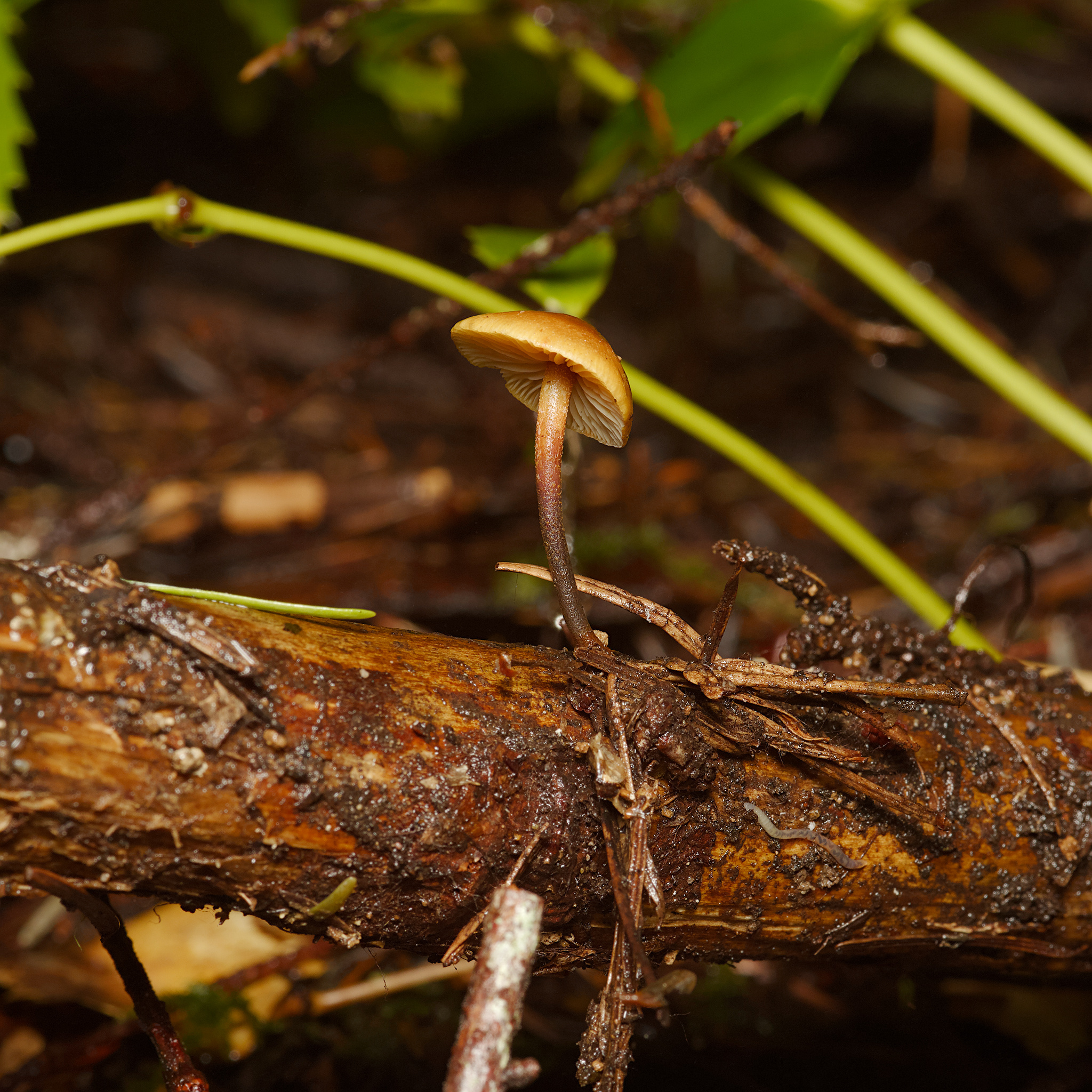
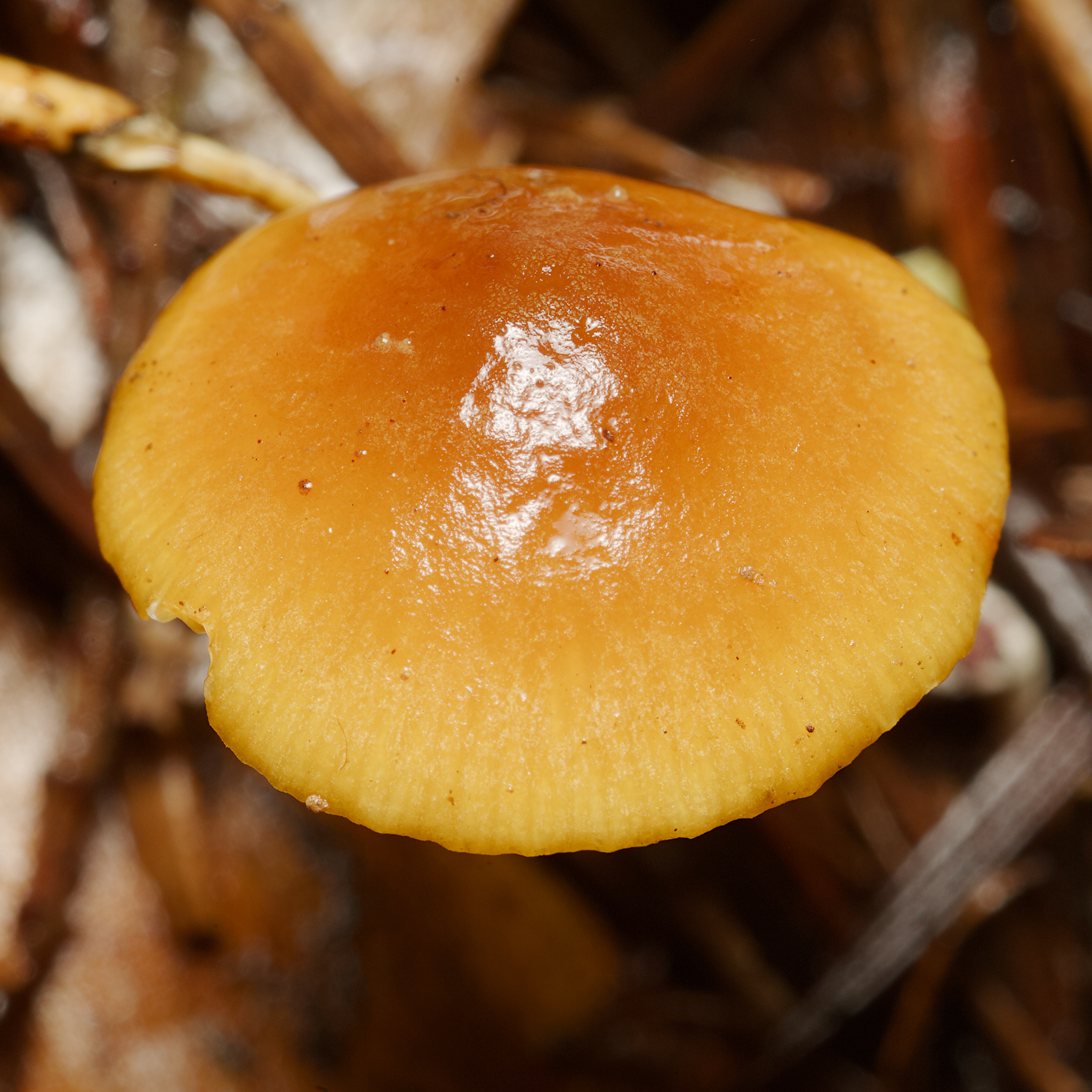
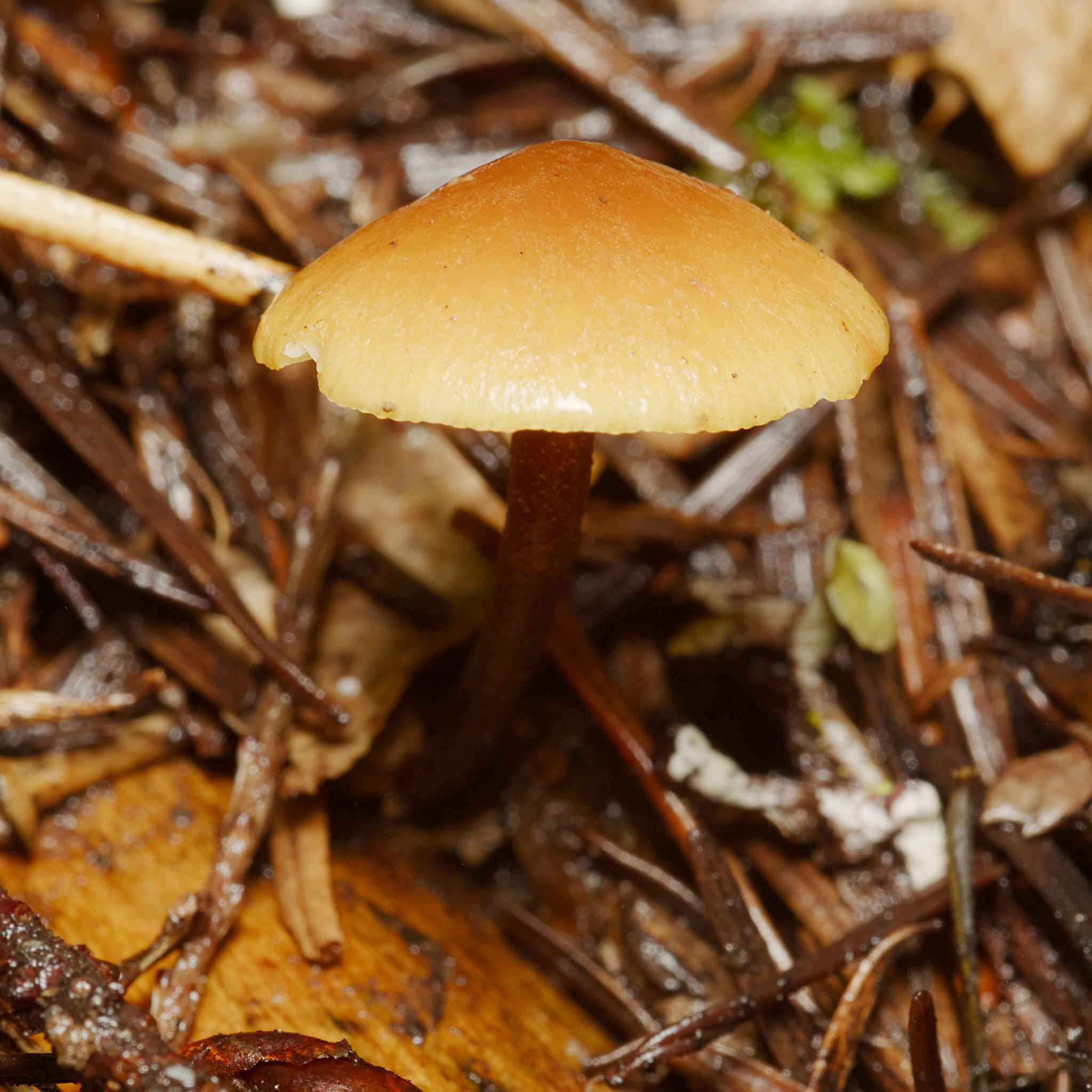
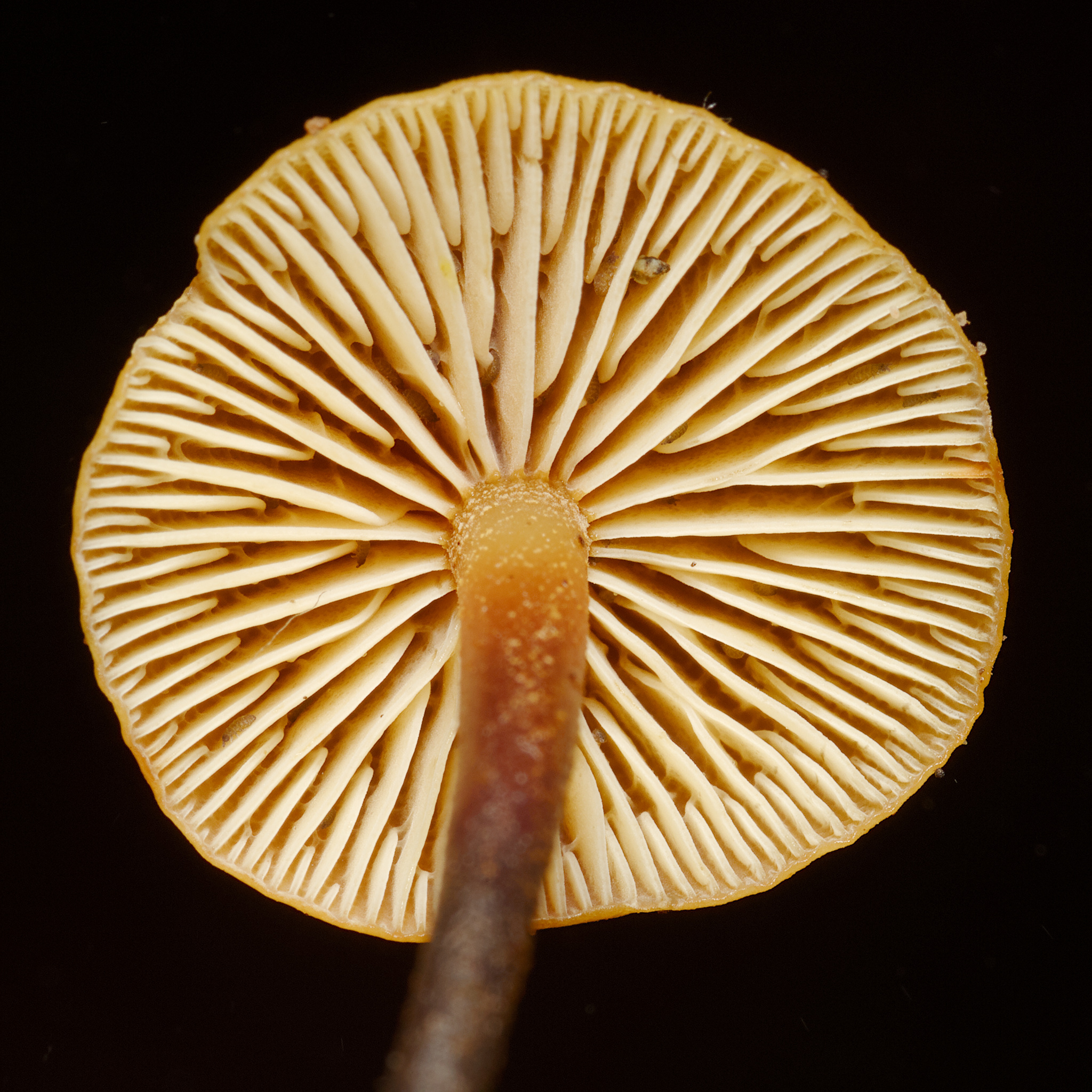
Photos of observation (344618975)
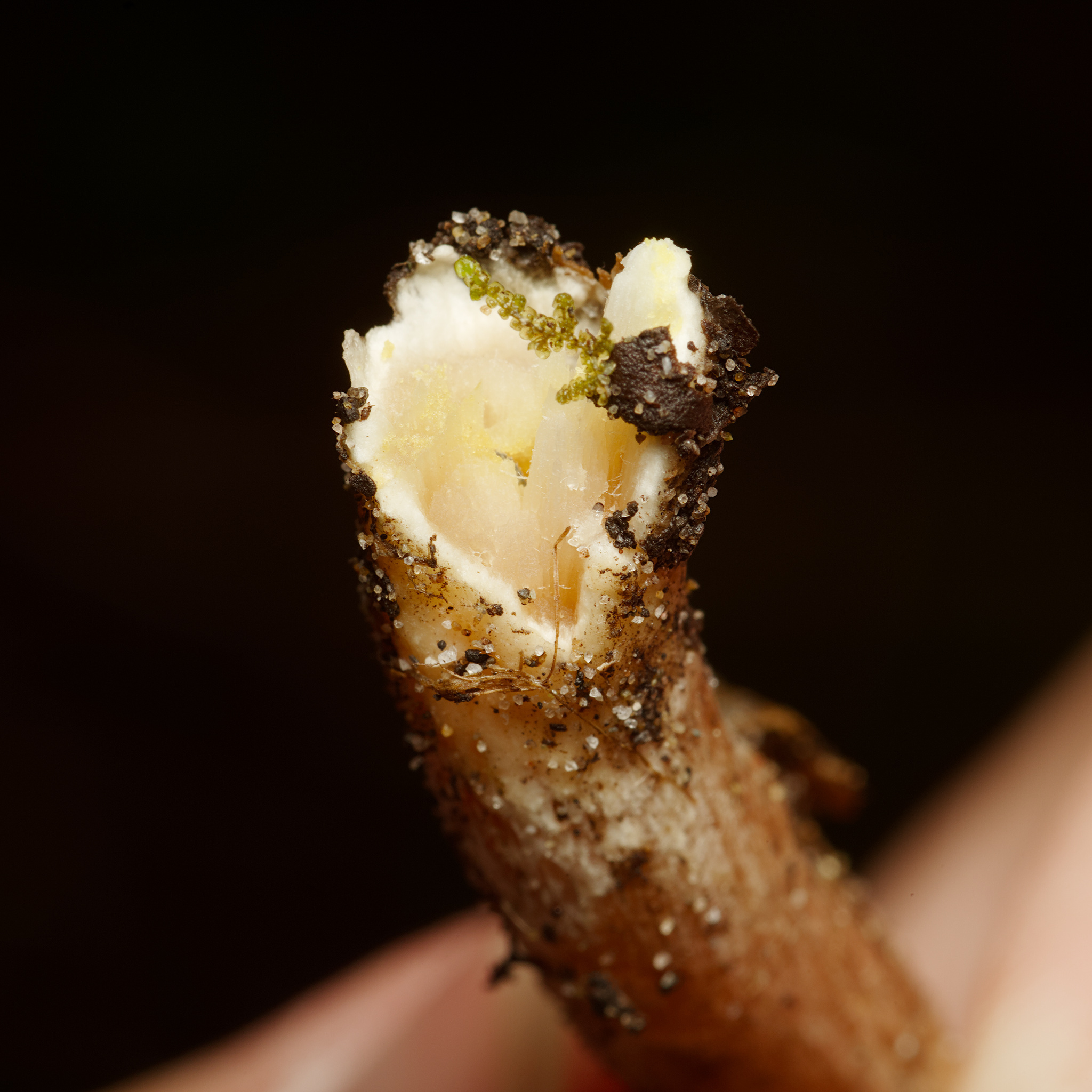
Our first march collection of what appears to be Heimiomyces fulvipes. At the very least something Xeromphalinaceae (Marasmiineae). We made multiple collections of this very sparsely dispersed, but common species in March. If anything it will be nice to have more sequence data, out of my own curiosity. I also find this species tends to prefer more dense mid to older growth and is very cold tolerant. Thus, additional collections from these park locations may help positively establish its record and more information about its existence here. I typically find one or two mushrooms of this species, every 50-100 feet, when walking through the proper habitat. That number may decrease as frequency increases at some of the later collection sites, such as the Ancient Grove trail area.
DNA Update: Sequencing confirms H. fulvipes here, as with latter collections.
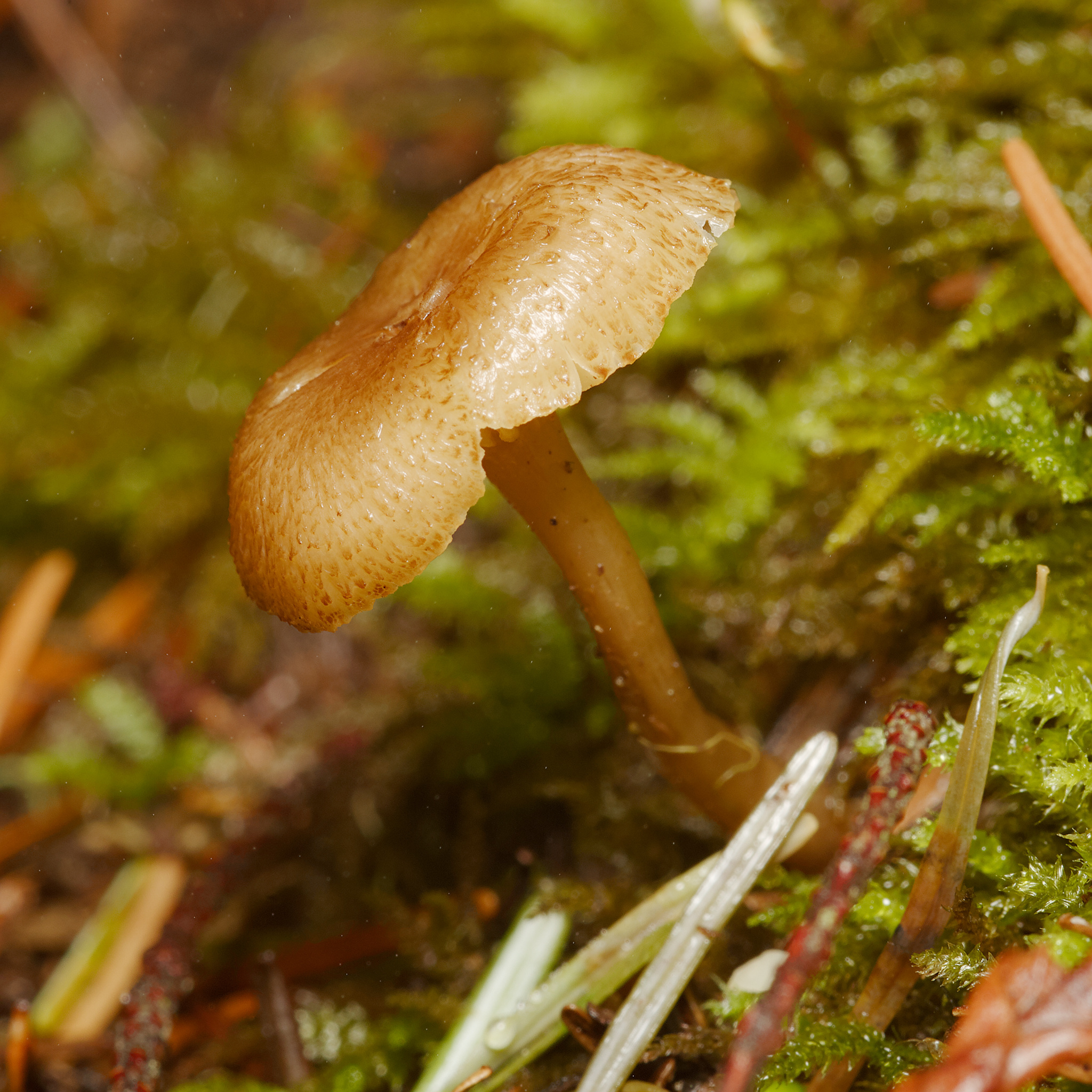
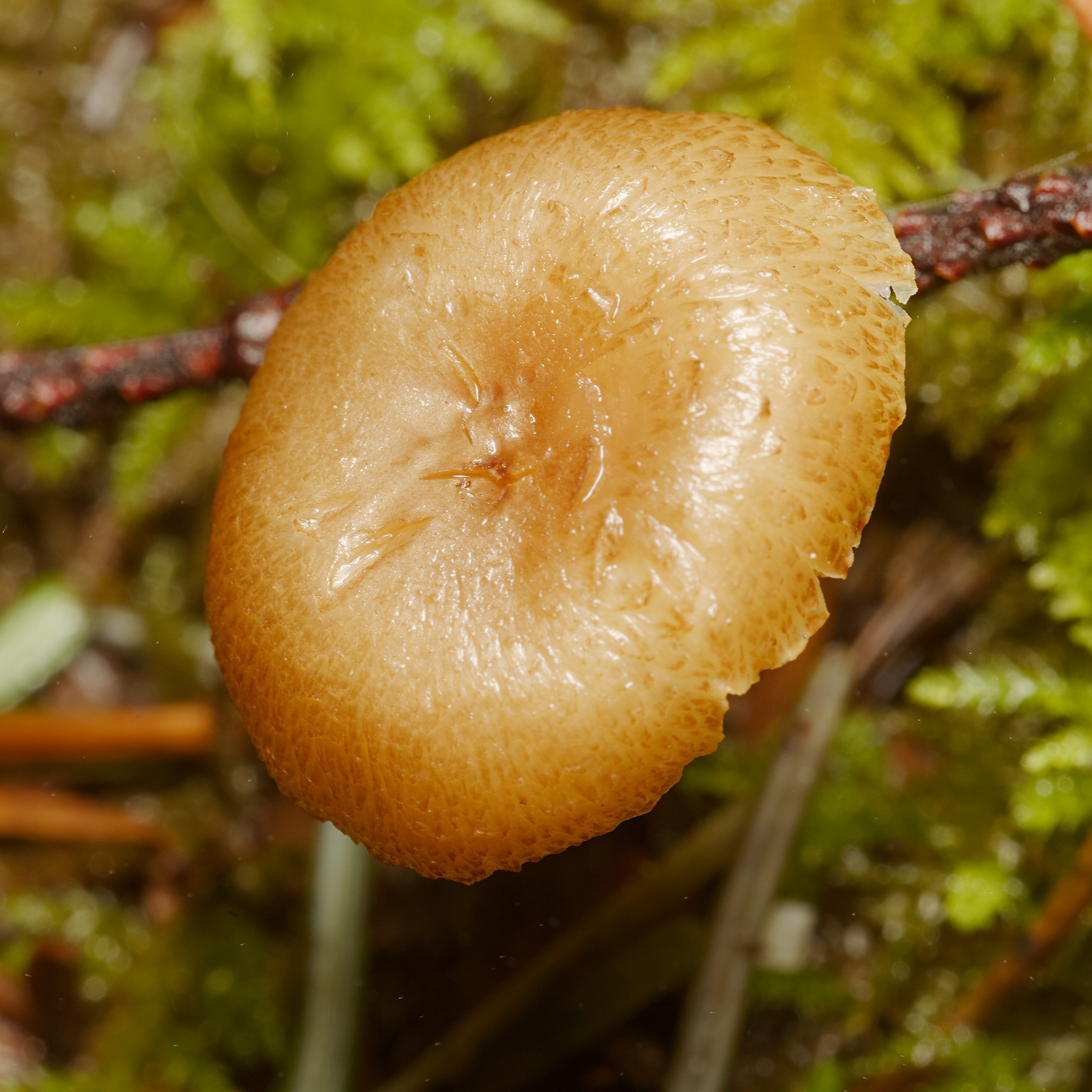
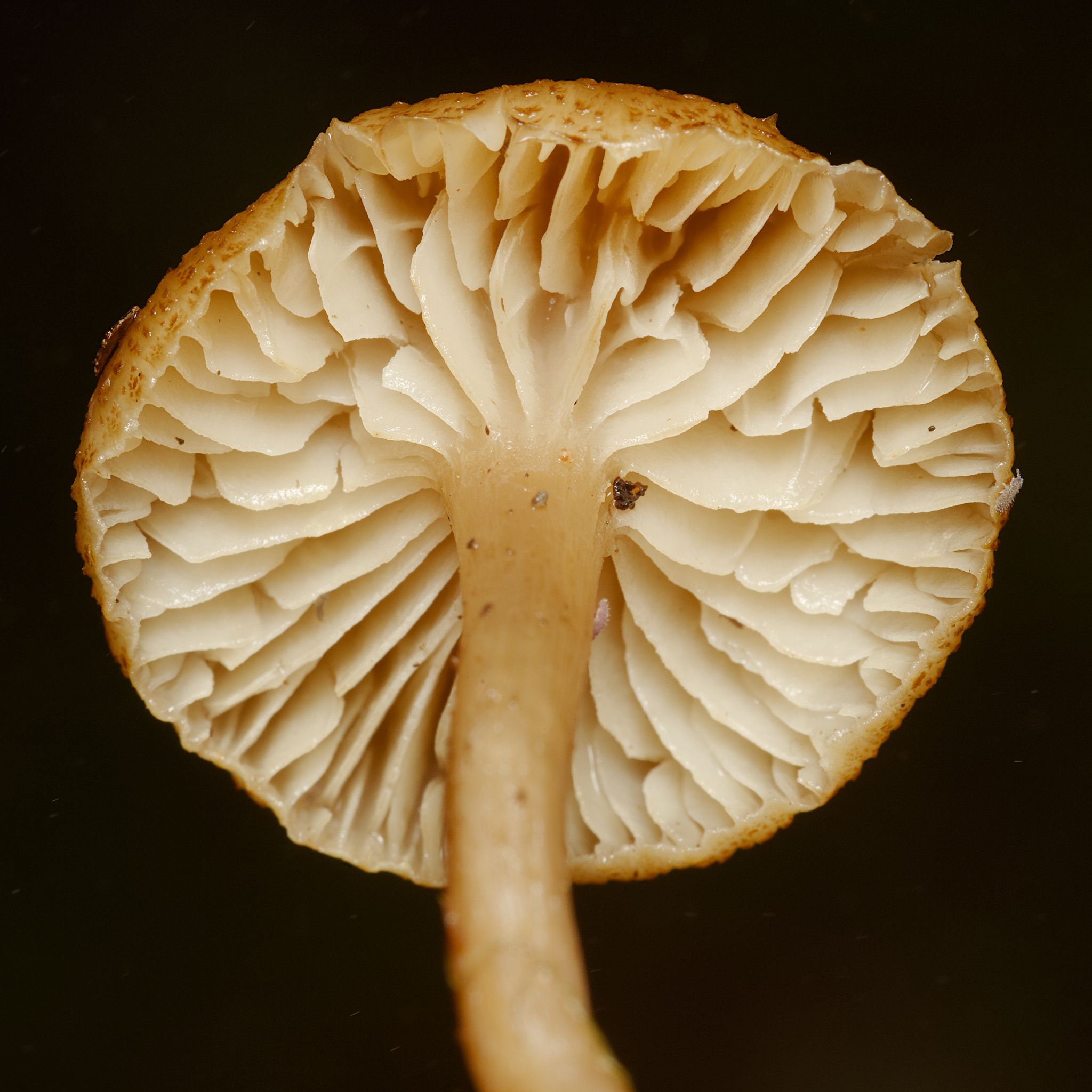
Small, potentially tiny clitocyboid, maybe omphalinoid, but I really wasn’t sure of much in the field. Reviewing photos, it is still a bit ambiguous to me. Will shop around to a few LBM experts and await sequence. Photos are Brodie’s of collection (344618994).
Update: DNA confirms this as Pseudolaccaria fellea.
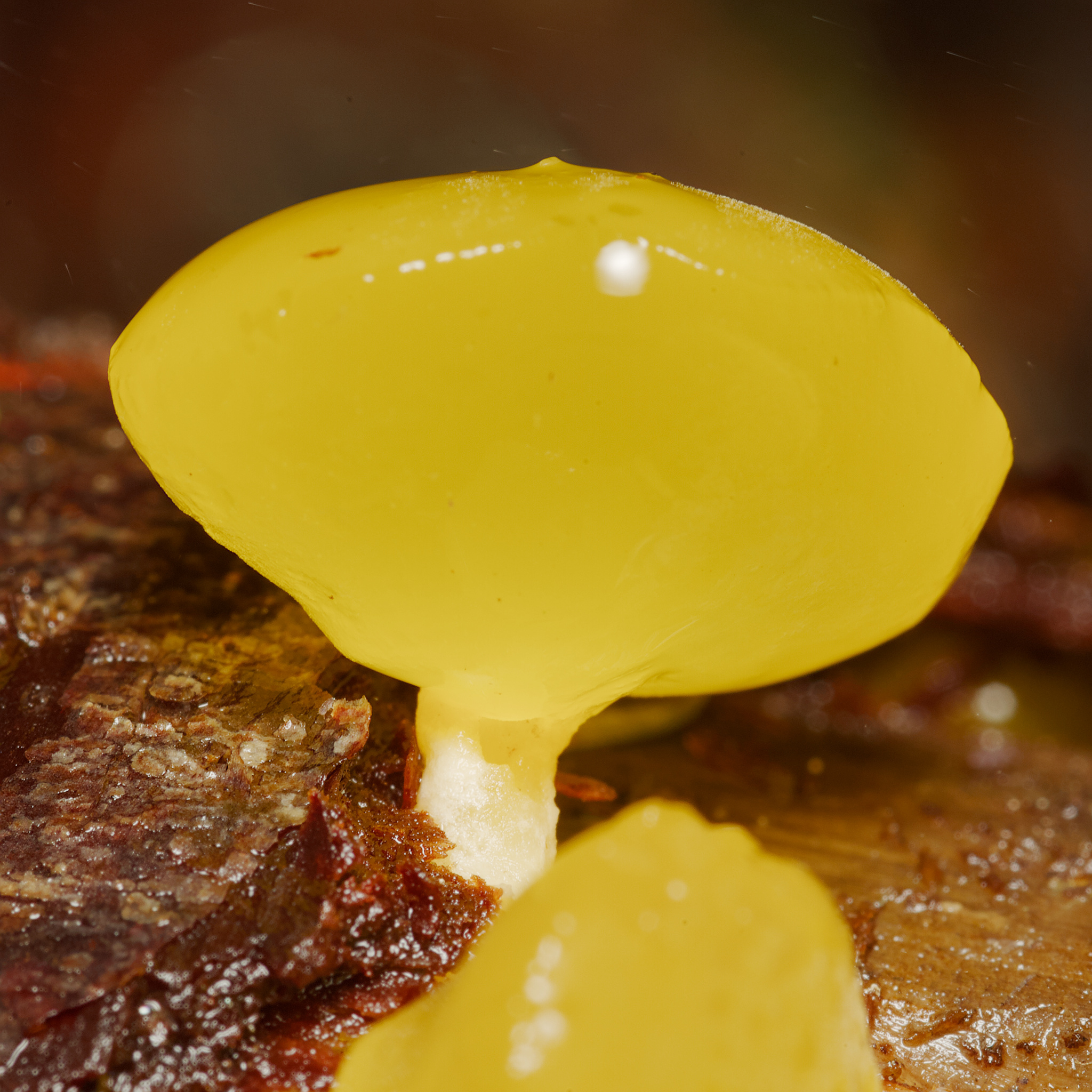
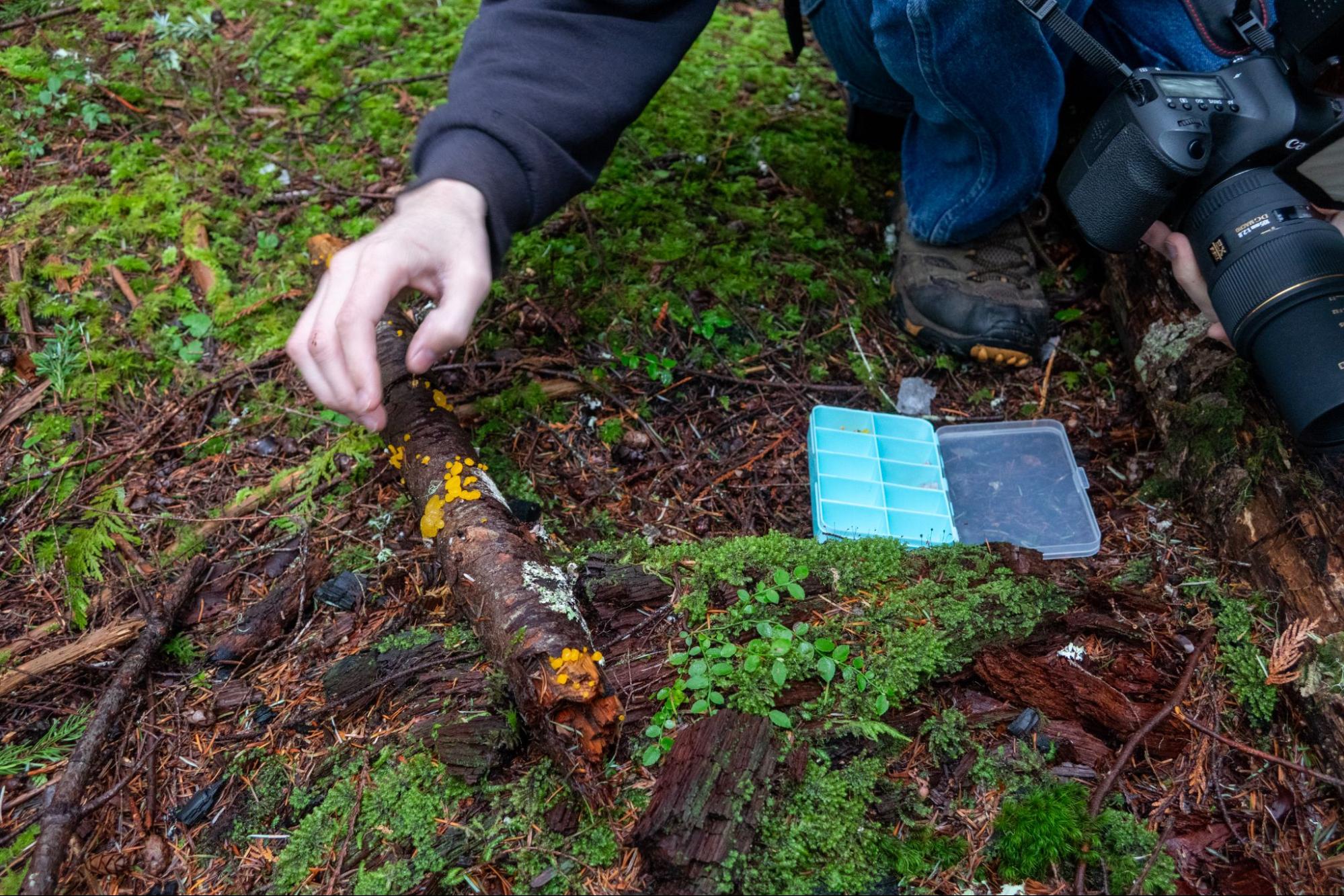
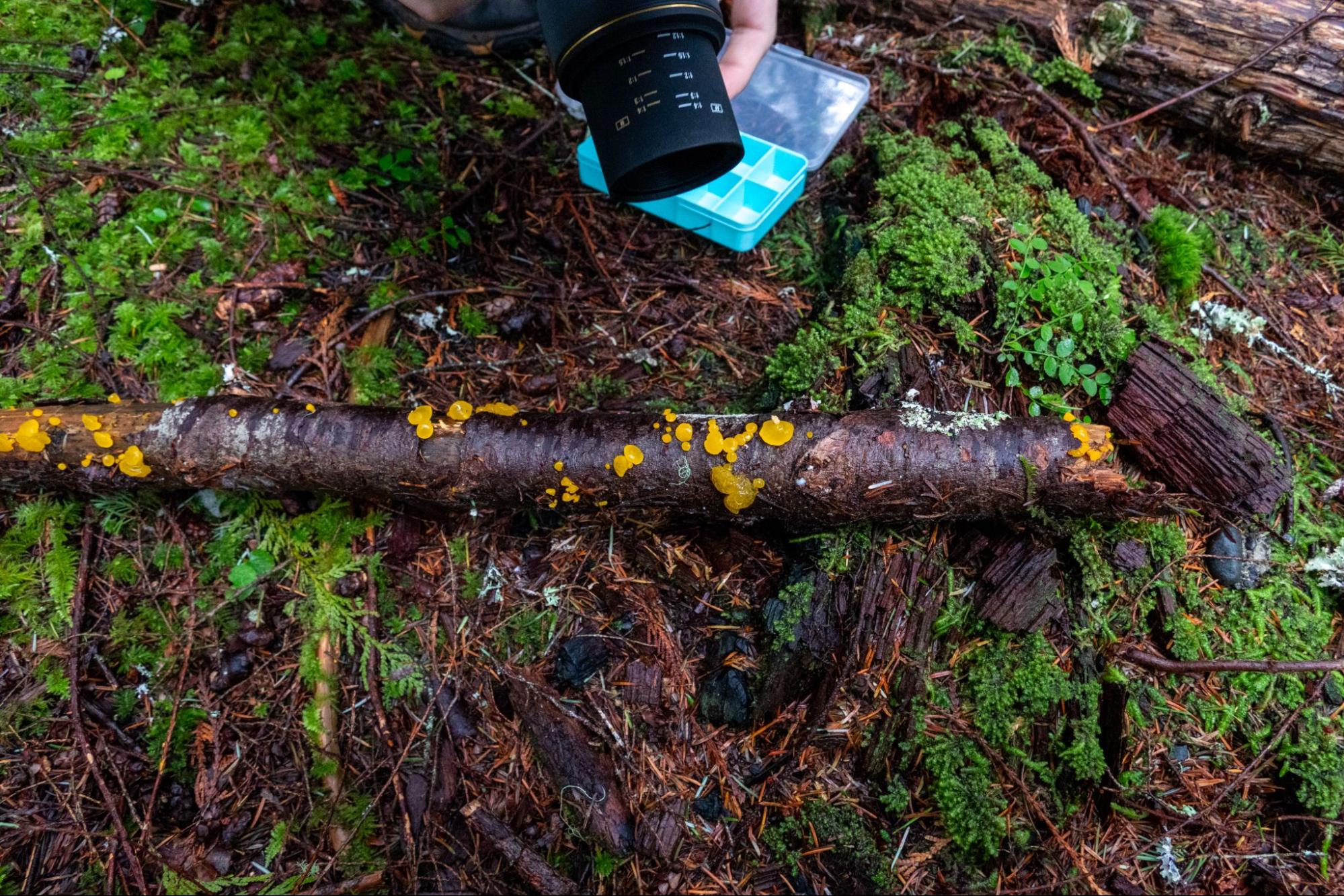
Brodie working with this collection. Remaining photos are from his observation of this collection (344618983).
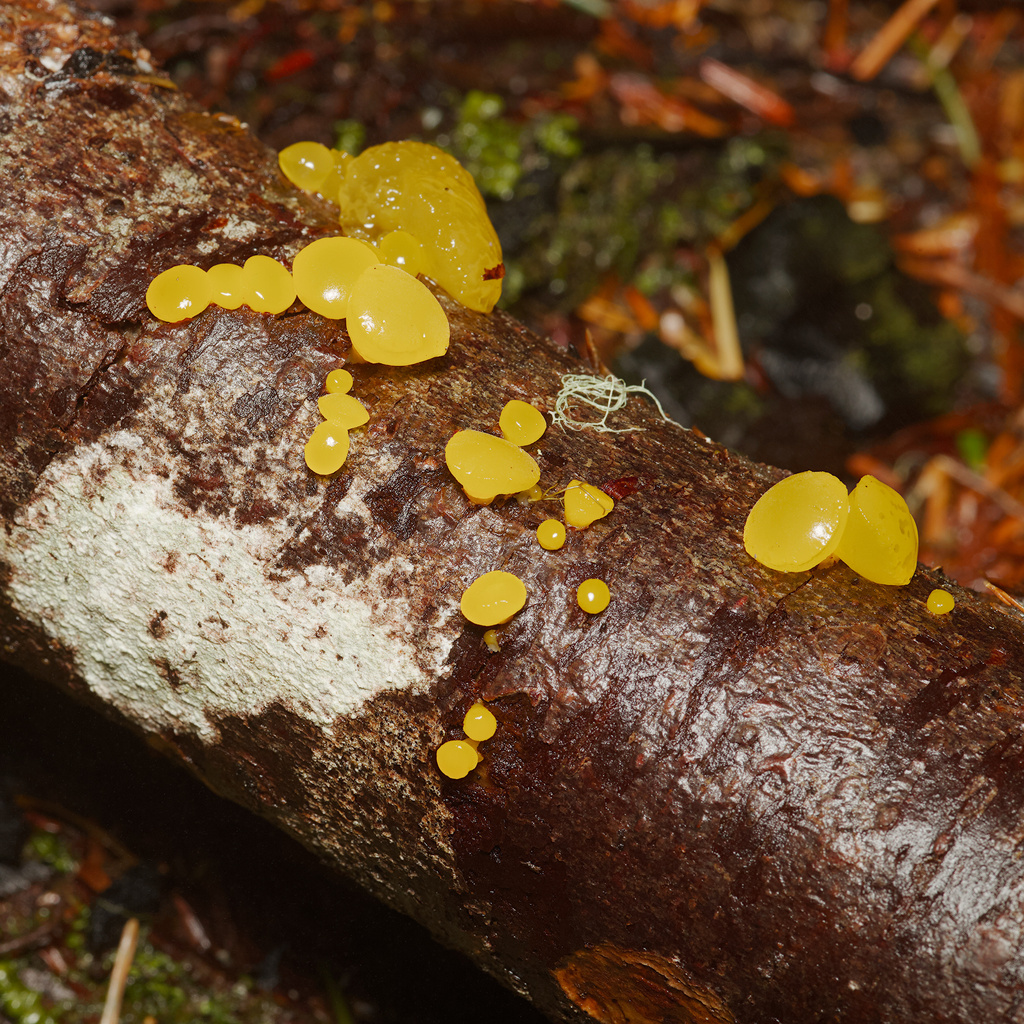
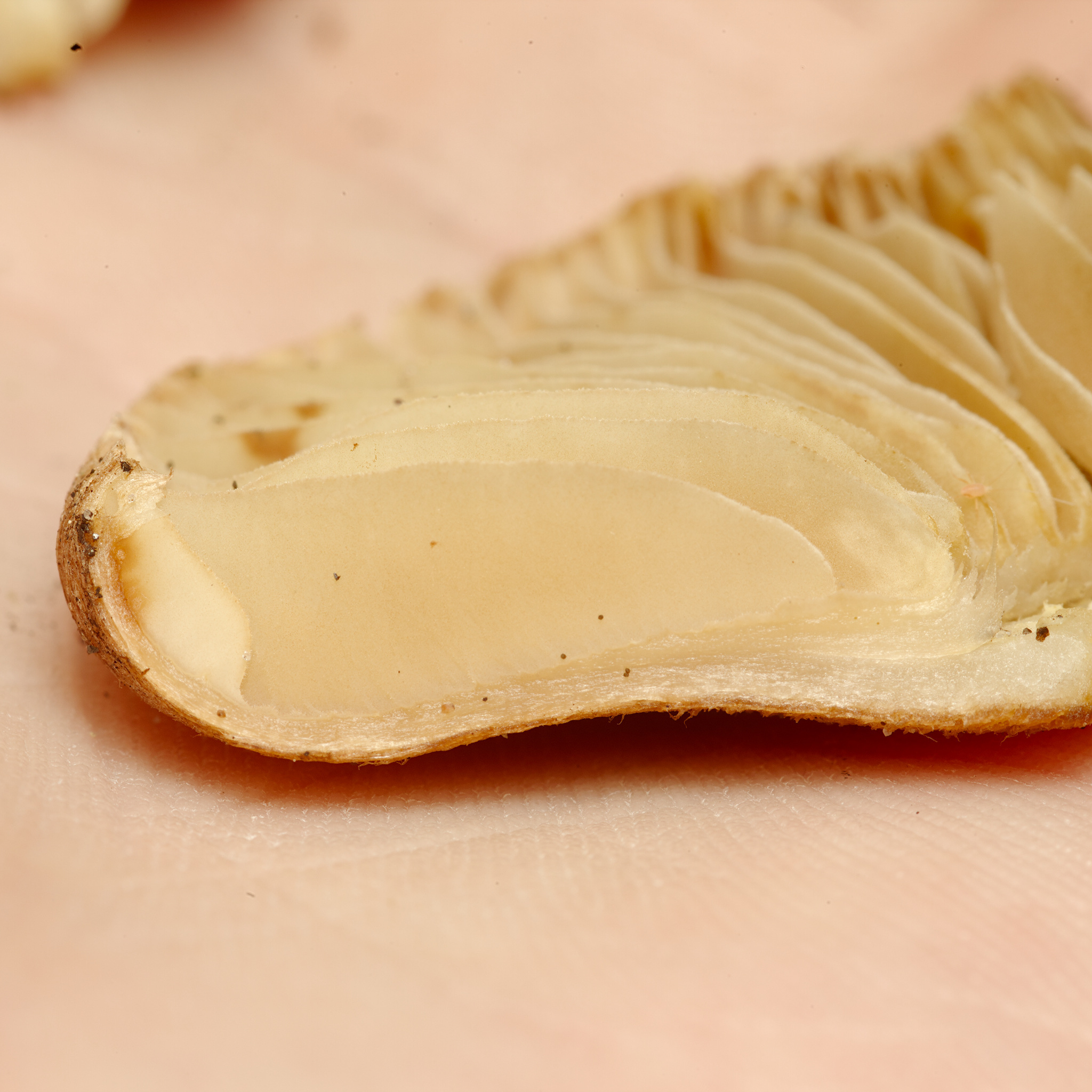
Guepiniopsis / Heterotextus cf. alpina has always been a fascination for me. I love Dacrymycetes in general but these common cones, and lesser common or lesser known cushions and cones, are my favorites. This is one of a few collections we made this season from different locations. Writing this in April, most are starting to fade, but we will seek more collections focused on this group of species throughout the next few years. I think Danny Miller and friends have made a valiant effort to begin the work here but I’m of the firm belief there is much much sorting to be done! At least currently.
This collection should most closely resemble provisionally named members of the broader G. alpina group, perhaps sp. ‘CA01’ or close. “How broad is this group here?” is the question we may be able to help answer. Most, if not all, sequences are from elsewhere. We will aim to present collections that match this species, and also the other morphologies of similar “true” Heterotextus species.
With these collections, I would like to focus on shape and also the attachment to substrate. Here I think Brodie has successfully captured both quite nicely. We have a few collections with lesser detailed photos, one aforementioned, but going forwards we will be making some more refined observations. I would like to sequence around 10-15 collections of these each early Spring, through 2030.
Update: DNA confirms this as Guepiniopsis sp. ‘alpina-CA01’.
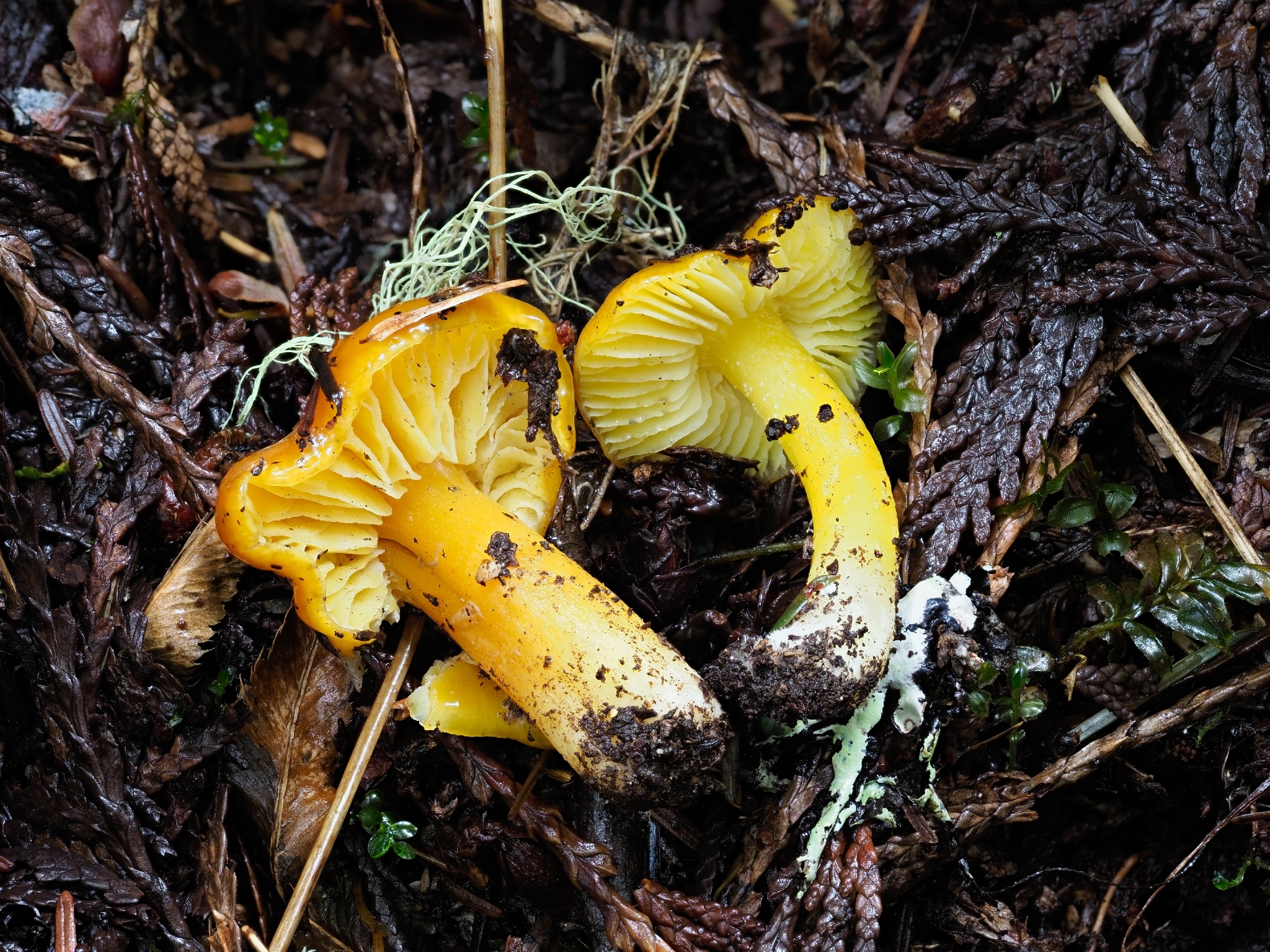
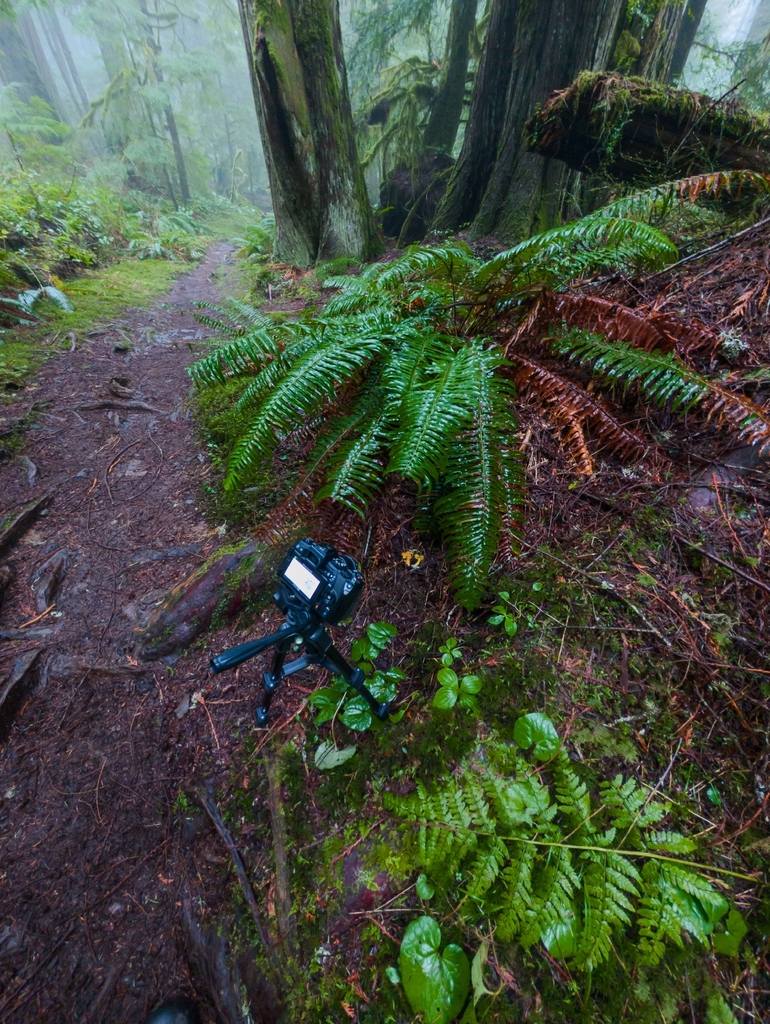
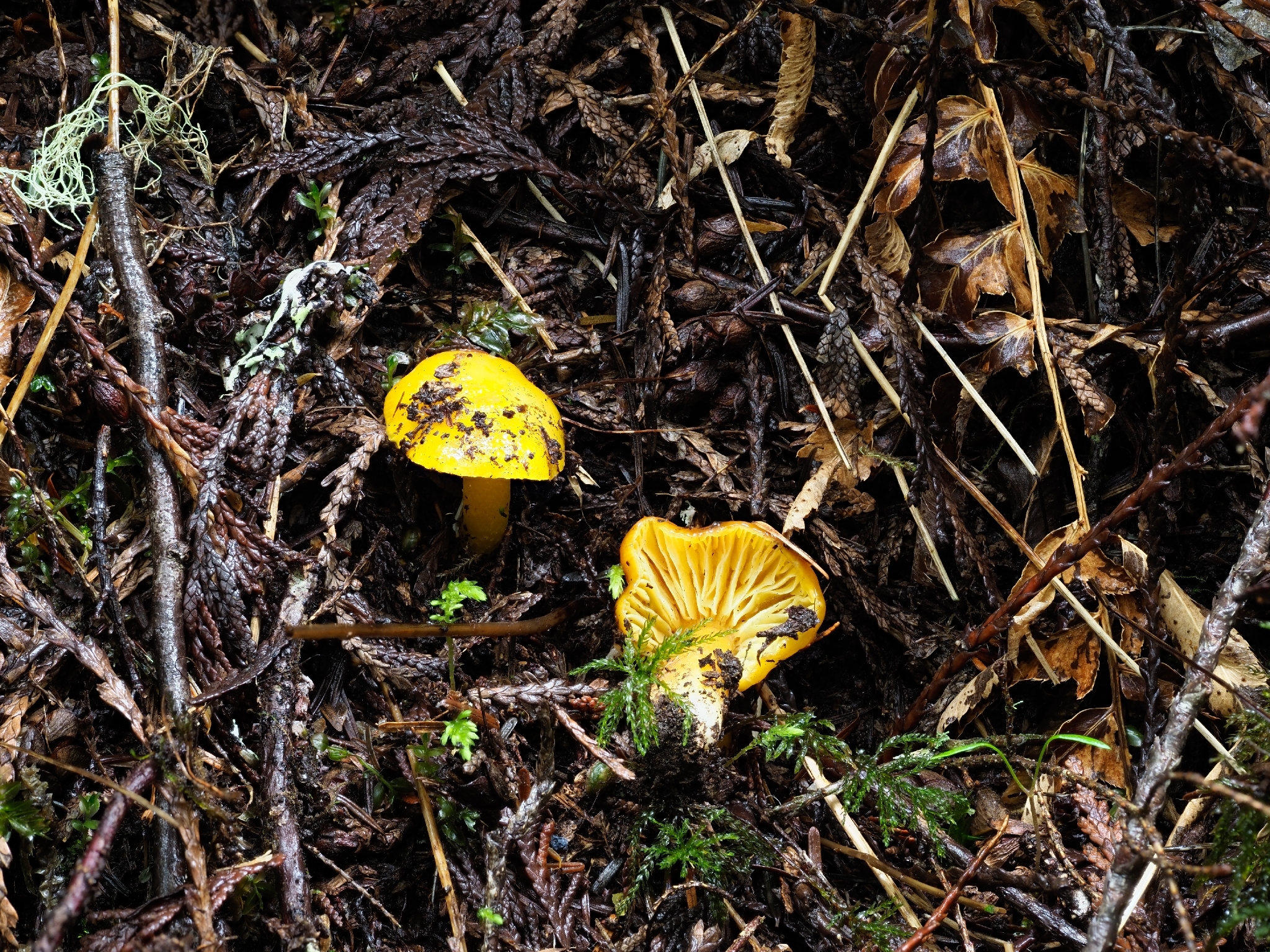
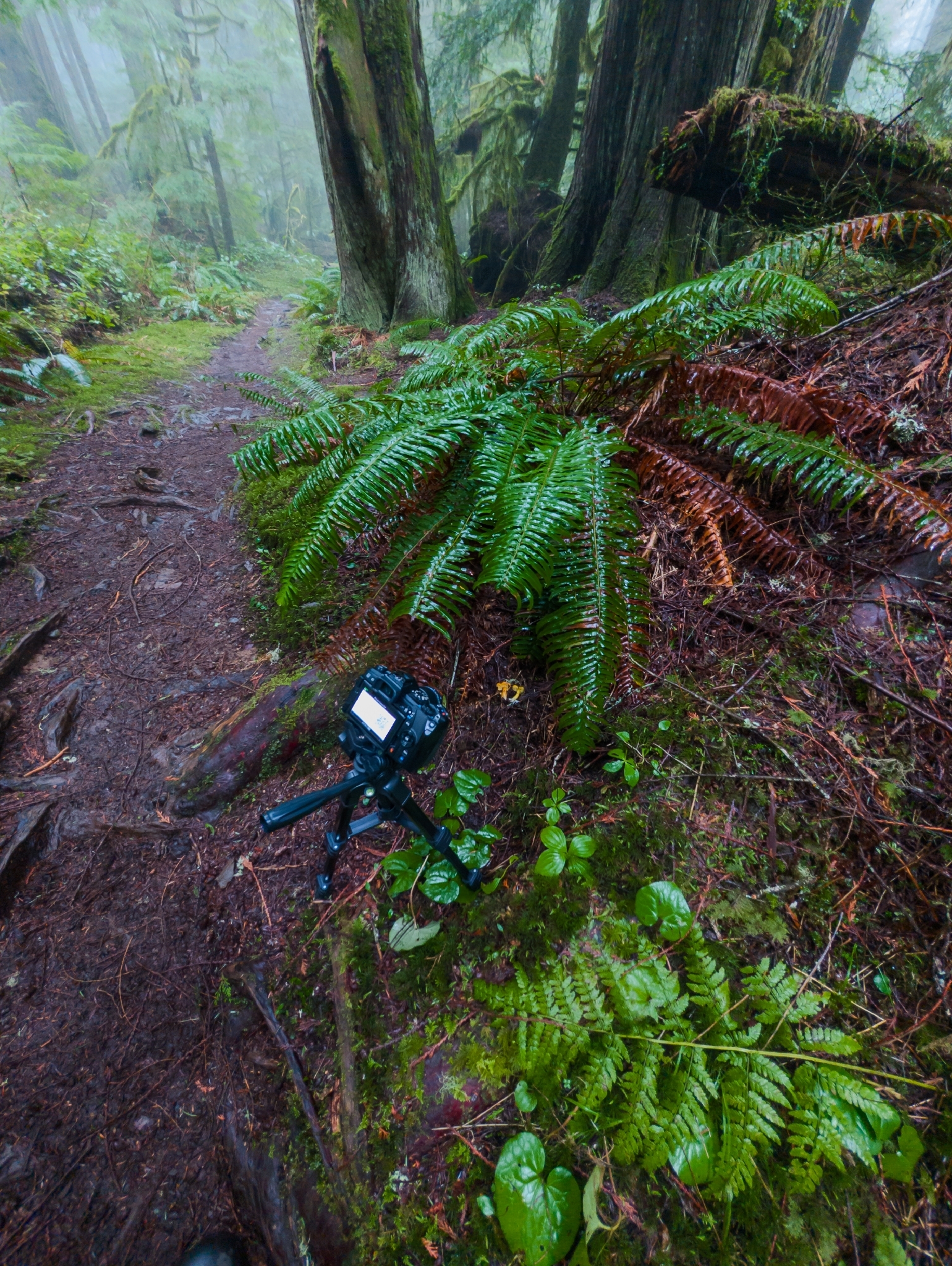
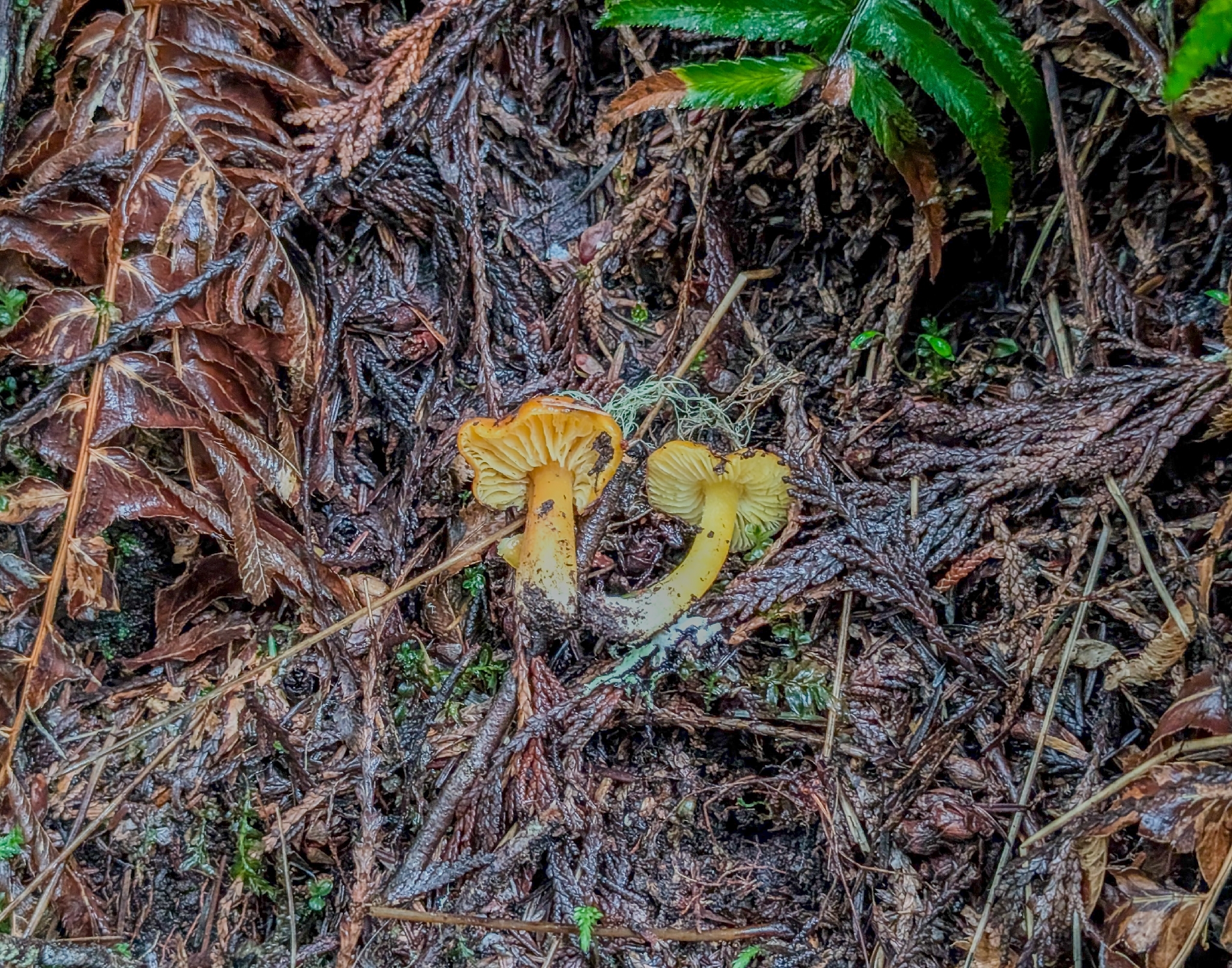
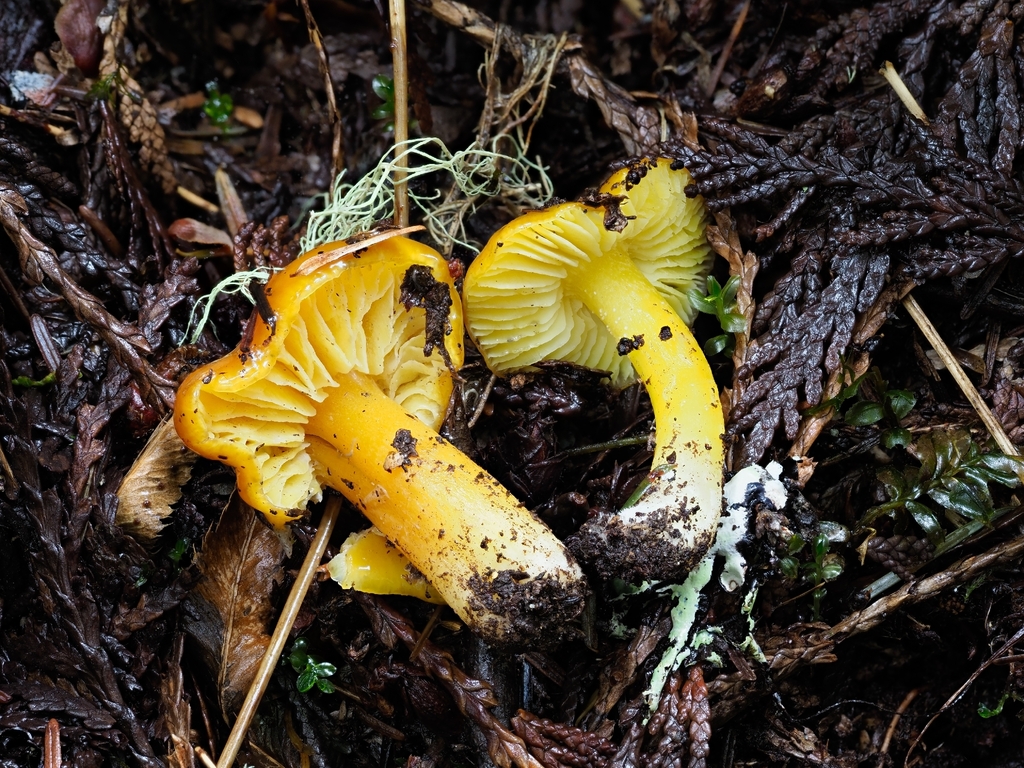
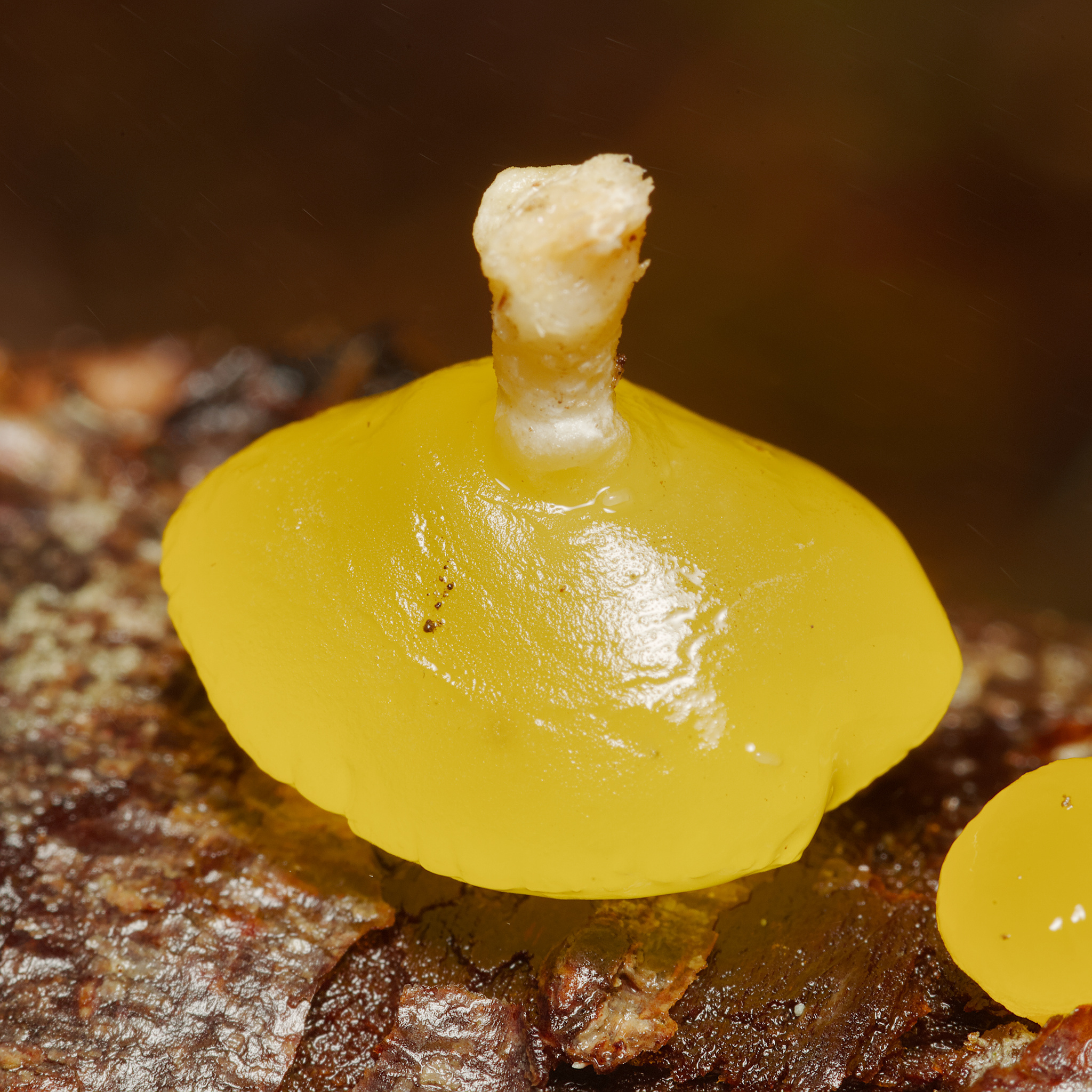
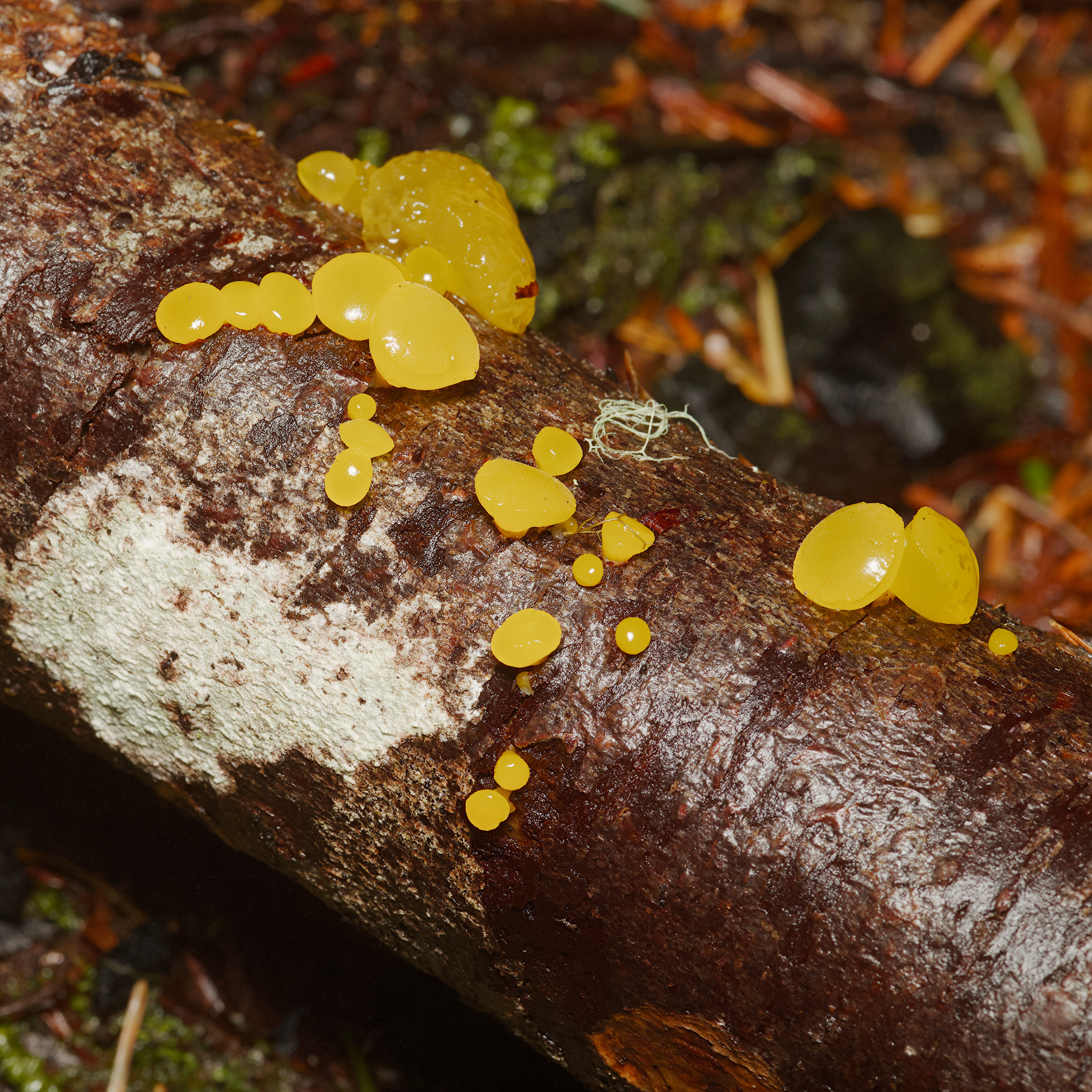
Hygrocybe aff flavescens is fun for its always striking orangey yellow, glistening fruits. I see lots of this species pictured, in the coastal forests outside the park, so it was nice to see it on this walk. Albeit a bit munched on by slugs and bugs. These photos are from my solo observation. (346726560) May not focus on this one in the future but certainly will feature the genus and family again, and potentially a nicer looking collection of this species. I have always thought or understood that this was a bit of a species group. I am not sure if there are temp codes here for example. Regardless I would like to feature more colorful waxcaps, and can confirm we have at least one cool collection in the family for next month. Hygrophoraceae are lovely.
Update: Sequencing has returned a result of Hygrocybe sp. 'flavescens-PNW06'. Nice! I am glad about this result and want to add another code or two this direction to the study.
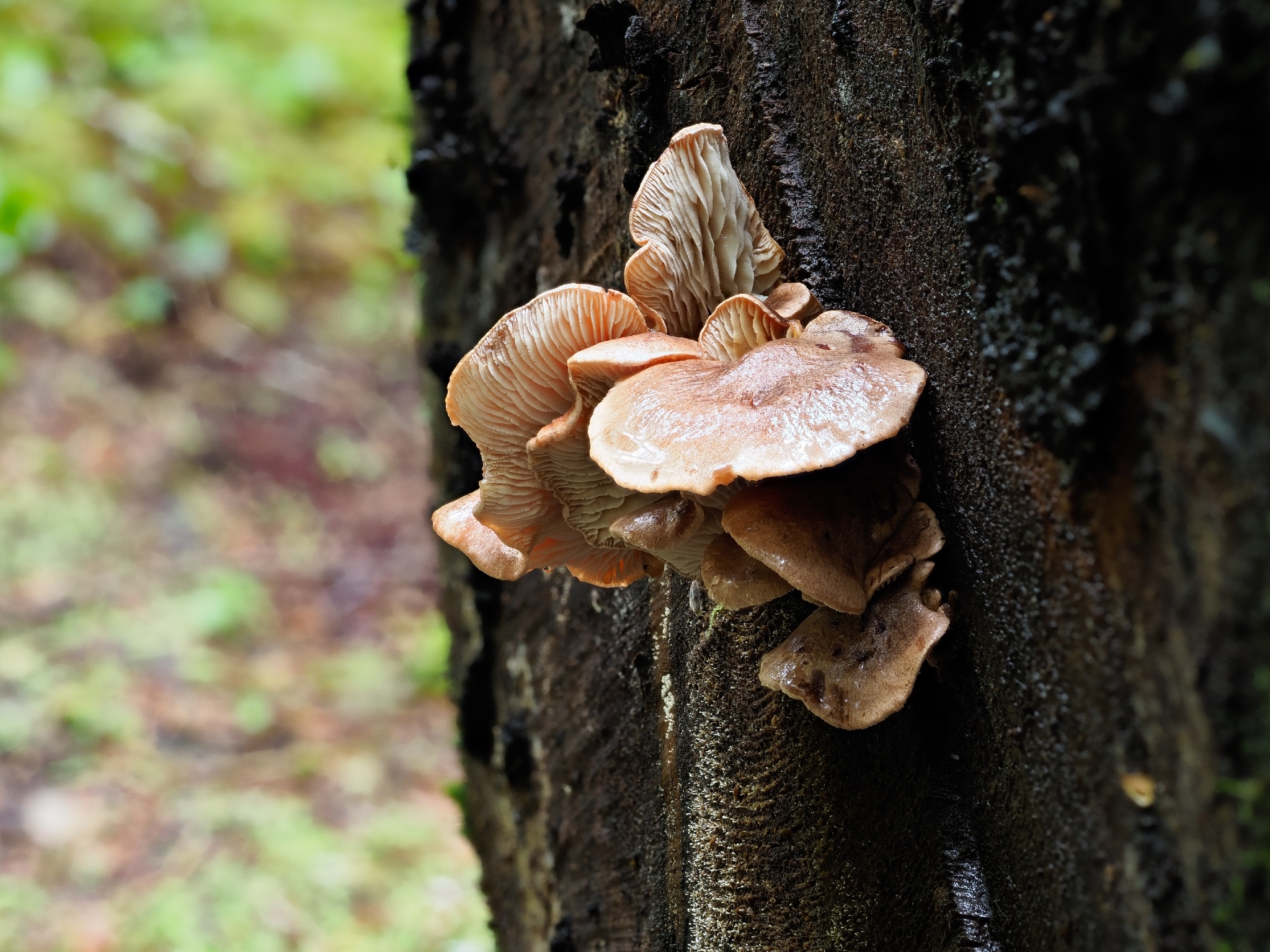
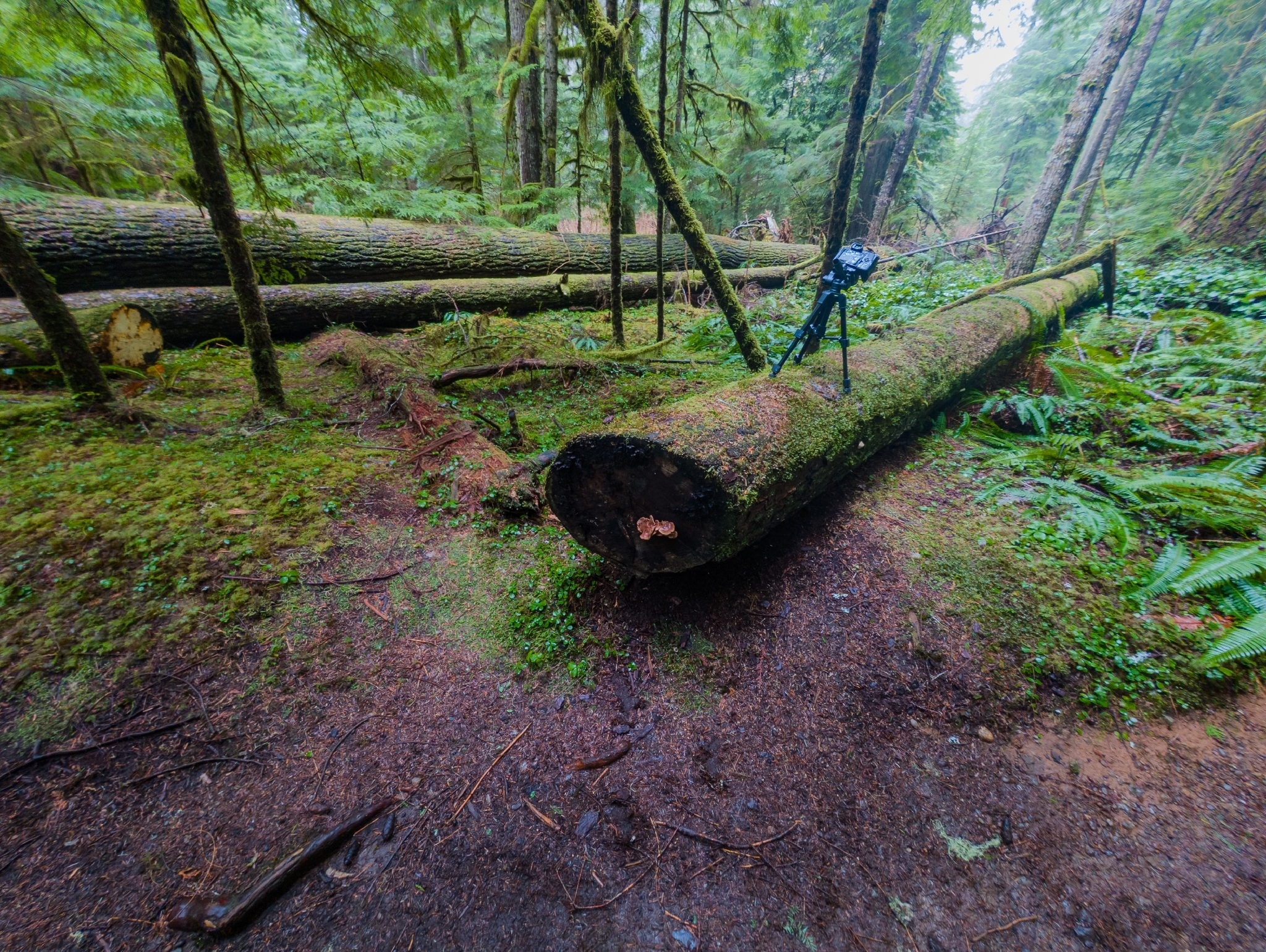
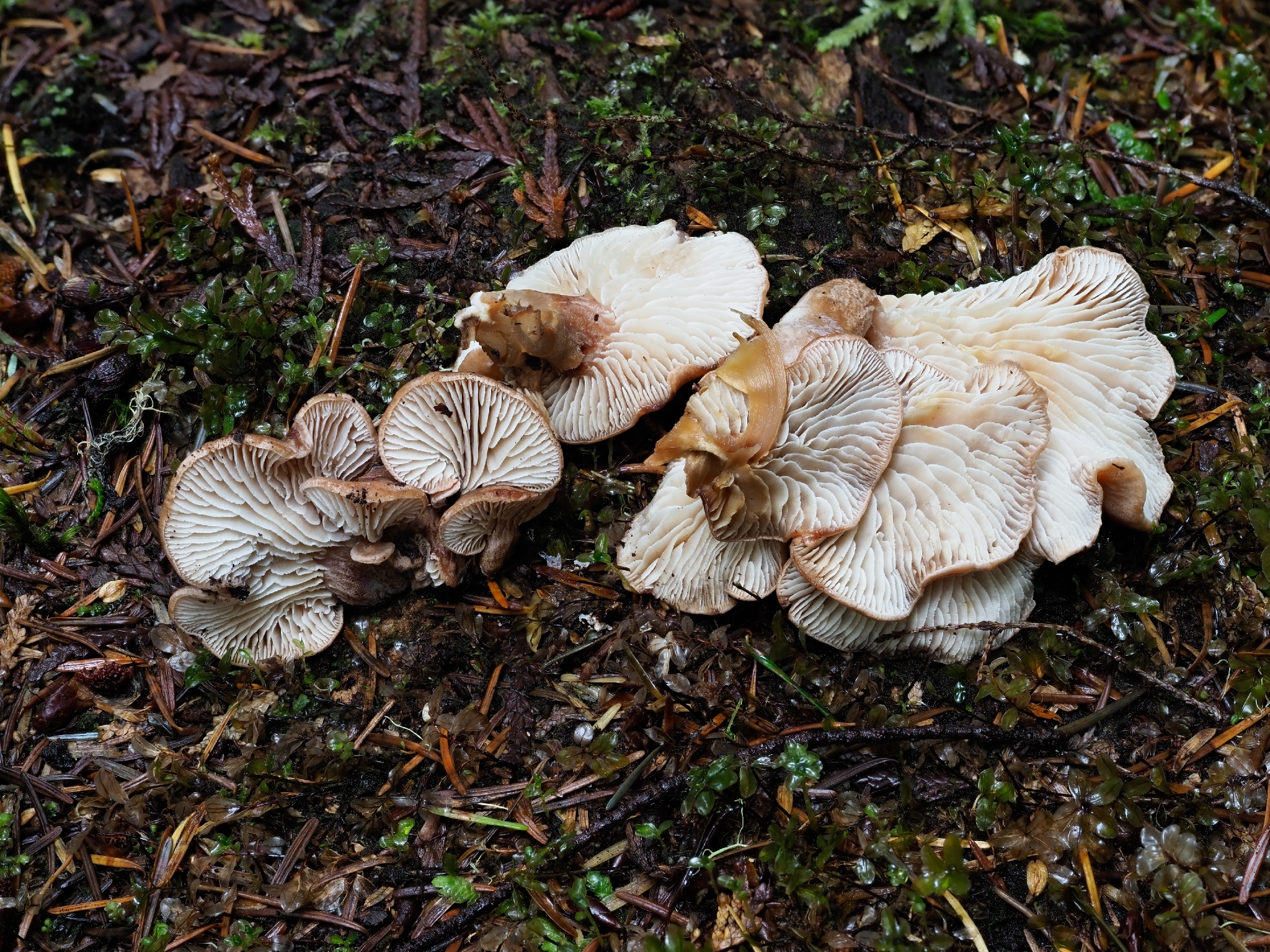
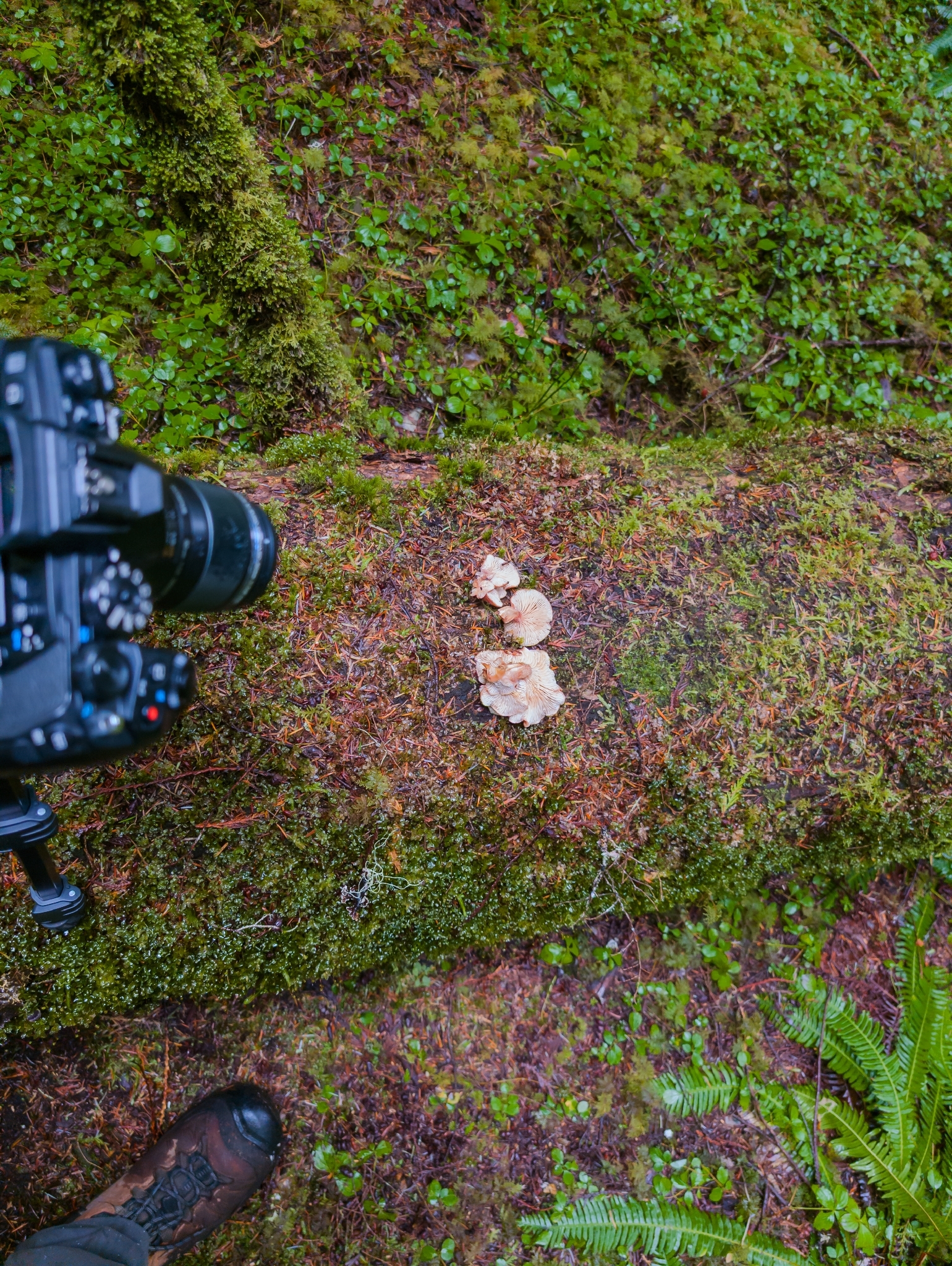
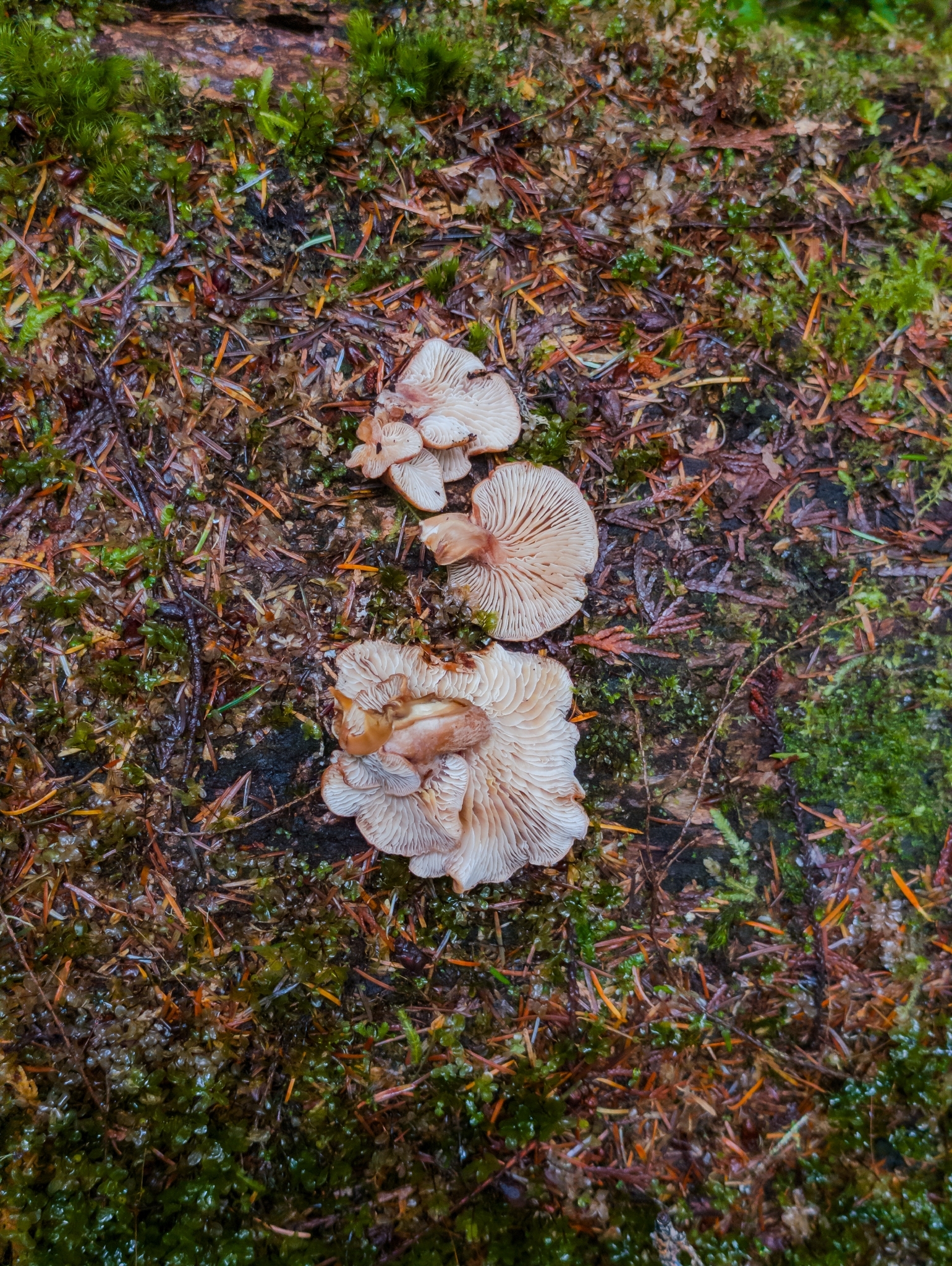
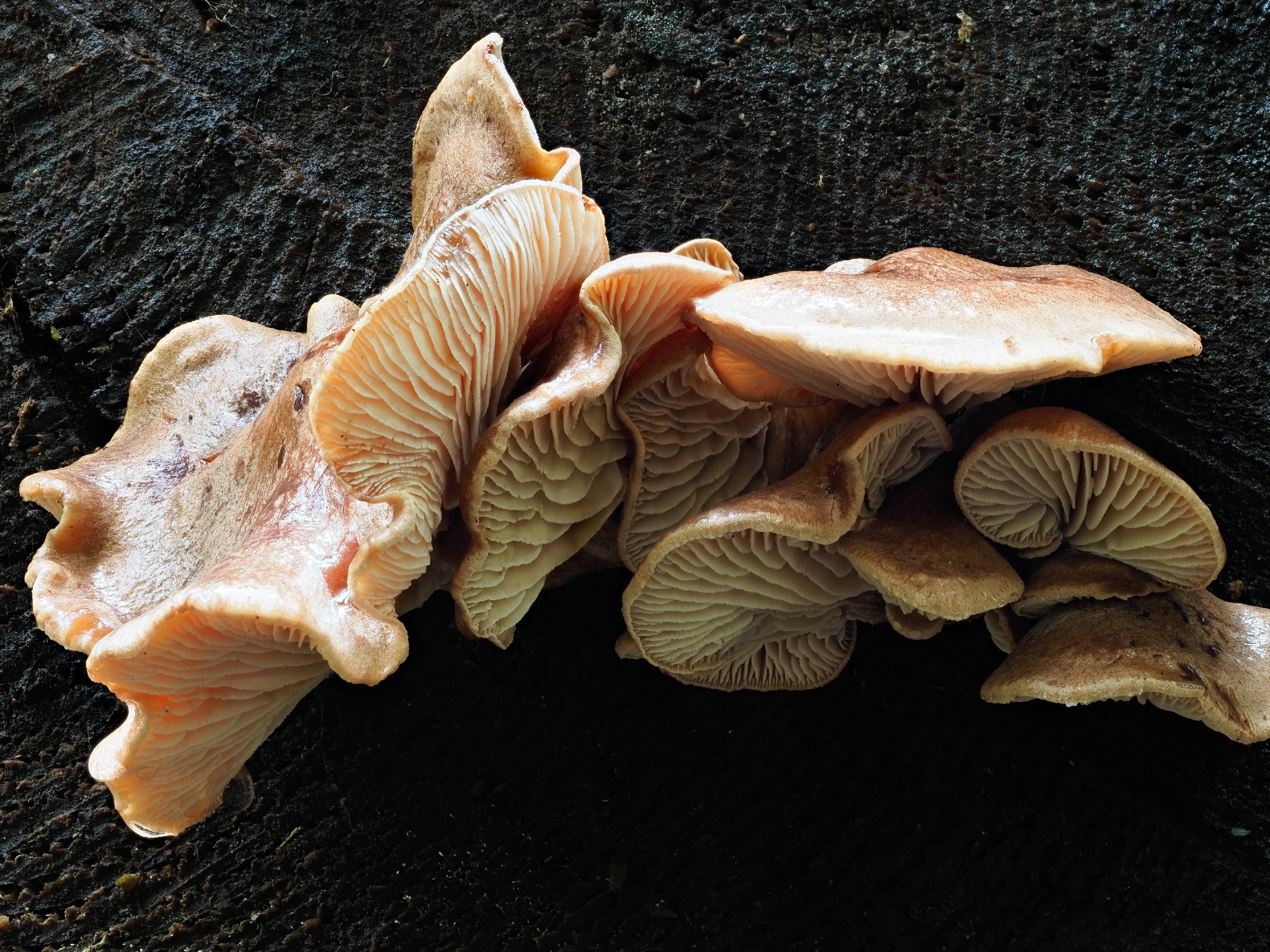
A very cold tolerant Neolentinus, I actually found a fresh one of these in February covered in snow, but did not make a collection at the time as I was a bit wet and cold and lazy. So, I was excited when on this slightly less chilly day at a different location, I found the same species again! Potentially towards N. adhaerens, as Yi-Min Wang has suggested on the observation. (346726777)
Update: DNA has proven Yi-Min correct, this is that species. Distinct from N. kauffmanii macroscopically in cap texture, as Yi-Min points out on iNat. Also appears to be able to be differentiated by stipe length and shape to some degree, as well as color. I would have to include cold tolerance, or seasonality, as another potential difference between the two. I believe this one is more common in this specific area.
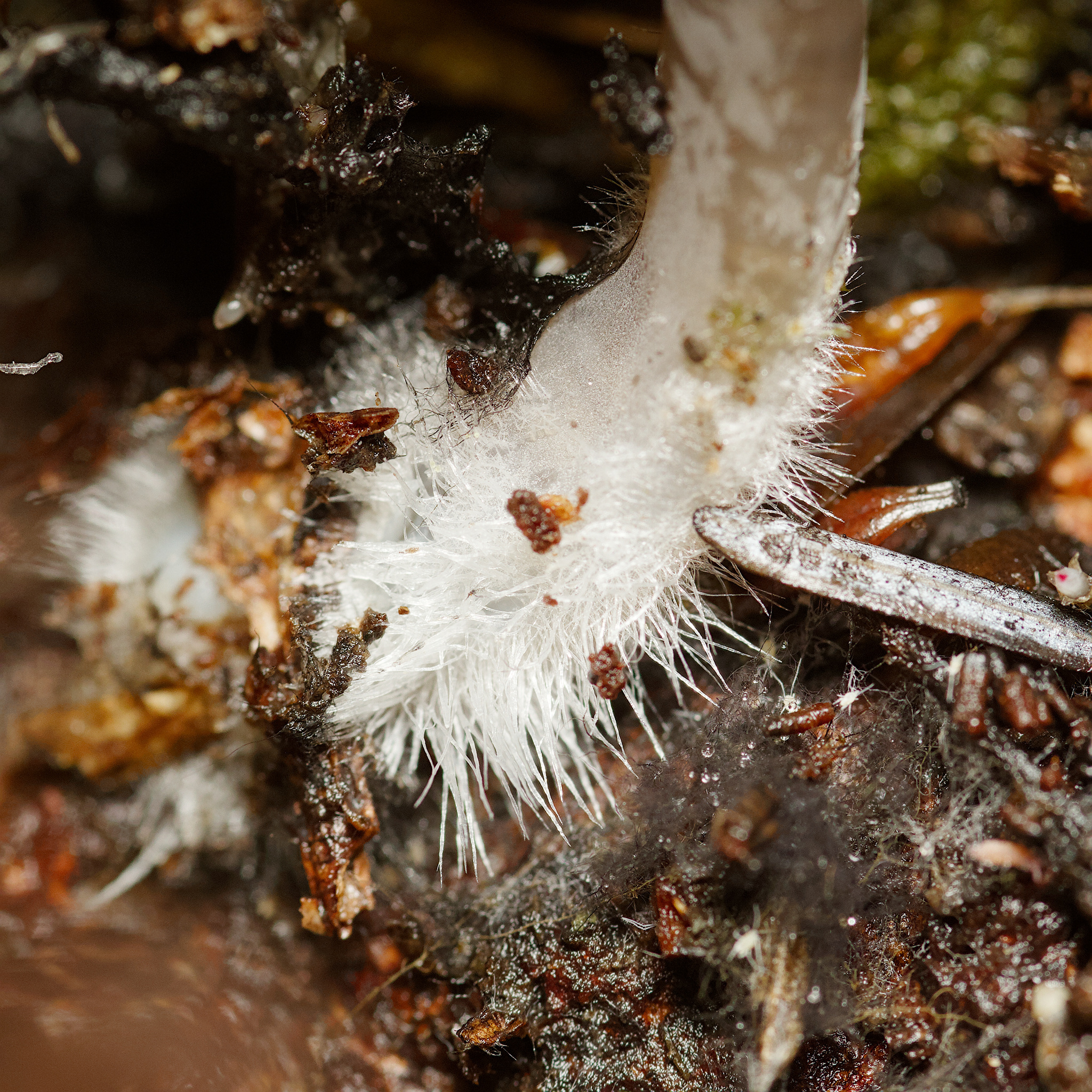
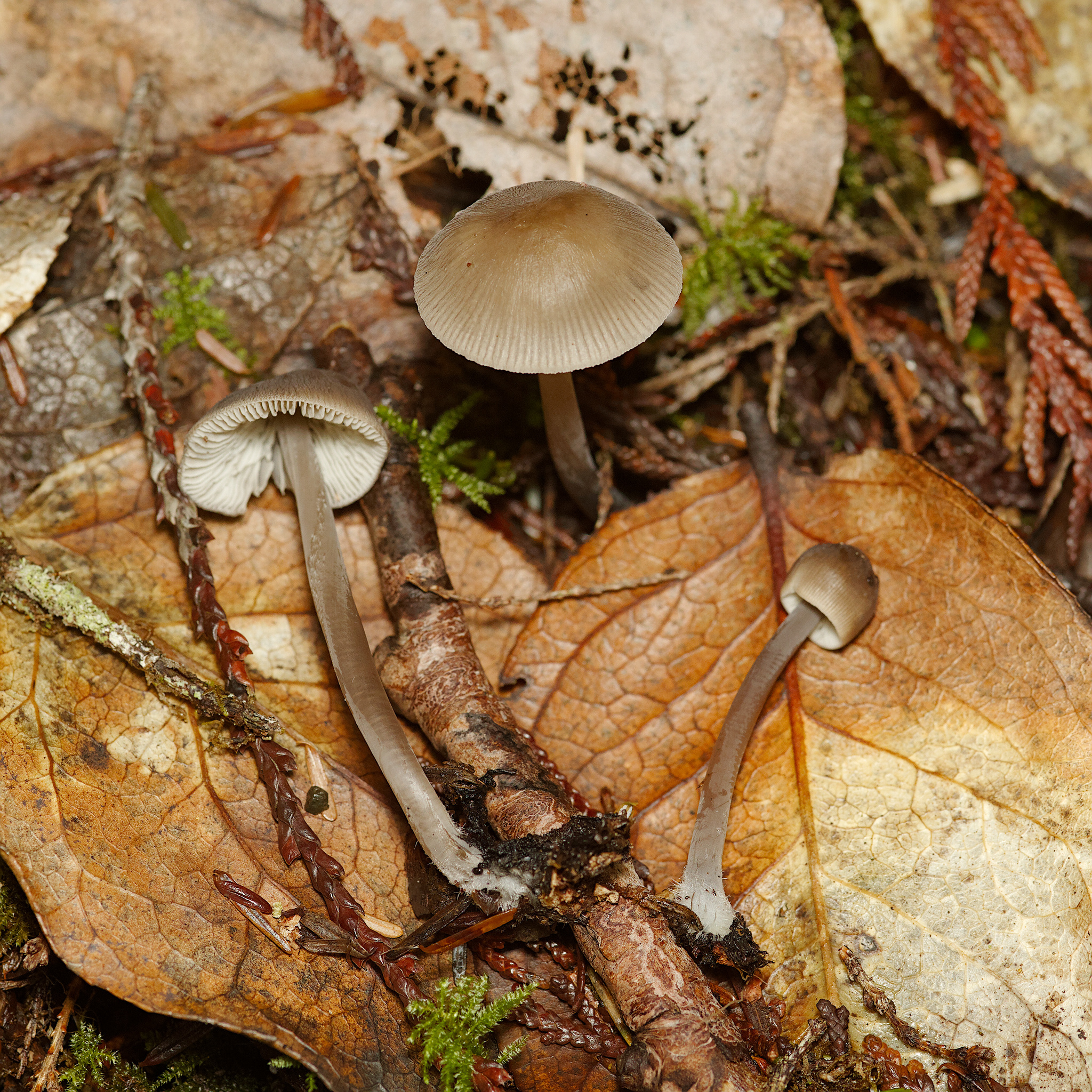
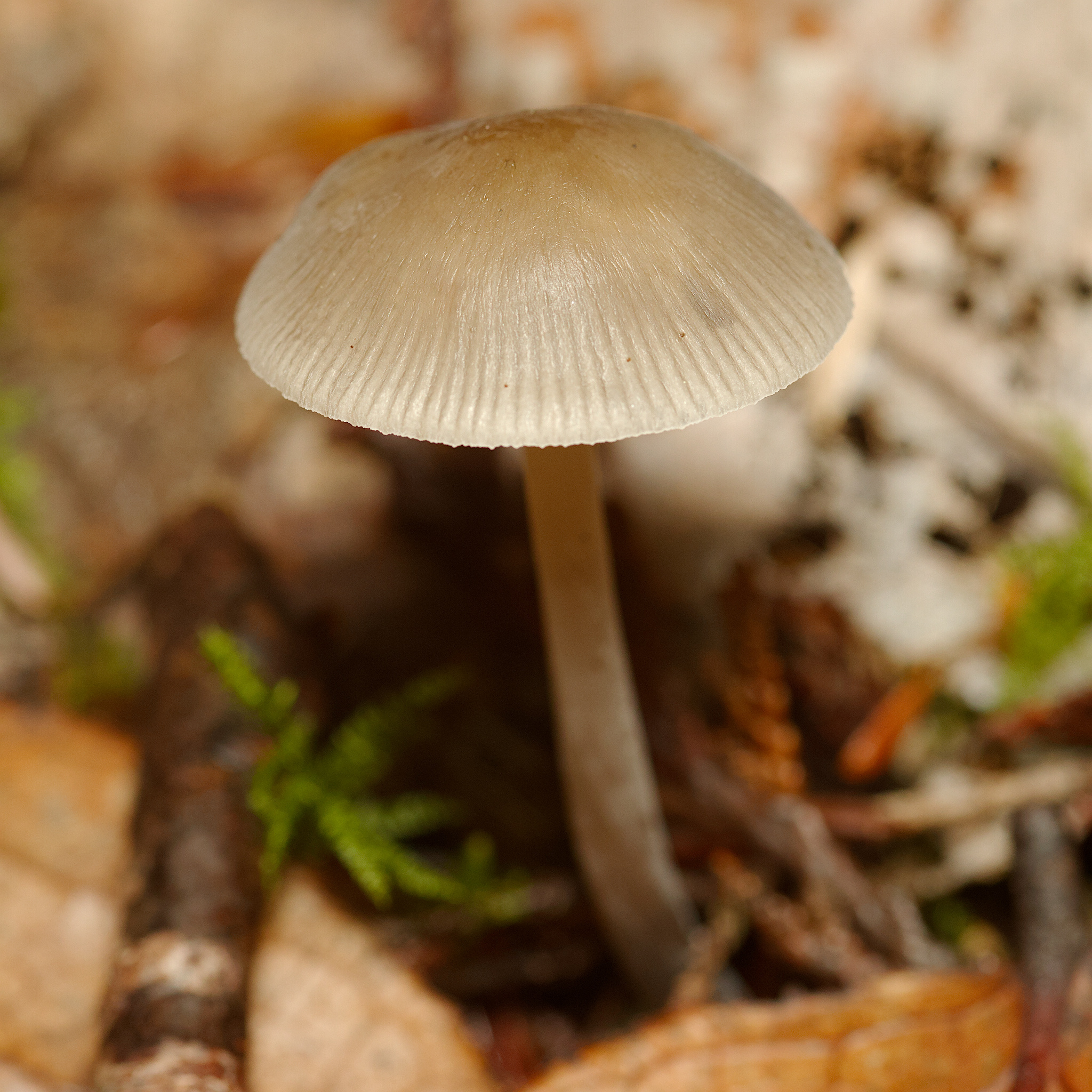
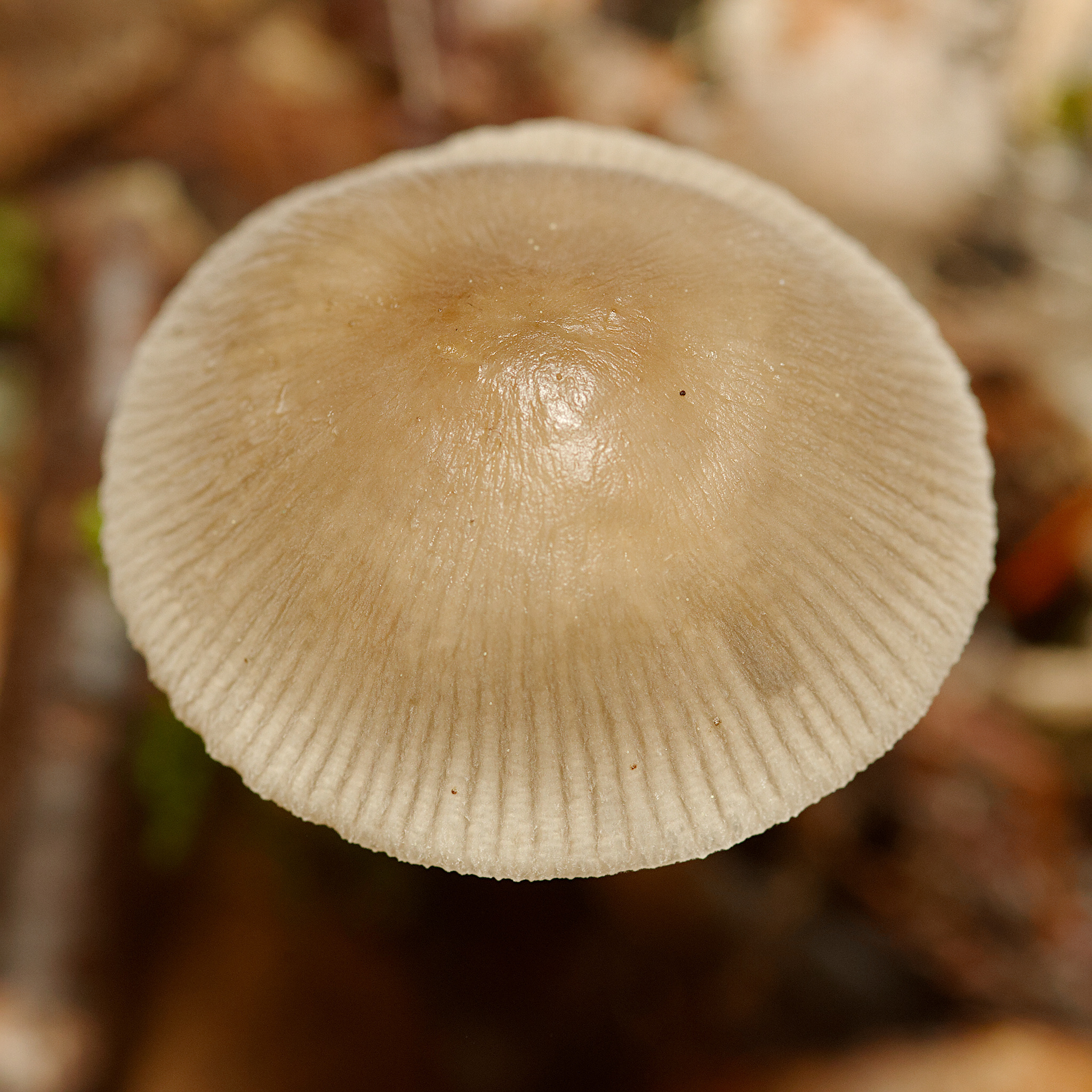
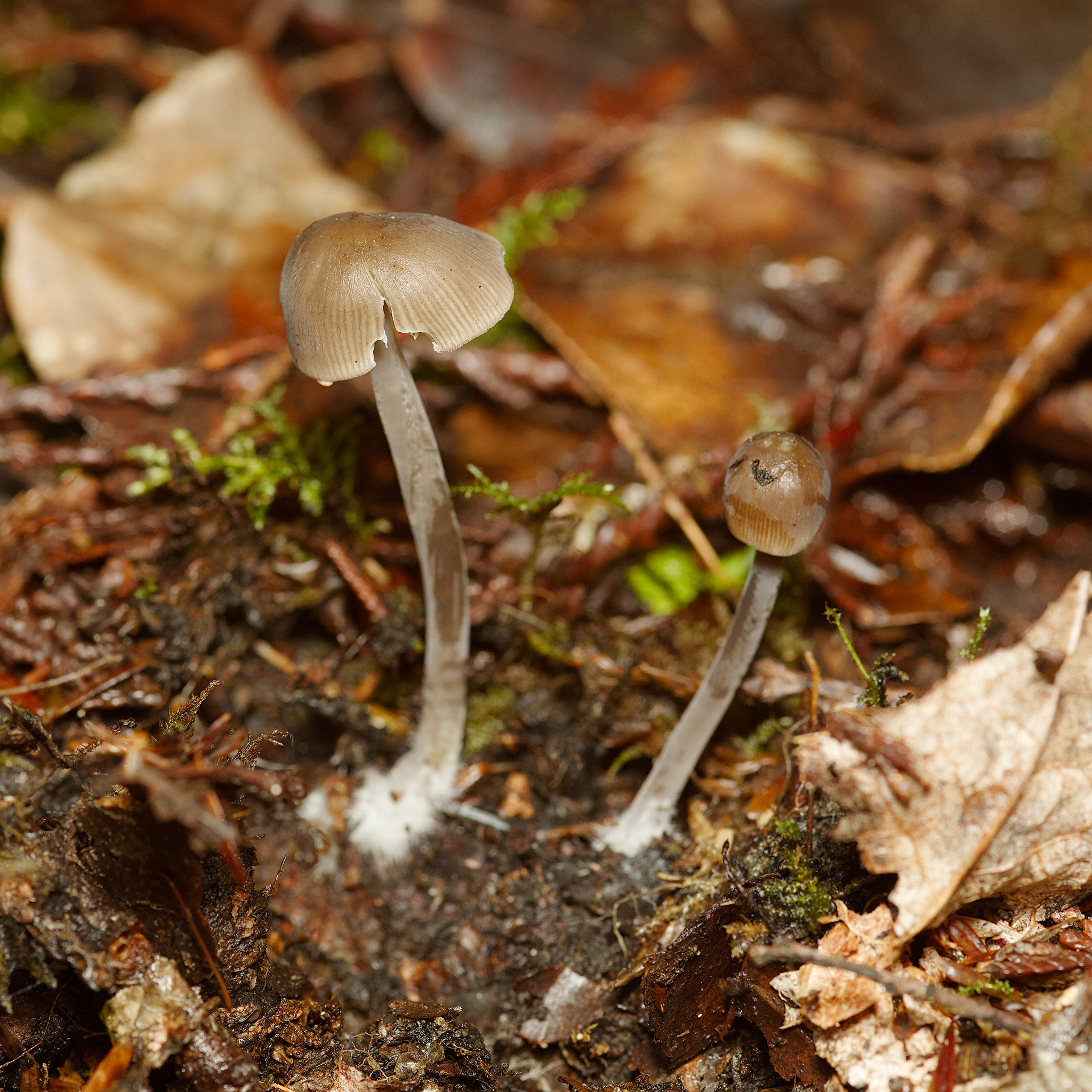
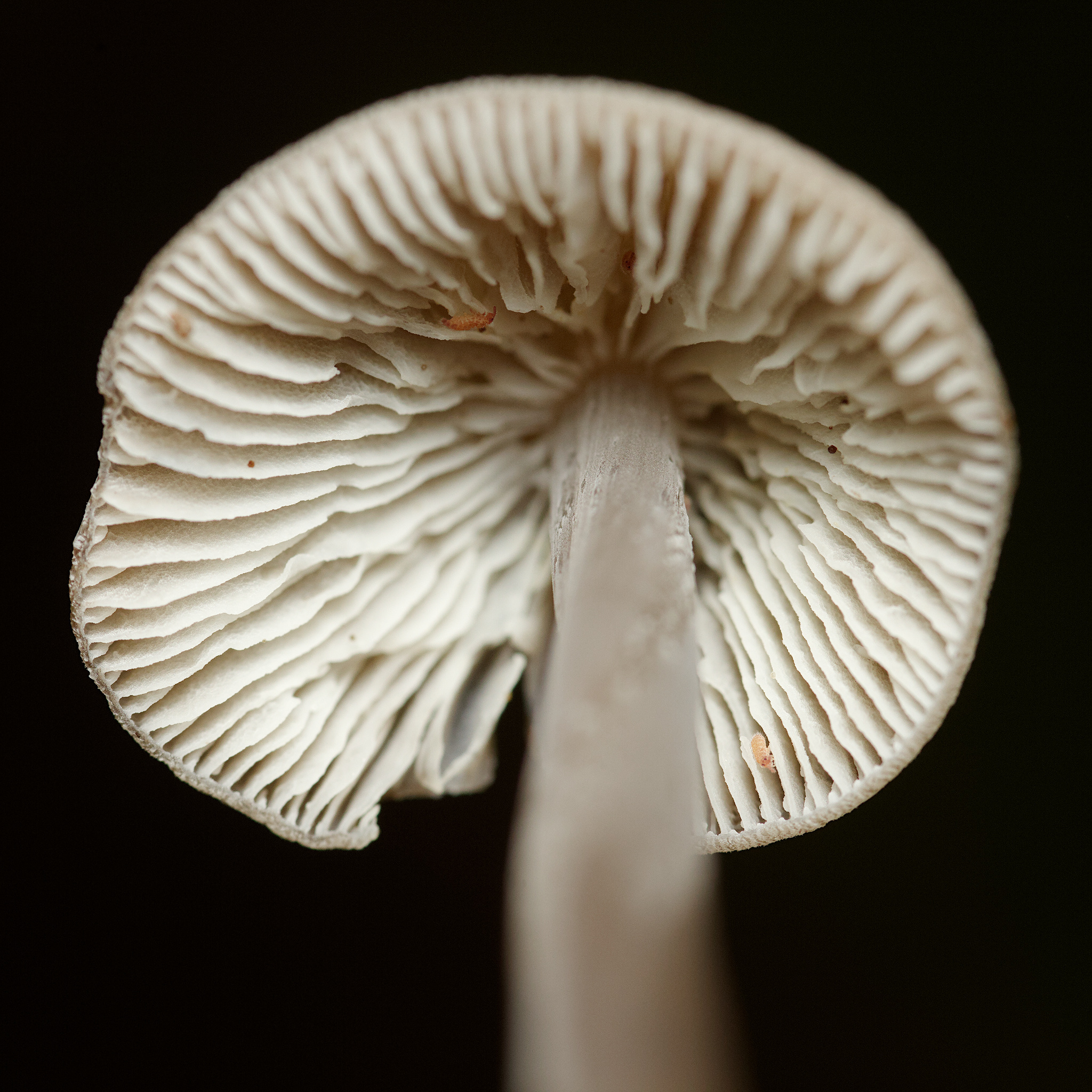
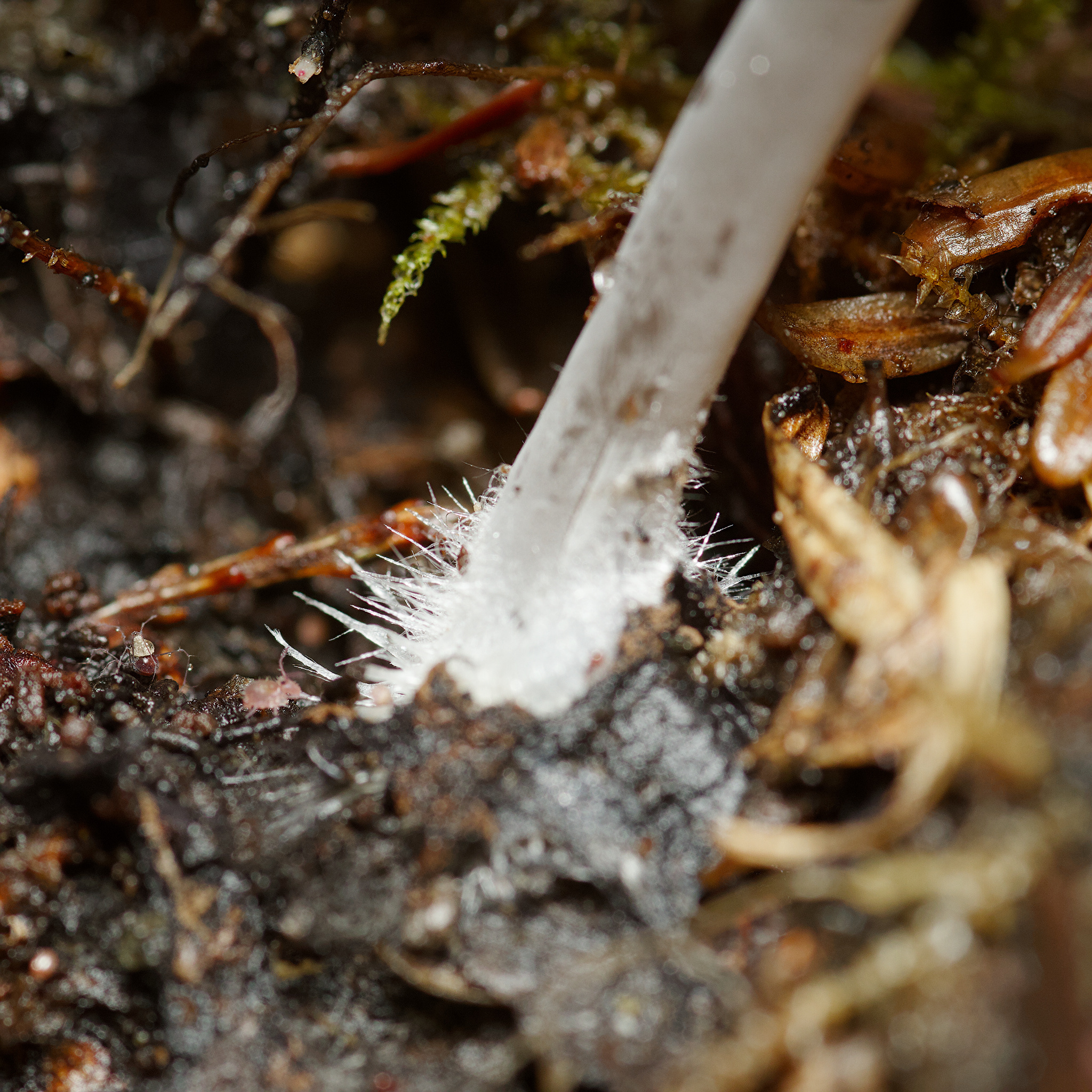
This collection (346517690) consists of another generic robust Mycena. Of course meaning robust for this genus. Unfortunately I don’t believe either Brodie or I gave a full sniff here. I say unfortunately because while this could simply be one of the many “boring” larger Mycena, it also fits the bill for at least some of the odorous species. Will make better note there next time, for now our collections in the genus just aim to provide a more general understanding of a few of the key species in this area. I am certainly not one to speculate as to species in this genus either. The reader may find that I am more of a generalist, in general.
Update: DNA confirms this as M. hudsoniana. Slightly lesser known, neat find!
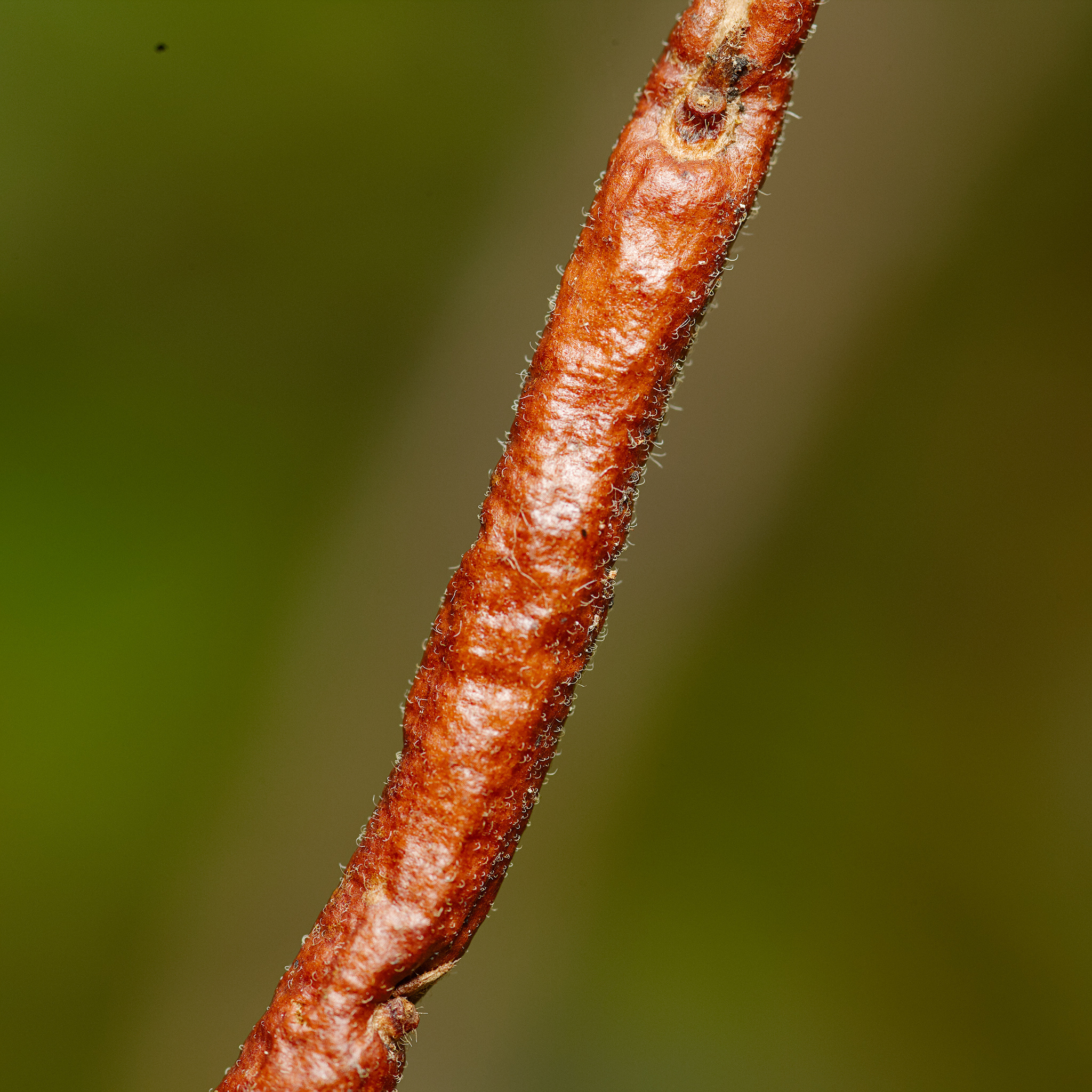
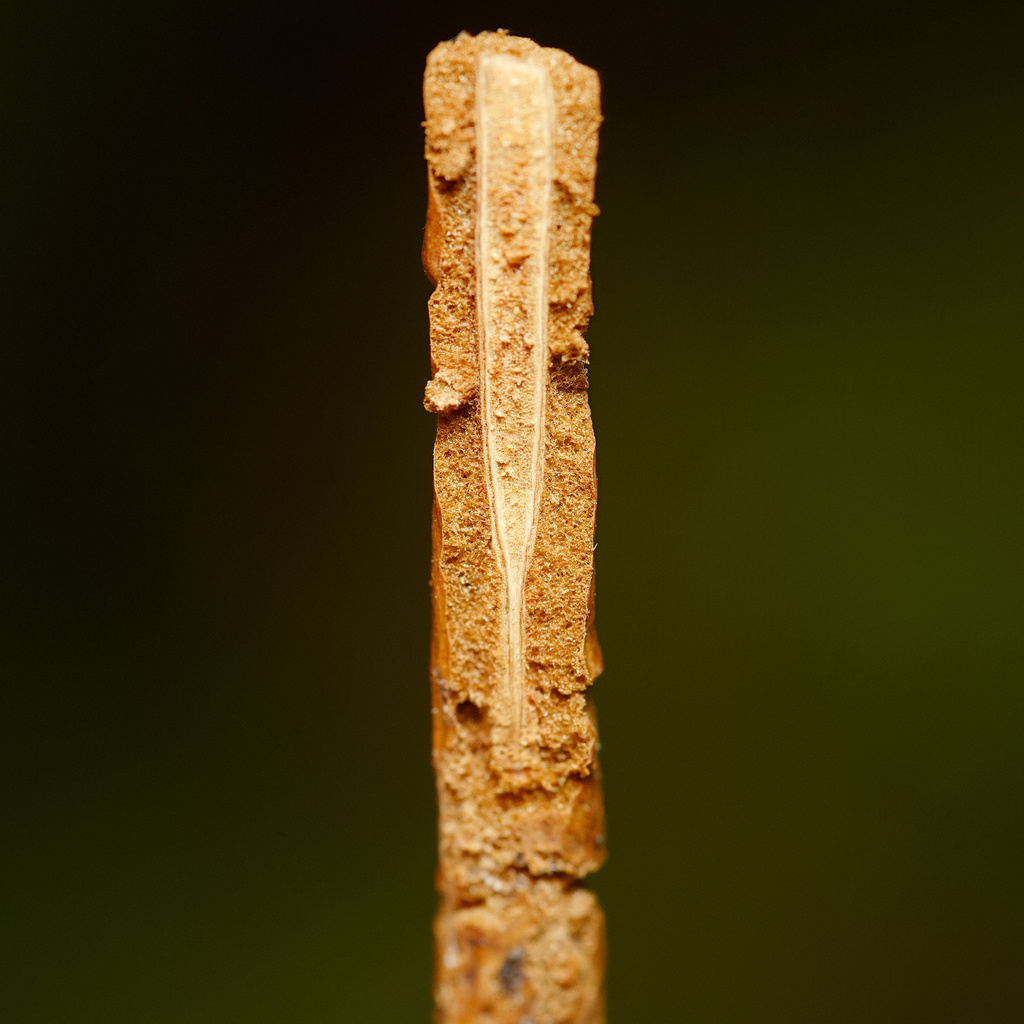
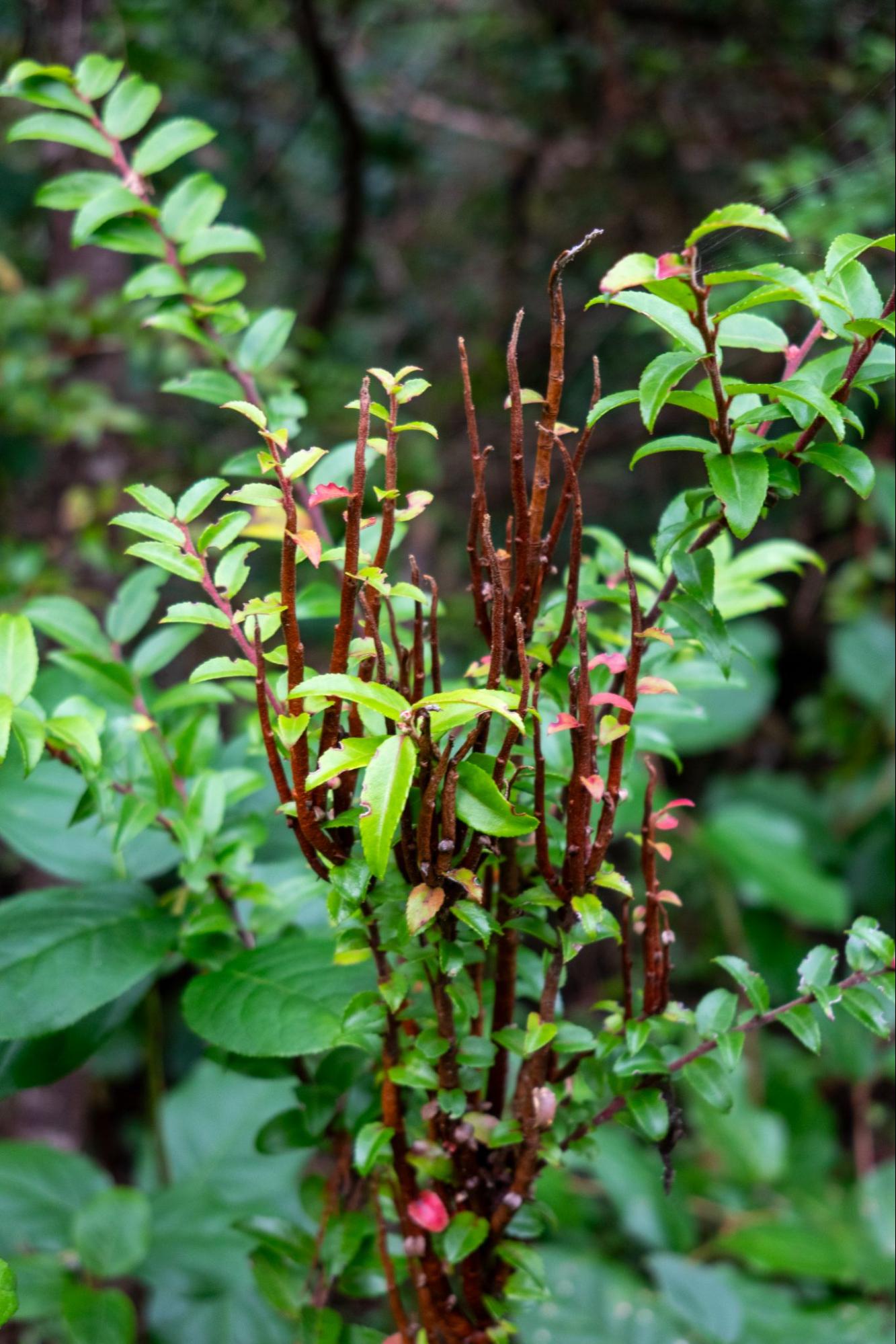
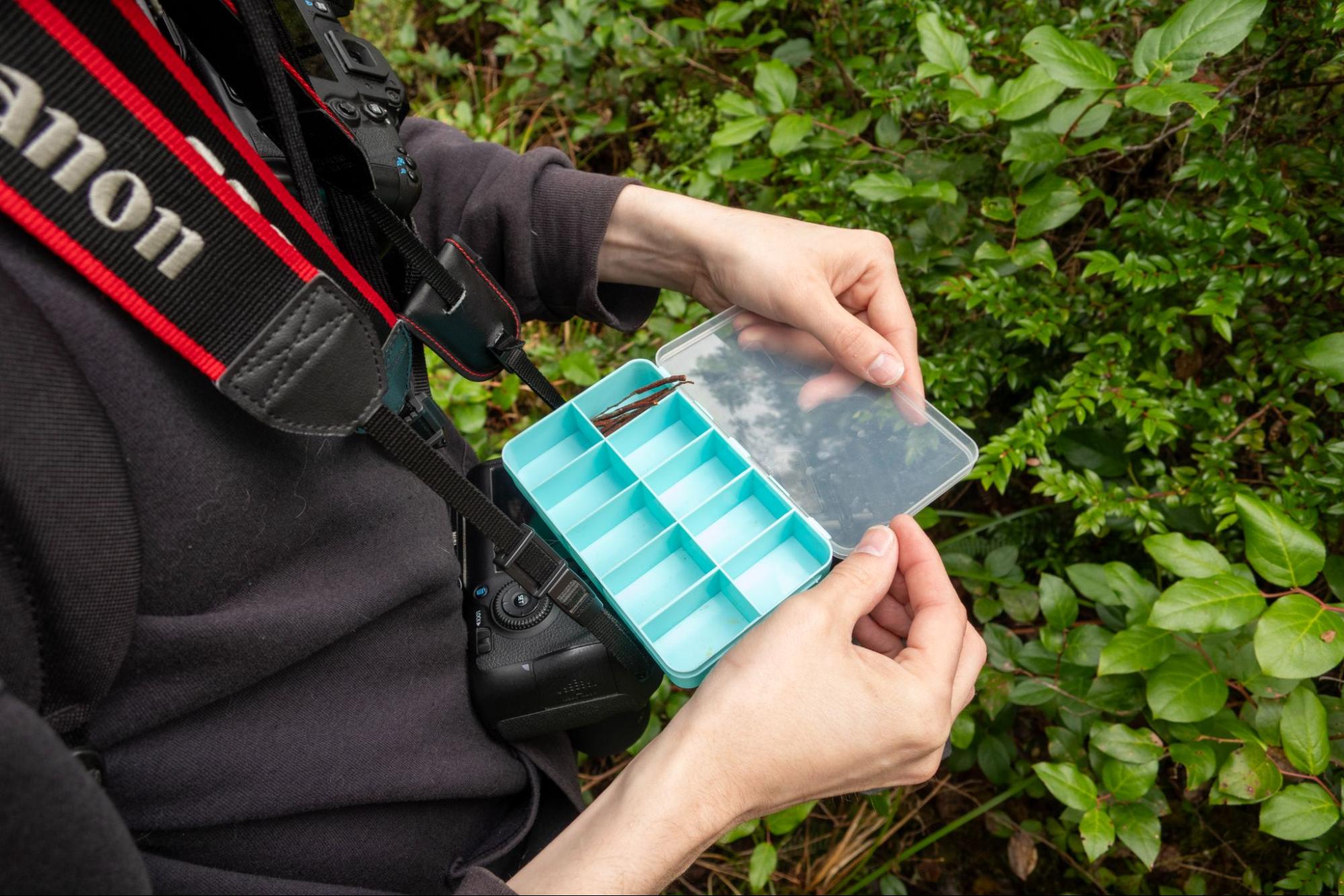
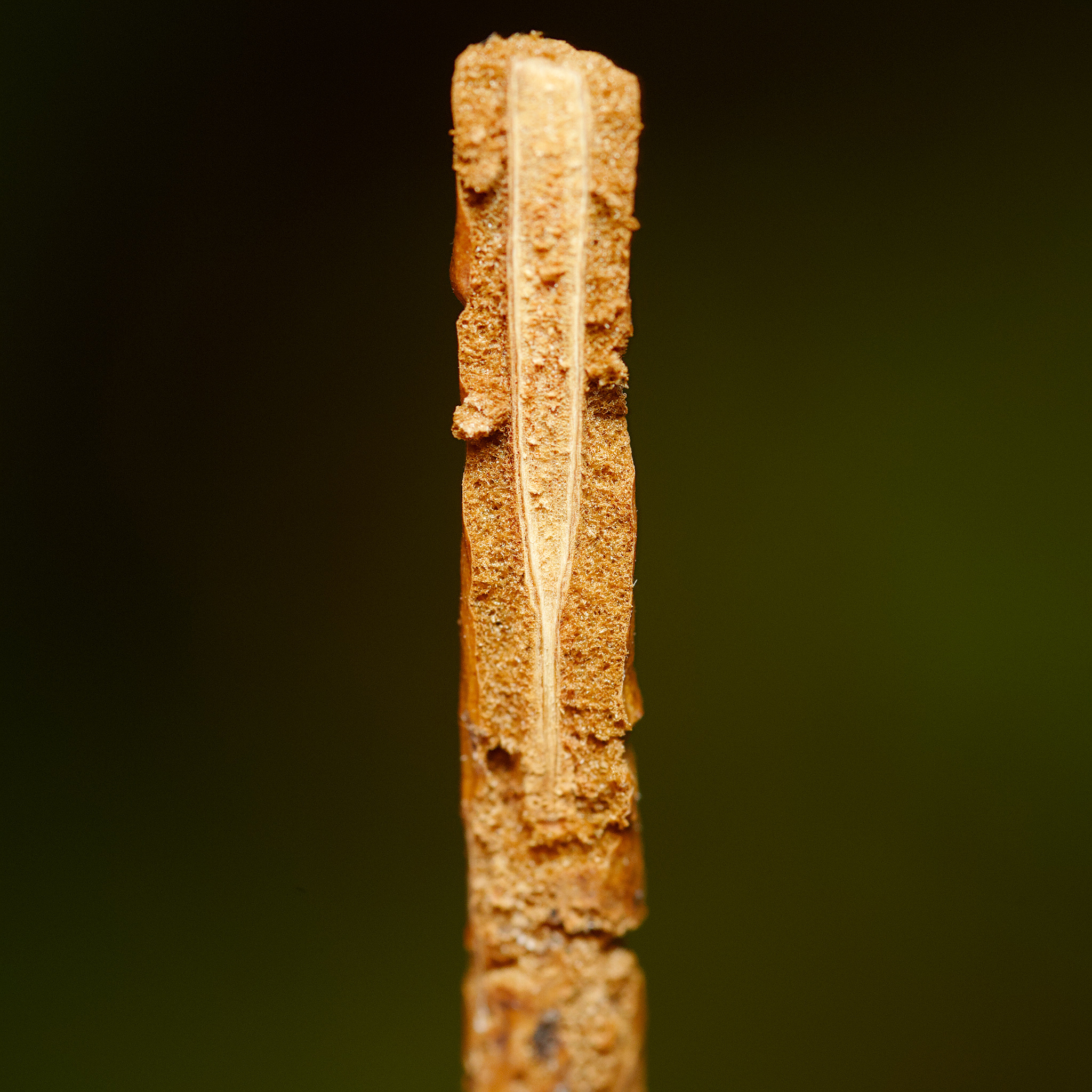
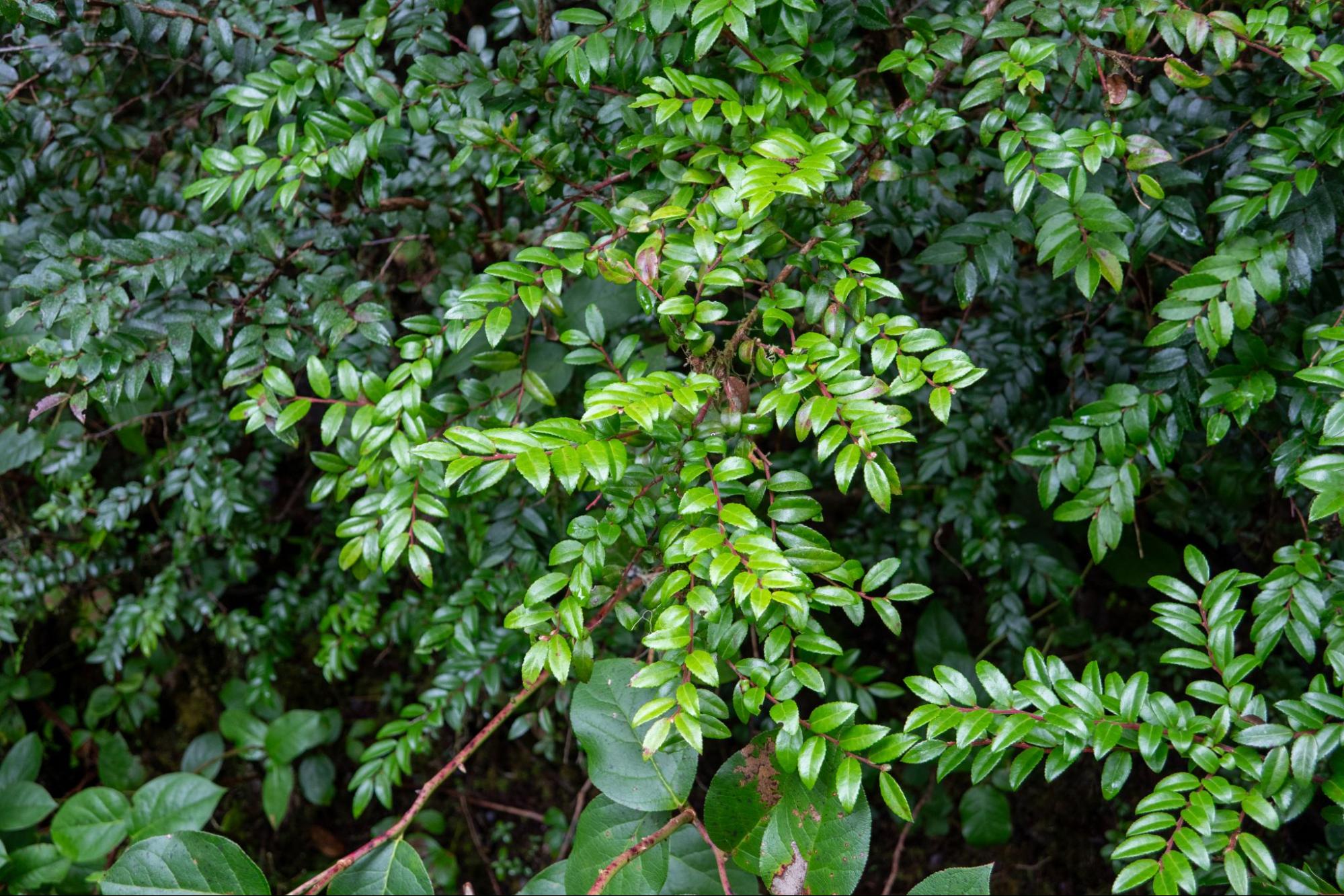
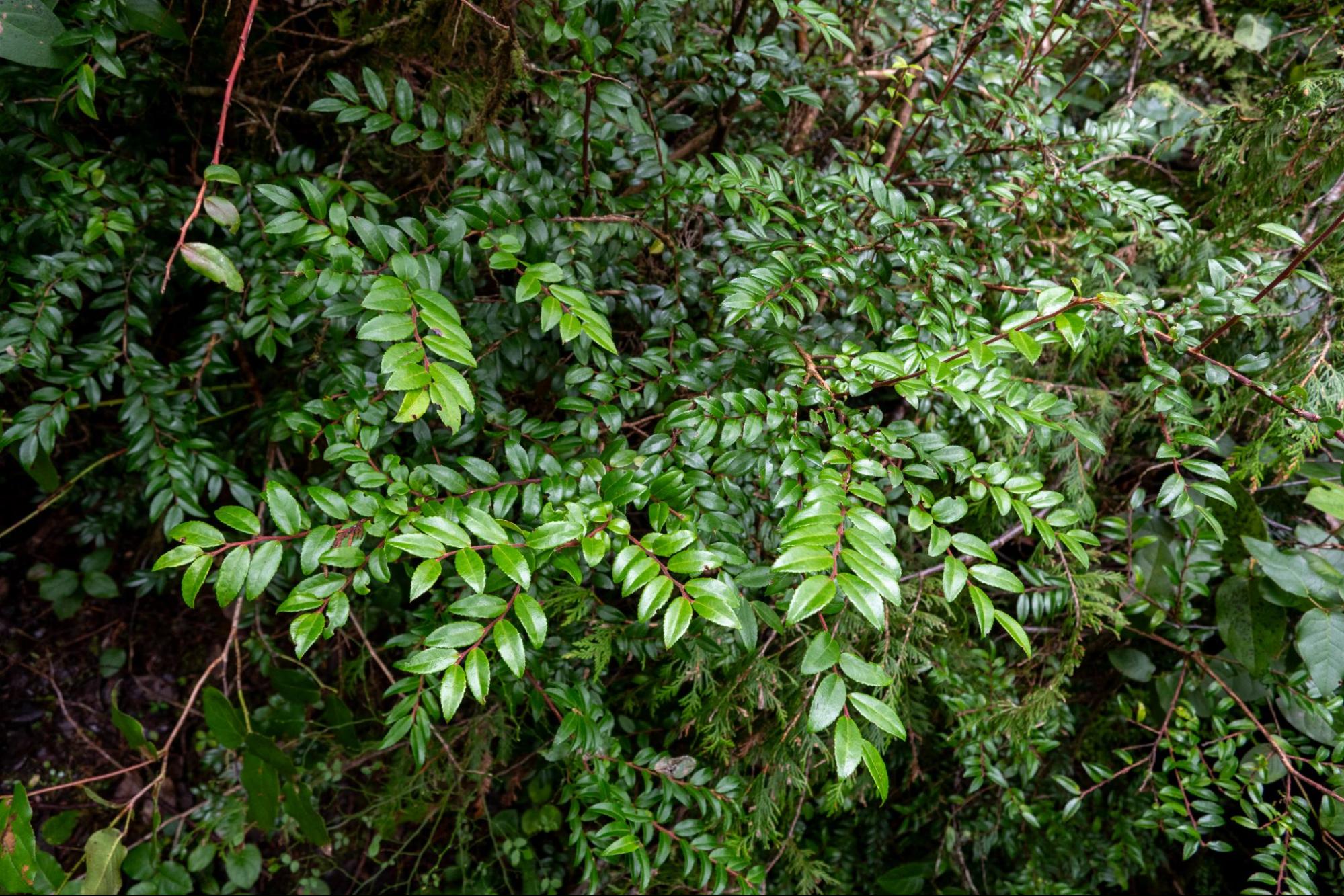
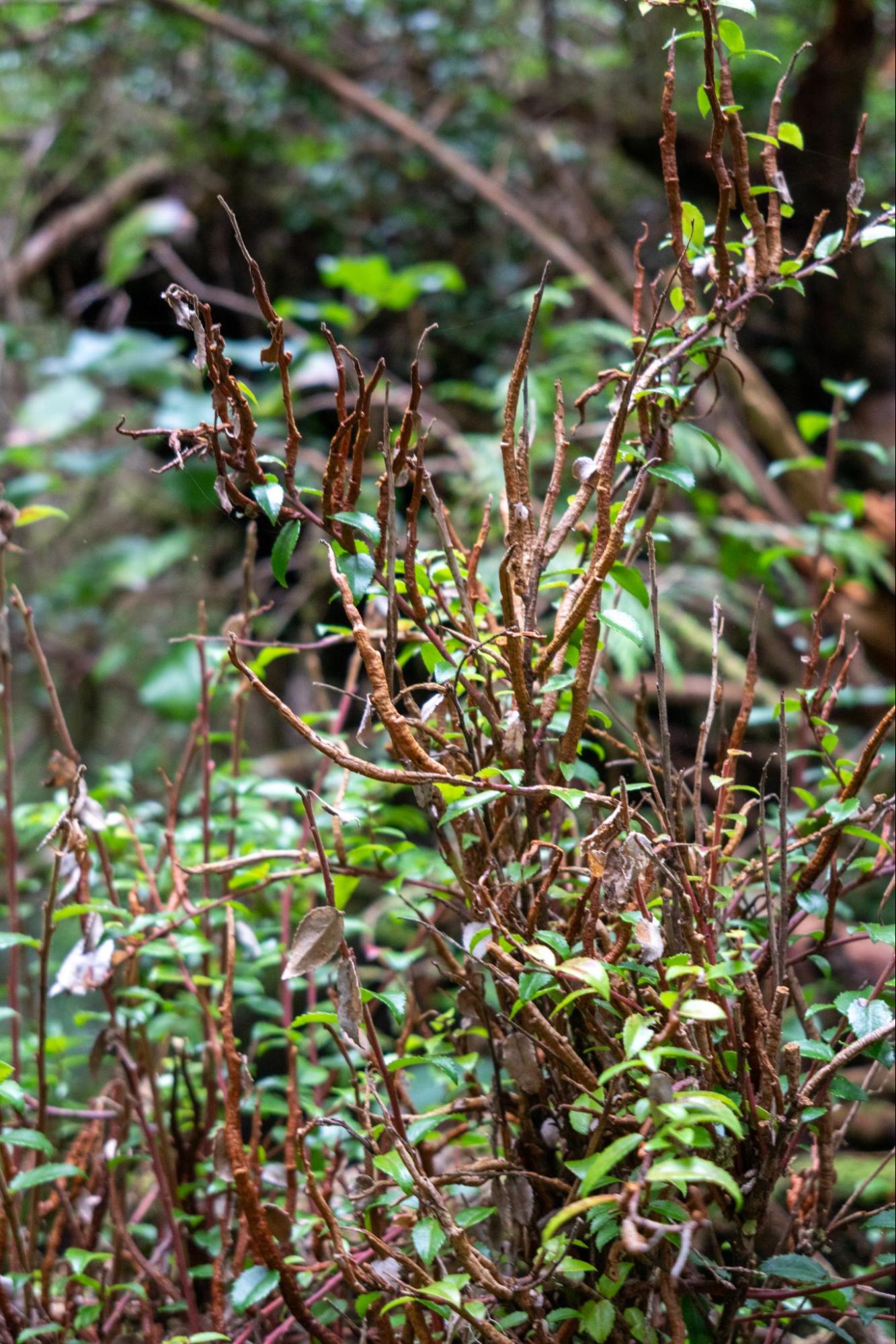
A parasite on Evergreen Huckleberry, this species is quite common, especially surrounding the large bogs that this trail cuts through. Despite its frequency here, I found it fascinating. This is Calyptospora ornamentalis growing on Vaccinium ovatum. (346517688) The fungal parasite coats the stems of the plants and significantly changes their growth, causing denser vertical clusters of now swollen stems to form. Often resulting in less foliage and overall fairly different host morphology. An infected plant below on the left, uninfected on the right.
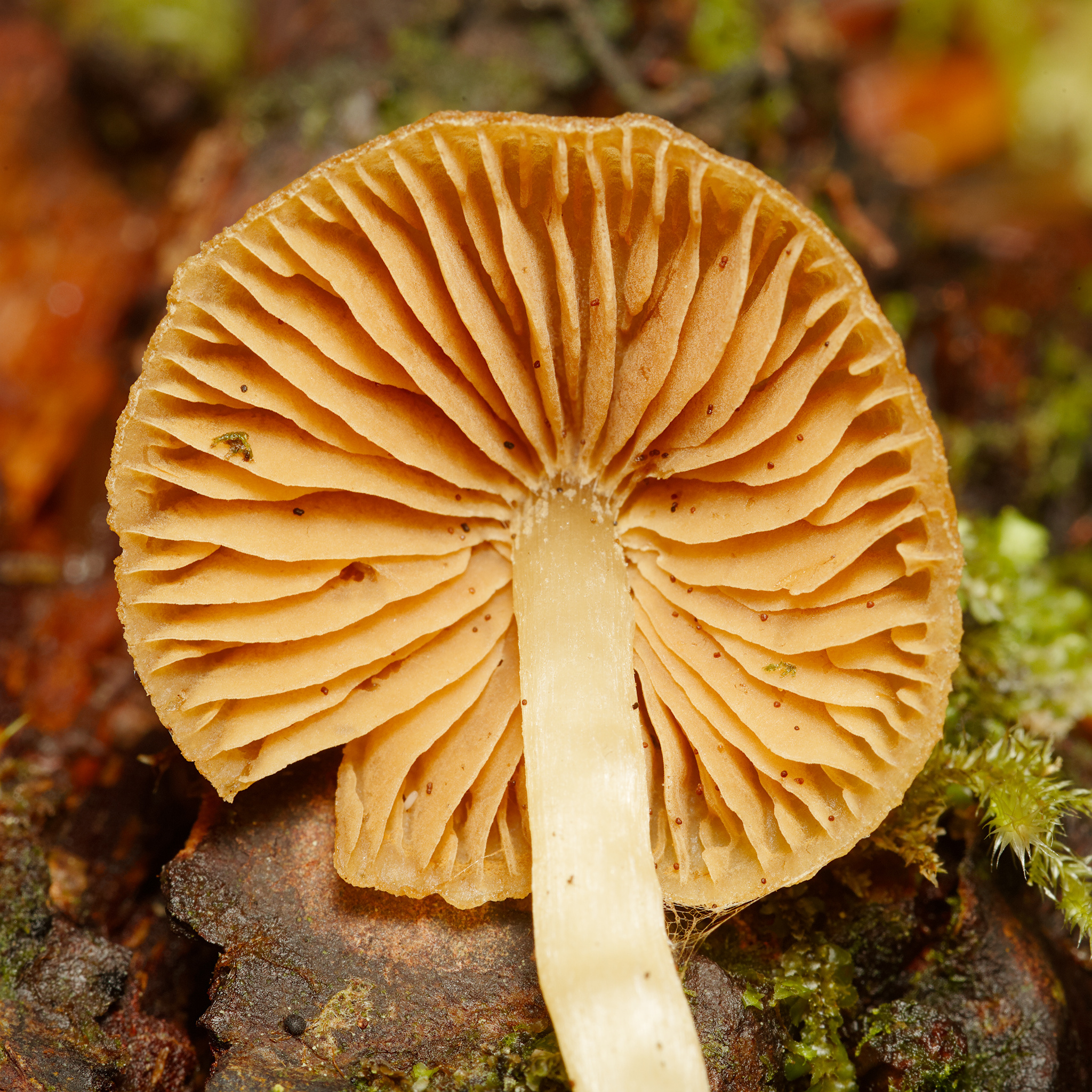
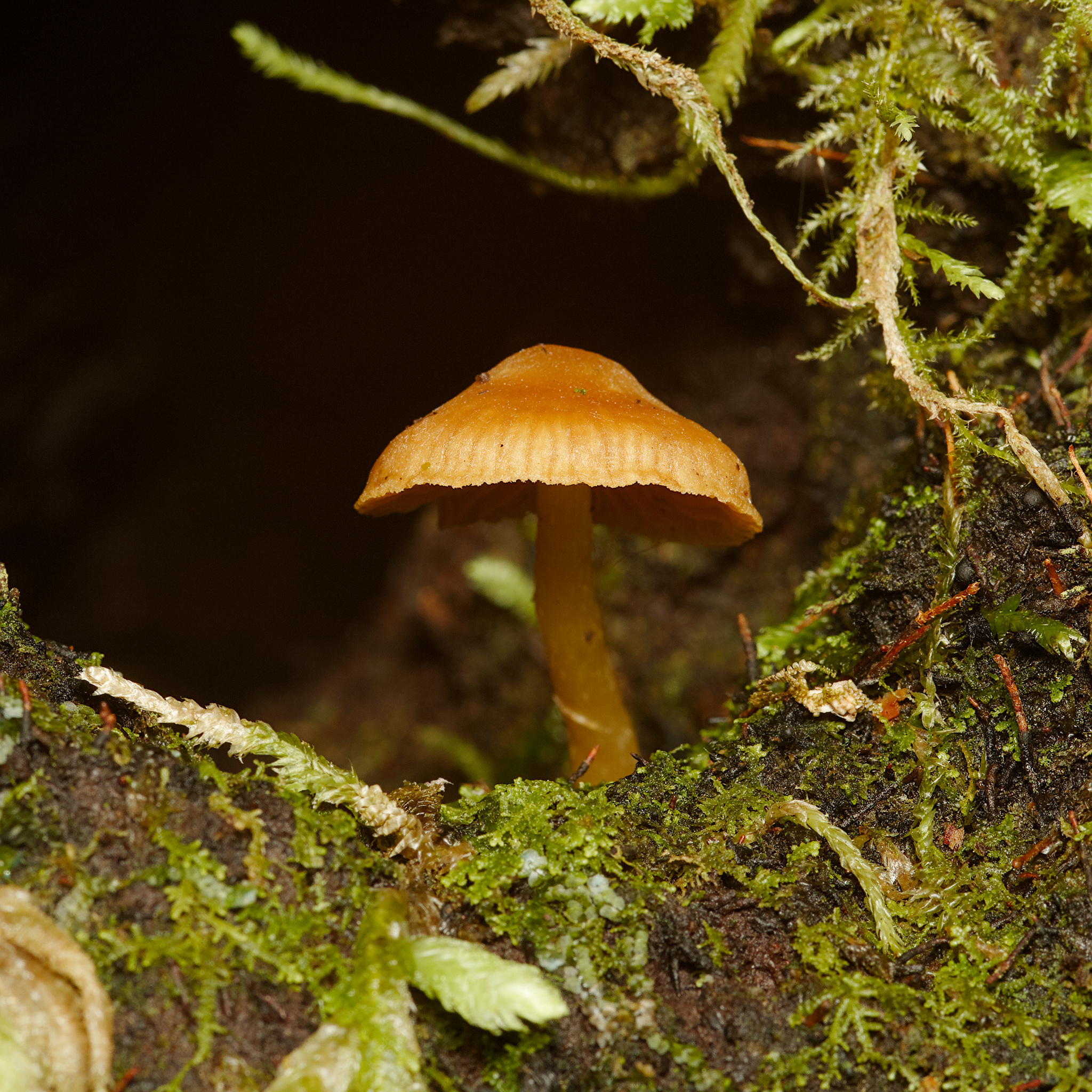
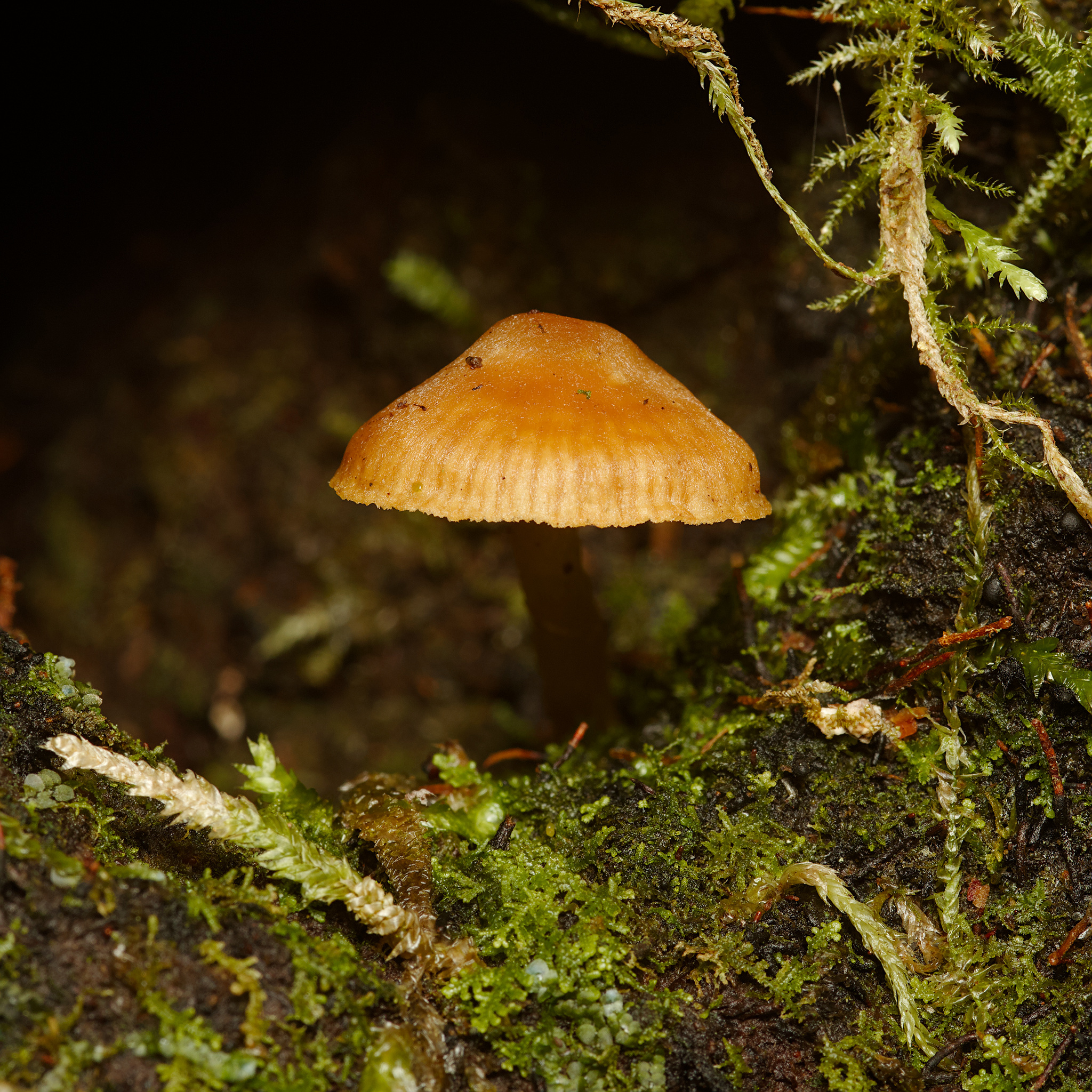
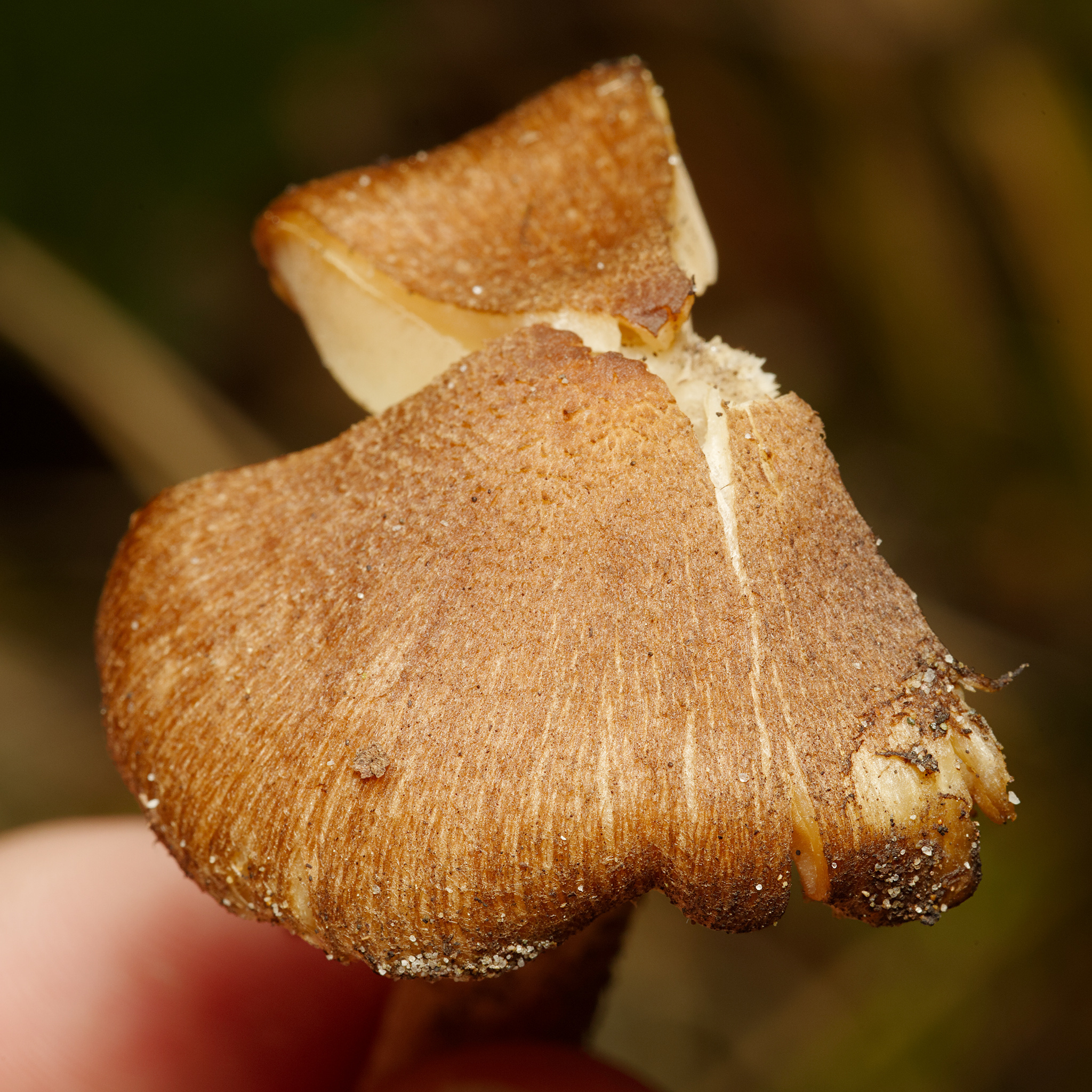
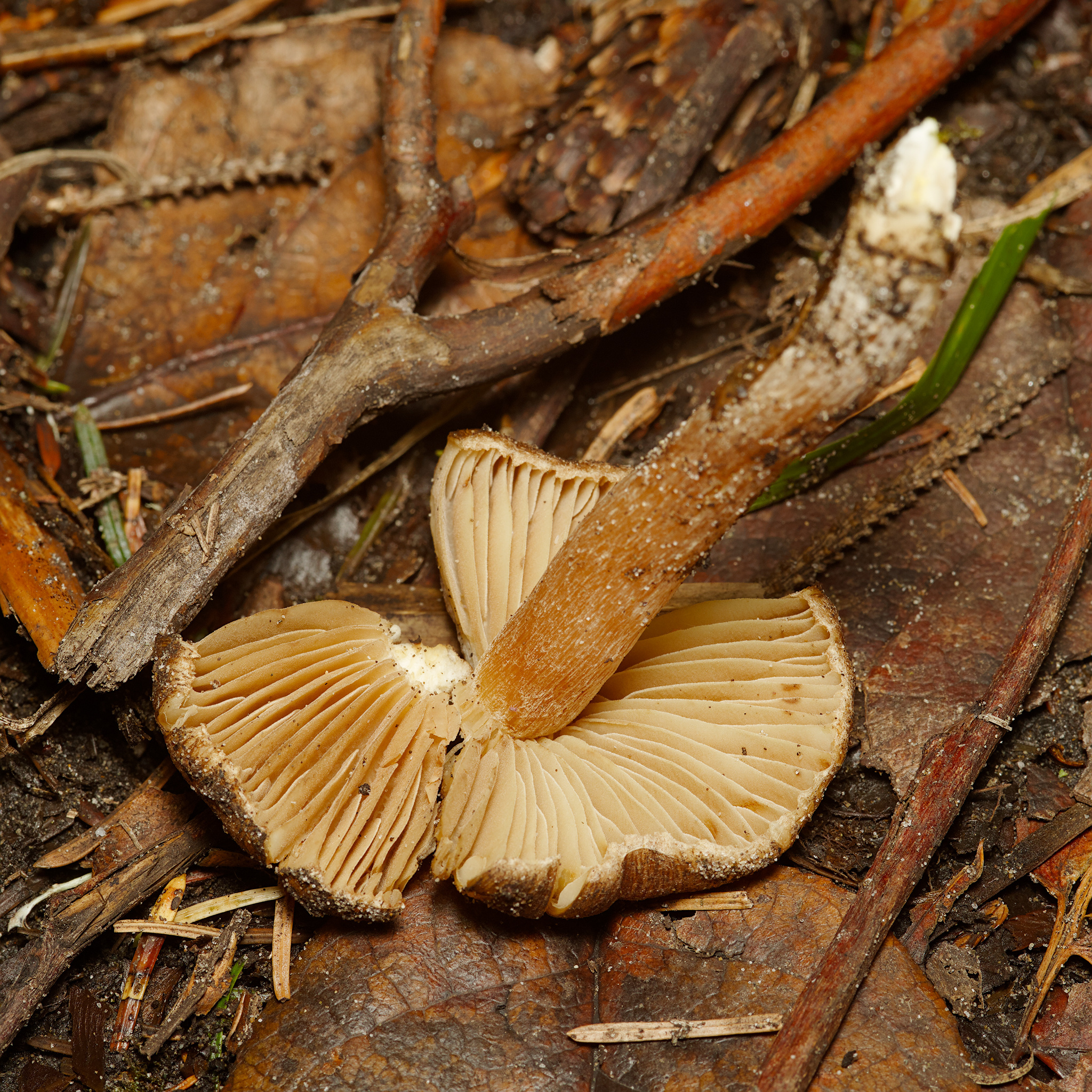
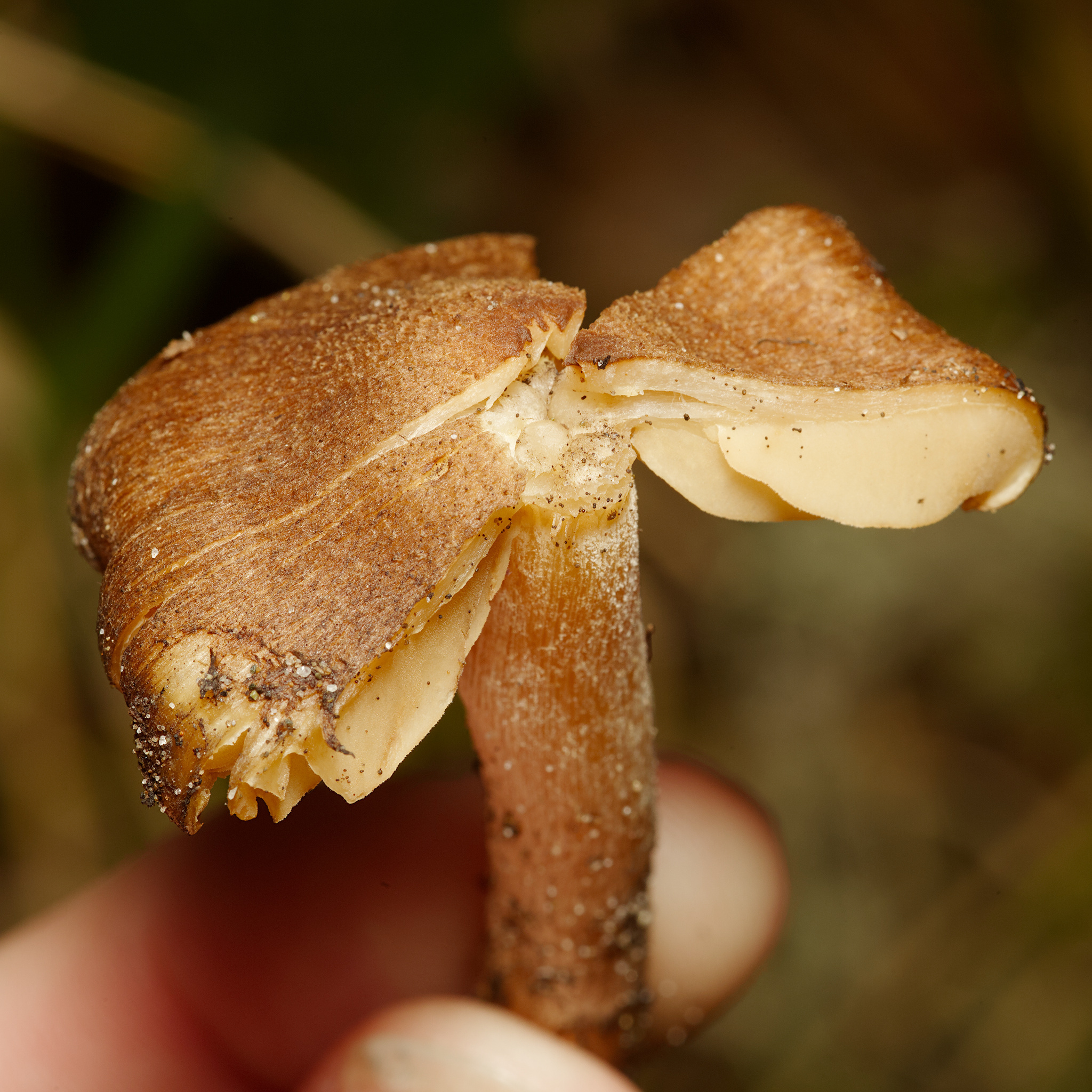
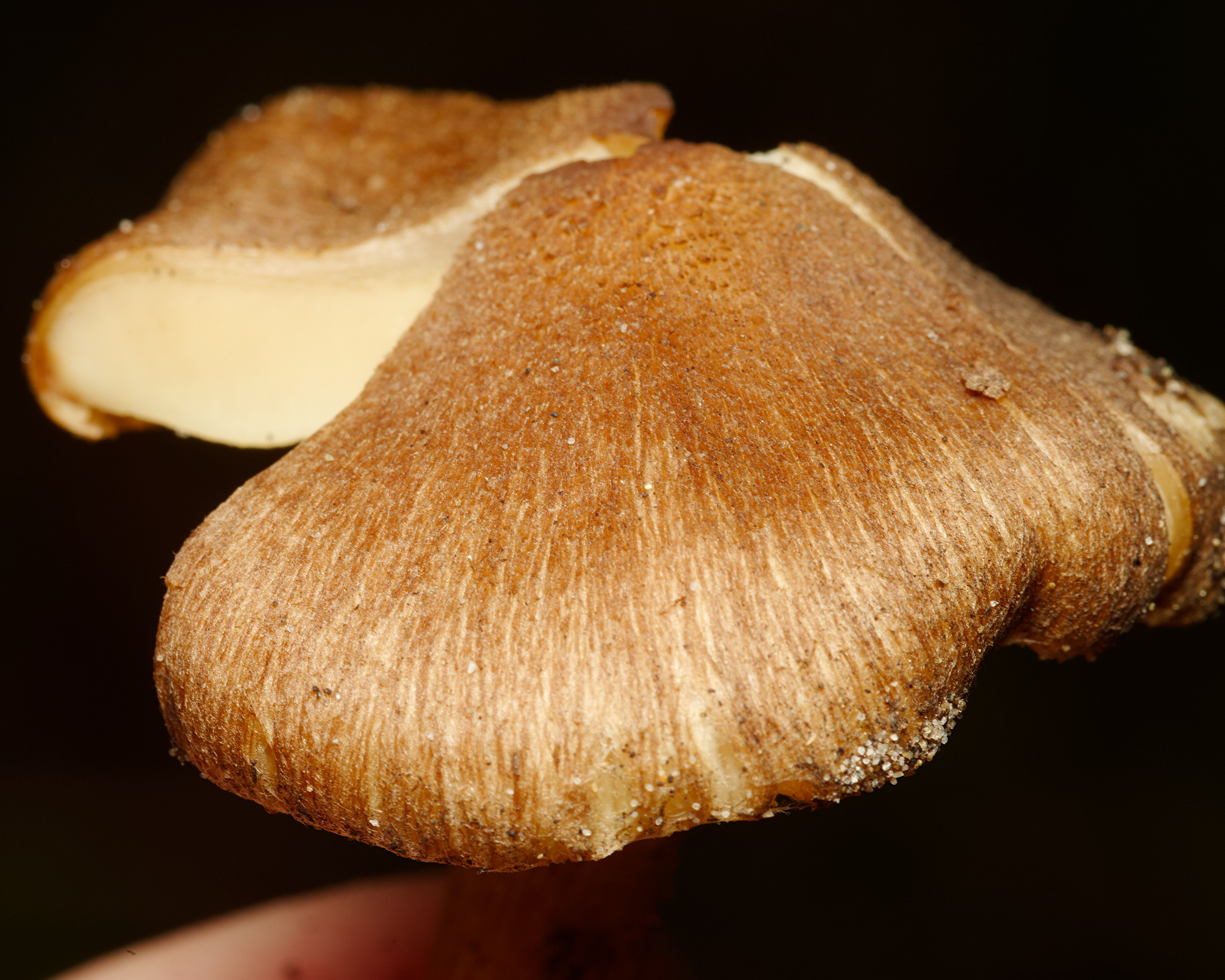
This collection (346517692) struck us as maybe Galerina in the field. Without much additional photography or any microscopy, I am left to assume we might have been wrong. My gut tells me this is likely a Tubaria. Another collection we will await a sequence for, and is the direct result of simply trying to fill a slower month with the potential for interesting results that will still add to the general survey.
Update: Sequencing has returned a result of Cortinarius sp. 'WA19'.
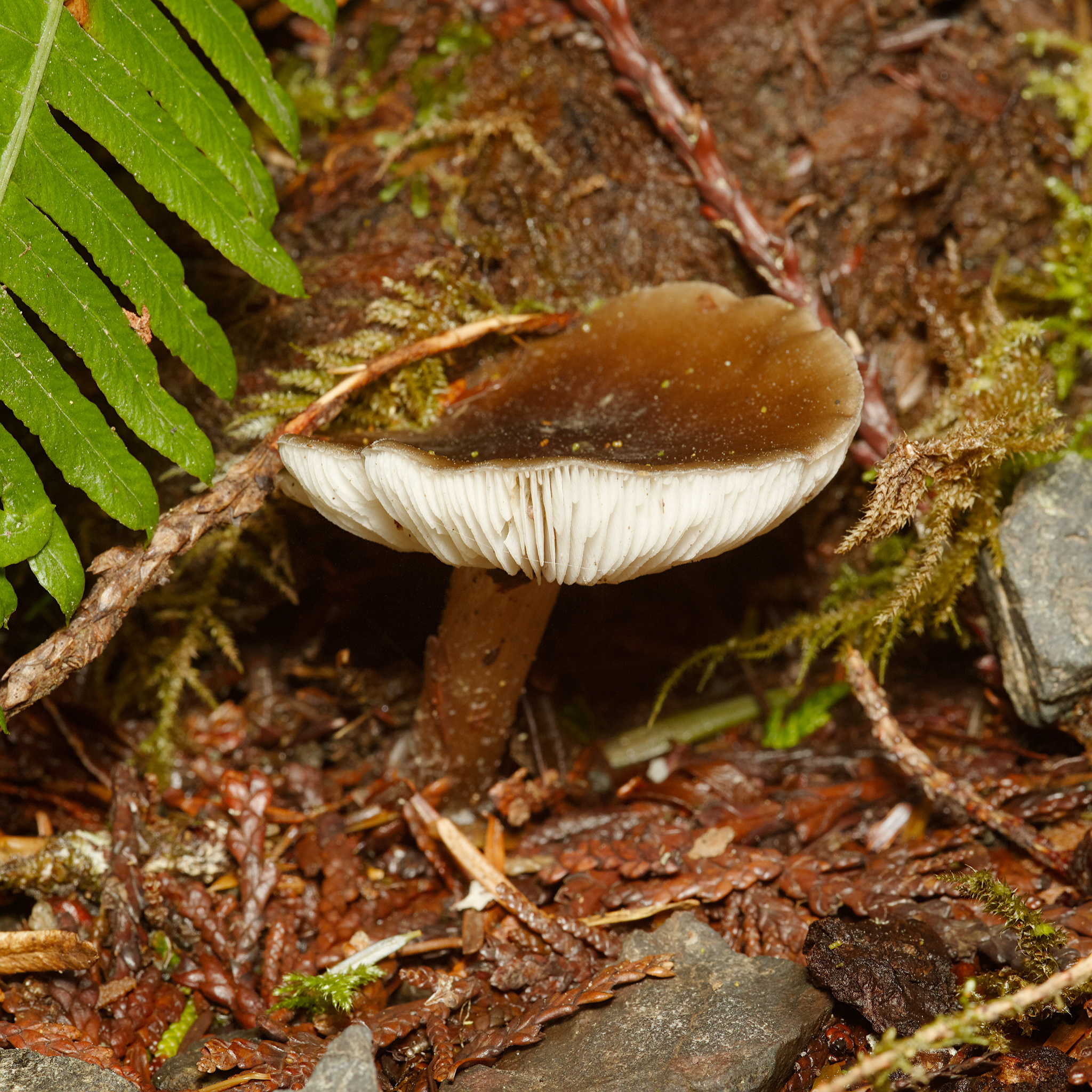
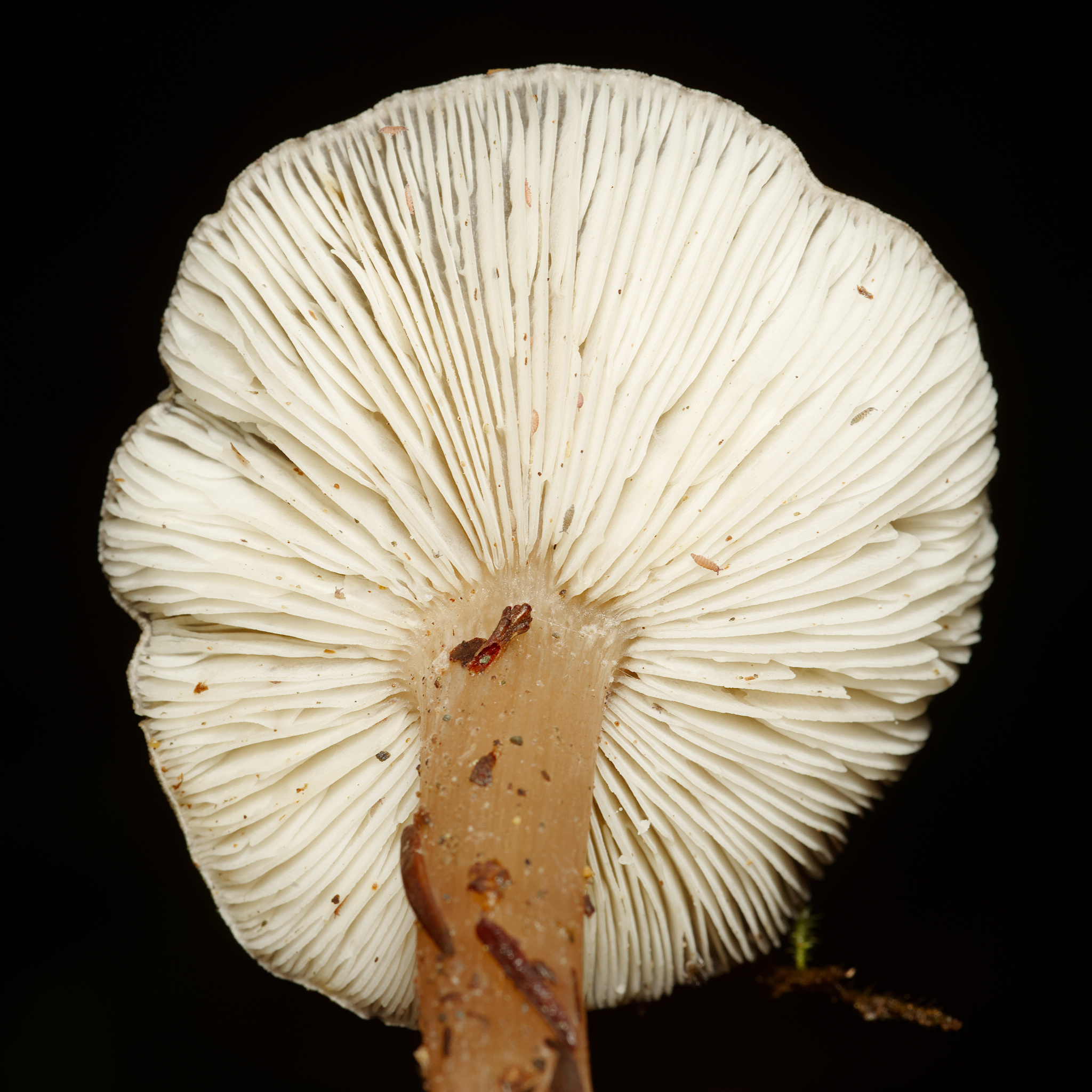
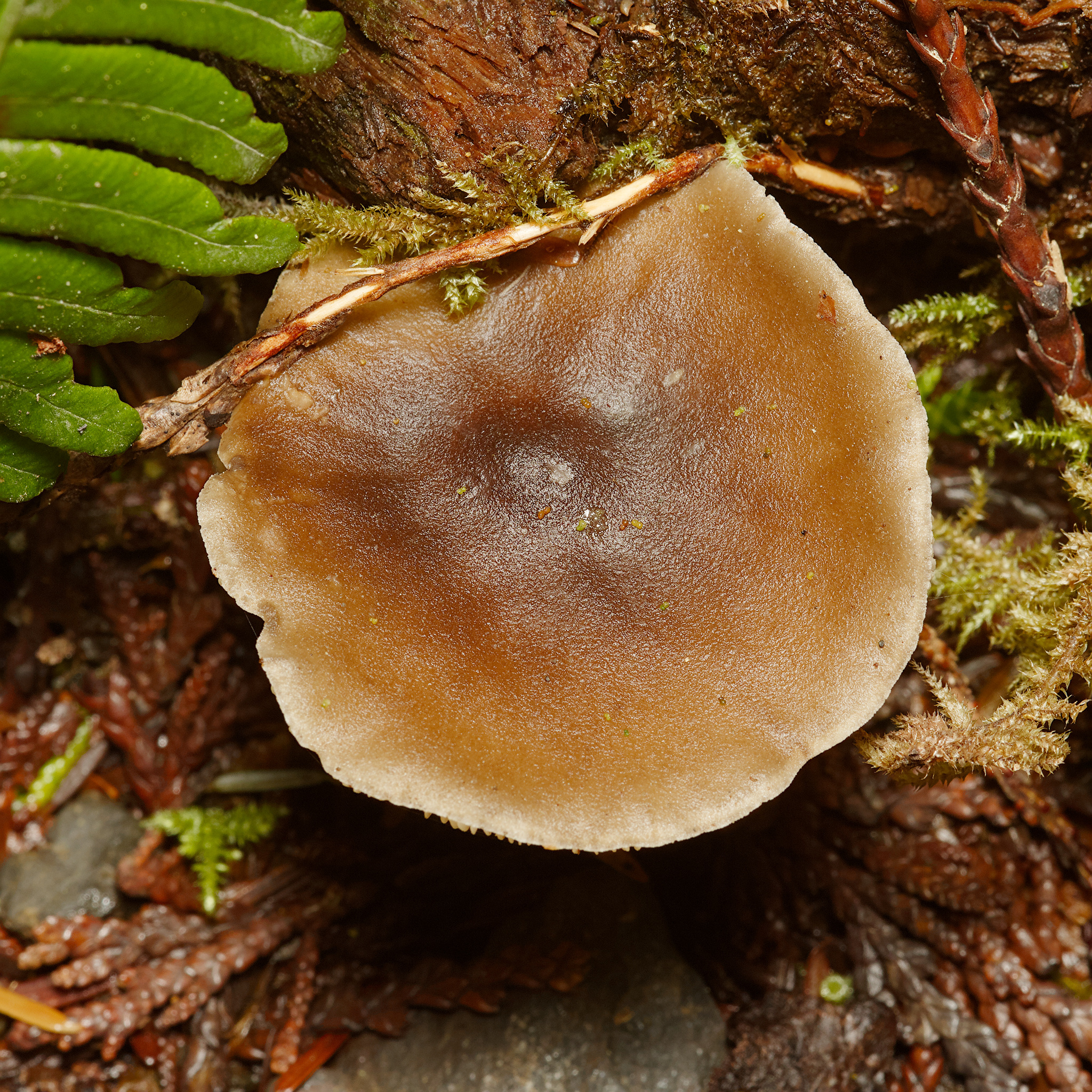
A relatively plain Melanoleuca (346517691), perhaps towards M. melaleuca group. Danny has the species in this genus sorted between two groups, those without stinging cystidia and those with. I would again have to assume this belongs to the former group. This genus is quite beautiful and we have a good handful of spring species present on this part of the Peninsula. Seeing as I am writing this towards the end of April, due to a busy schedule, I am already aware that we have at least one more collection of this genus coming in the next report. Due to the change in morphology and habitat between the two, I am sure this will bear a different sequence to the latter collection. This is another one of those genera that will help to buff the survey with general data that might be lacking. I do have some unmeasured and undermagnified spore microscopy for this collection. However it is subpar for presentation. This collection too, would be a good candidate to draw on material from for additional microscopy. We began this study with a focus on macro over micro, but as mentioned will soon begin to integrate some microscopic detail into our work. Compiling sequence data with the presence, or lack of, stinging cystidia, etc.
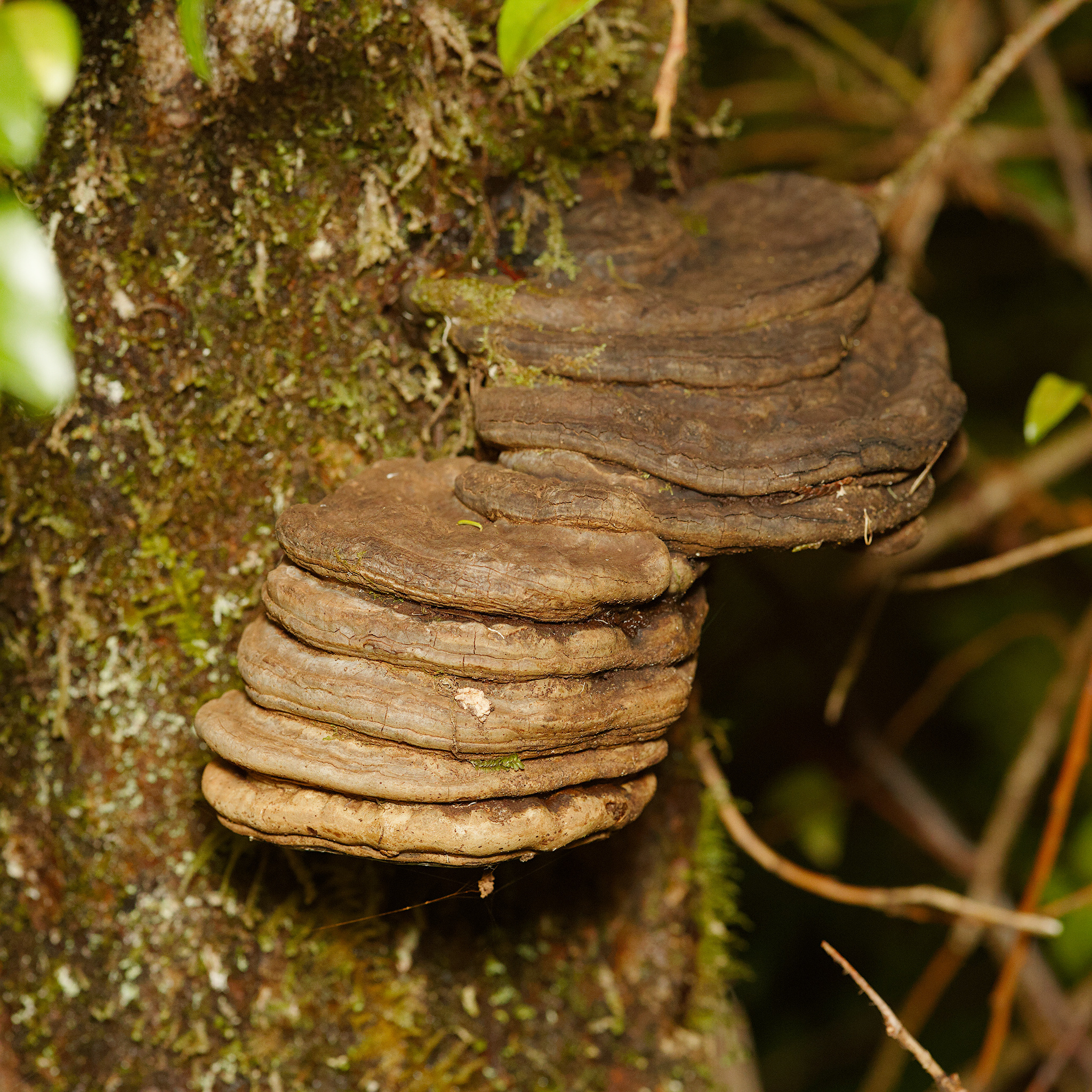
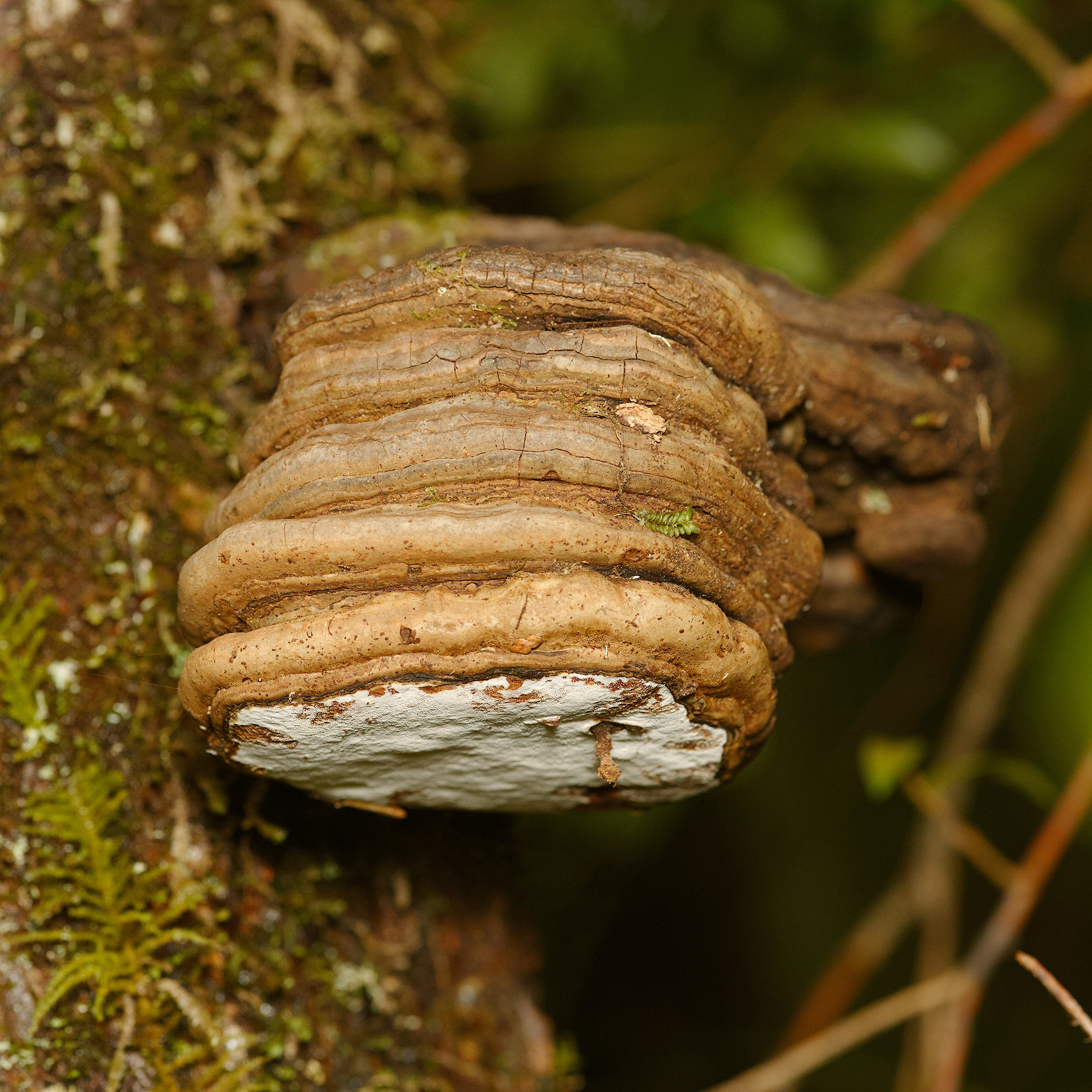
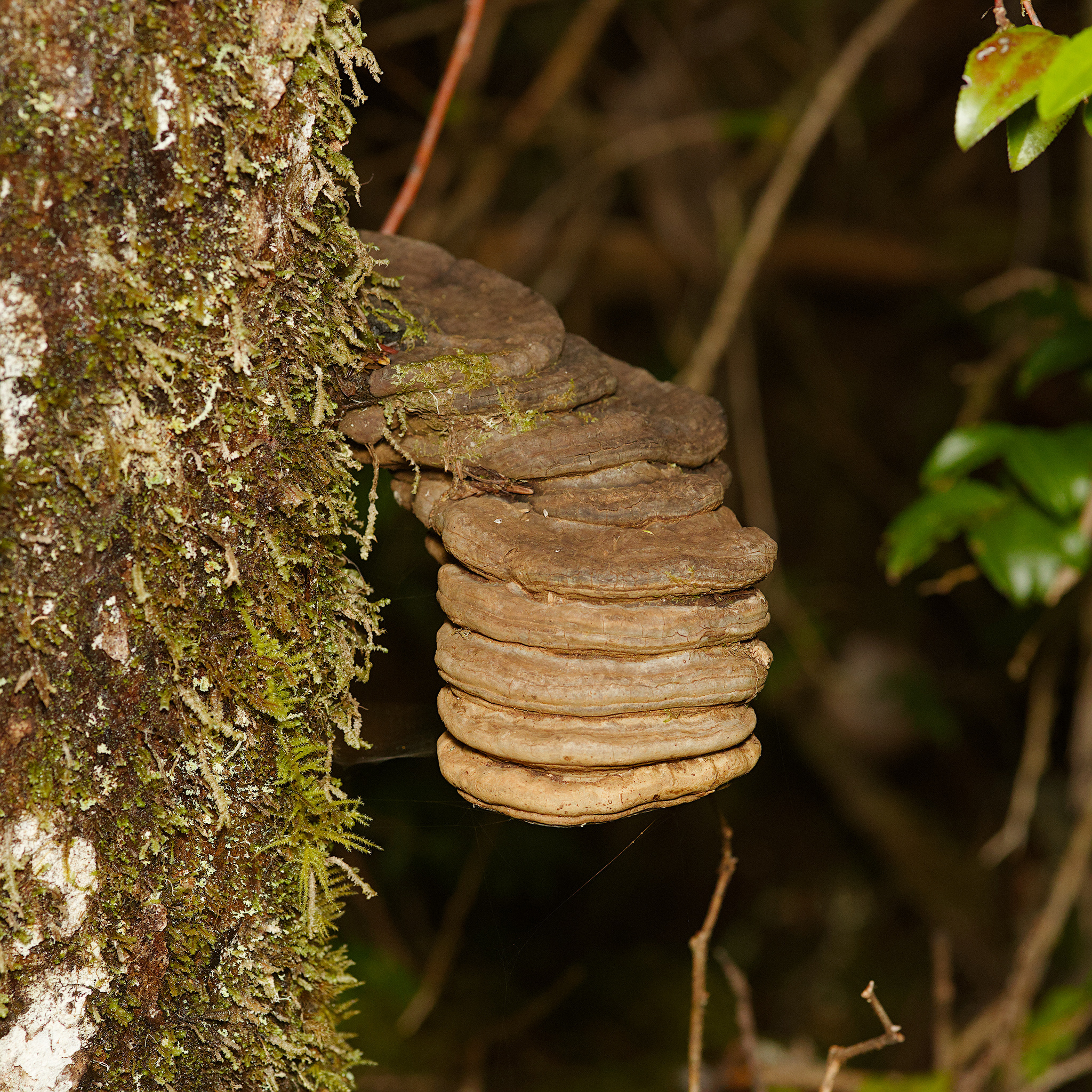
A lovely stack of Ganoderma. Perhaps G. applanatum, certainly within the subgenus Elfvingia. We took a small portion of the older material here for a sequence. Part of my more general study in the past few years has been looking into the correspondence and sharing of habitat between these Ganoderma and Pleurotus pulmonarius. So if anything, this was both a curiosity collection and a potential data point for future collections on this tree.
Update: Sequencing has returned a result of Inocybe sp. 'CA44'.
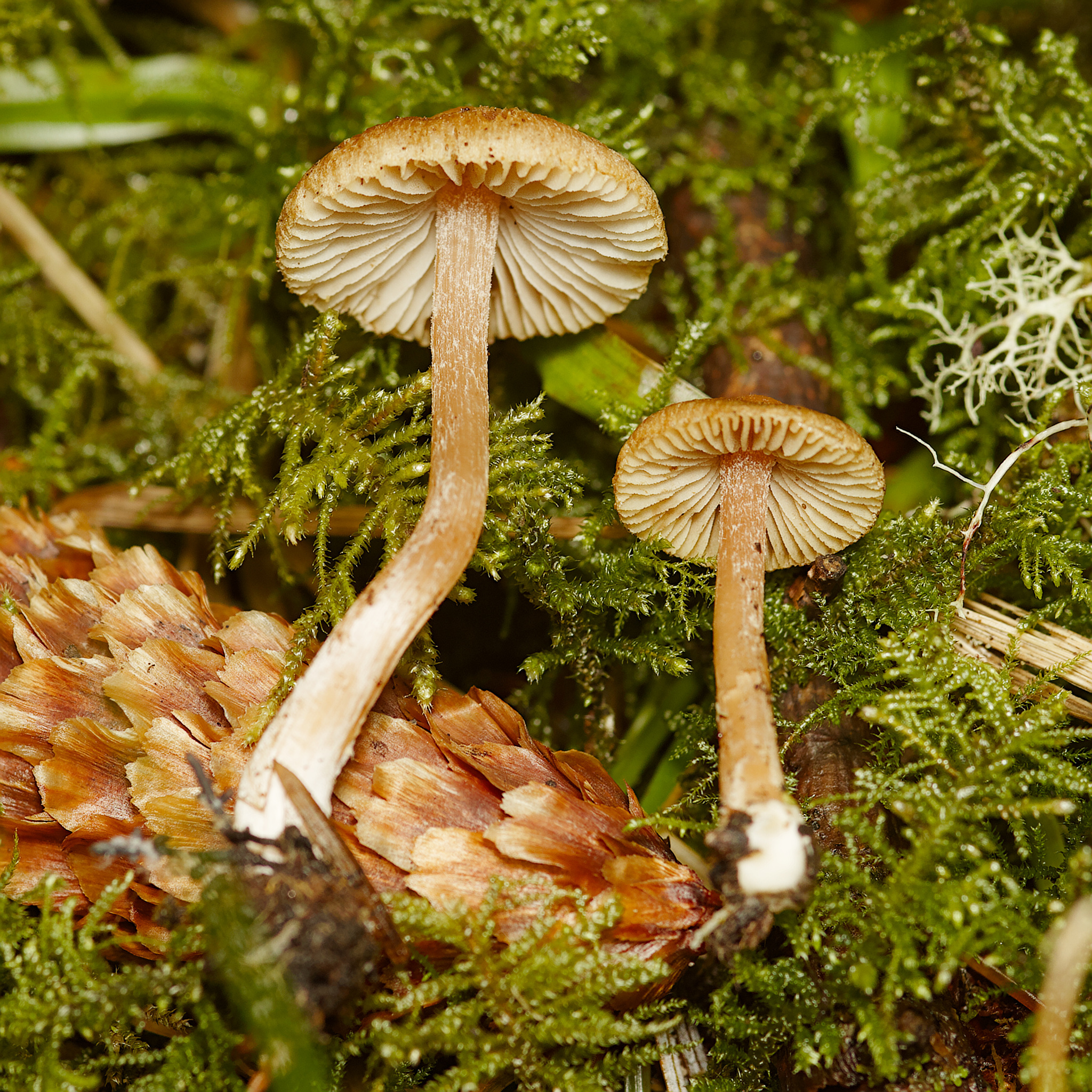
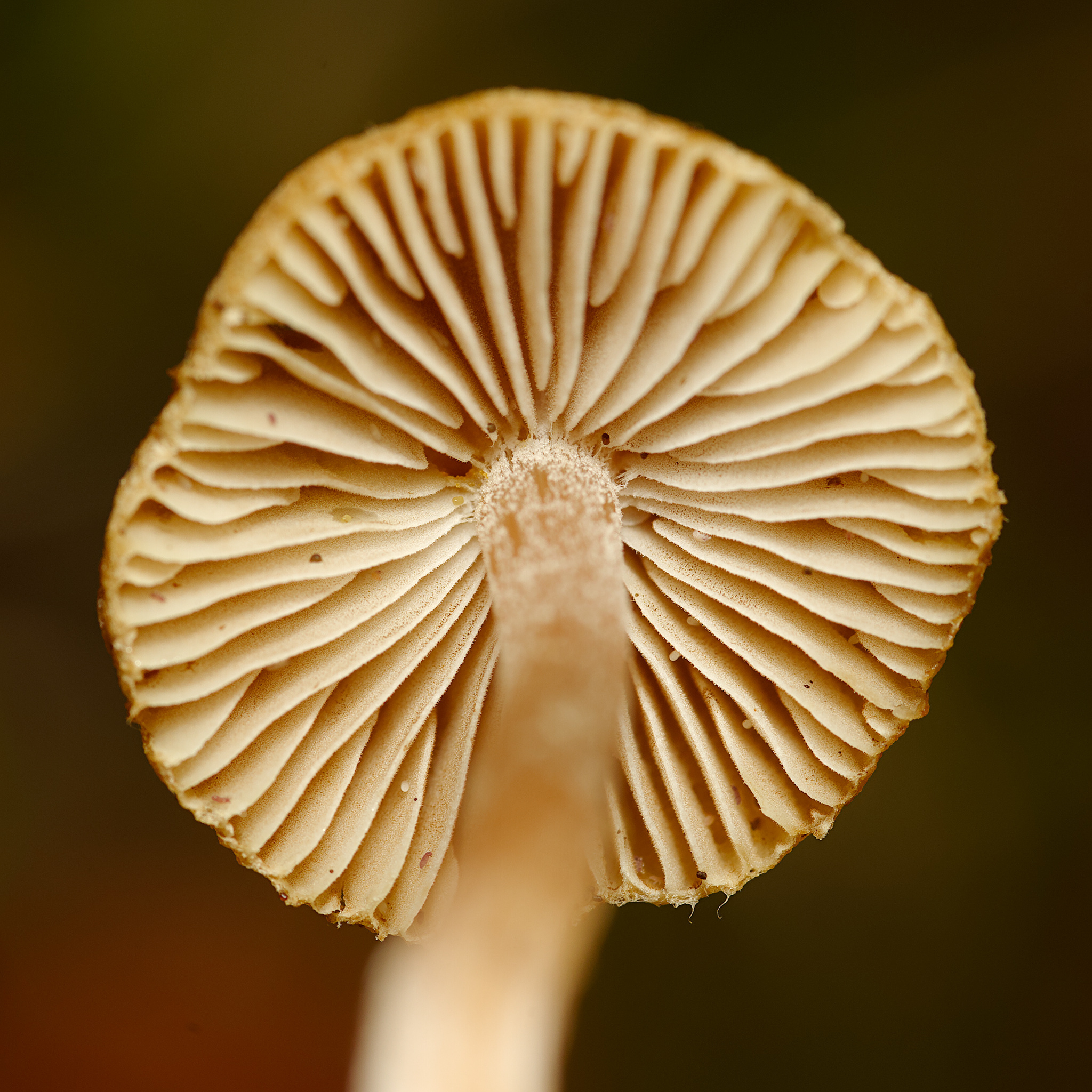
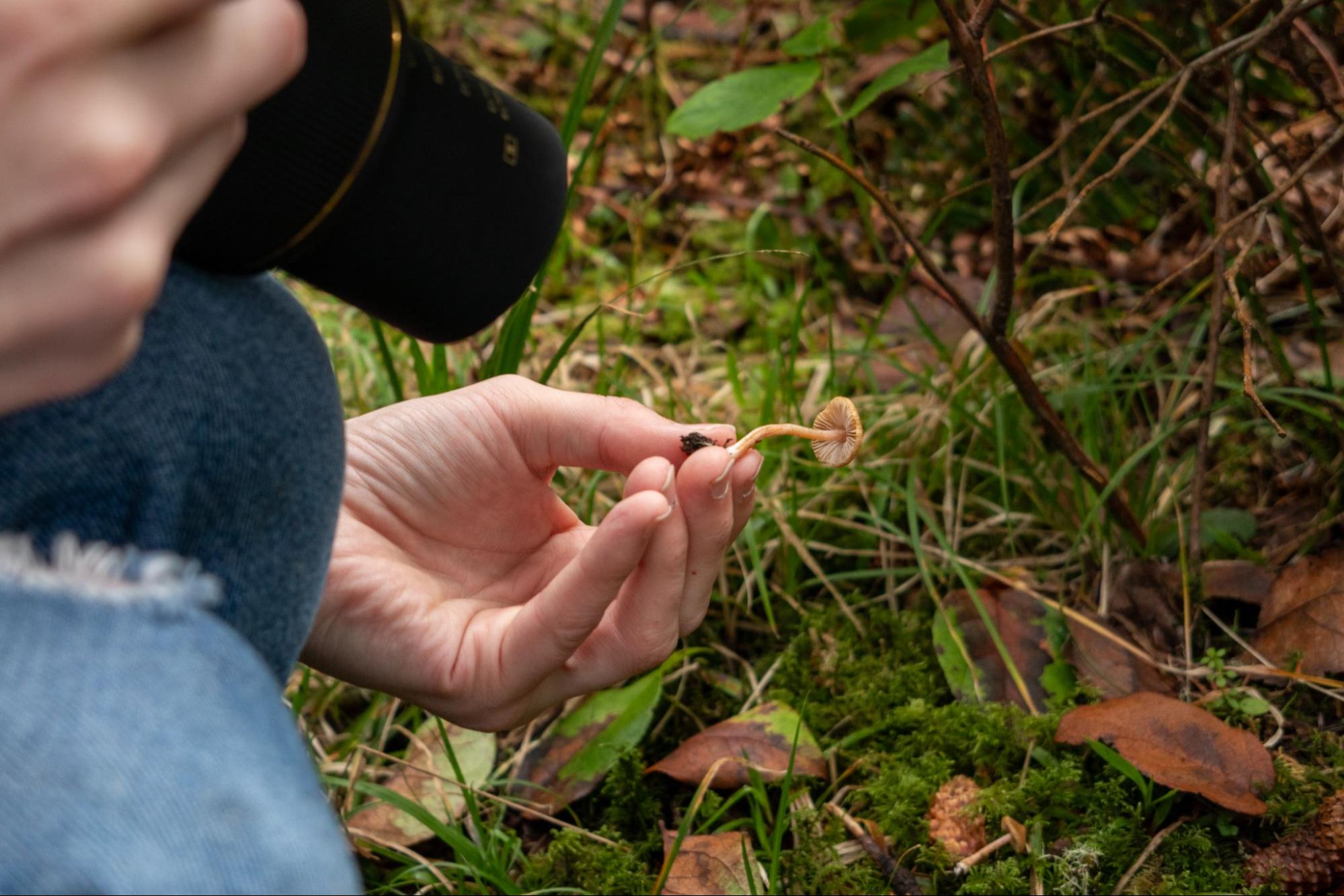
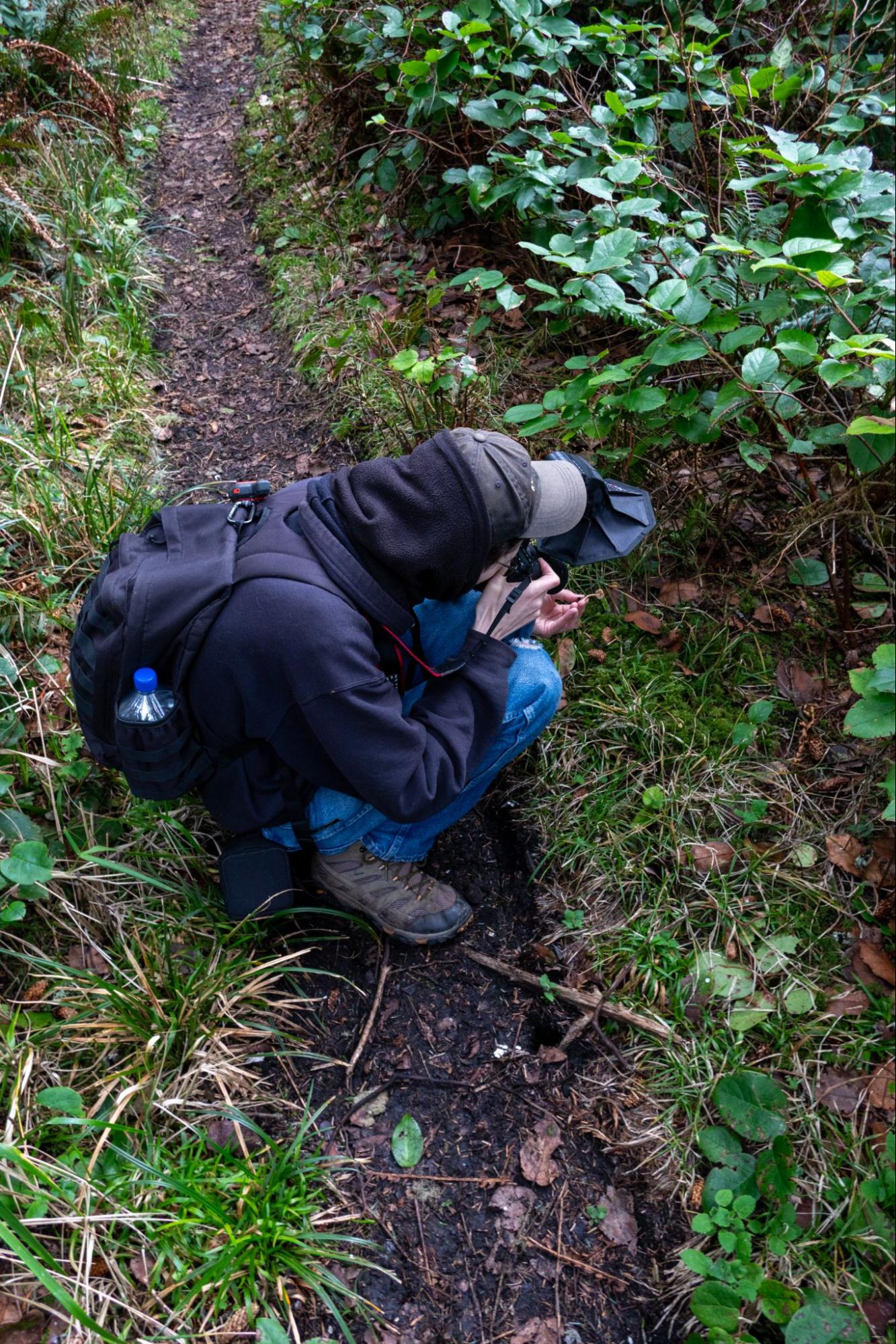
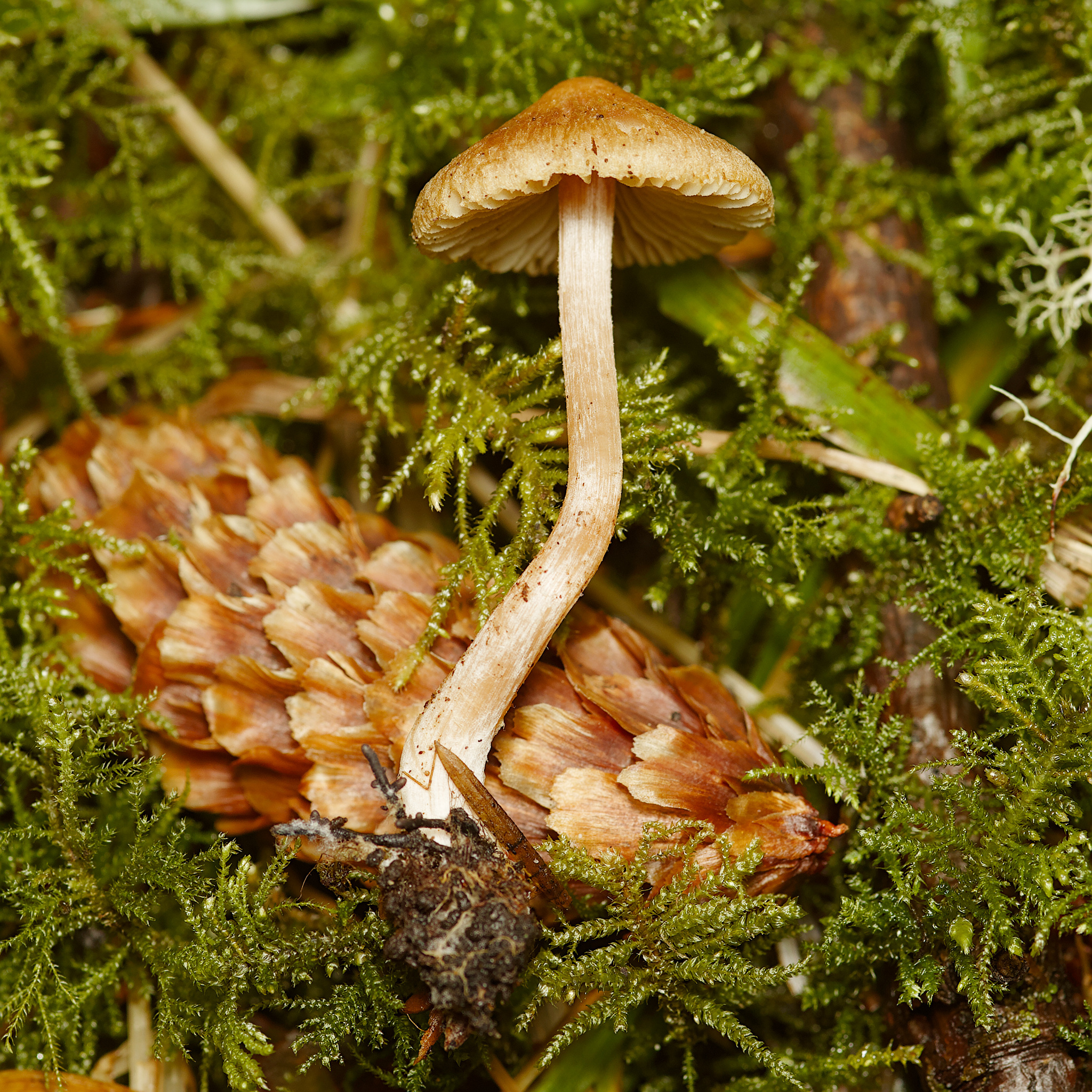
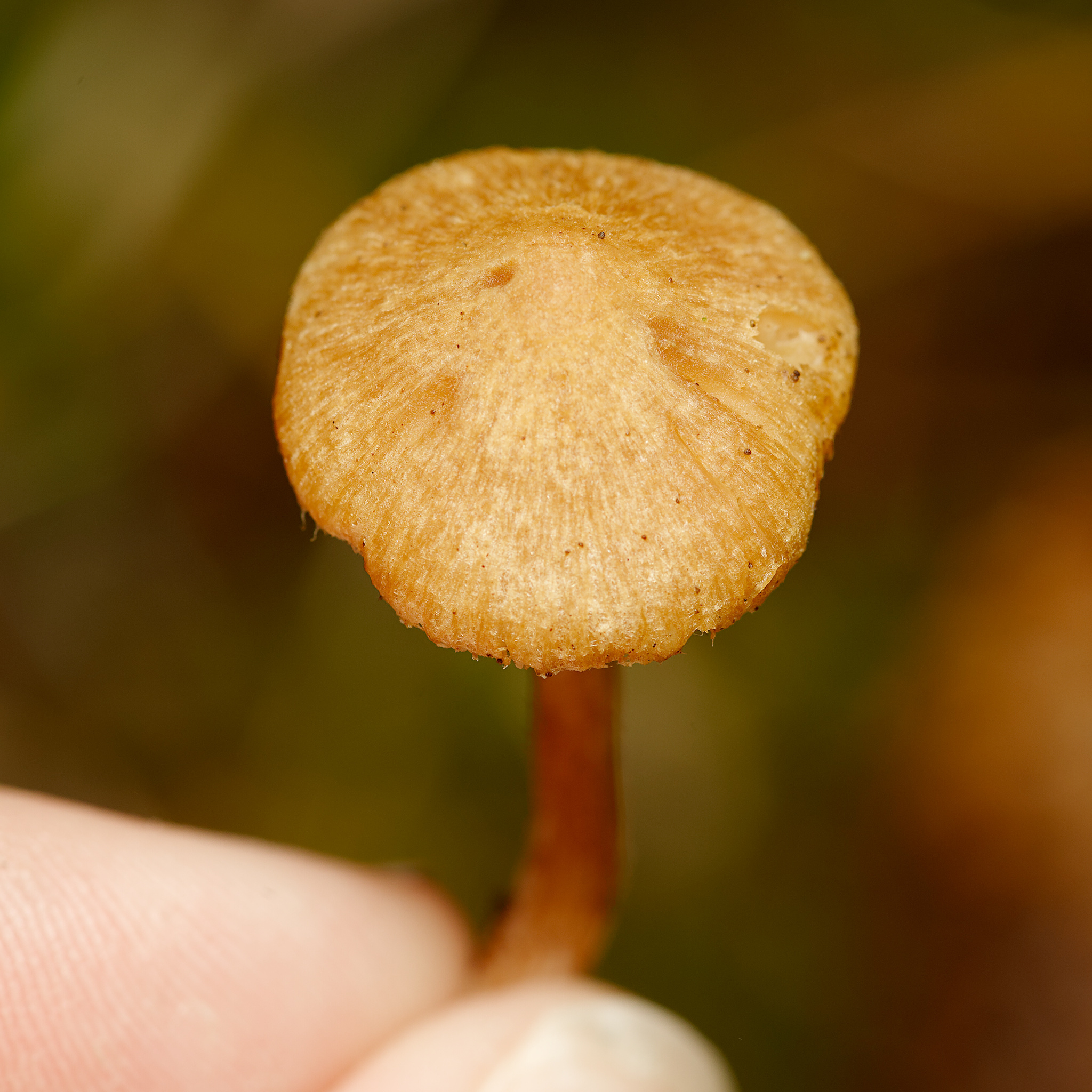
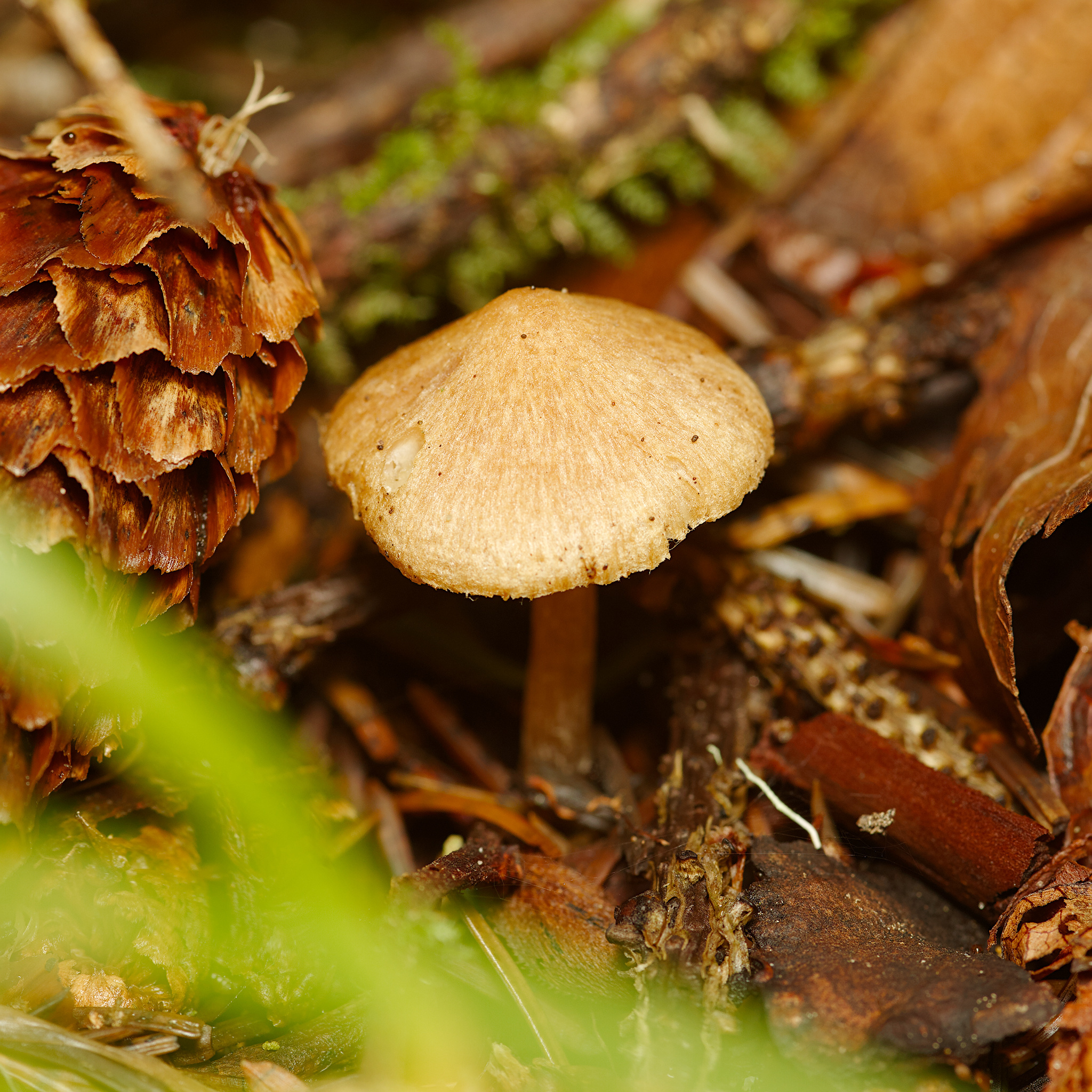
This collection (346517699) of smaller Inocybaceae, perhaps a Mallocybe species, represents a very similar mushroom to the following collection. Although these were much smaller and found about 10-15 feet away, so we have separated them for study here. Again I have completed some amateur microscopy here, and to my eyes on the scope, the spores appear identical in shape and size. At the very least both collections are very similar and represent inocyboid mushrooms without nodulose spores. As of writing we have still yet to receive sequences, but I would put my money on them being the same species. Just two different sizes and ages or stages of maturity. The latter collection (346517700) was a bit worse for wear, but is featured below.
Update: The above collection has been sequenced as I. nitidiuscula, it will be interesting to see if the former is the same!
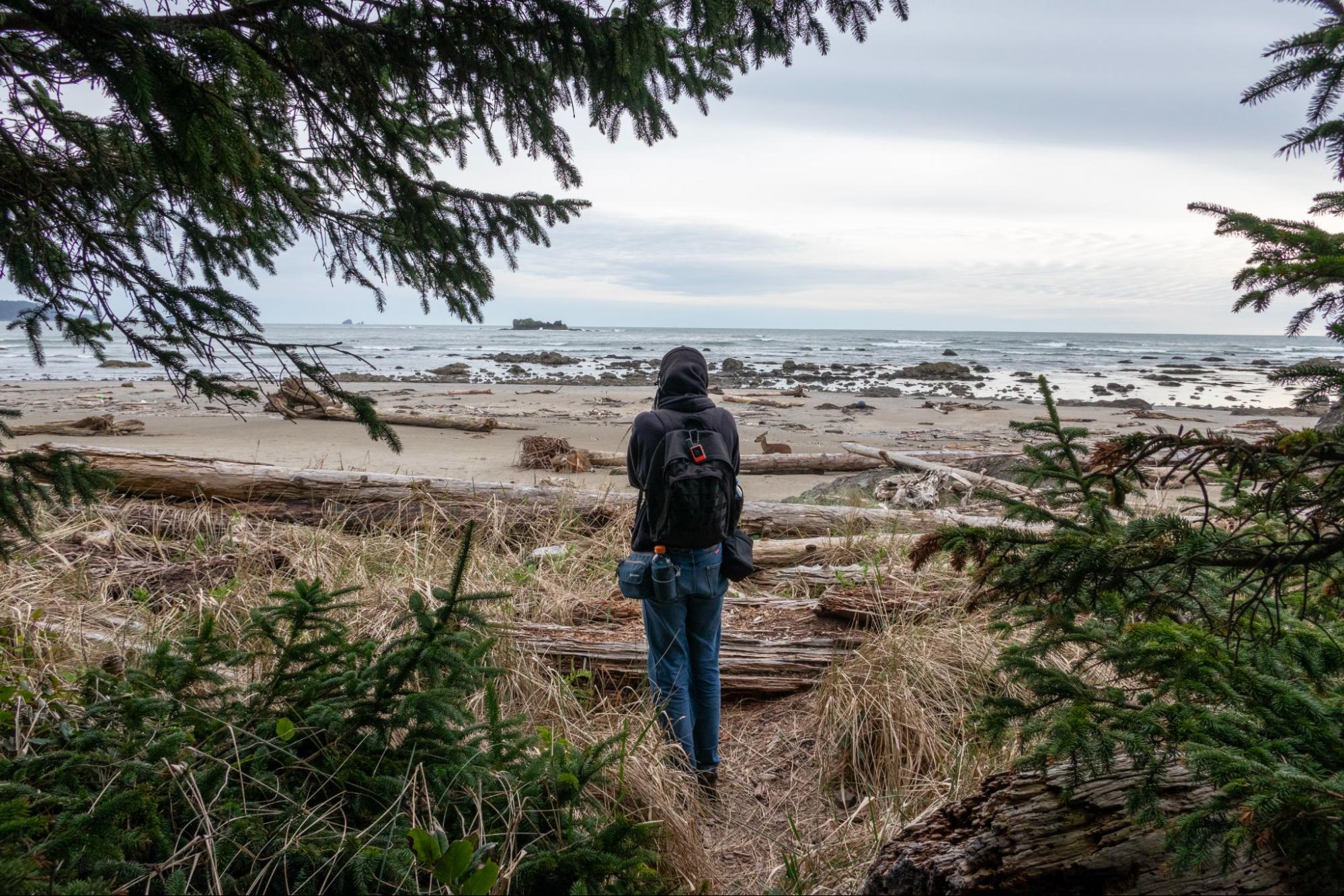
Brodie being a true naturalist and getting distracted by some of the moss and deer on this beautiful hike.
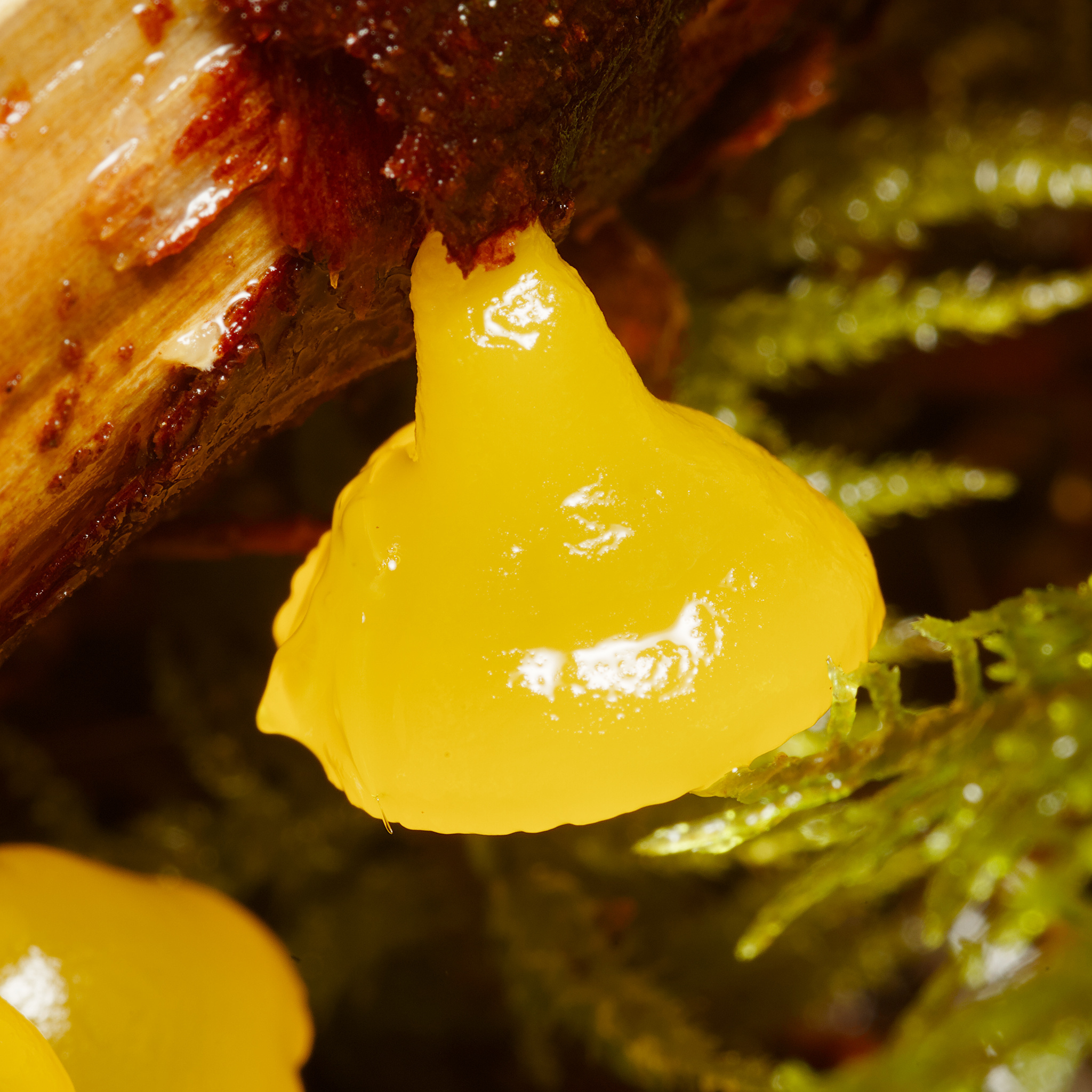
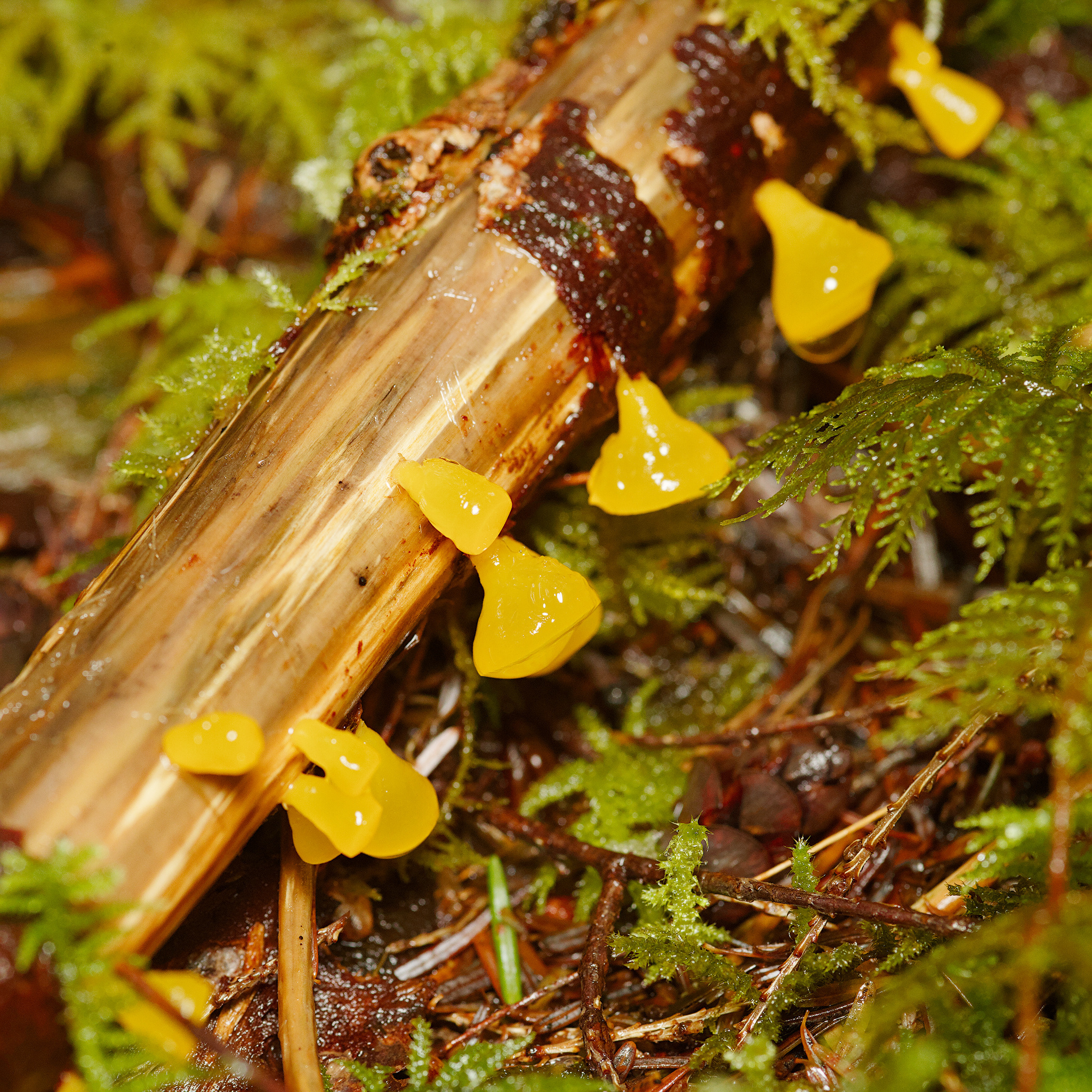
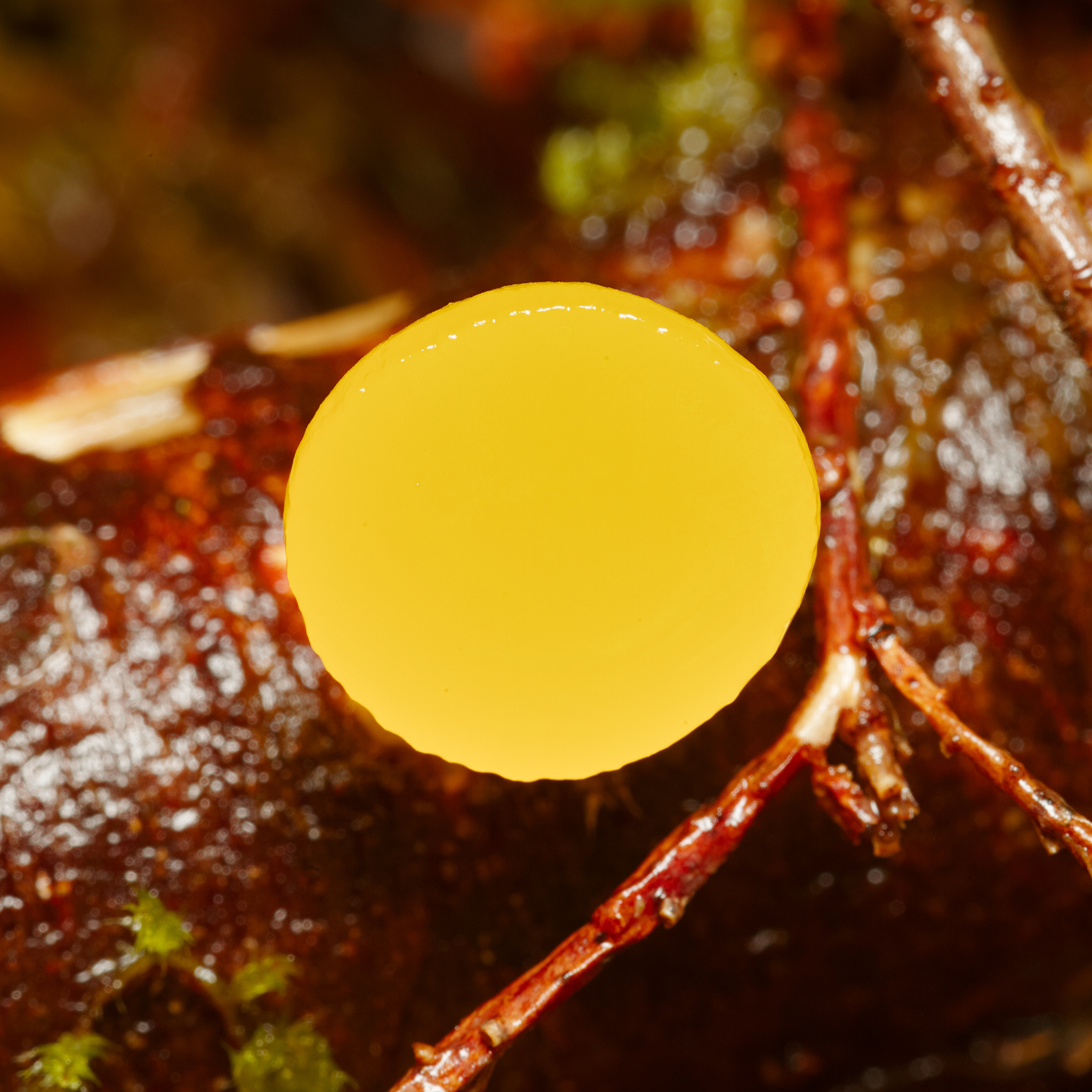
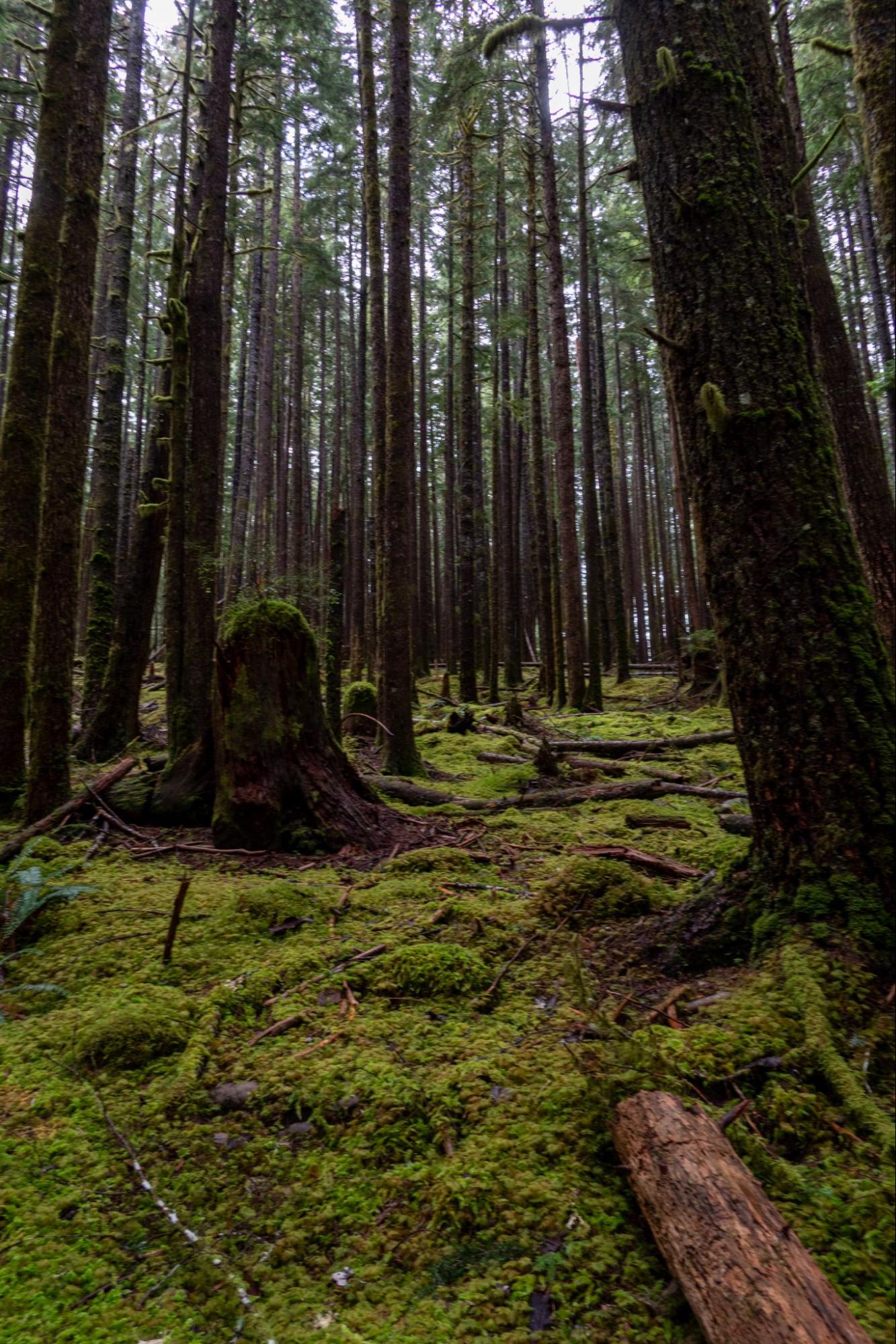
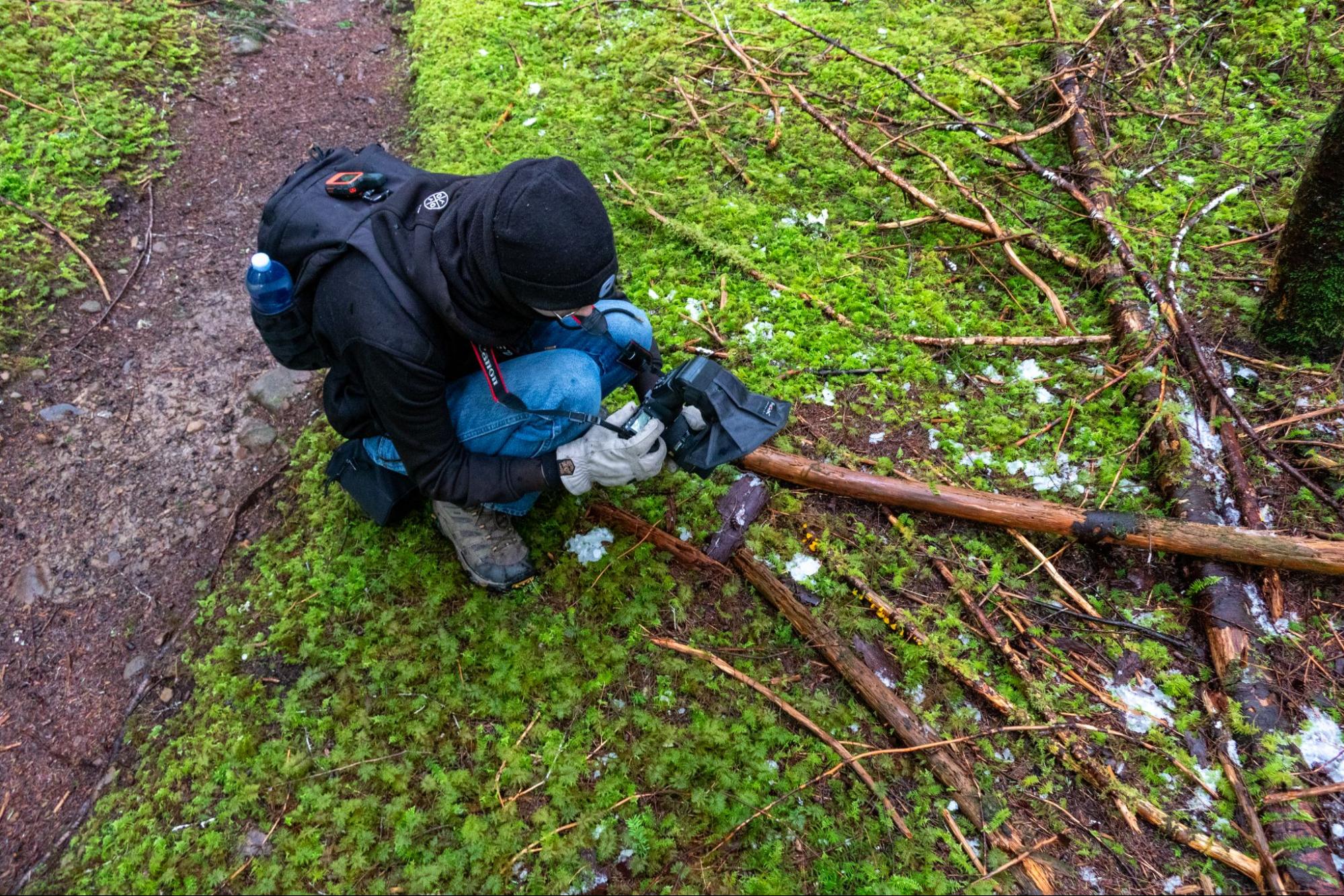
We had a lovely hike up towards Mink Lake on this slightly warmer, but still wintery day. We found a small variety of fungi but the only collection we made were these jelly cones. (346517705) The habitat seemed worth revisiting for a fall survey but after a few hundred feet of ascension above the snow line, we called it a day and put a pin in the spot for future collection ideas.
Update: DNA confirms Guepiniopsis sp. ‘alpina-CA01’ here also.
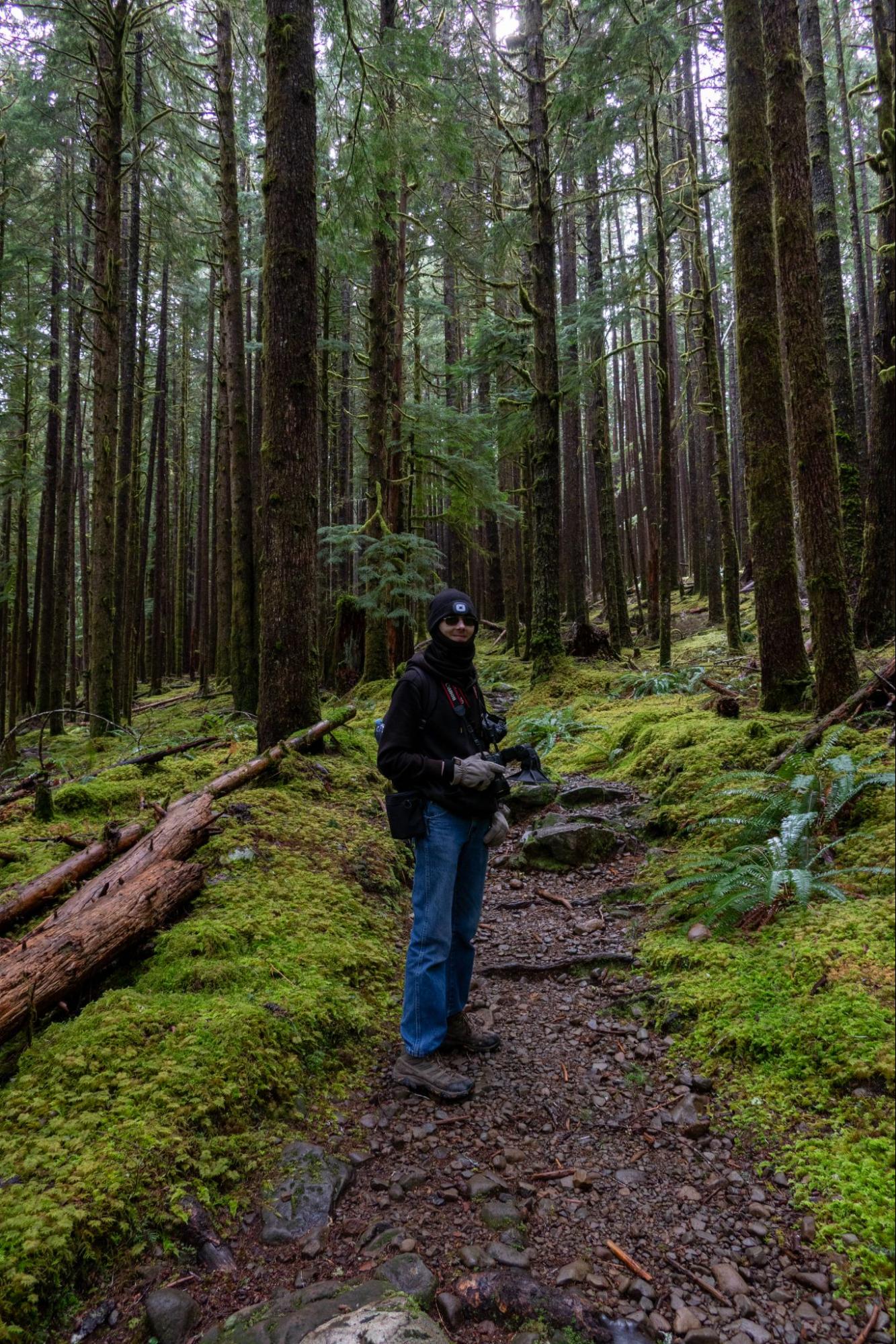
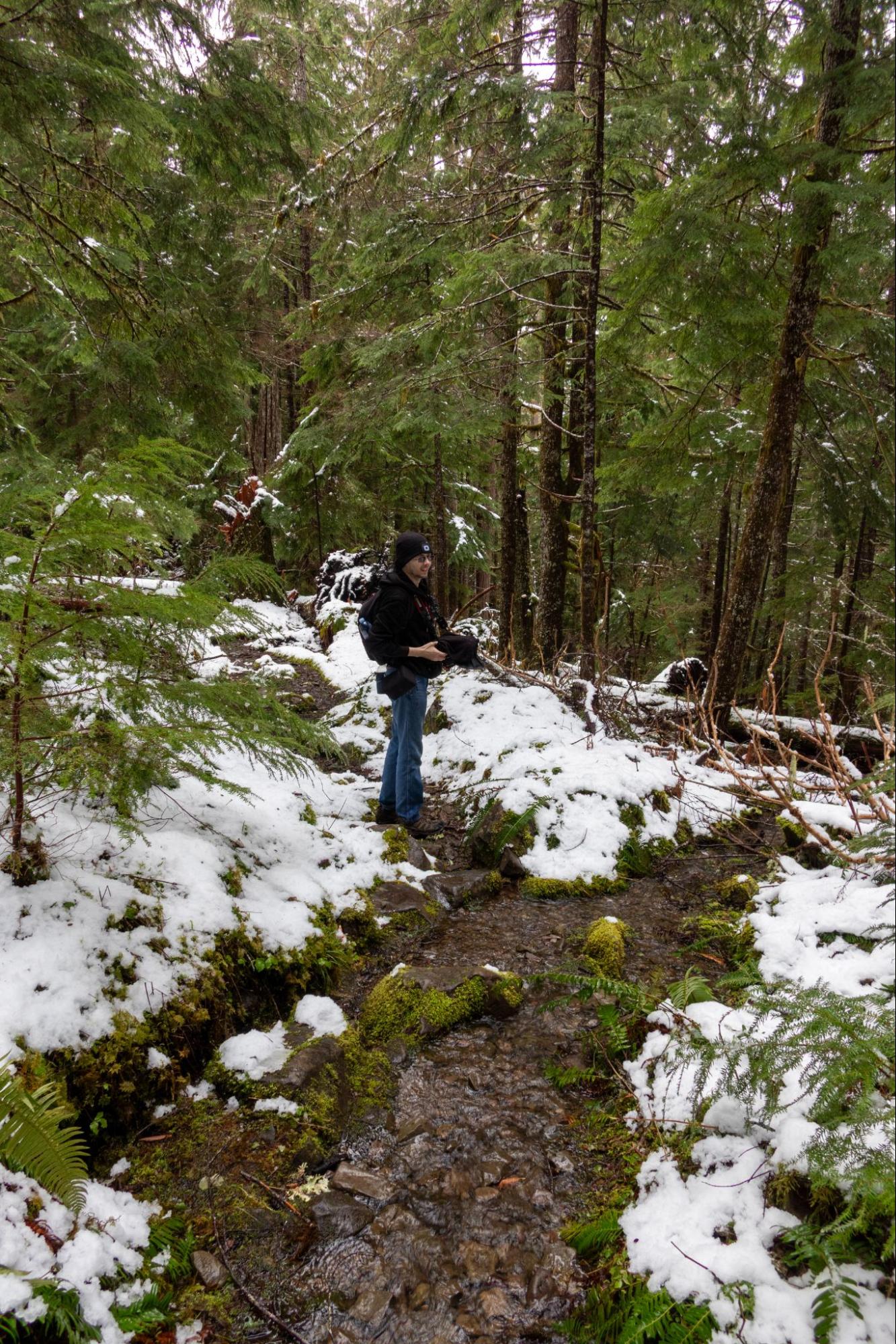
Brodie at the start and then briefly before our turnaround point for the day. Left and right.
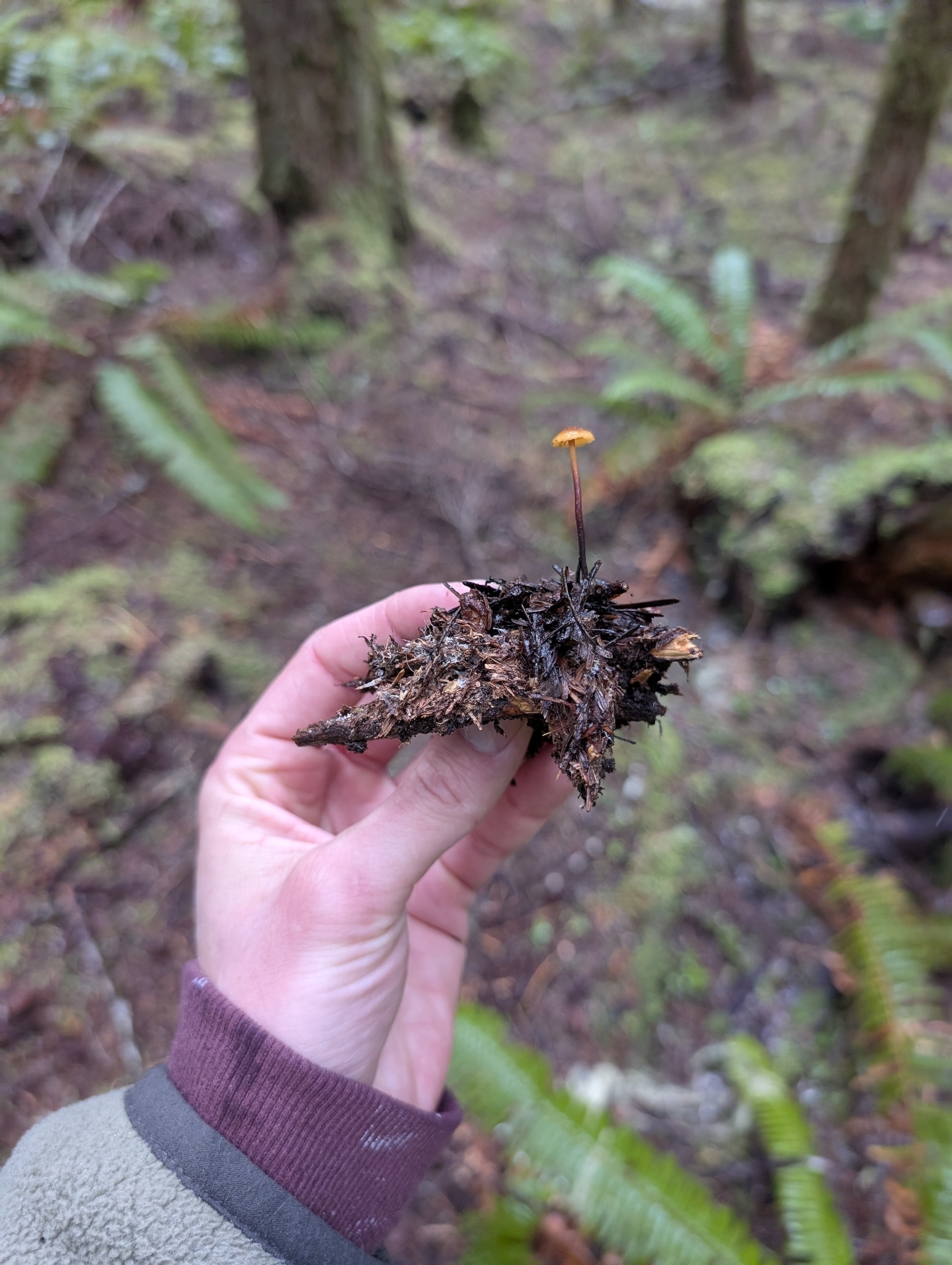
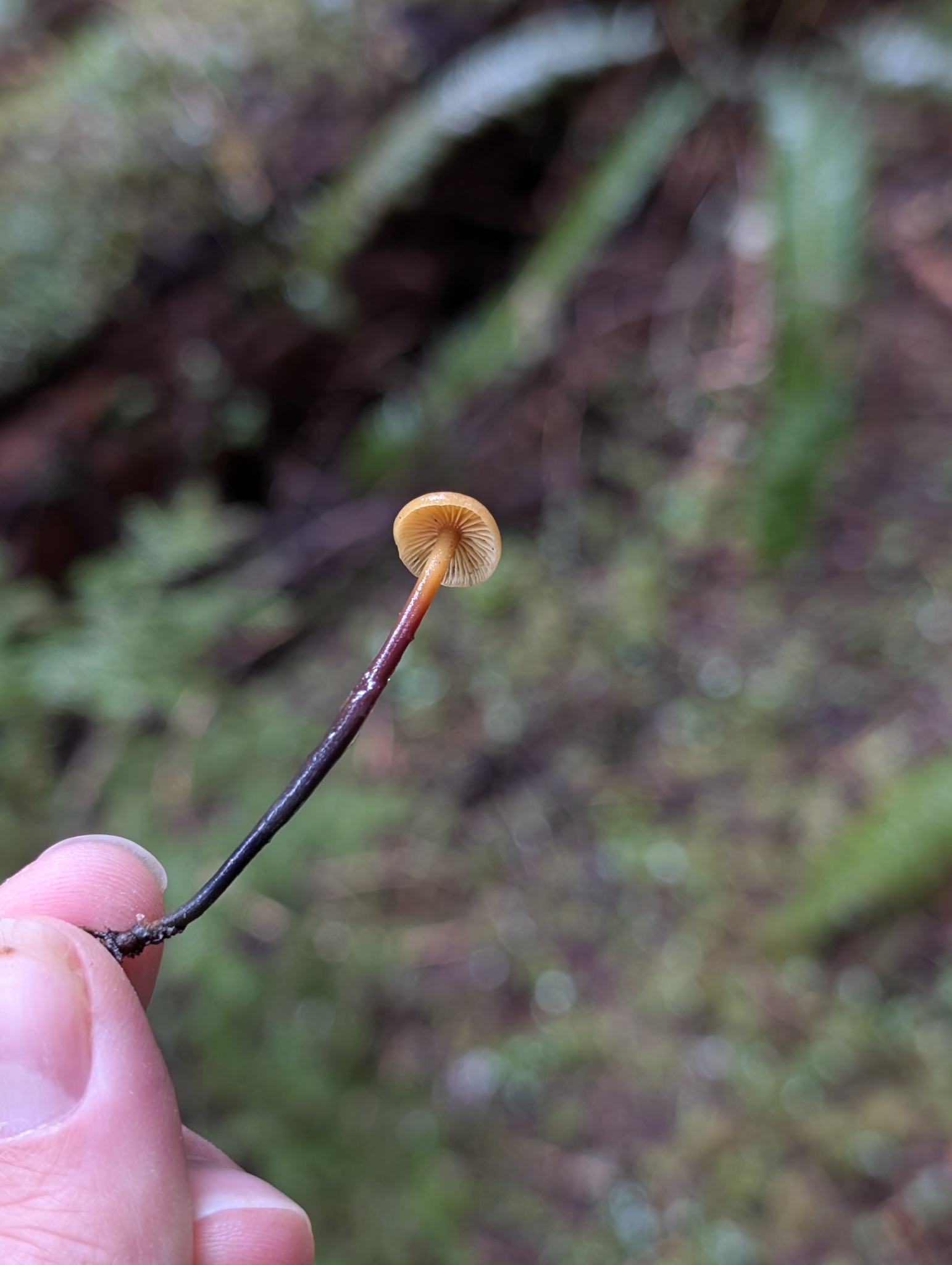
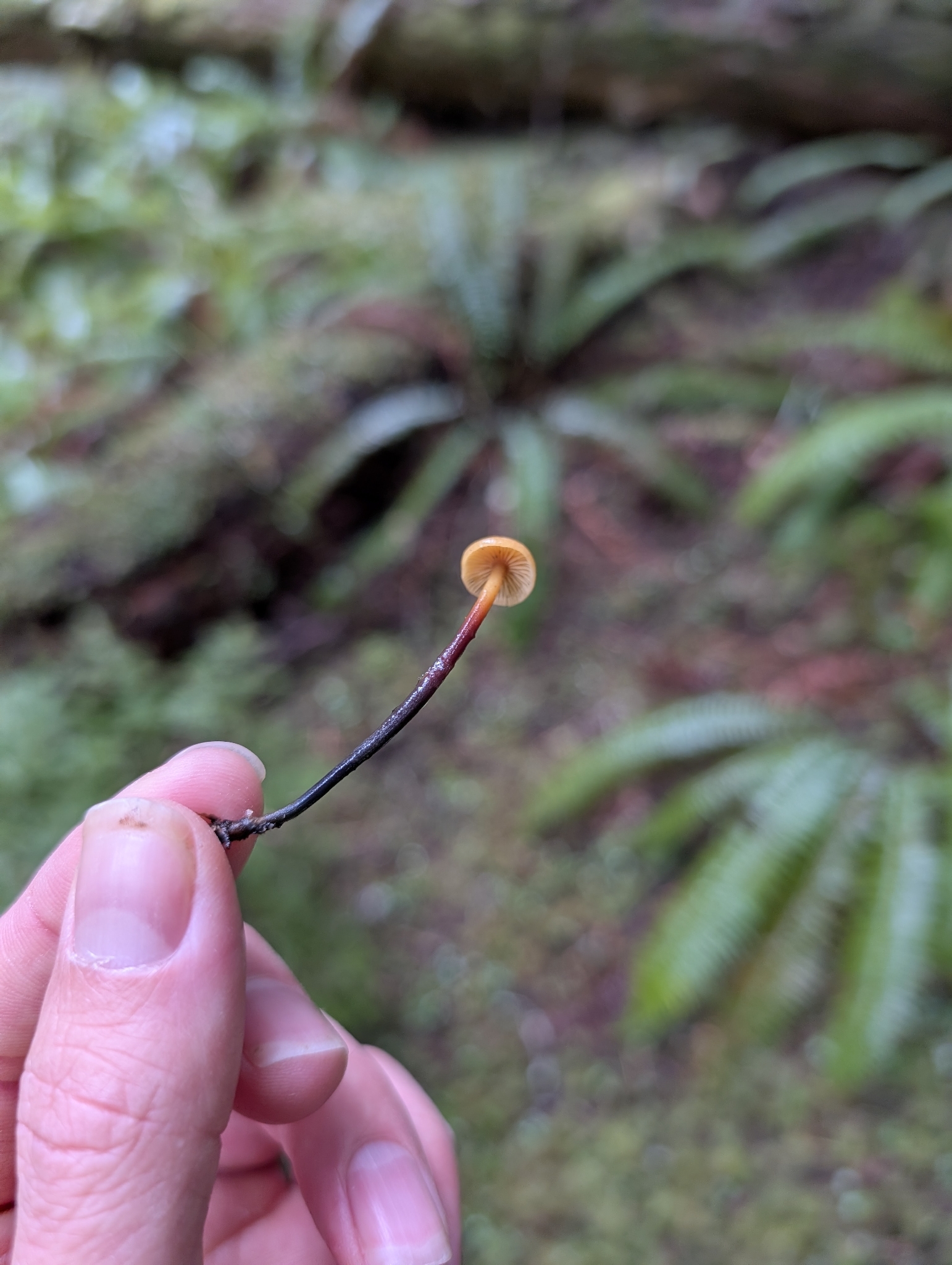
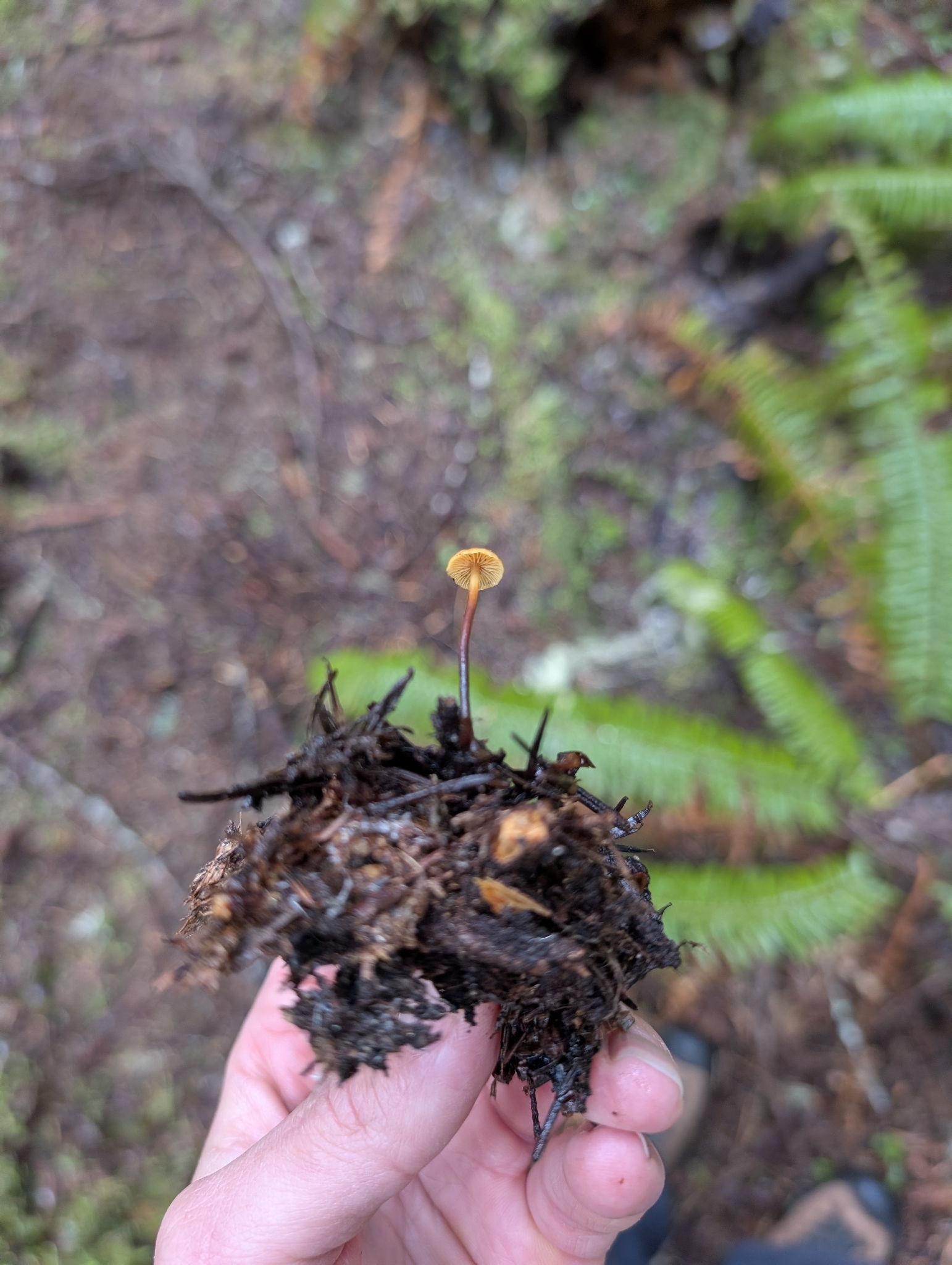
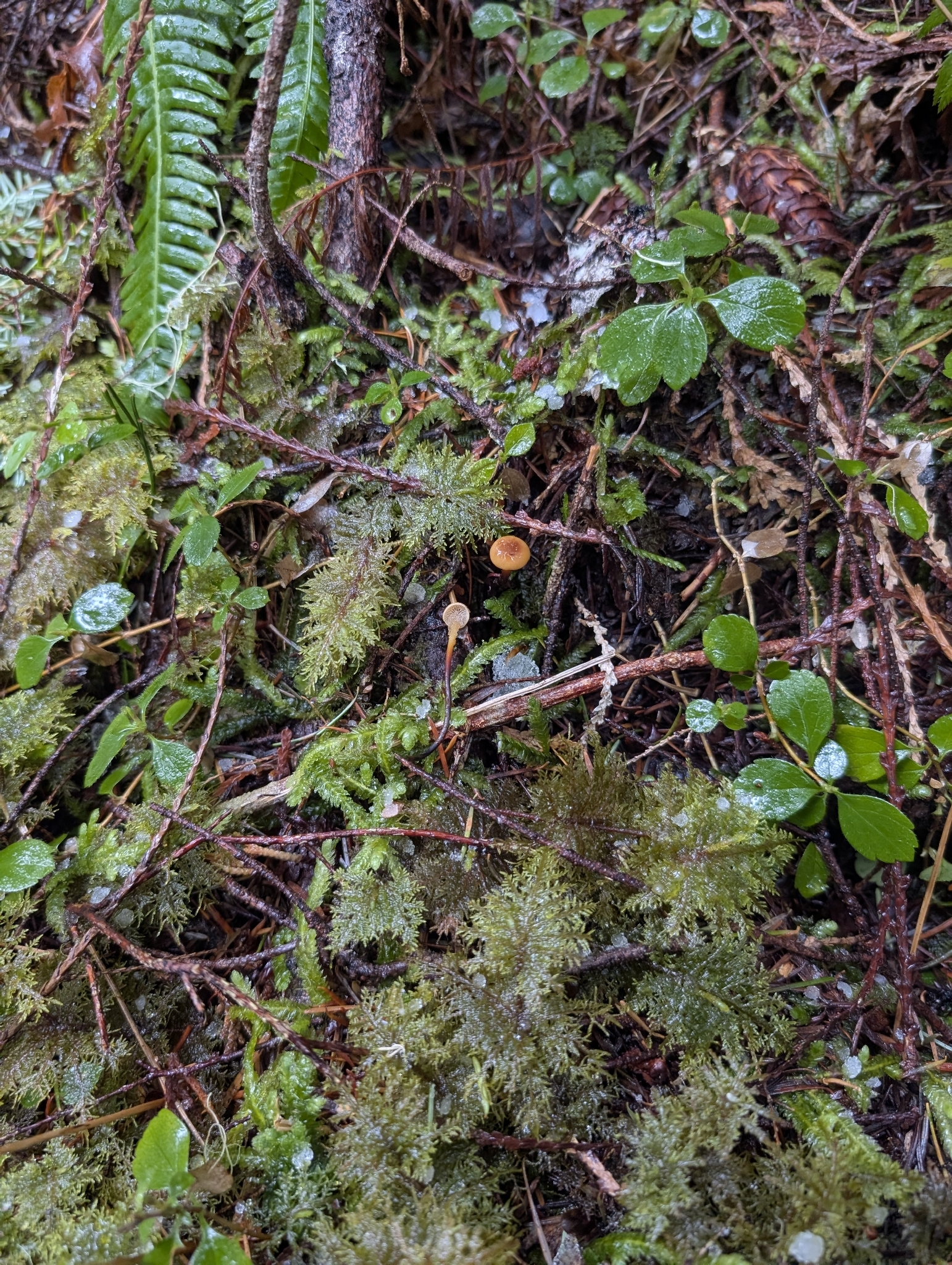
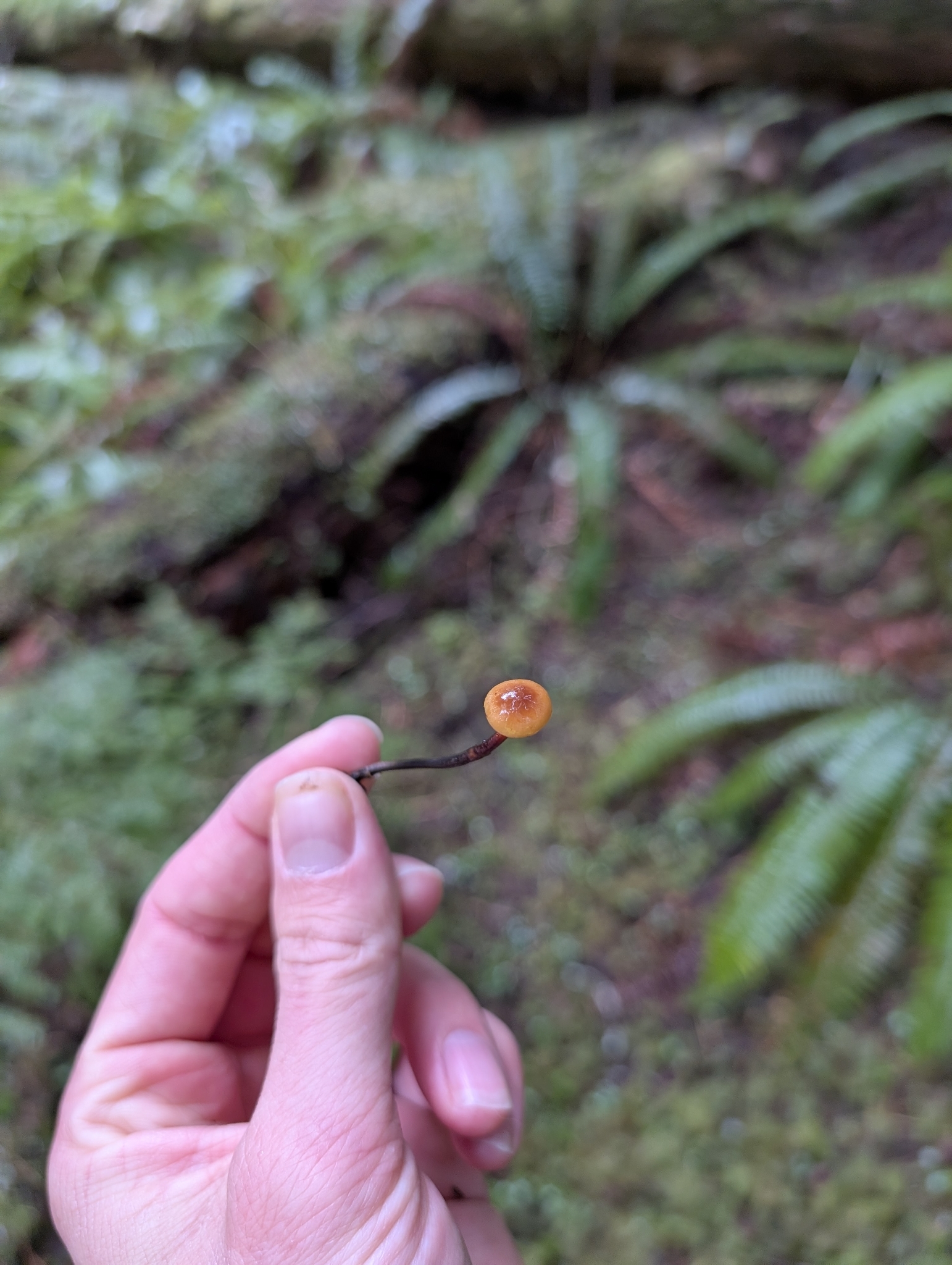
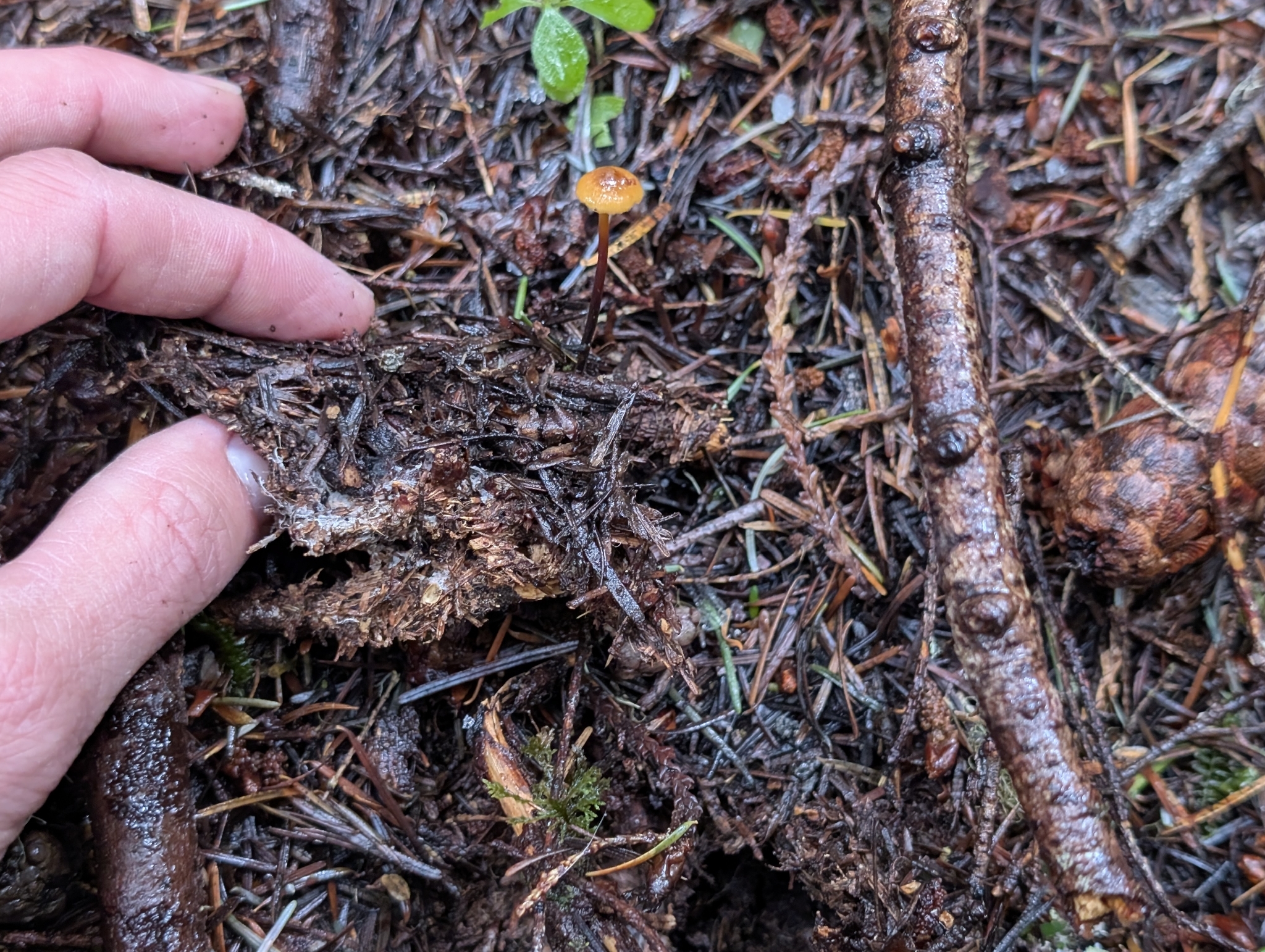
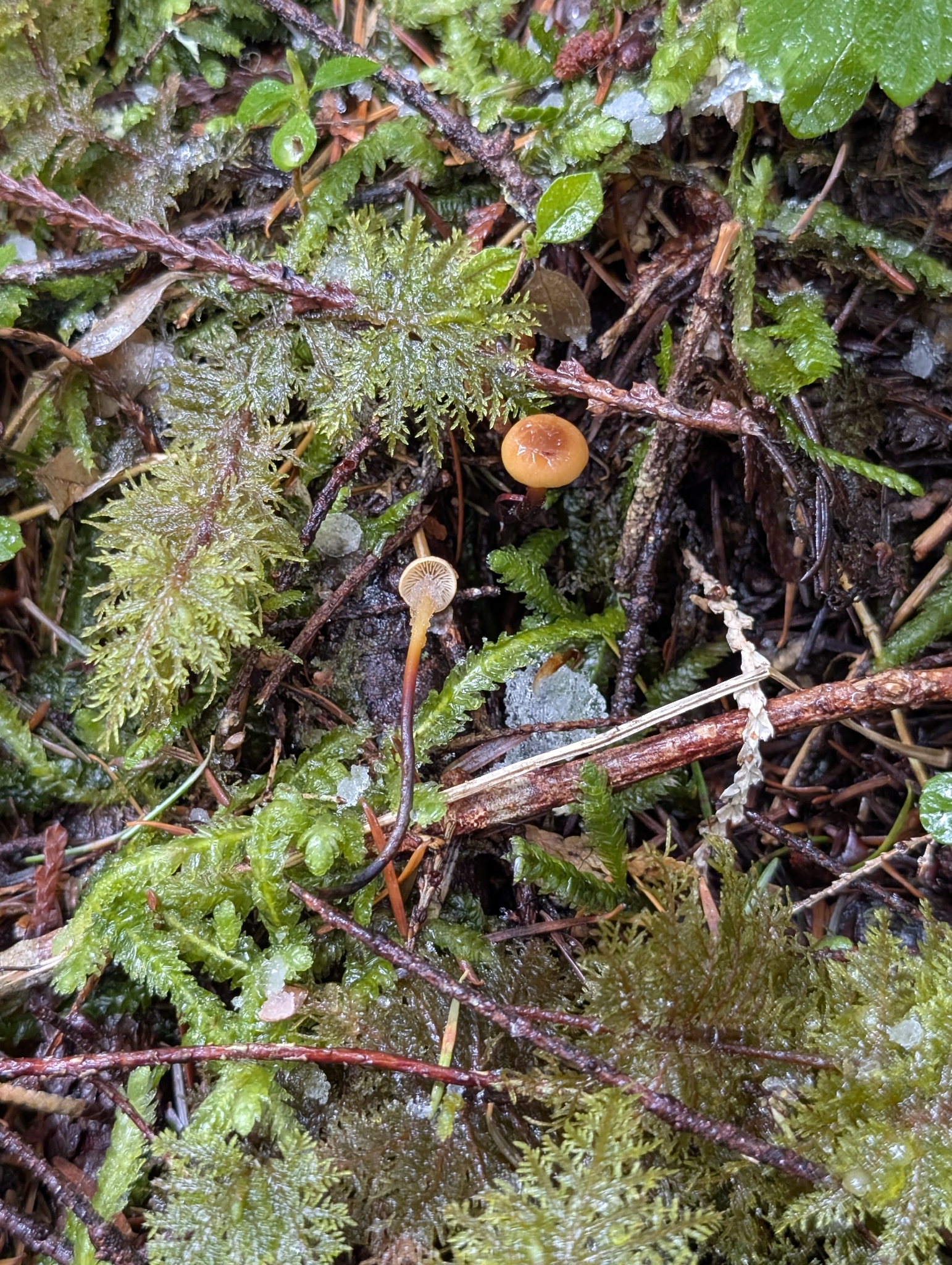
(More photos of latter collections, these are from my phone)
A relatively common mushroom to see this time of year, this collection (347158766) is likely Heimiomyces fulvipes. However I have been surprised by local Xeromphalinaceae before so for the end of the month I made multiple collections of this species, and/or similar. Both to fill our limits for the permit for this month and again add to our data available on these species. I would say these small fruitings are very common this time of year in a variety of similar habitats, however it is usually that I find one of two fruits from this species every 50 feet or so. Not a particularly solid metric but I do find it fairly consistent, at the latter collection location also. One more solo collection from this short day first.
Update: Sequencing has returned a result of Heimiomyces fulvipes.
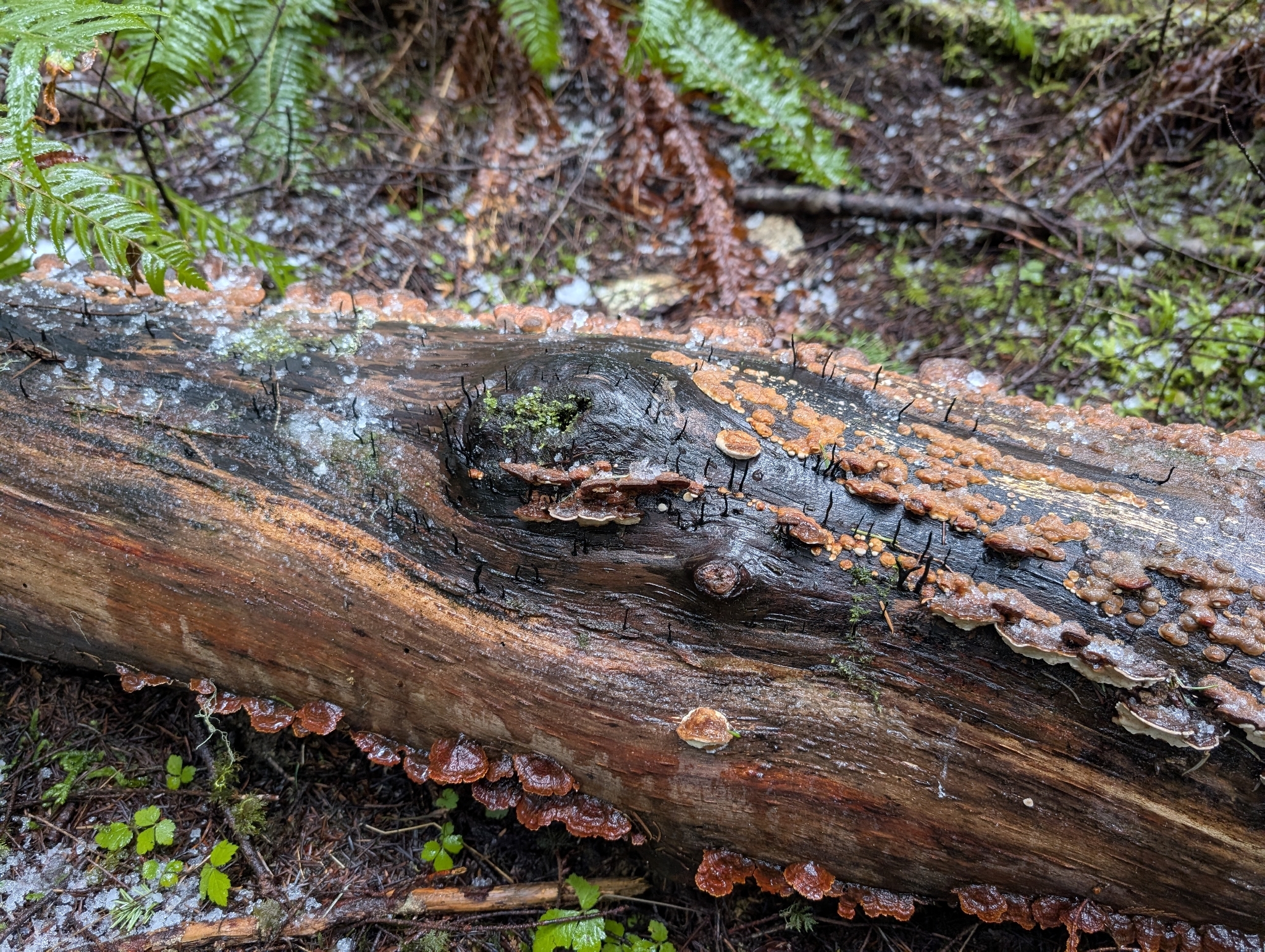
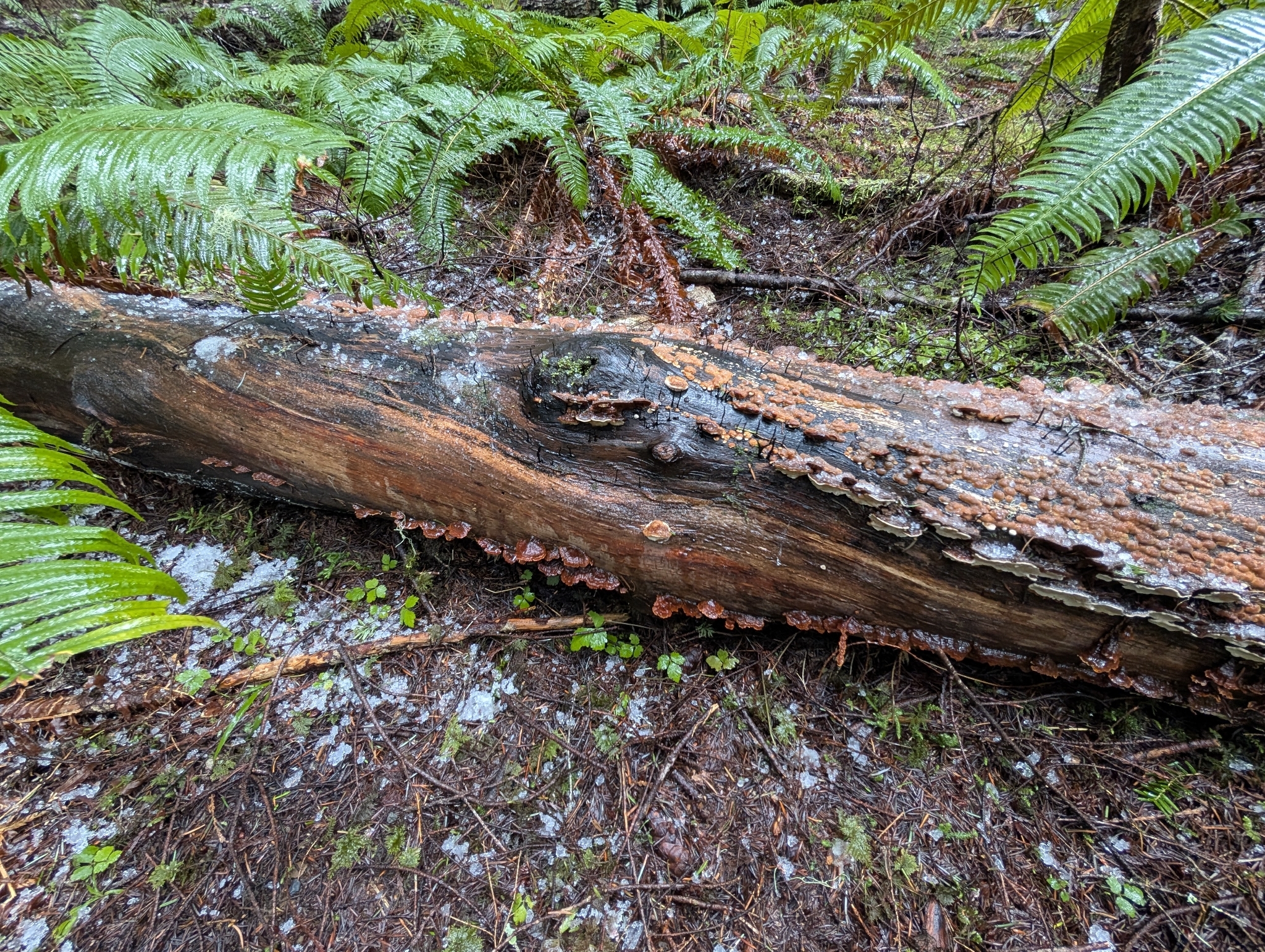
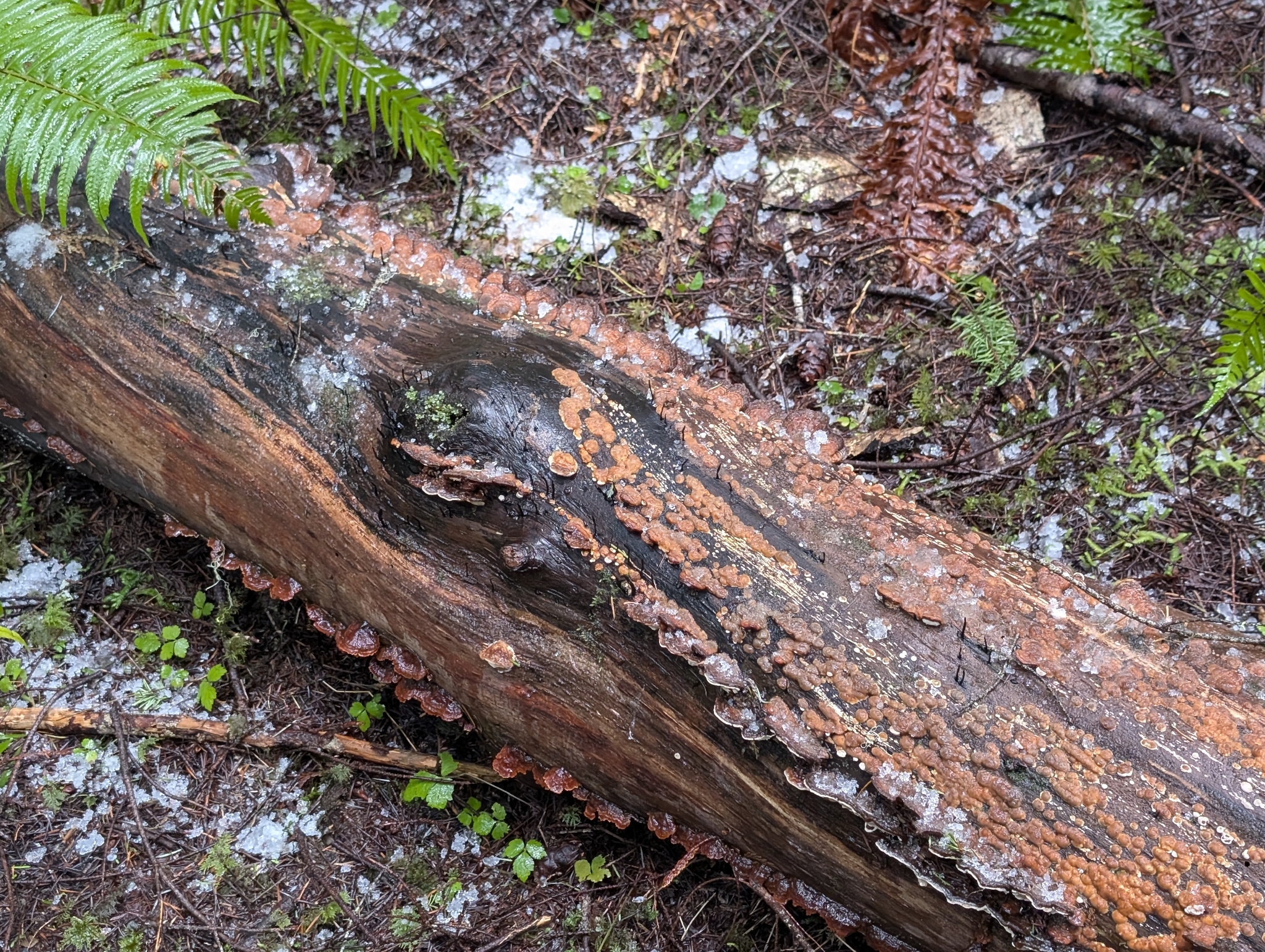
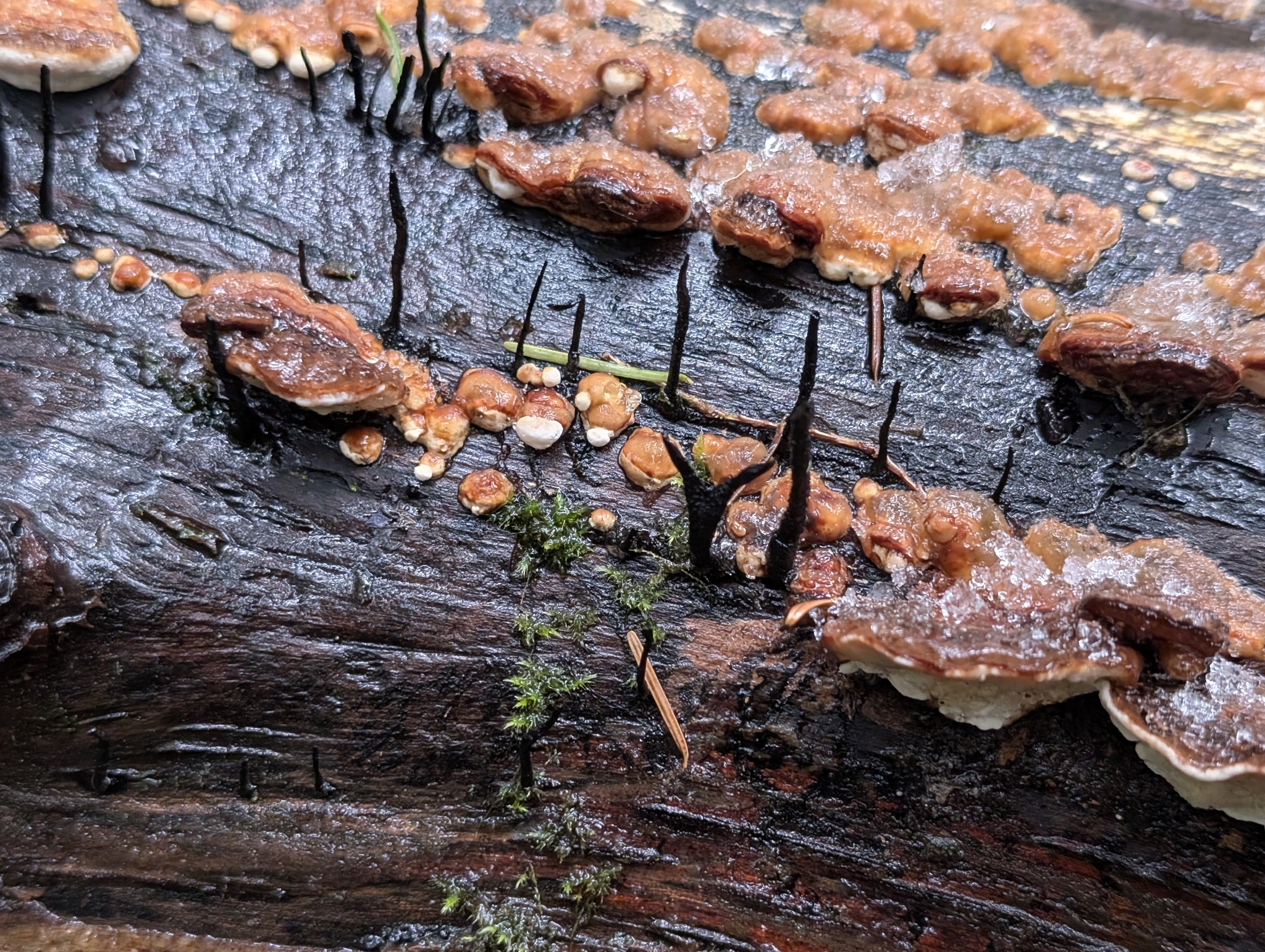
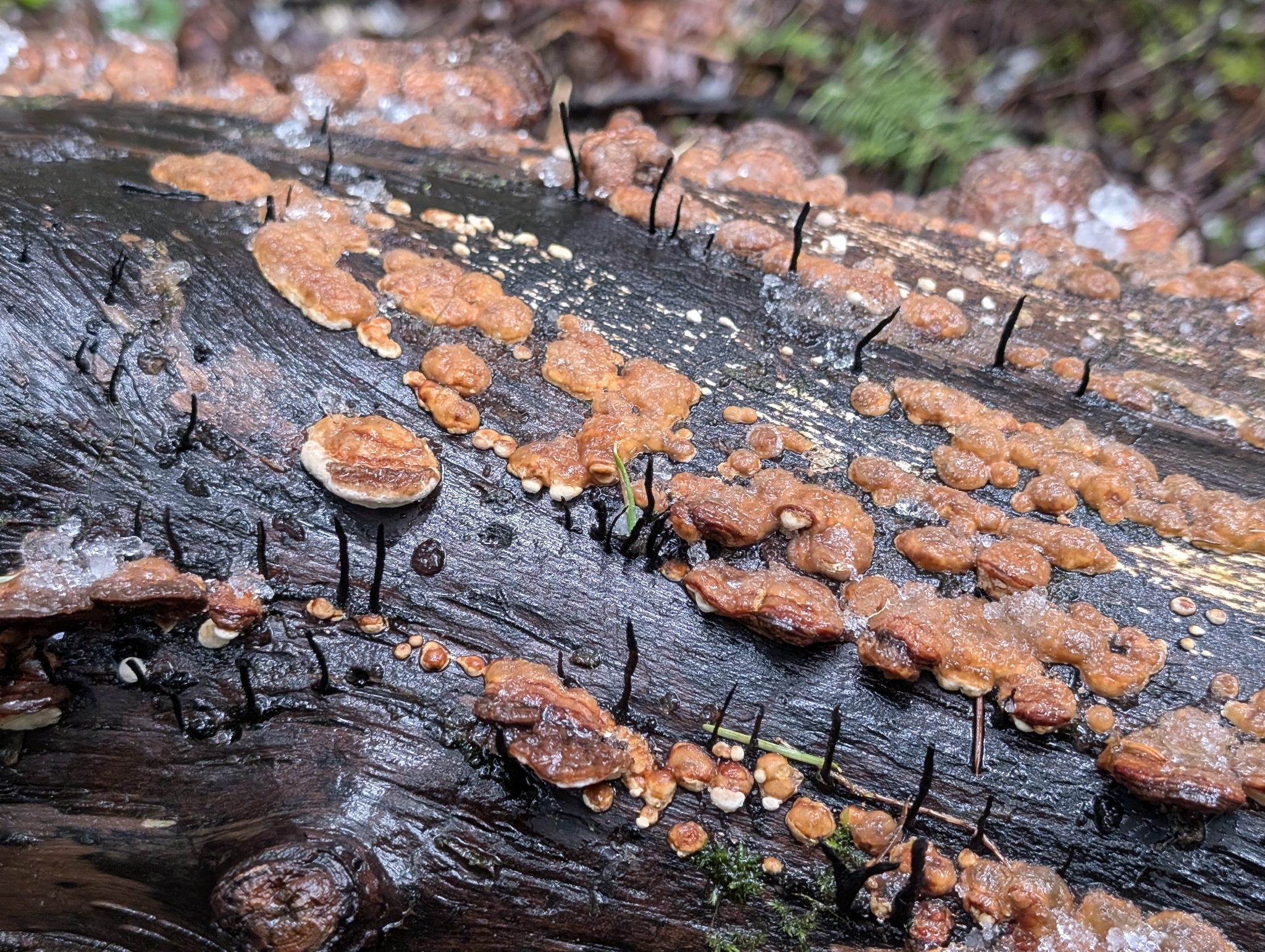
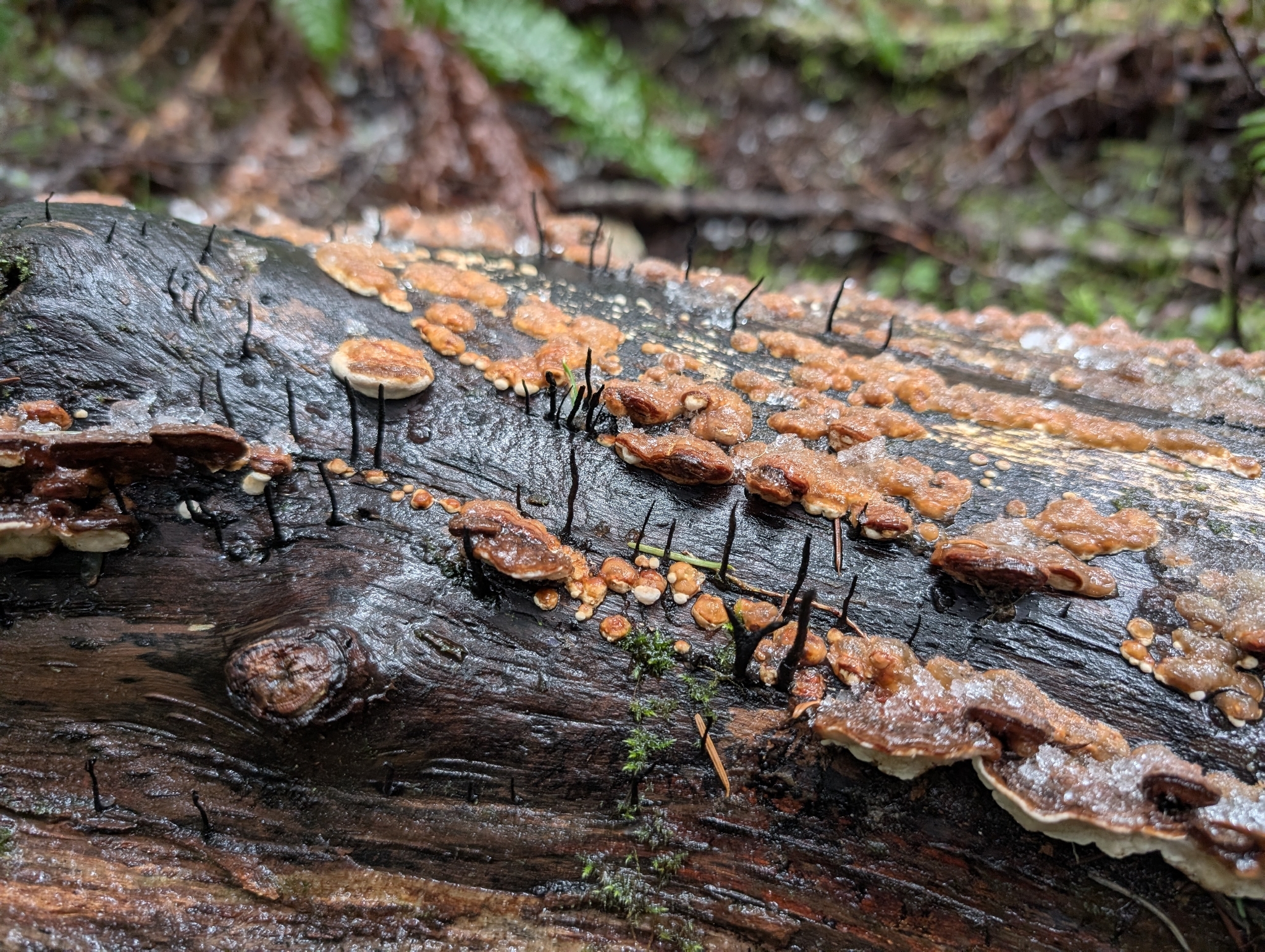
I also collected some Xylaria on this day. (347158532) Not extremely notable, just a genus I have always found nice to see. Showing off its cold tolerance next to some chilly Trametes that had some funky stunted growth going on.
Update: X. hypoxylon it is!
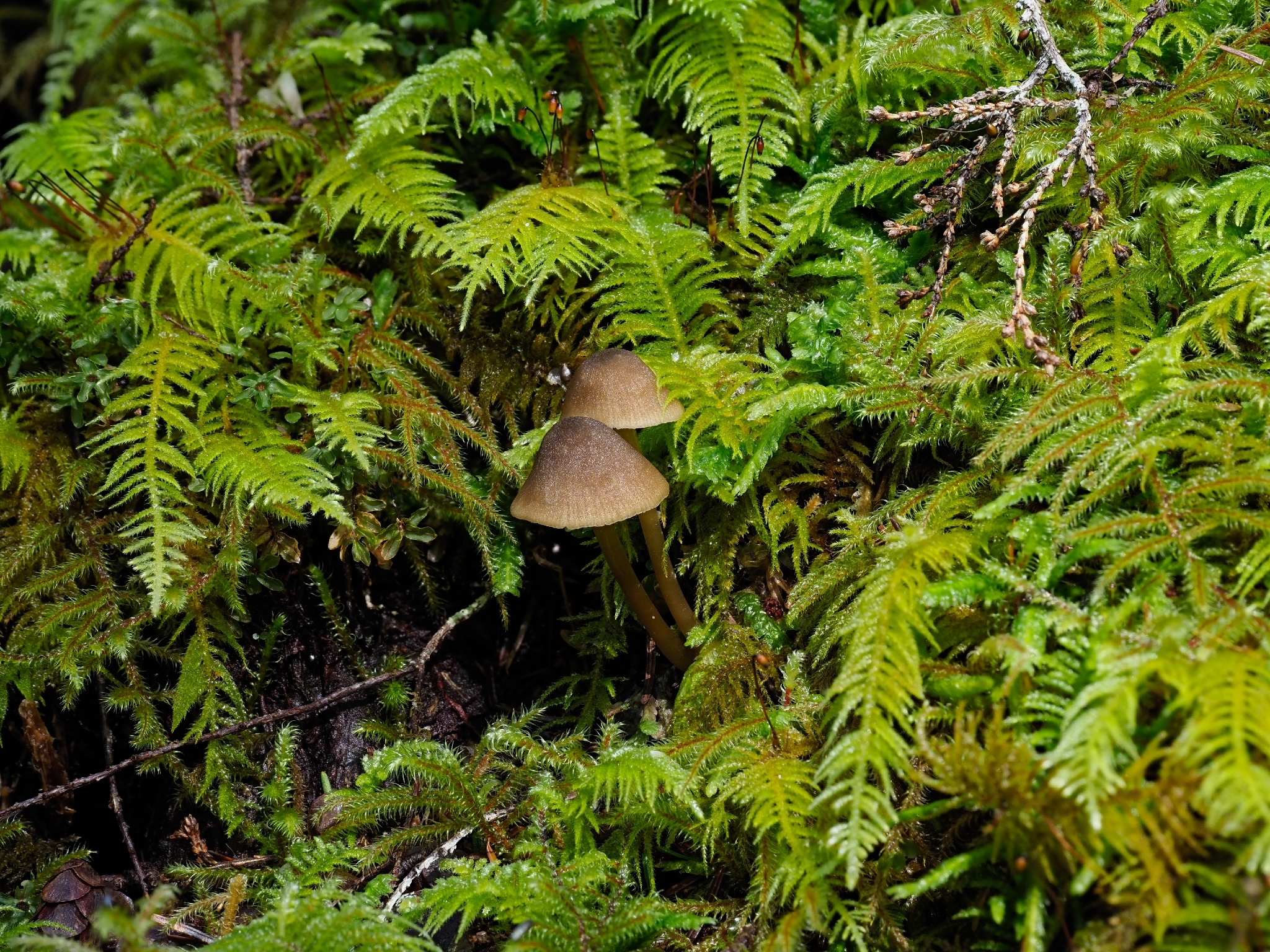
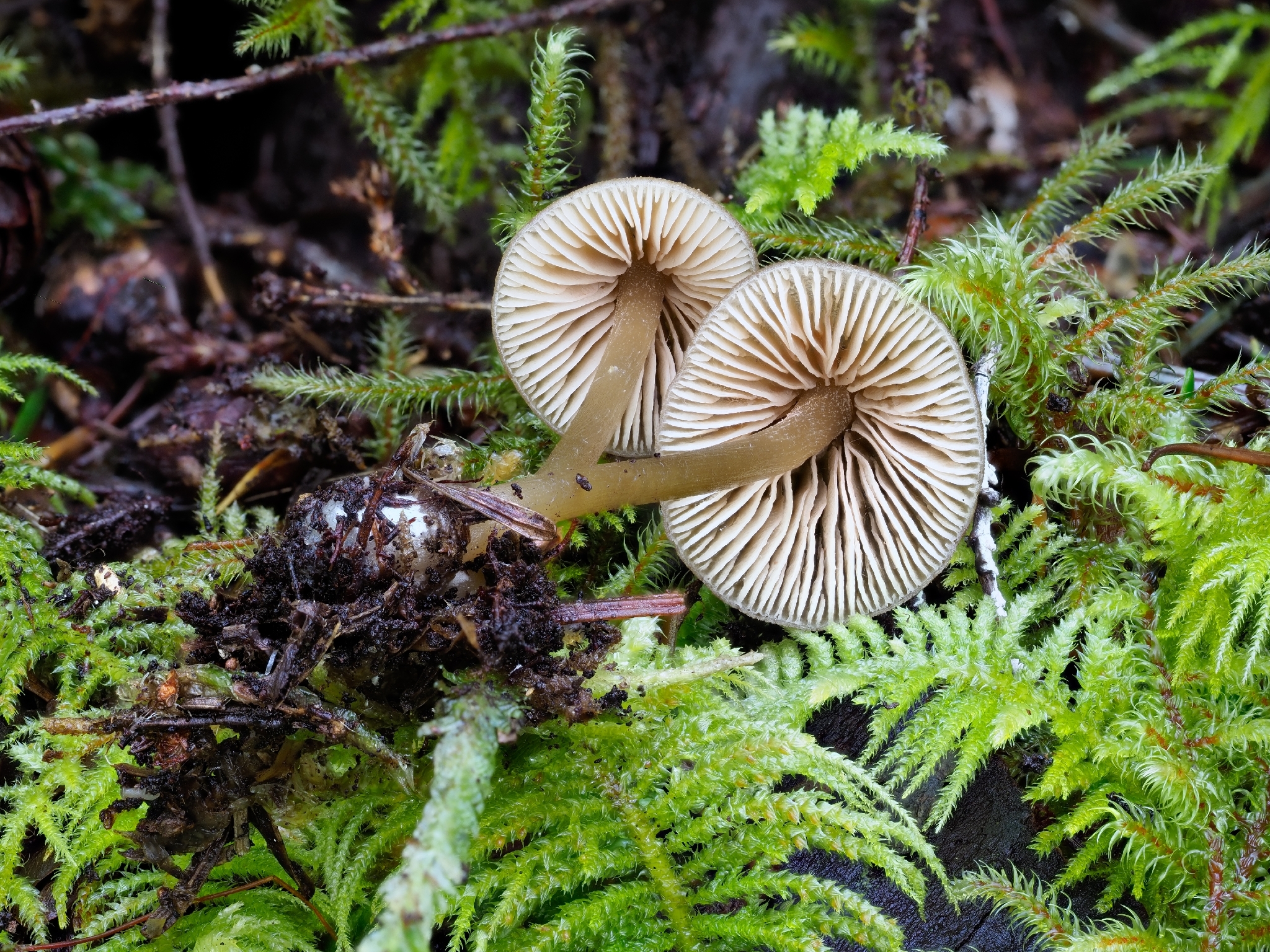
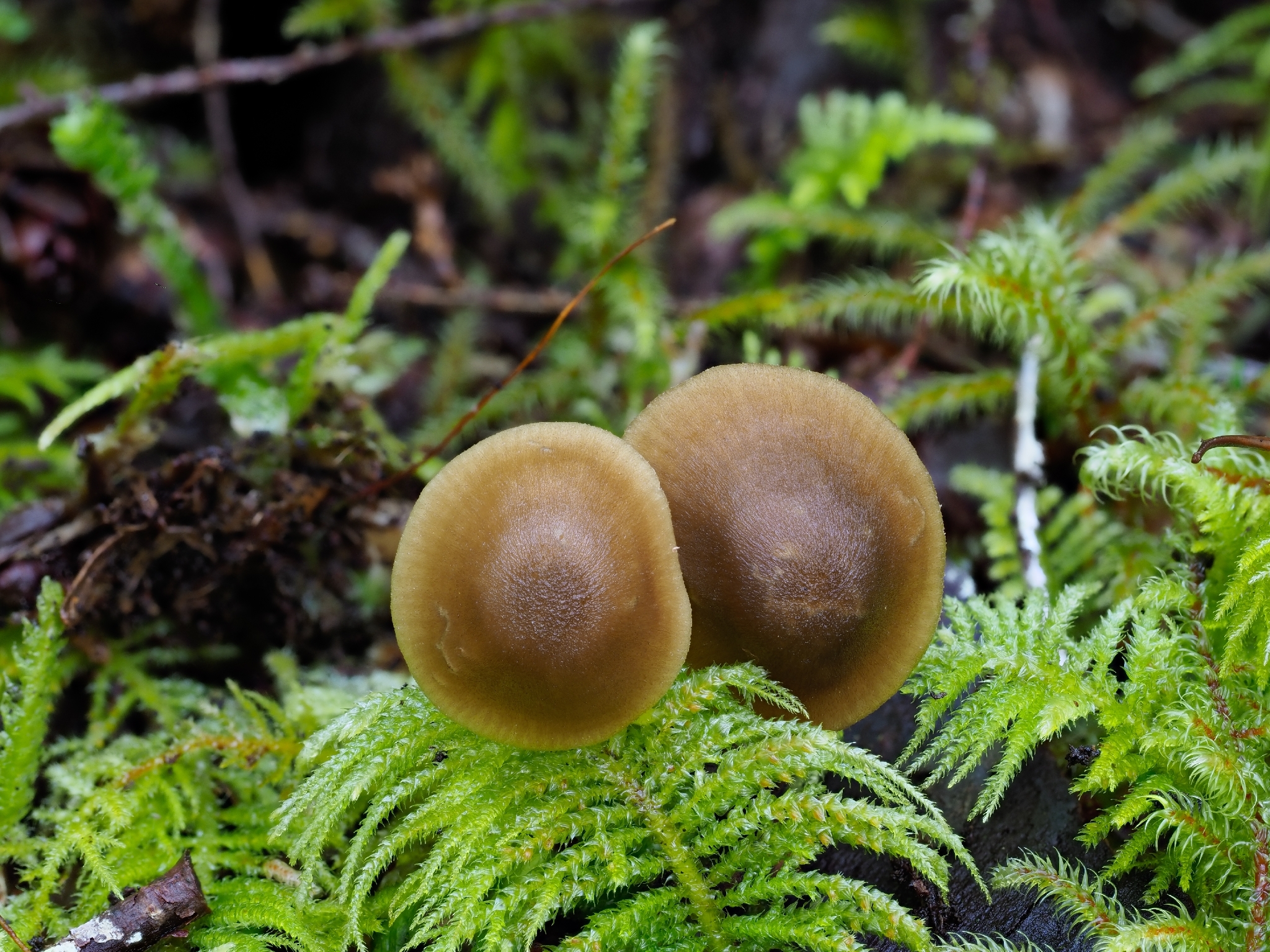
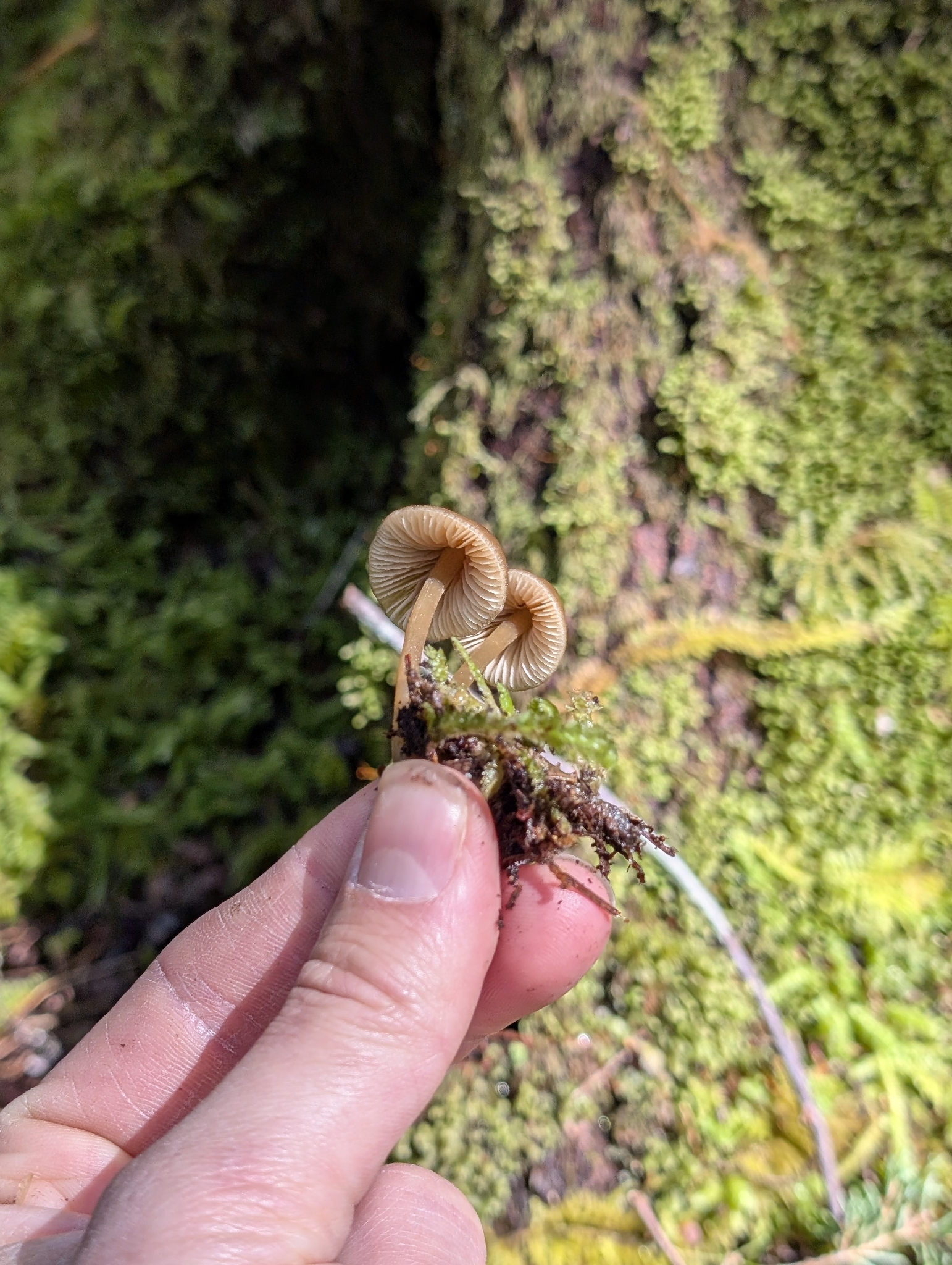
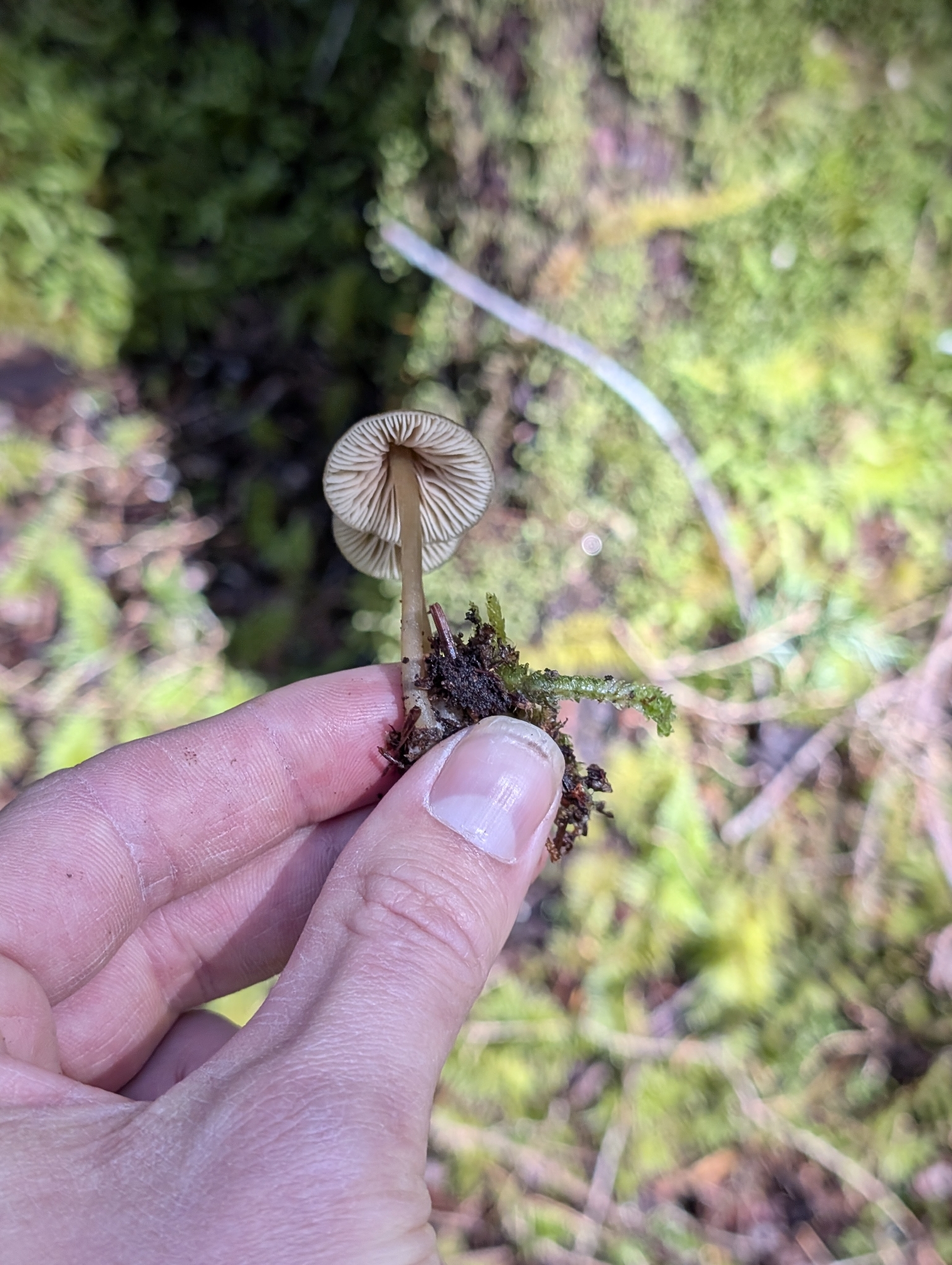
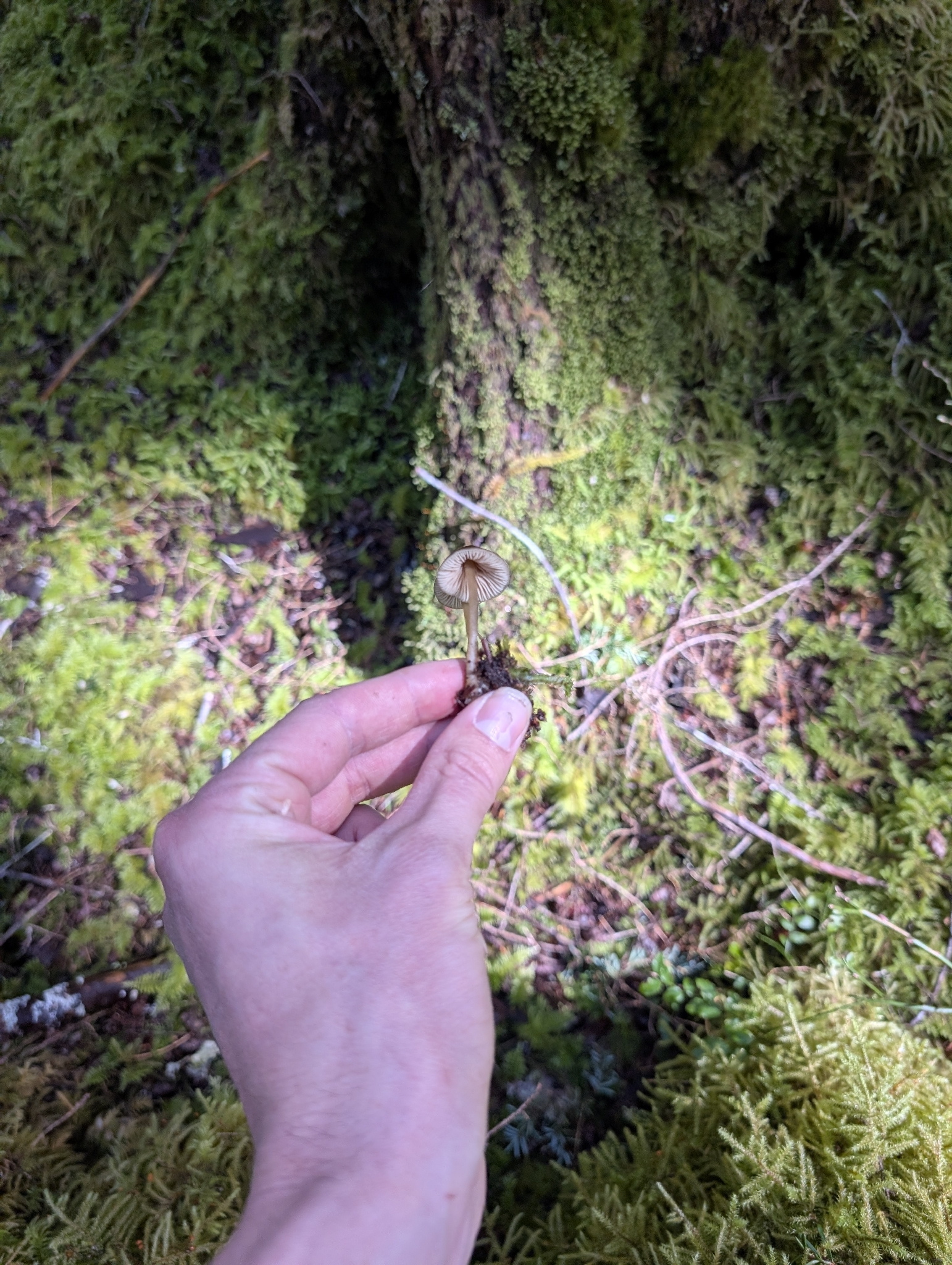
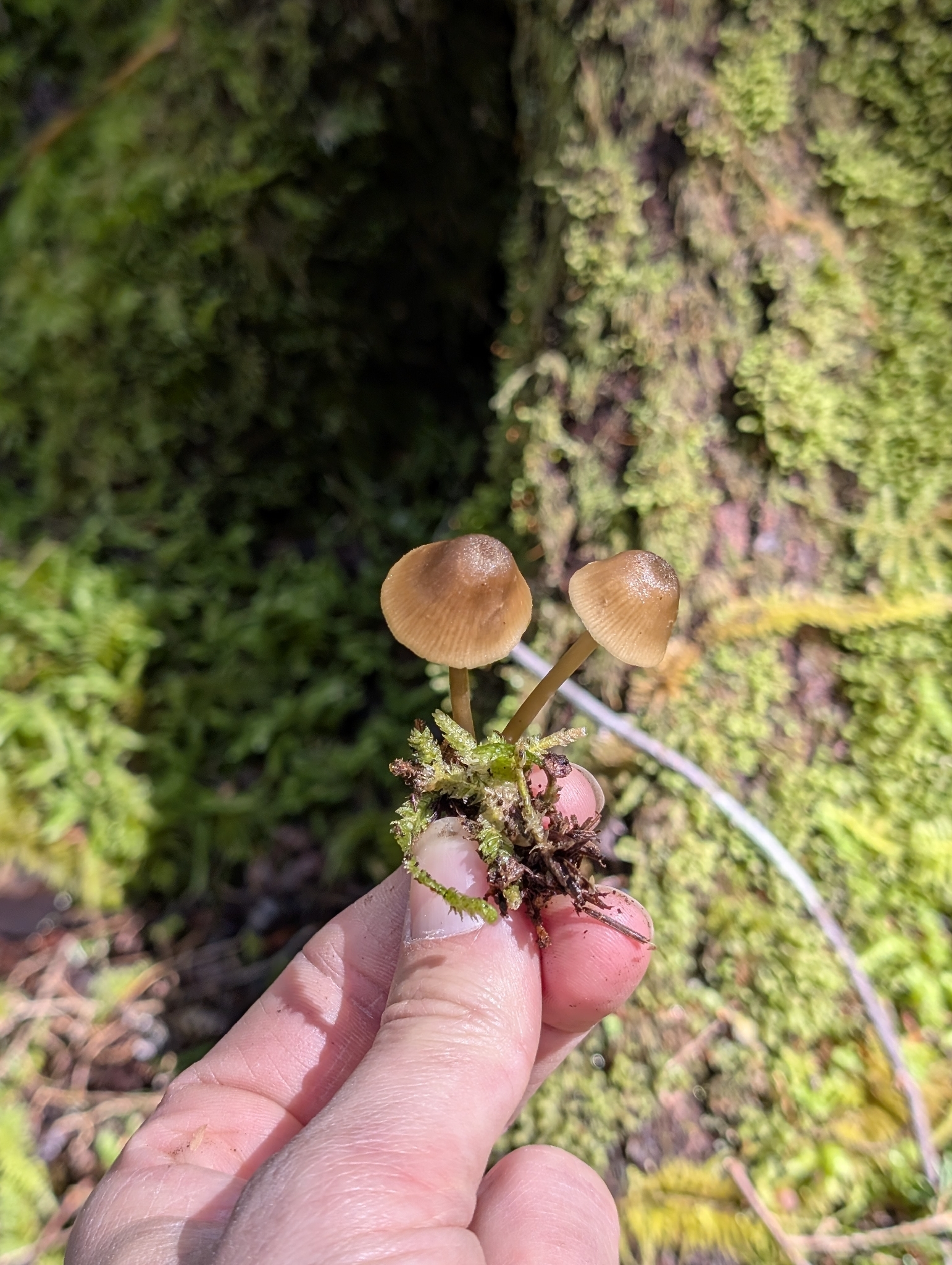
Seeing as the remainder of the collections from this month are filled by more Heimiomyces / Xeromphalina, I will start this hike with the last remaining different genus. This lovely pair (347167578) originally struck me as being fairly mycenoid, however after looking again I would place them as one of our spring species in Entoloma subgenus Nolanea. There’s even a bit of pink deposit in the gills! Nothing too spectacular but it will be nice to see which species or temp code this is.
Update: DNA confirms this as E. cetratum. Indeed a spring Nolanea, in section Staurospora.
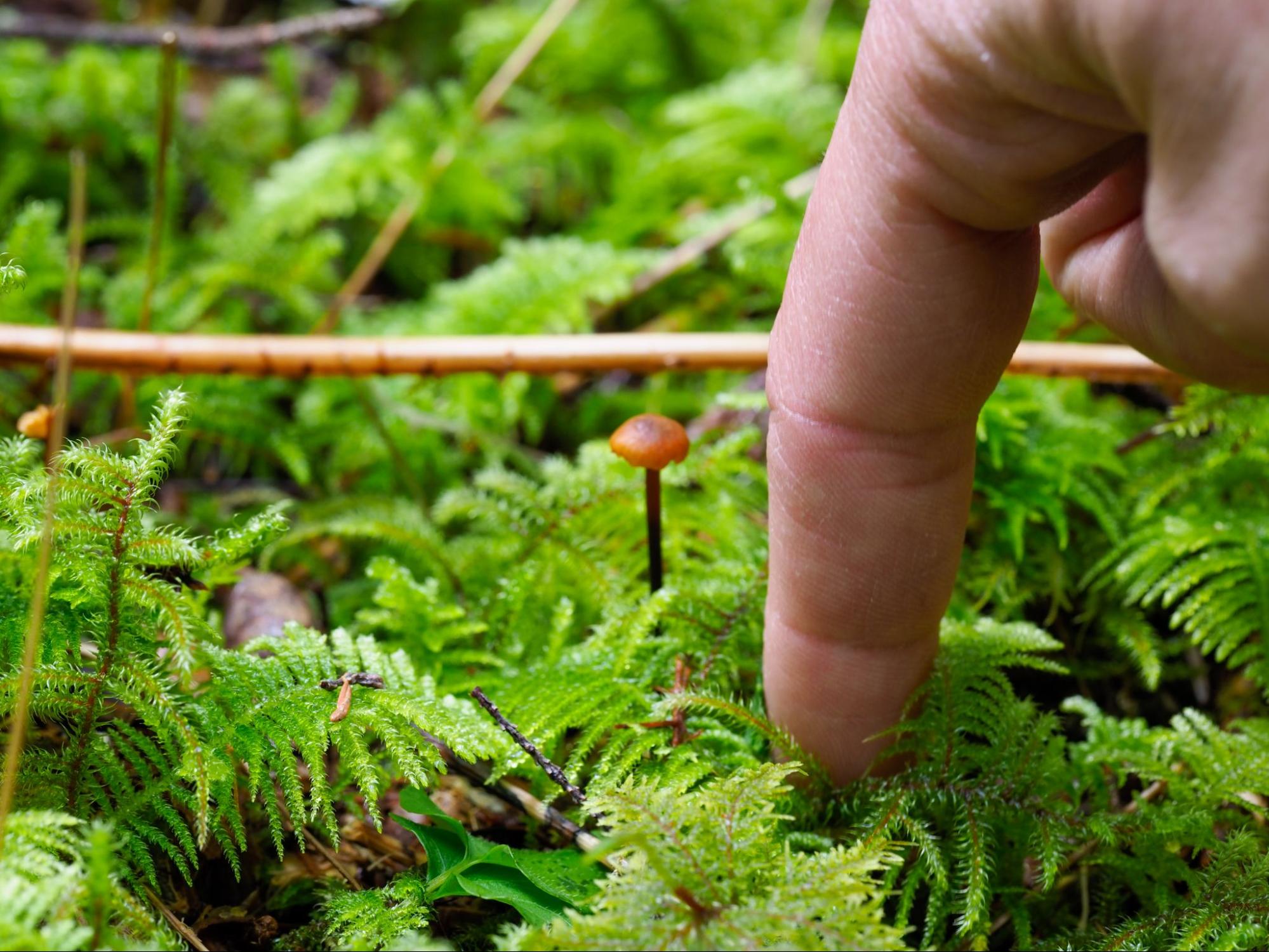
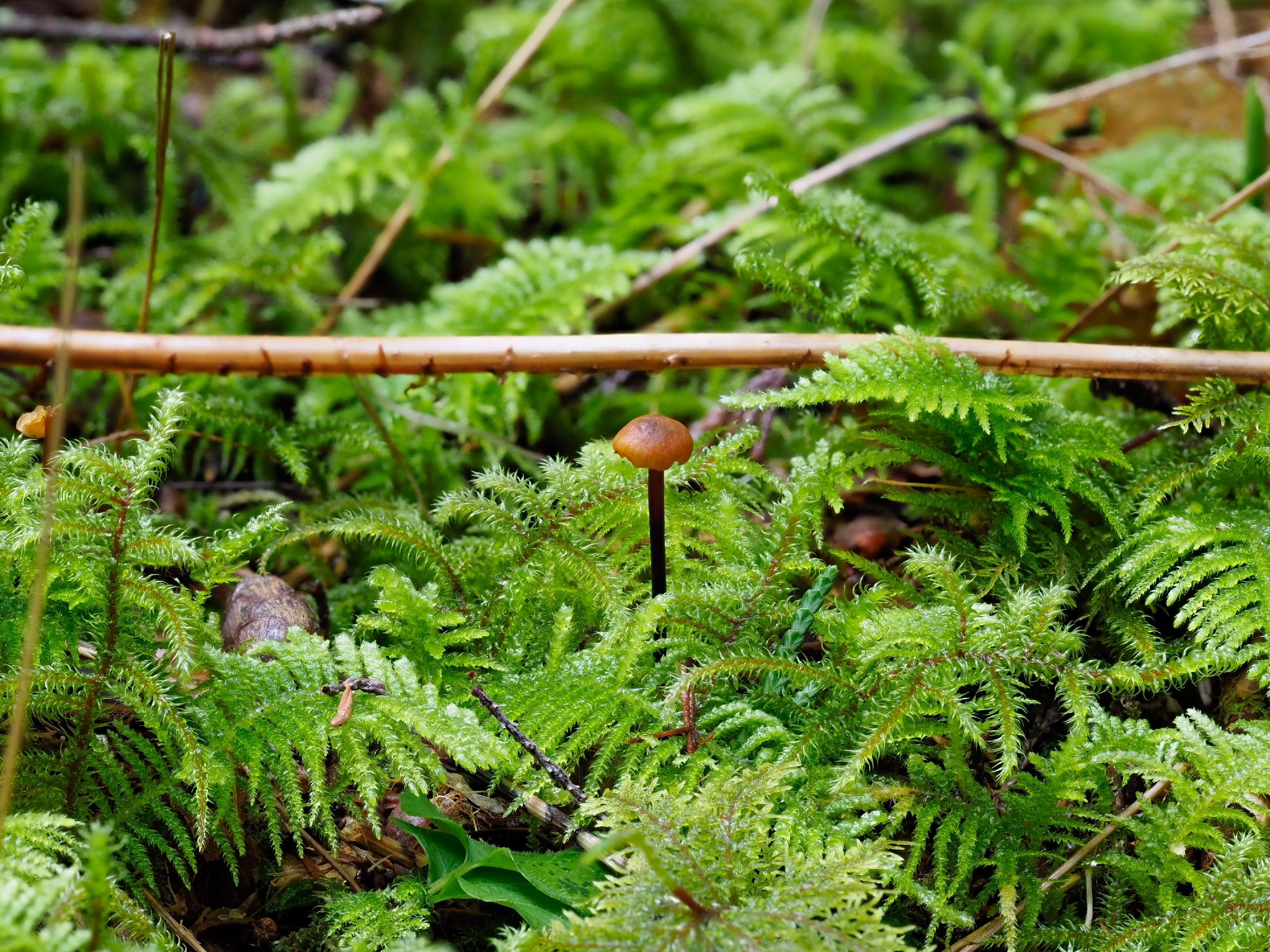
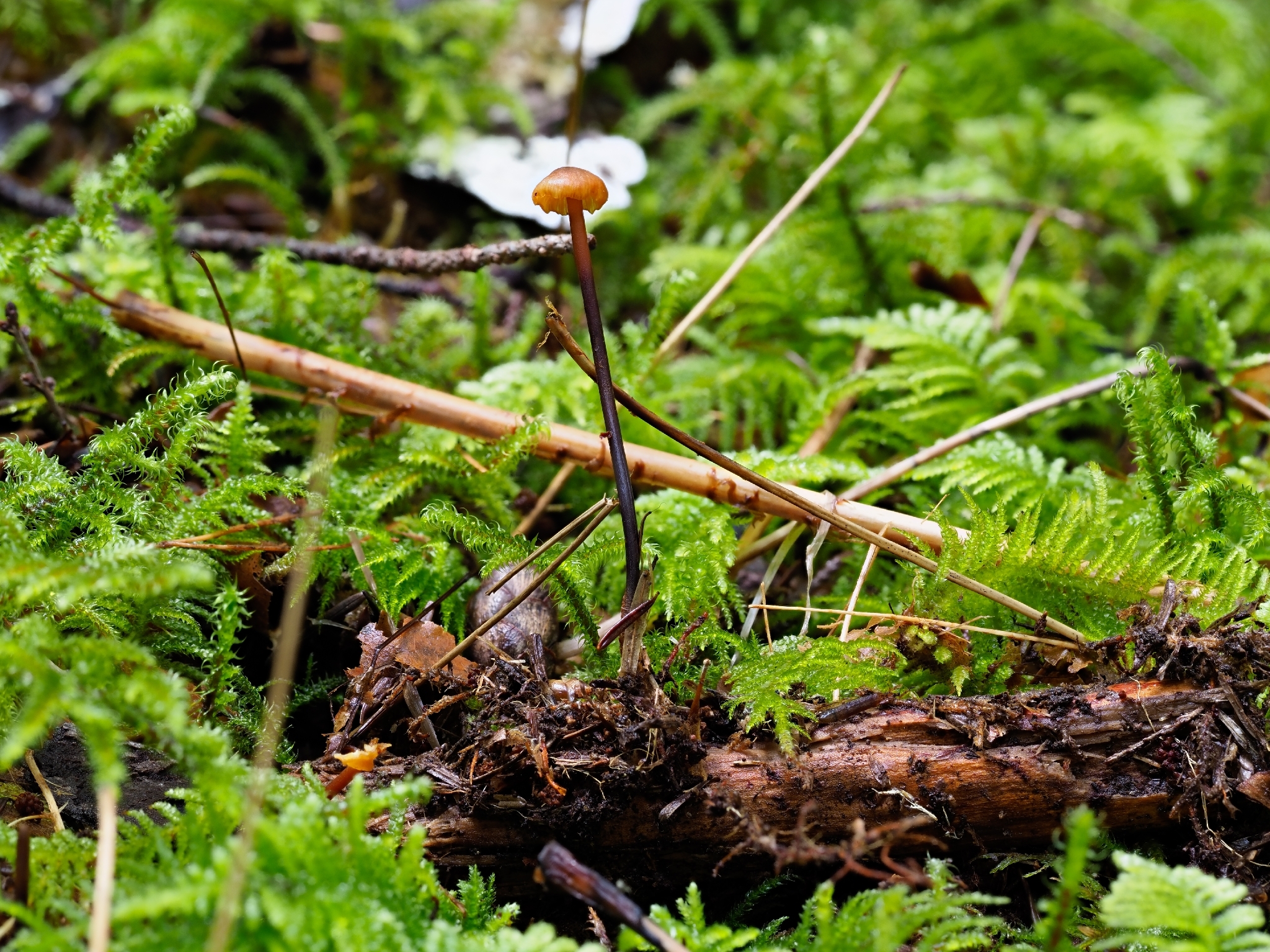
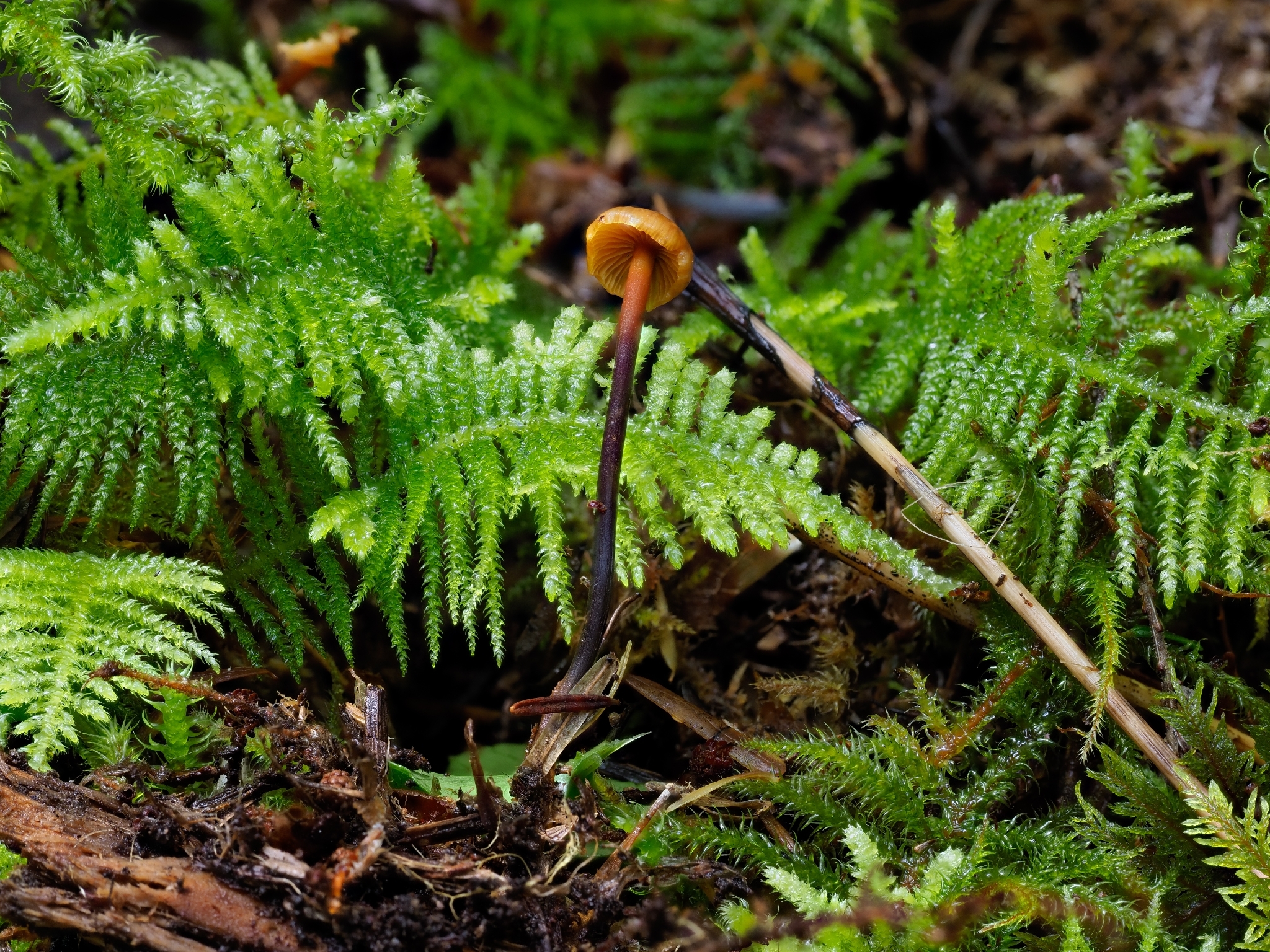
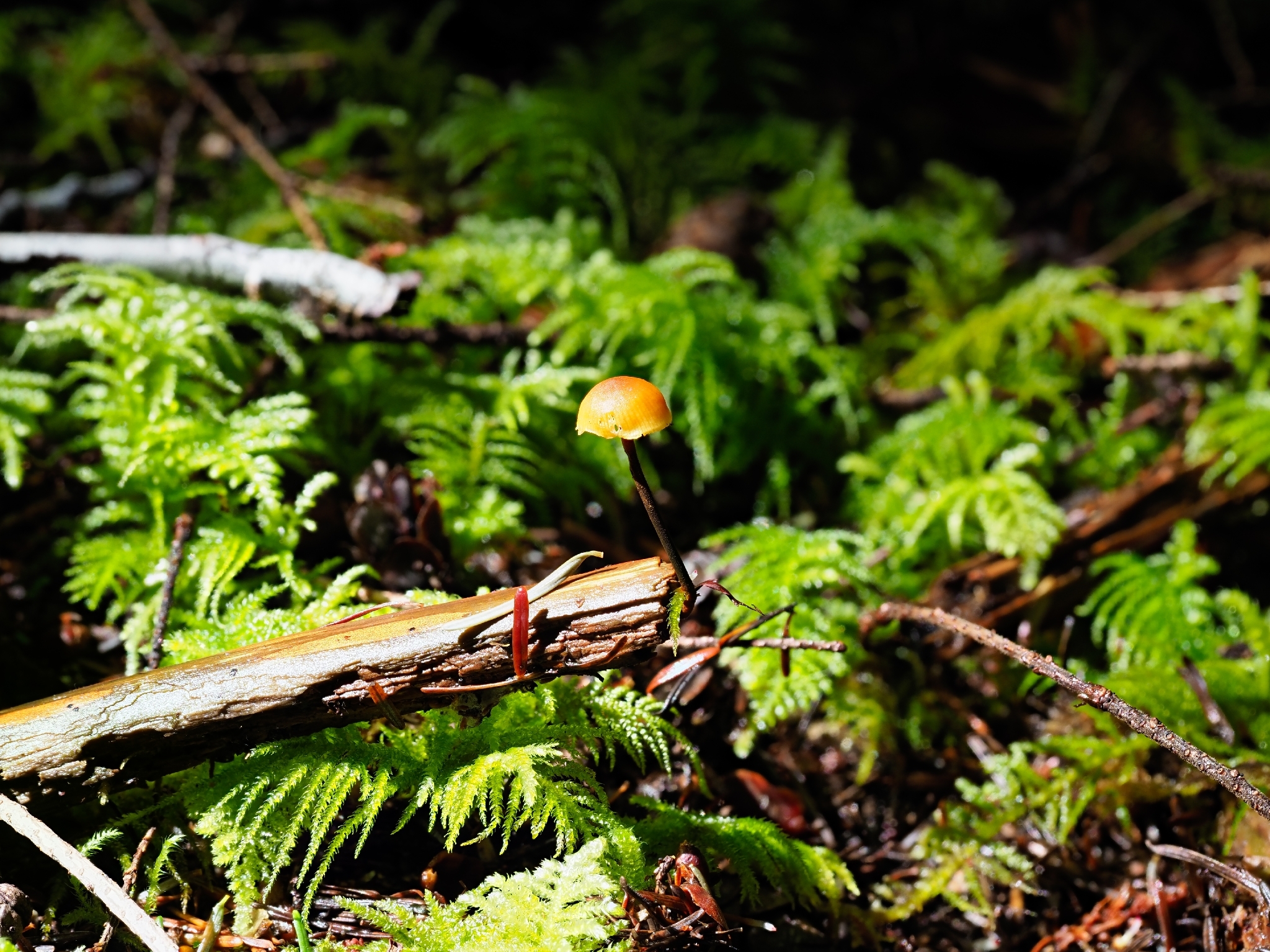
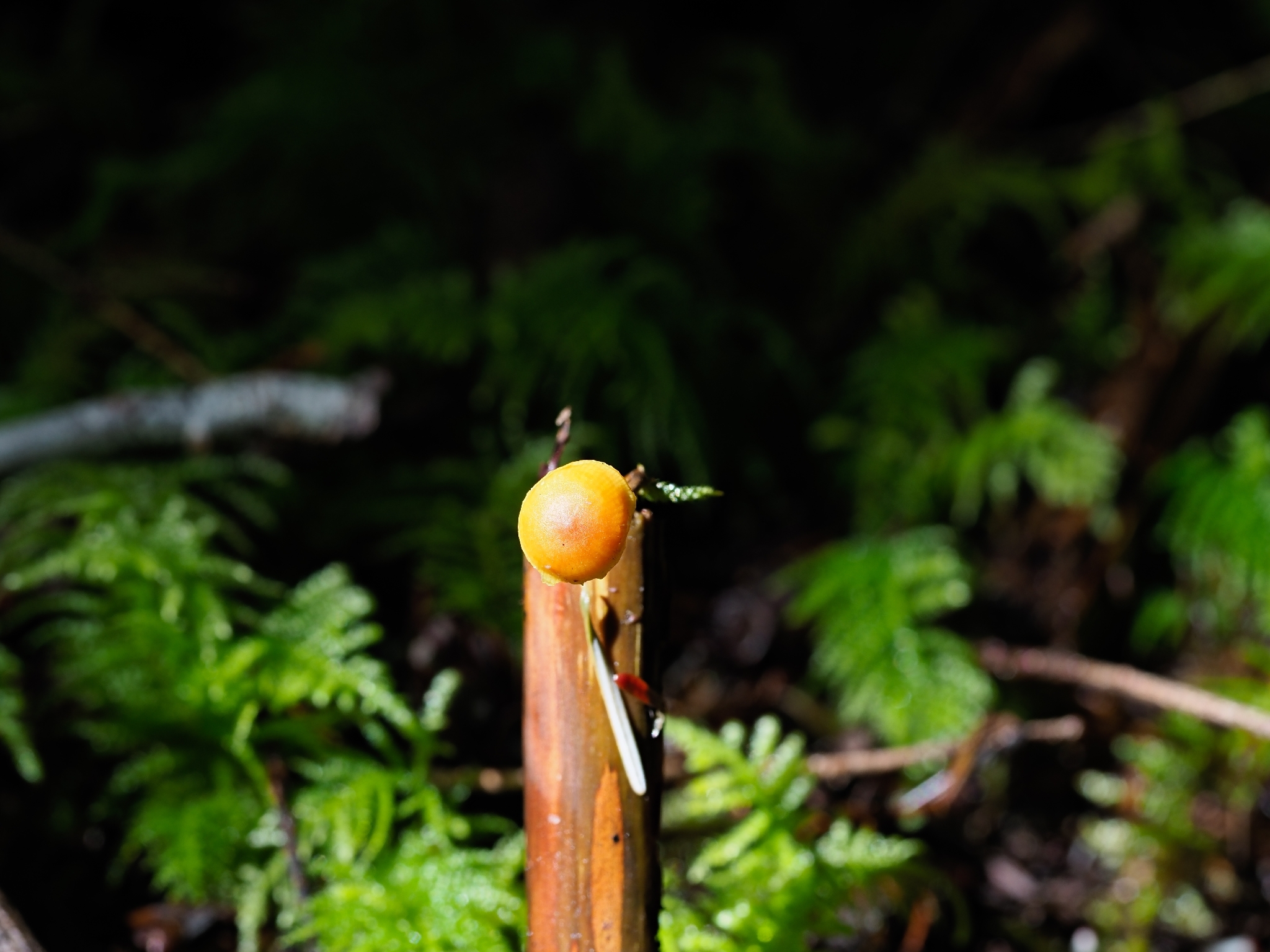
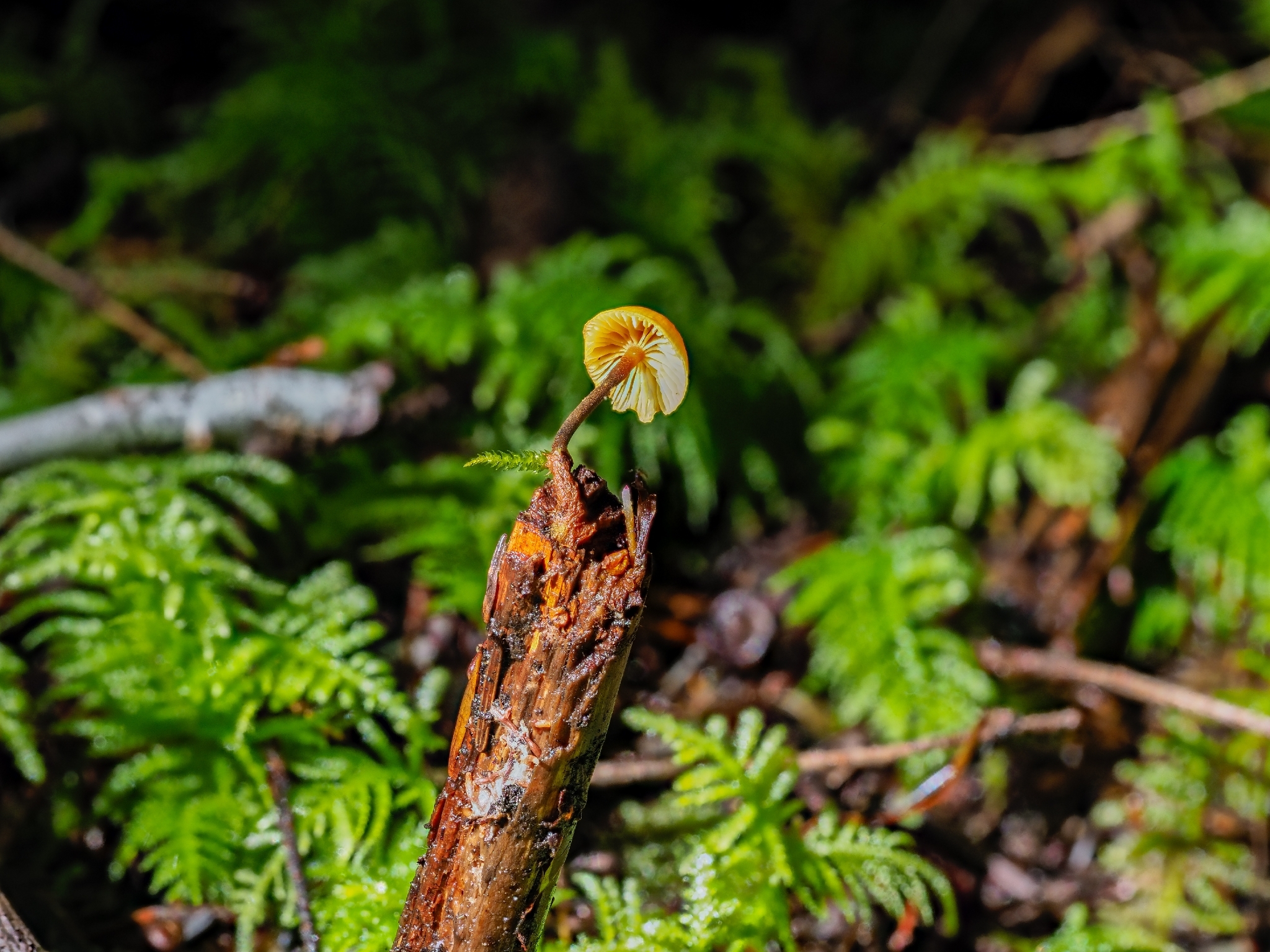
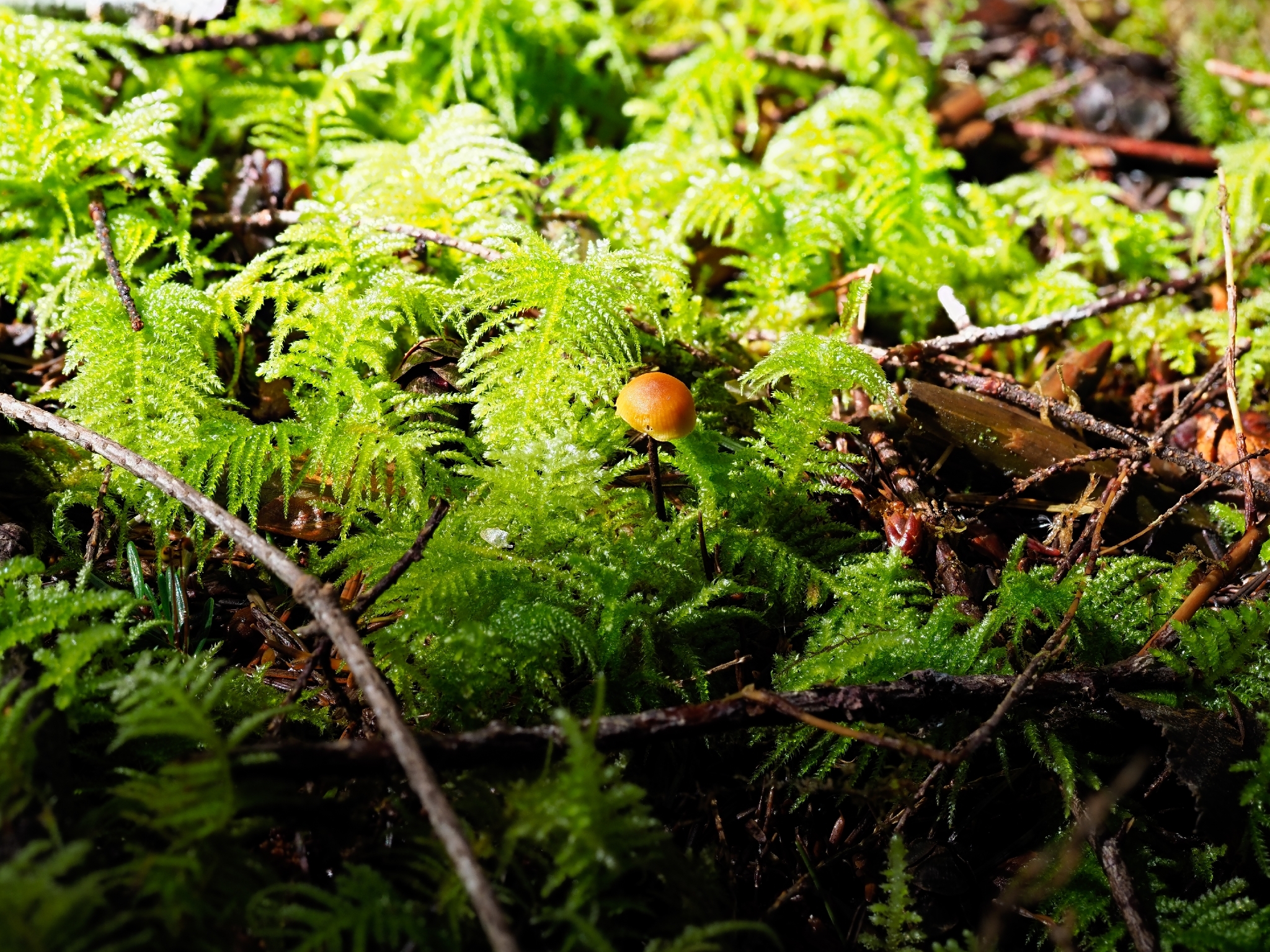
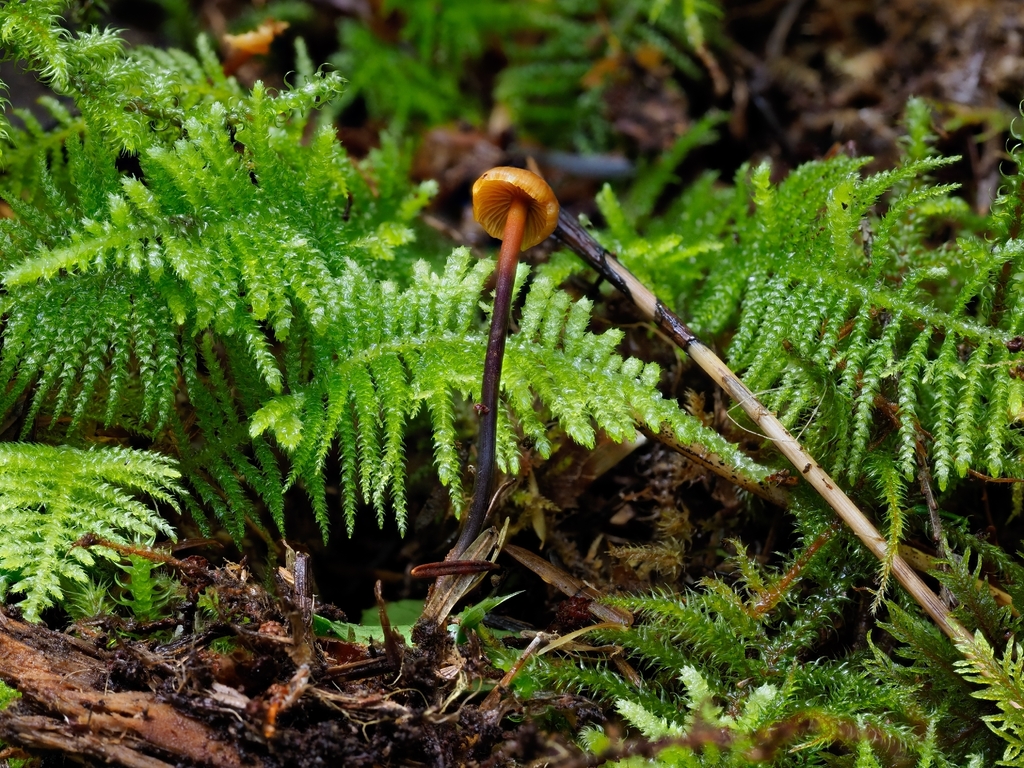
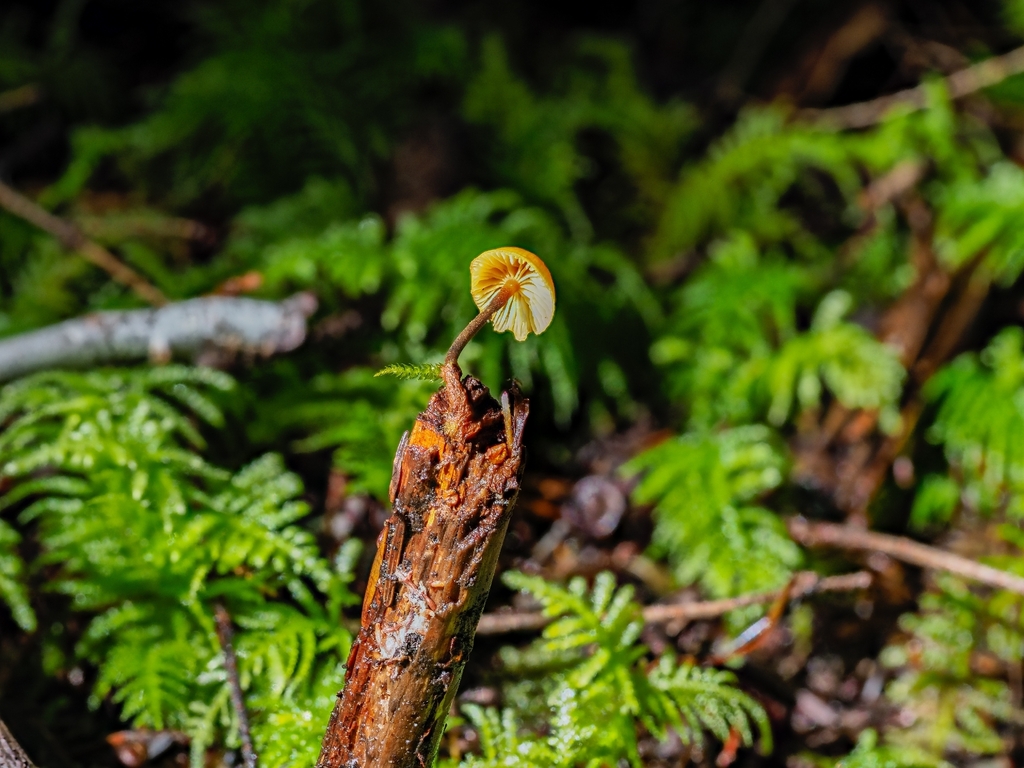
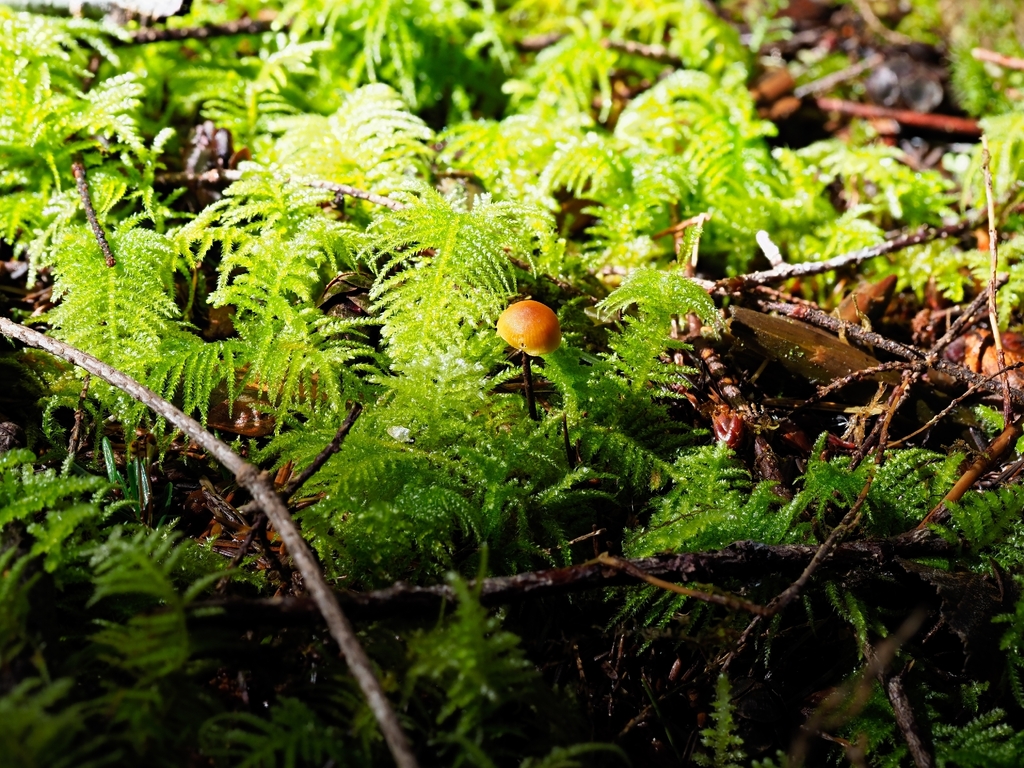
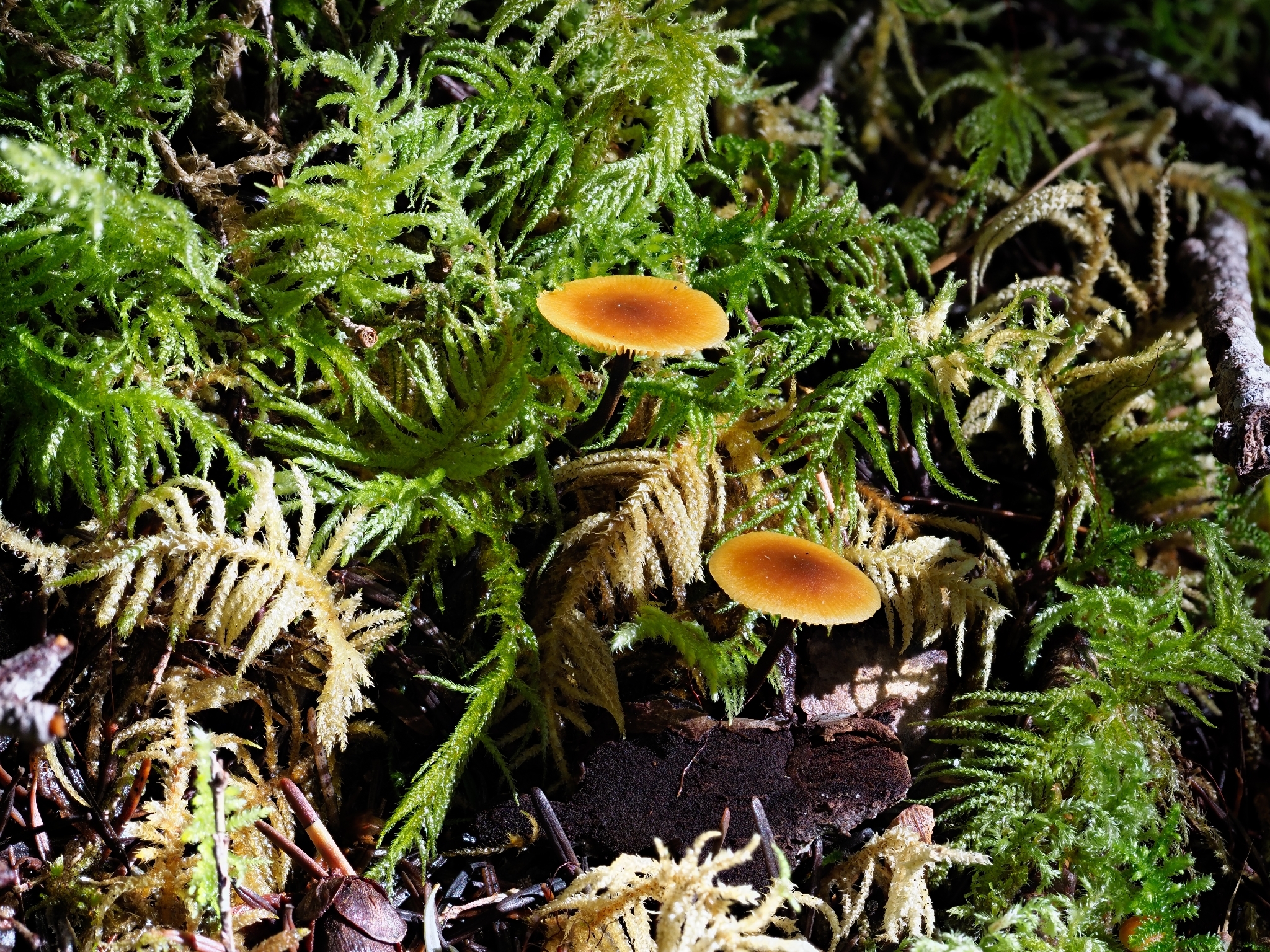
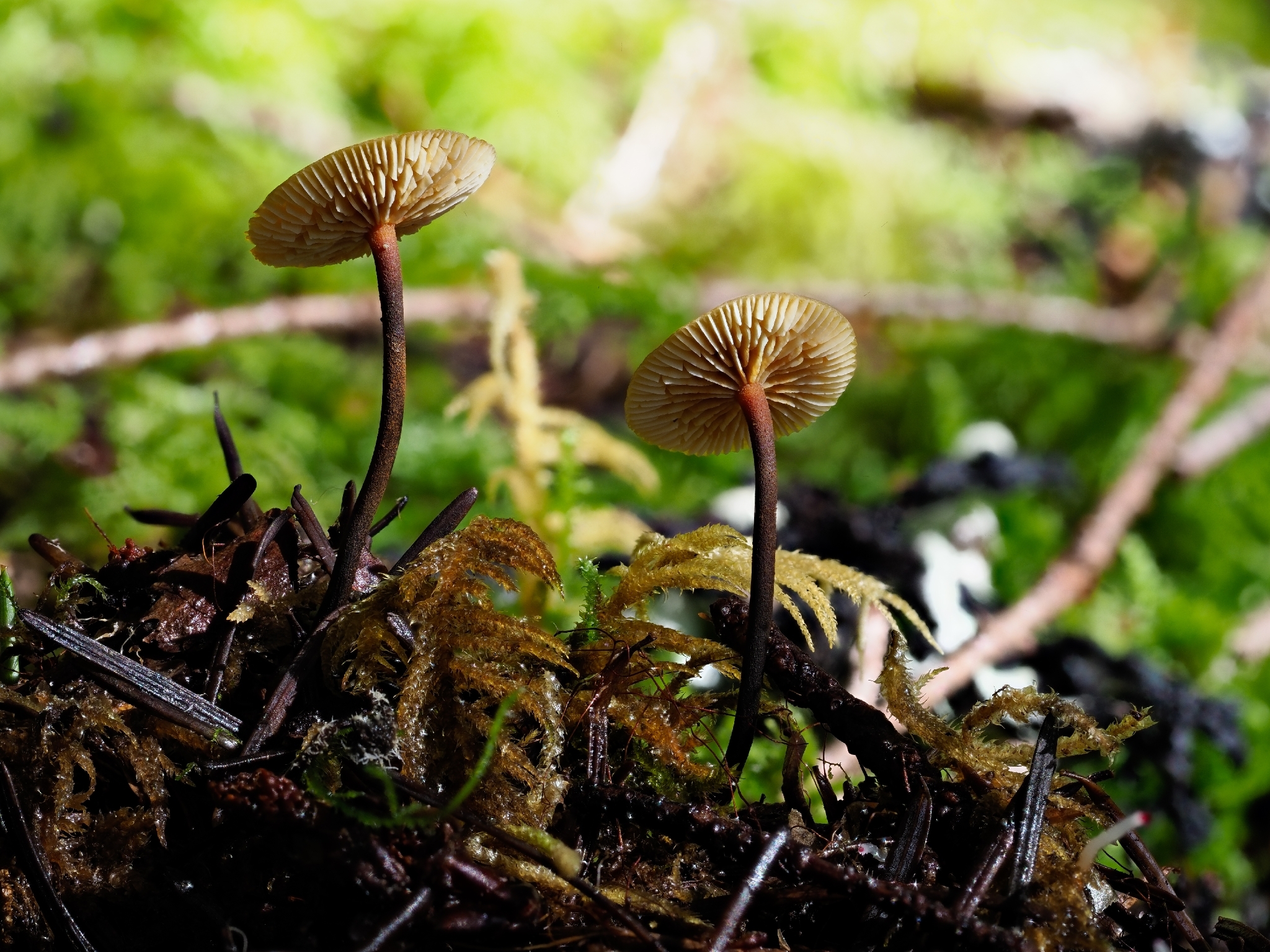
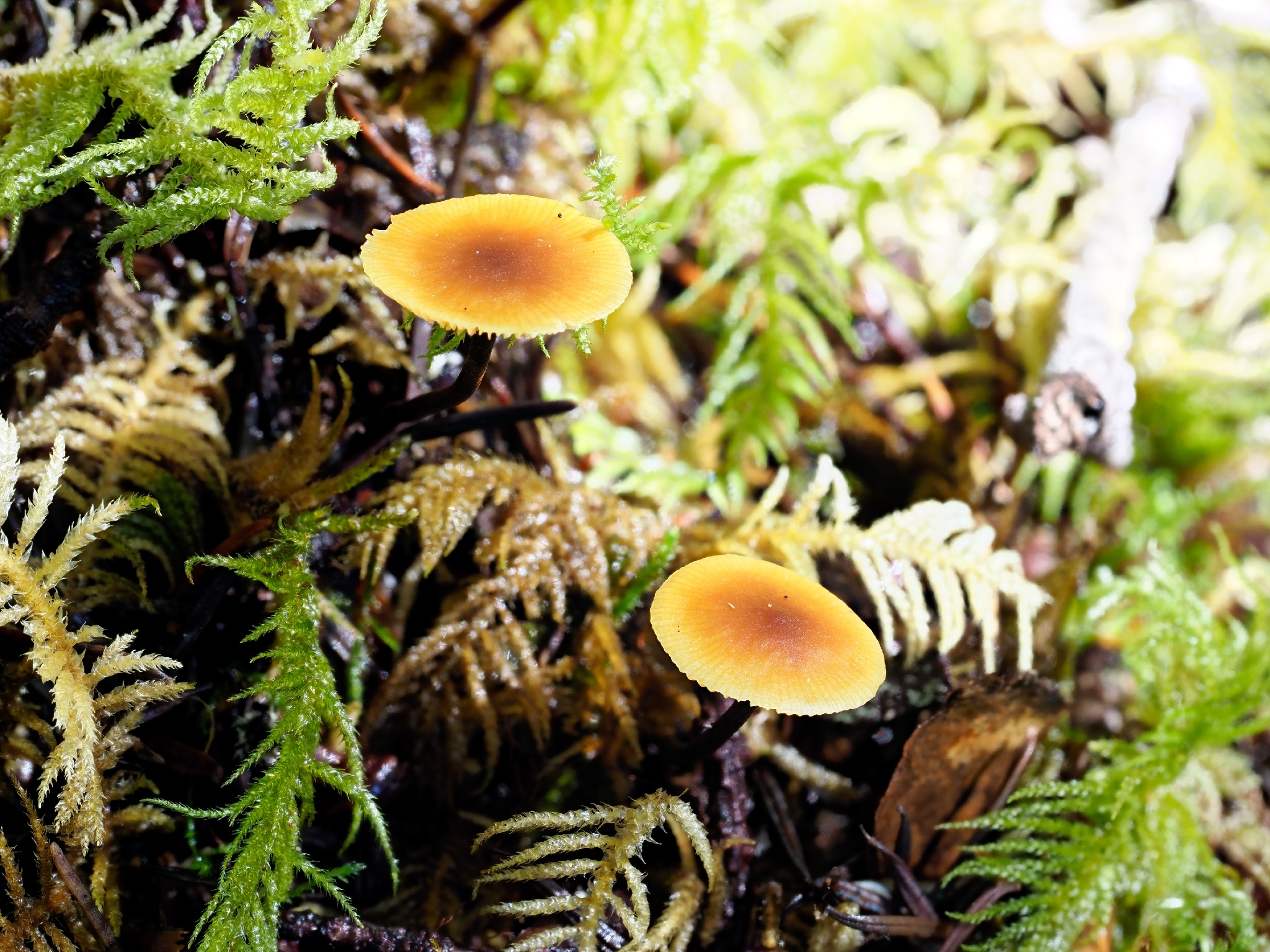
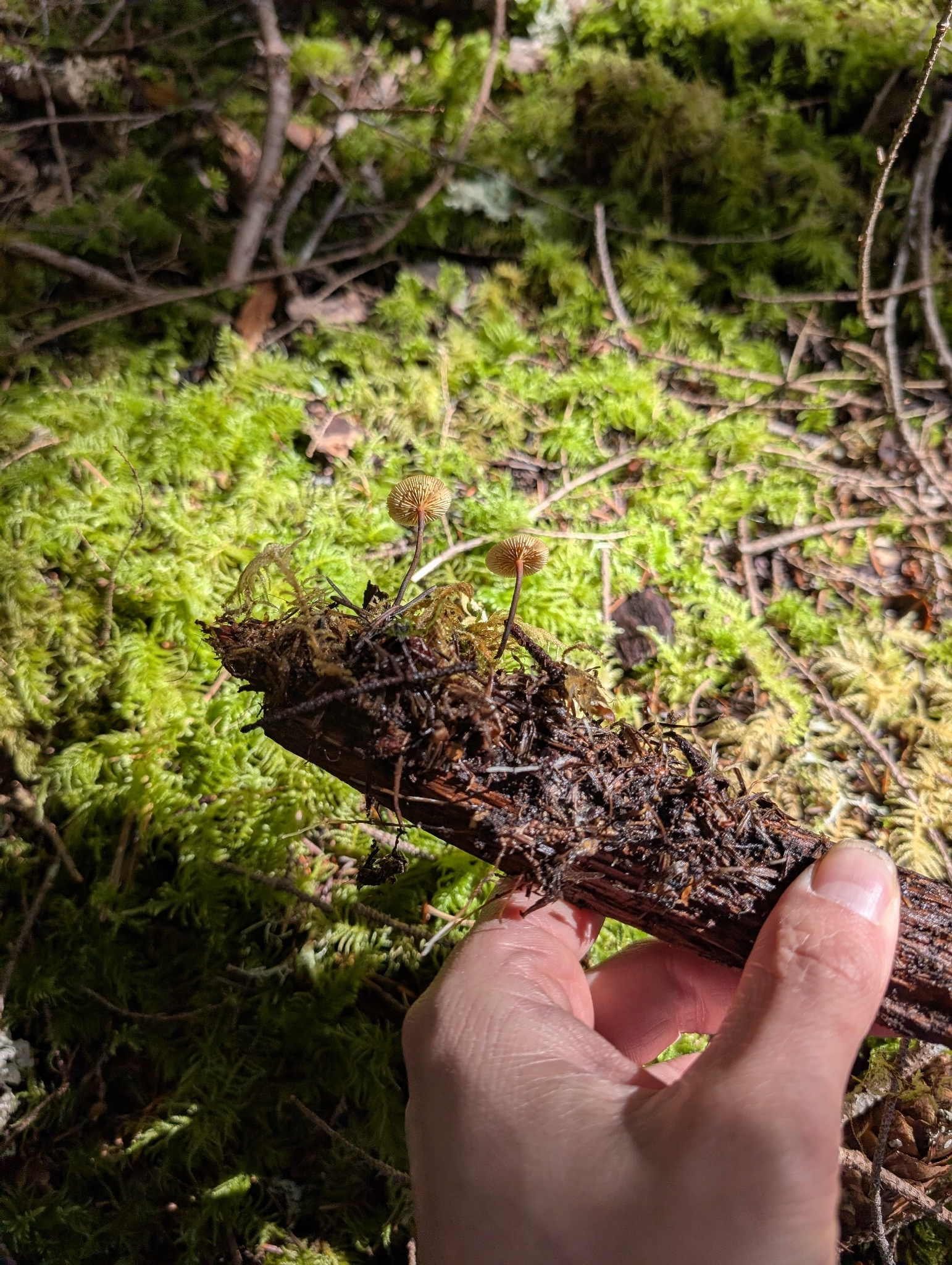
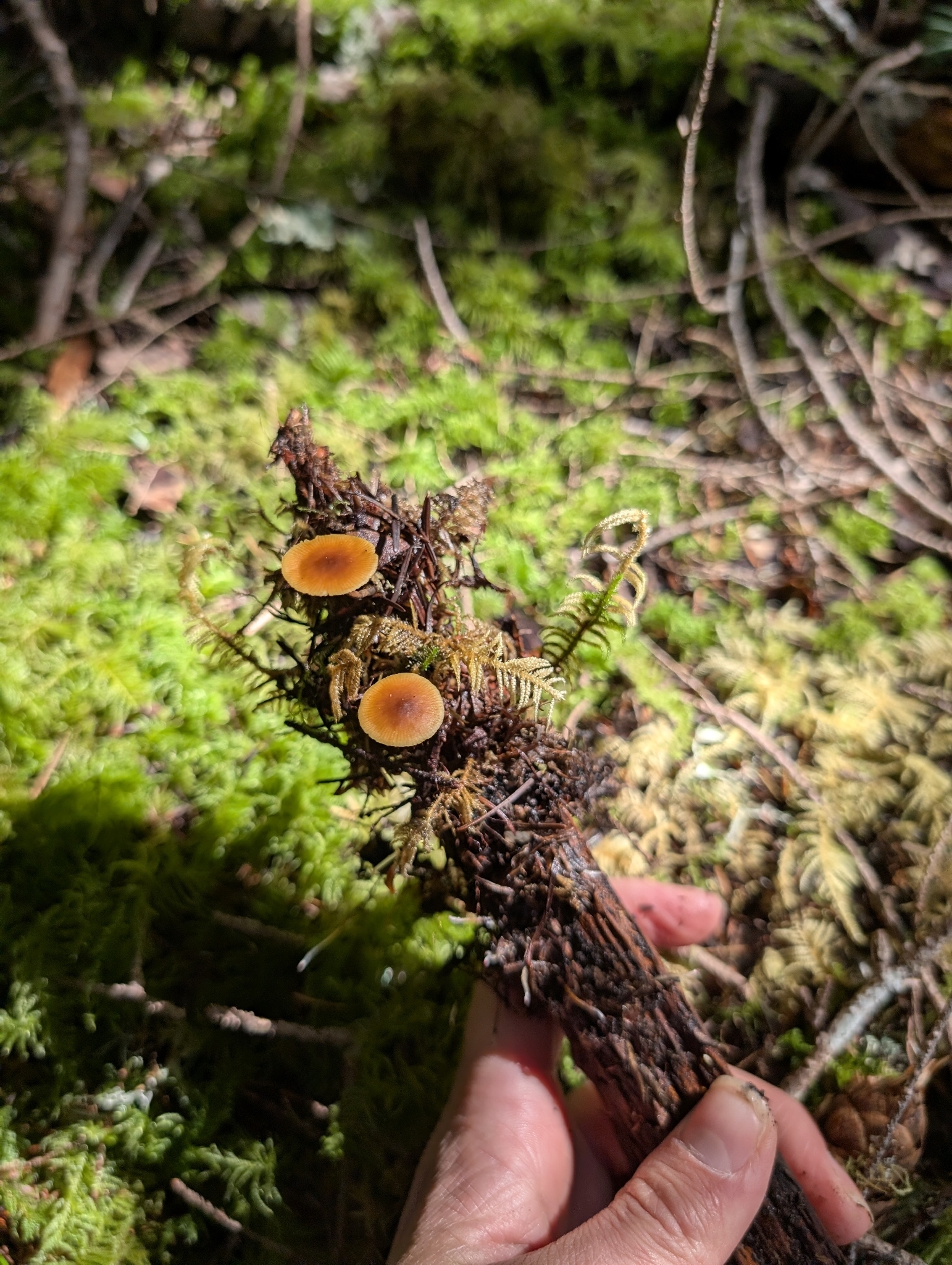
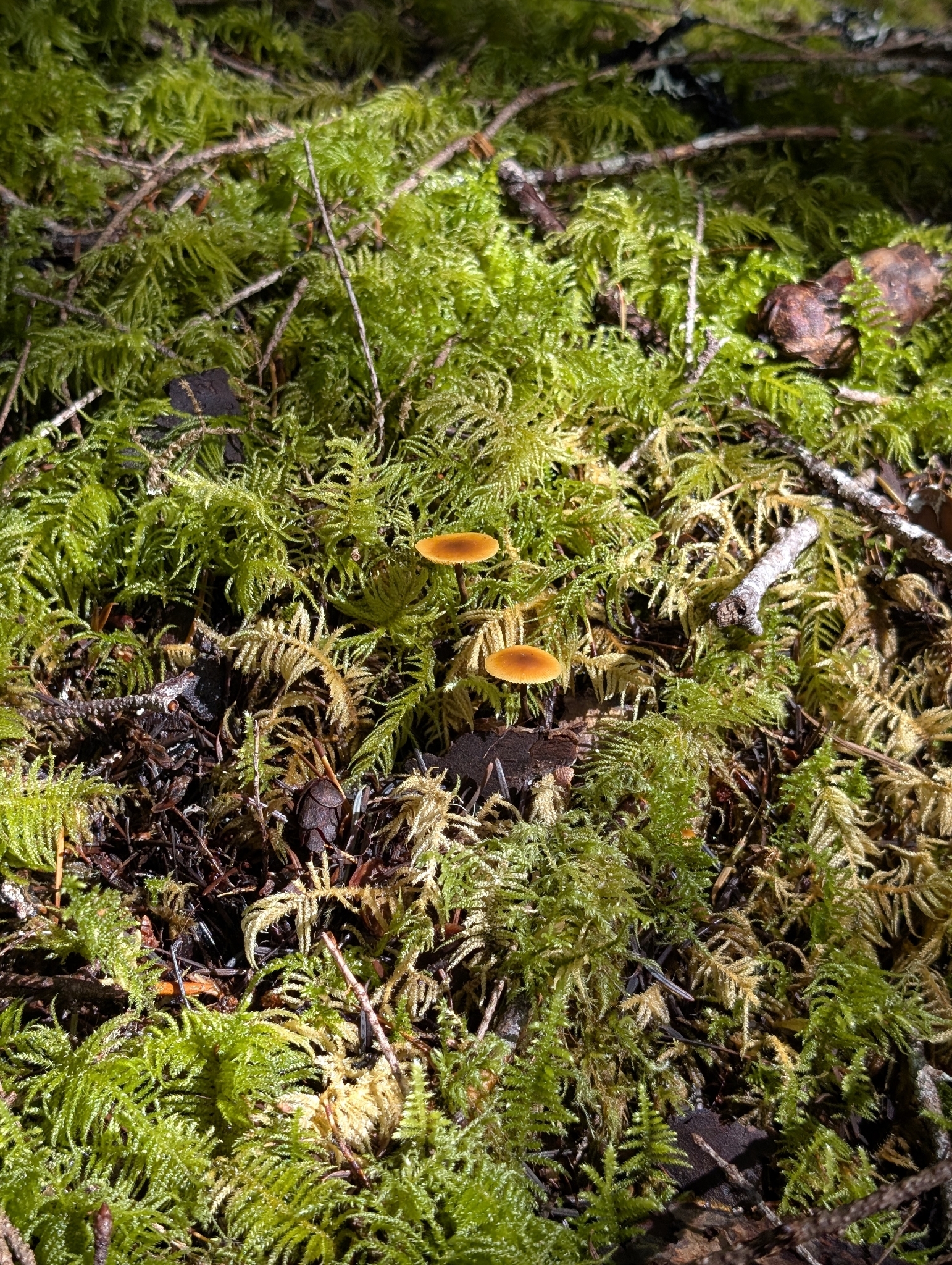
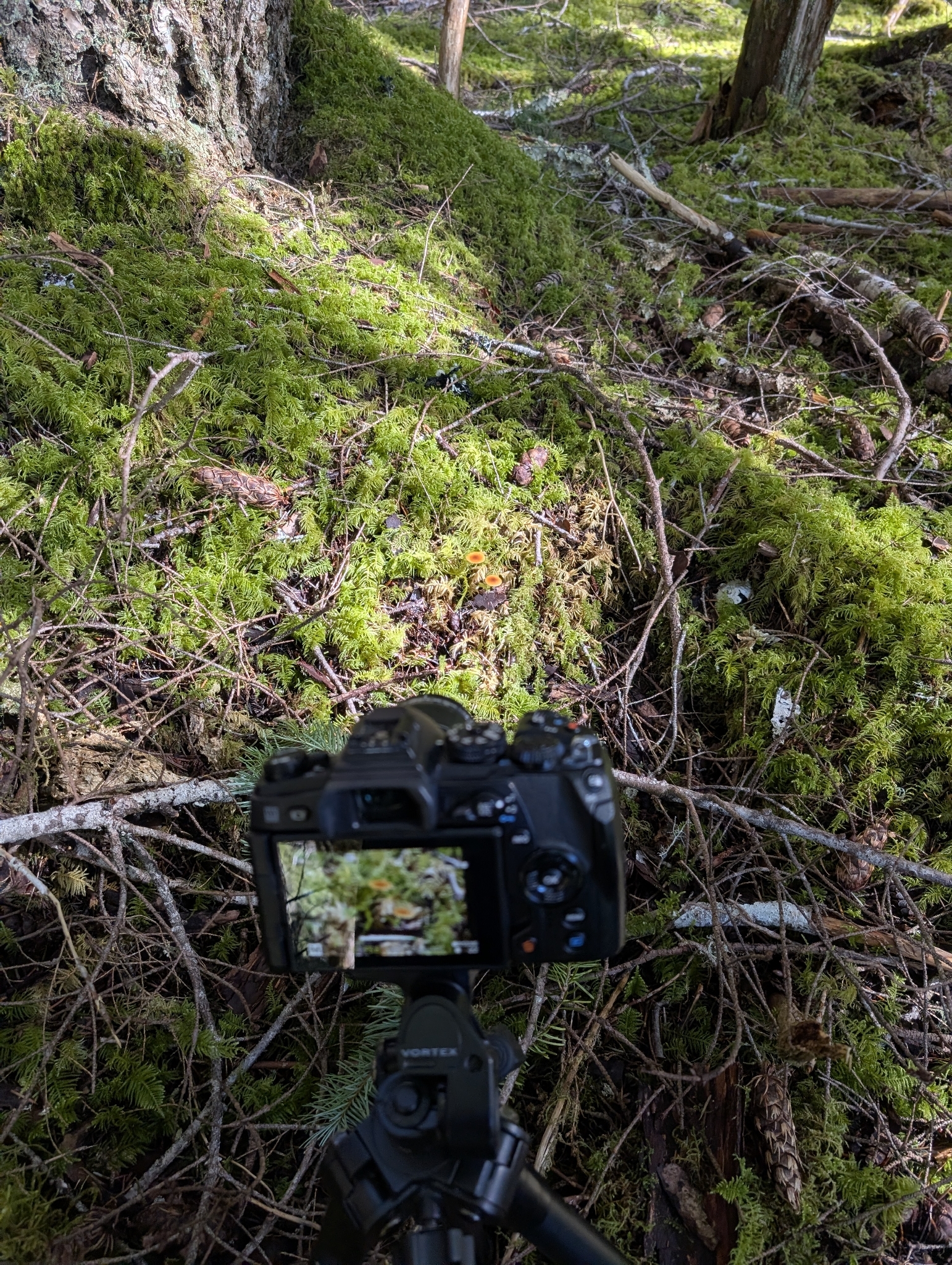
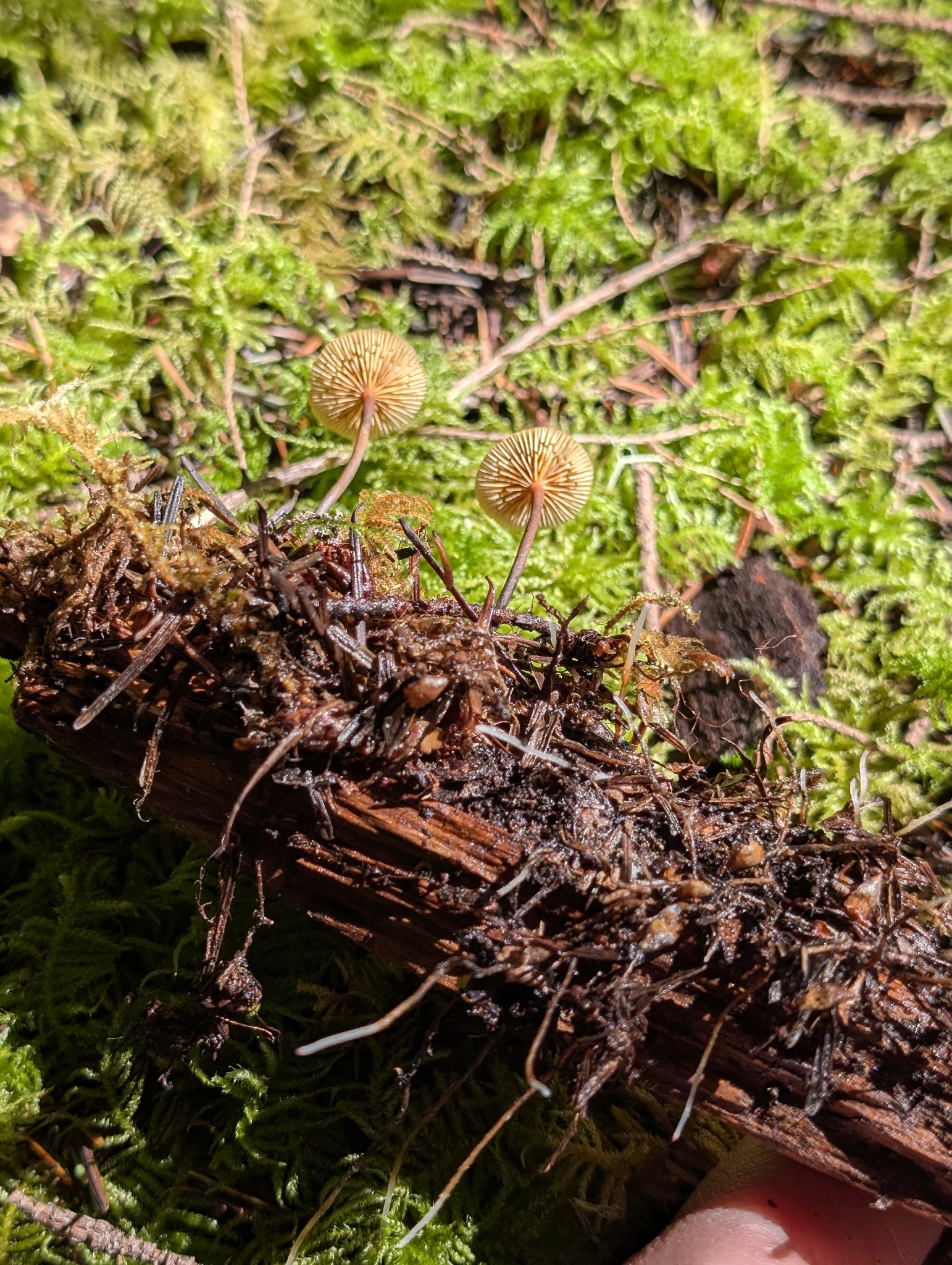
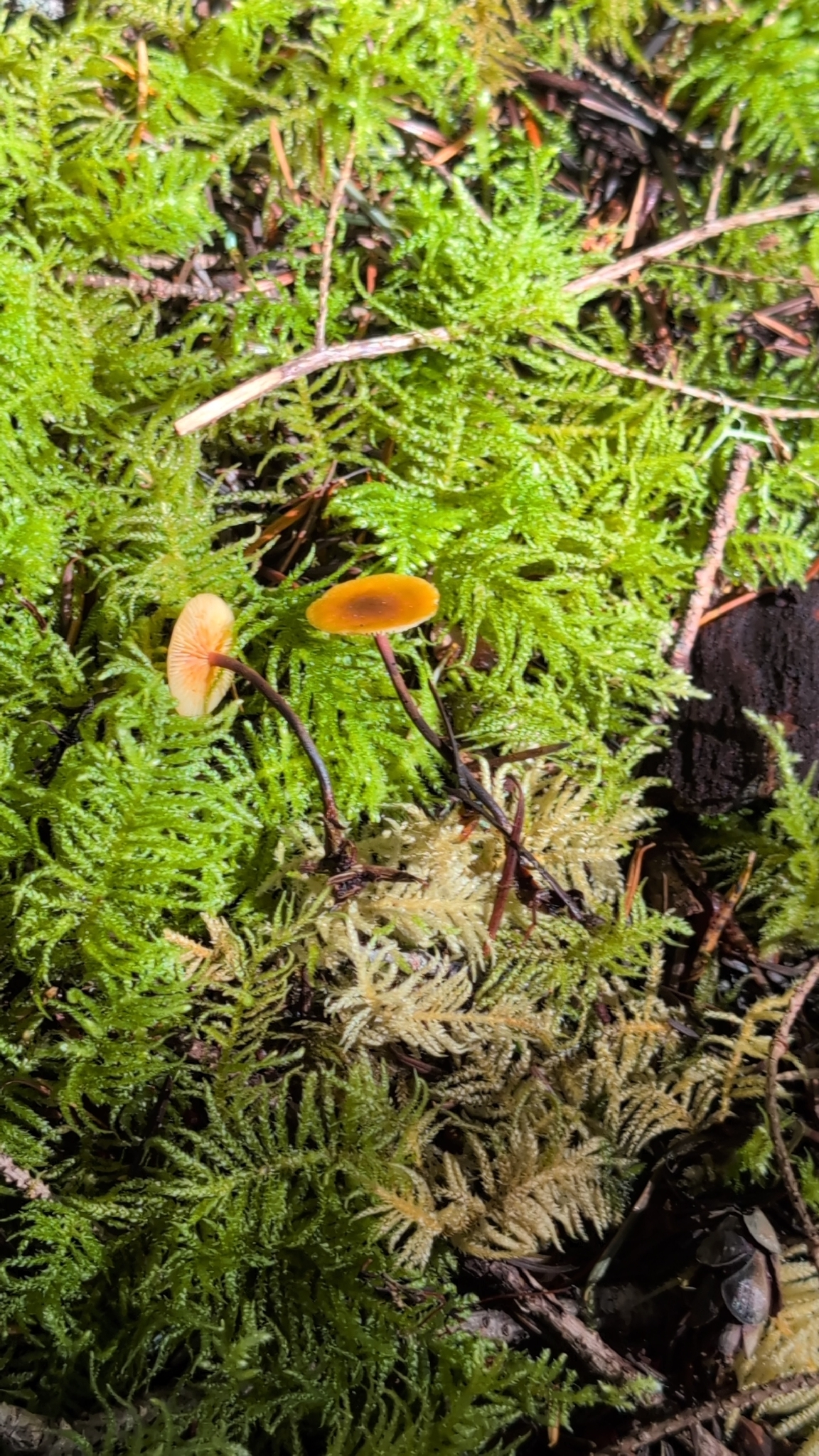
Photos of collections (347165997), (347166148), and (347166341) respectively, in sets of two.
It is likely these collections represent Heimiomyces fulvipes also, or whichever similar xeromphalinoid mushroom I collected the day prior. I am quite fond of the color contrast on these little guys, and the variety of looks when aging. I also enjoy the whole deal where they are common, but also sparsely distributed within the proper habitat. Fairly small but relatively easy to spot for a trained eye, especially at a time of year when most things are either rotten from the winter, or just starting for the spring. Little pops of color, helping with things like the jelly cones or even new conk growth, to announce the very start of spring.
DNA Update: DNA says these are all H. fulvipes. Noted! Glad to have some documentation at the very least.
More to come next month. Excited to see how this work develops over time. Will create some “update” edits here later, as previously mentioned. Mostly to add sequencing results and discussion surrounding them!
Again it is likely that we will share something in similar format to this, every month throughout the study. I will do my best to credit those involved as I have friends pitch in. Largely though, this study will be operated by me and Brodie. He’s not a huge talker, and doesn’t have any social media (besides iNaturalist), so these progress reports will be mostly me journaling about our thoughts and experiences. Less of a formal report, but ideally a collection of shared experiences from two relatively experienced people.
As I finally finish this up, now at the beginning of May, I can confirm some future plans also. Brodie will be making all of our May collections for ONP, so while April will feature a bit more photography from myself, May will also be dominated by Brodie’s fantastic photos. We made around 25 collections in the first half of April, with Brodie recently finishing off collections to our 30 cap for this park, this month.
Lastly (for now), I will be focusing on finishing our progress report for April, before beginning collections in Crater Lake! For that study I will make my own reports, and while Brodie may make an occasional trip for fun, those reports will be dominated by my photos and more solo commentary. I will be seeking permits and studies on state lands here in OR eventually, but for now the two park studies provide enough interesting work to do.
Thanks for reading and remember to resist hate. Peace and love to those on the side of peace and love.
Permit information, spreadsheets, material, etc. is available upon request. Happy to talk to almost anyone about mushrooms.